Our Services
Others
- DFPP
- Shockwave
- IV Drip

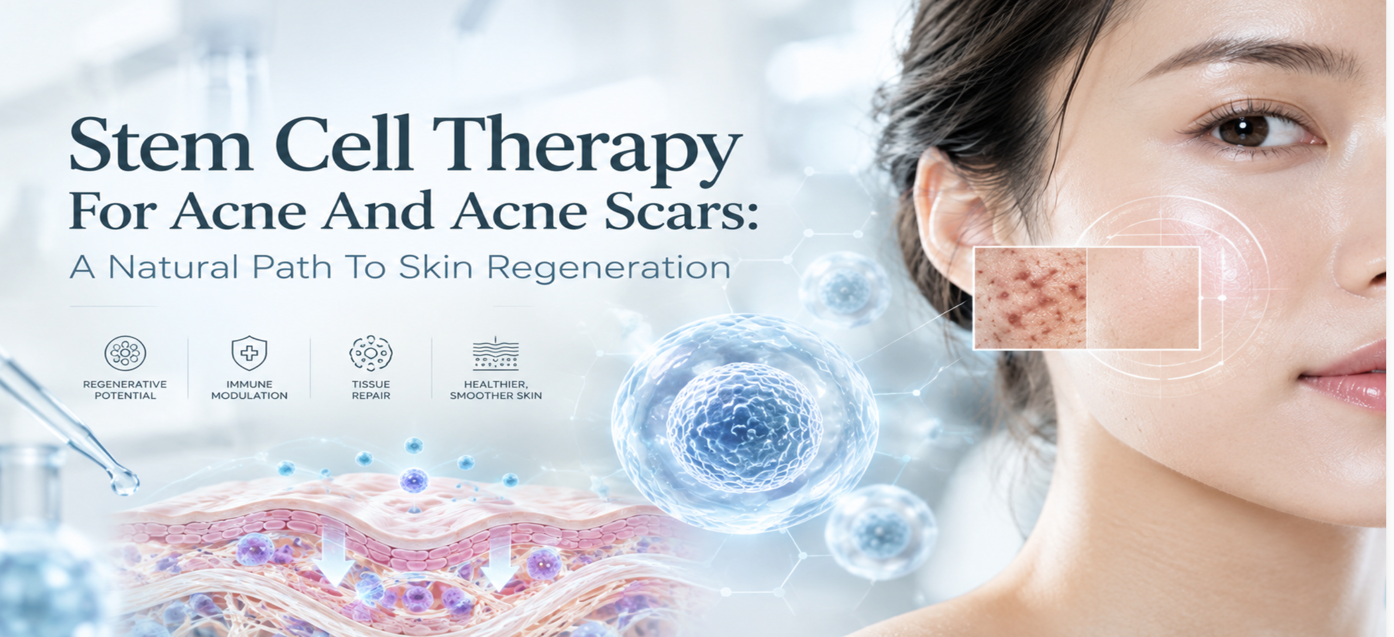
This article is for educational purposes only and does not replace consultation with a qualified medical professional.
Patients exploring aesthetic dermatology often reach a frustrating plateau with traditional treatments like chemical peels and lasers when treating severe, tethered acne scars. Patients endure months of aggressive resurfacing only to realize the deep architectural damage remains completely untouched. Surface-level interventions may temporarily mask biological deterioration, but they frequently fail to address the underlying cellular senescence and deep matrix damage that keep scars permanent and anchored to the muscle fascia.
Here’s the clinical reality of aesthetic dermatology: we are moving away from burning tissue to force a panic-healing response. Instead, the focus has shifted toward biological tissue repair. In this guide, you’ll learn the precise clinical mechanisms behind regenerative medicine and how cellular signaling is currently utilized to remodel dermal tissue from the inside out. We examine the biological frameworks, compare clinical distinctions against PRP, review safety protocols, and outline actual market costs for 2026.
By understanding the science of stem cell therapy for acne scars, you can stop wasting money on superficial fixes and start evaluating treatments that actually rebuild your skin’s foundational architecture.
Advanced stem cell therapy for acne scars shifts the focus from physical stimulation to molecular cellular signaling, offering potential improvements in dermal regeneration.
Stem cell therapy for acne scars utilizes biological signaling to repair damaged dermal layers rather than merely stripping away superficial tissue. In modern regenerative aesthetic medicine, specialized cells isolate bioactive molecules to stimulate quiescent dermal fibroblasts. Mesenchymal stem cells and their exosomes improve severe acne scarring by actively stimulating collagen type I production (National Institutes of Health, 2022). This addresses the structural deficits that cause permanent, tethered scarring and restores healthy cellular function at a foundational level.
For decades, the aesthetic industry completely misunderstood how cellular therapies actually worked. Early theories assumed that injected stem cells physically transformed into new skin cells to replace the damaged tissue. We now know this isn’t exactly true. The clinical evolution driving results today is what is known as The Secretome Regeneration Framework the concept that
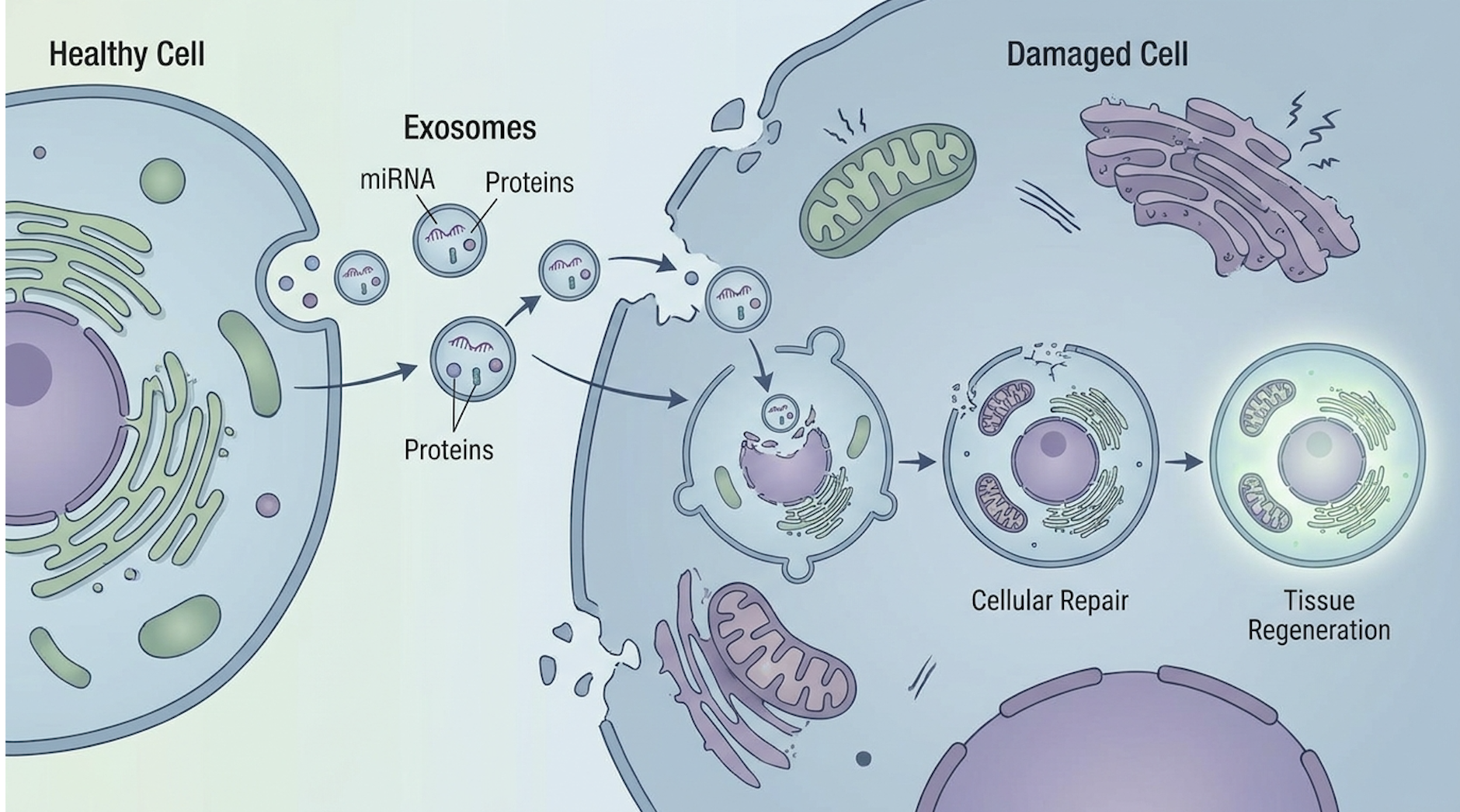
When a physician injects Mesenchymal Stem Cells (MSCs)—highly viable, multipotent adult cells utilized for their regenerative signaling capabilities—these cells act like biological directors. They secrete a complex mixture of proteins, growth factors, and genetic material known as the secretome. The most critical components of this secretome are exosomes. Exosomes, the nanoscale extracellular vesicles that transmit regenerative signals between cells, are the actual heavy lifters in modern exosome skin therapy. They dock onto your aging or damaged skin cells and deliver a payload of vascular and basic fibroblast growth factors, alongside highly specific messenger RNA (mRNA) that overrides the cells’ dormant state.
Because these exosomes are incredibly small (typically between 30 and 150 nanometers in diameter), they easily penetrate the dense, fibrotic tissue of an acne scar. This cellular communication triggers the ERK MAPK signaling pathway inside your quiescent fibroblasts. Think of this pathway as a master switch for extracellular matrix production. Once activated, the fibroblasts begin synthesizing fresh collagen type I, fibronectin, and elastin.
More importantly, they organize these new collagen fibers in a horizontal, lattice-like structure. Contrast this with a traditional TCA cross or fractional laser. Lasers rely on thermal injury to trigger a basic wound-healing response—essentially forcing your skin to panic and patch the damage with dense, rigid, vertical scar collagen (primarily type III collagen). Exosome skin therapy bypasses the trauma entirely. It directly reprograms the local immune microenvironment, telling the cells to rebuild the dermal matrix calmly and methodically.
The clinical outcomes are fundamentally different. Biopsy data shows that while lasers create somewhat disorganized tissue to fill a void, the secretome framework encourages healthy, pliable dermal architecture. While structural remodeling addresses the physical indentation of scars, the underlying cellular signaling also controls the mechanisms responsible for abnormal skin pigmentation.
Deep acne doesn’t just leave physical divots; it leaves a lasting footprint of color. Post-inflammatory hyperpigmentation (PIH) is the dark, stubborn staining that lingers long after the active breakout has subsided. At a cellular level, PIH is caused by excessive melanin accumulation triggered by inflammatory cytokines. When an acne cyst ruptures deep in the dermis, your immune system rushes in. It cleans up the infection but leaves behind a highly inflammatory environment that effectively traps melanin in the lower layers of the skin.
This is where MSCs provide a profound advantage over traditional aesthetic approaches. Stem cells perform a process called phenotypic macrophage reprogramming. Macrophages are the white blood cells responsible for tissue cleanup. After severe acne trauma, they get stuck in an angry, pro-inflammatory “M1” state. In this M1 phase, they constantly secrete inflammatory cytokines like IL-6 and TNF-alpha, which keeps the tissue inflamed and the pigment locked in.
MSC exosomes force these macrophages to switch to an anti-inflammatory, tissue-repairing “M2” state. They literally change the behavior of your immune system at the site of the scar, prompting the release of soothing factors like TGF-beta and IL-10. Once the environment flips from destructive to regenerative, the secreted factors promote the degradation of melanin transcription factors. The trapped pigment is broken down and cleared away naturally by the lymphatic system.
| 📌 If you’re interested in how stem cells calm inflammation by reprogramming immune cells, we have an interesting article that discusses mesenchymal stem cell therapy for immune modulation, which you can read via the internal link. |
If you are searching for the best treatment for post-inflammatory hyperpigmentation, you have to look beyond topical bleaching creams like hydroquinone. Hydroquinone only blocks new pigment production; it doesn’t clear the chronic inflammation keeping the old pigment locked in place deep in the dermis. We see this mechanism utilized in highly personalized treatments like LaVIV personalized stem cell therapy, which takes a patient’s own fibroblasts, expands them in a lab, and injects them back to target specific cellular deficits.
Understanding this advanced regenerative capacity highlights the stark differences when compared to earlier, widely adopted biological treatments like platelet-rich plasma.
When evaluating PRP vs stem cell therapy for severe acne scars, the primary distinction lies between cellular stimulation and biological regeneration. Platelet-rich plasma for acne scars While PRP stimulates existing cells, stem cell therapy provides a regenerative secretome that actively replaces damaged tissue for up to two years (National Institutes of Health, 2021).
If you’ve spent any time researching regenerative aesthetics, you’ve undoubtedly encountered Platelet-Rich Plasma (PRP). It’s a blood-derived concentrate used for cellular stimulation, famously dubbed the “Vampire Facial.” PRP works by drawing your blood, spinning it in a centrifuge to isolate the platelets from the red blood cells, and injecting them back into the skin. When those platelets degranulate (break open), they release a burst of localized growth factors.
But here is the critical limitation of platelet-rich plasma for acne scars: it relies entirely on the health of your existing cells. The growth factors trapped inside your platelets are only as potent as your current biological age and metabolic health allow. If you have older skin, severe sun damage, or senescent (exhausted) fibroblasts, PRP is essentially whipping a tired horse. You are asking cells that have already failed to repair the acne scar to suddenly work harder. As a patient ages, their autologous platelets simply contain fewer potent growth factors, leading to diminishing returns with every subsequent PRP session.
Stem cell therapy operates in a completely different biological reality. By utilizing umbilical cord tissue (UC-MSCs) or highly viable, laboratory-expanded autologous cells, you are bypassing your skin’s cellular exhaustion. You aren’t just stimulating old cells; you are providing a robust, youthful secretome that brings fresh genetic programming to the tissue. For deep ice-pick or boxcar scars, the regenerative payload of MSCs creates more profound structural repair than standard PRP ever could, specifically because it introduces active immunomodulatory proteins that PRP physically lacks.
| 📌 If you’re curious why umbilical cord cells outperform other stem cell sources, we have an interesting article that discusses why umbilical cord-derived UC-MSC stem cells are superior to other stem cell sources, which you can read via the internal link. |
| Criteria | Platelet-Rich Plasma (PRP) | Stem Cell Therapy (MSCs/Exosomes) |
| Cellular Source | Patient’s own peripheral blood | Umbilical cord tissue or lab-expanded cells |
| Mechanism of Action | Degranulation of platelets to stimulate existing cells | Paracrine signaling via exosomes to replace damaged tissue |
| Best For | Mild textural issues, general glow, fine lines | Severe tethered scars, deep volume loss, stubborn PIH |
| Result Longevity | 6 to 12 months | Up to 2 years or longer |
| Average Cost Range | $600 – $1,200 per session | $3,000 – $10,000 per session |
The data supporting this distinction is overwhelming. Verified clinical research showing stem cell results can last up to 2 years clarifies the outcome gap. Despite their different functional mechanisms, clinical researchers are discovering that isolating these therapies is not the only approach.
In elite dermatological clinics, the conversation is no longer about choosing one or the other. The frontier of acne scar revision involves the synergistic combination of stem cell derived secretome and PRP. The biological rationale for combining them is surprisingly elegant and solves a major mechanical problem in aesthetic delivery.
PRP excels at creating a highly vascularized biological “scaffold.” When injected, the fibrin in the plasma forms a physical, sticky matrix in the dermal layer. The immediate platelet-derived growth
That’s where the secretome comes in. By injecting exosomes directly into the PRP fibrin scaffold, practitioners trap the regenerative messengers exactly where they are needed. Without the sticky fibrin net, microscopic exosomes risk being flushed away by the lymphatic system before they can fully dock with the local fibroblasts. The PRP provides the temporary architecture and blood flow, while the secretome provides the long-term regenerative programming to rebuild the dermal matrix.
When observing patients undergoing this combined protocol, the timelines are fascinating. Practitioners typically note synergistic compounding effects: the PRP drives accelerated initial healing and reduces immediate redness within three to five days, while the secretome’s collagen synthesis kicks in around the three-month mark. This combined protocol controls local immune microenvironments and reduces excessive tissue fibrosis far better than either treatment administered in isolation.
With the introduction of complex biological agents into the dermis, evaluating the safety profile and potential adverse events becomes a critical prerequisite for any patient.
The financial barrier to entry for cellular medicine is undeniably steep. In the United States, current market rates remain highly exclusive. Why is it so prohibitively expensive? You aren’t just paying for a physician’s time; you are funding an incredibly complex, highly sensitive medical supply chain.
A massive premium is placed on rigorous laboratory standards. Ensuring high cellular viability requires meticulous extraction, purification, and expansion of umbilical cord tissue (UC-MSCs) or autologous cells in certified cleanrooms. Furthermore, the biologics must be transported via complex cold-chain logistics. Exosomes are enclosed in delicate lipid bilayers. If they are not shipped in liquid nitrogen dry shippers and maintained at exactly -80°C, those lipid membranes rupture. A ruptured exosome is biologically useless. The exorbitant price tag ensures that the product injected into your face is actually viable and active.
Because these are universally considered elective aesthetic interventions, you will be paying completely out of pocket. Insurance does not subsidize cosmetic scar revision. This extreme pricing has driven a massive surge in medical tourism, with patients looking to cut their bills by traveling overseas. While international hubs offer substantial savings, patients assume massive risks regarding the regulatory oversight and cold-chain integrity of the biologics used abroad.
| 📌 If you’re considering treatment abroad and want to know how to choose a safe clinic, we have an interesting article that discusses whether stem cell therapy is safe in Thailand, which you can read via the internal link. |
Despite the costs, the market is exploding. Reports projecting the industry is projected to reach over $31 billion by 2030 highlight the massive trajectory of aesthetic applications.
This massive market expansion is not solely driven by clinical data, but by highly visible early adopters in the biohacking and entertainment spaces.
We cannot discuss the financial boom of cellular medicine without acknowledging the cultural drivers pushing it forward. Celebrity stem cell treatments have forcefully pushed the regenerative medicine market out of niche longevity circles and into the mainstream aesthetic consciousness.
Specific pop culture phenomena like the highly publicized Kim Kardashian stem cell facial trend, or endless biohacking discussions on lifestyle podcasts have acted as massive catalysts for public
But as an informed patient, you must pivot clinically. You have to separate the marketing hype from the biological reality. While celebrity adoption increases awareness, authentic tissue restoration relies on specific UC-MSC cellular mechanisms and rigorous medical evaluation. A true stem cell facial isn’t effective because a celebrity endorsed it on Instagram; it’s effective because of verifiable paracrine signaling. Do not mistake a clinic’s marketing budget for medical endorsements.
For patients who find the clinical costs prohibitive, scientific research is increasingly validating methodologies to optimize the body’s internal regenerative capabilities.
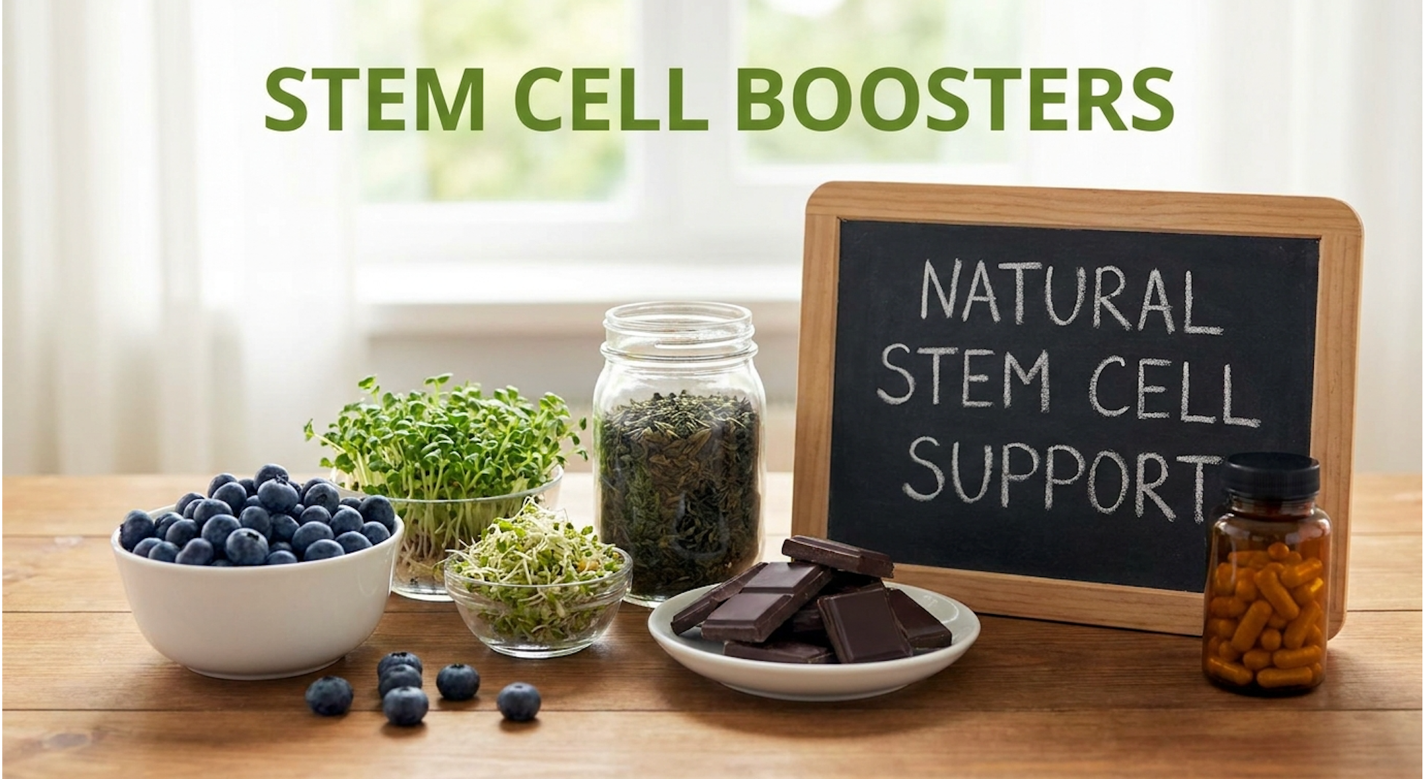
Patients seeking to naturally rebuild stem cells without invasive clinical procedures can utilize specific nutritional and lifestyle interventions to trigger natural skin healing. Enhancing endogenous stem cell proliferation relies on optimizing the body’s internal microenvironment, protecting existing progenitor cells from oxidative stress, and actively supporting the synthesis of extracellular matrix proteins. Nutritional factors like Vitamin C and D3 have been scientifically shown to enhance endogenous stem cell proliferation and improve natural regenerative capacity (National Institutes of Health, 2019).
If you are wondering how you can naturally rebuild your stem cells, you must adopt targeted dietary strategies that optimize specific micronutrient intake. You have to abandon the idea of a miracle cure and focus strictly on cellular biochemistry. If you want to optimize your internal microenvironment, you need to understand which vitamins for stem cell regeneration actually have clinical backing.
Vitamin C is absolutely crucial. It isn’t just a surface antioxidant; at a cellular level, it acts as a mandatory cofactor for prolyl hydroxylase, the exact enzyme required to stabilize the collagen
Patients constantly ask dermatologists about drinks that increase stem cells. Let’s be explicitly clear: no single “magic drink” generates new cells on command. However, the polyphenols found in high-quality green tea specifically Epigallocatechin gallate (EGCG) play a massive role in protecting mitochondrial membranes and reducing the systemic inflammation that ages your existing stem cell pools.
Furthermore, resveratrol, found in dark berries and grapes, has demonstrated a profound ability to promote the SIRT1 pathway. SIRT1 is a protein that protects against oxidative stress and inflammatory damage. By activating SIRT1, resveratrol directly supports the lifespan and viability of endogenous MSCs, preventing them from succumbing to environmental damage.
Beyond targeted nutritional supplementation, manipulating broader metabolic states represents the most potent method for systemic cellular renewal.
You cannot out-supplement a lifestyle that constantly damages your cellular machinery. If you want the best acne treatment environment possible, you have to look at metabolic triggers, specifically autophagy.
Autophagy is the body’s cellular recycling program. When you undergo periods of profound caloric restriction (typically extending beyond a standard 16-hour fasting window into 24-48 hour territory), your body actively suppresses the mTOR pathway. This suppression signals your body to clear out senescent “zombie” cells. These are aging cells that refuse to die but continuously secrete toxic inflammatory cytokines that damage surrounding healthy tissue. Clearing them out triggers the activation of dormant stem cell populations to replace them, creating a cleaner, highly optimized microenvironment for fibroblasts to operate.
Sleep is the other non-negotiable factor. Deep sleep is when cellular repair actually occurs. During the deepest phases of our circadian rhythm, the body actively downregulates the sympathetic nervous system. Simultaneously, it upregulates the release of human growth hormone (HGH) and other endocrine factors essential for tissue repair. Chronic sleep deprivation halts endogenous regeneration in its tracks, leaving you in a state of chronic cellular stress.
Are these natural interventions effective? Absolutely. They support overall dermal health, reduce the severity of subsequent breakouts, and delay biological aging. But we must be medically realistic. These endogenous methods cannot replicate the highly concentrated, localized structural repair of clinical exosome injections. If you have deep, fibrotic, tethered acne scars, fasting and green tea will not break those physical tethers.
Recognizing the limitations of both natural protocols and clinical therapies is essential for maintaining realistic aesthetic expectations and ensuring patient safety.
Stem cell therapy is a remarkable biological tool, but it is not infallible. Understanding where this technology fails is just as important as knowing where it succeeds. To make an informed decision,
The most dangerous thing a patient can do is assume the regenerative aesthetics market is fully standardized. It isn’t. When navigating this space, you must actively avoid these specific pitfalls:
1. Assuming all “stem cell” clinics are equal: Many commercial med-spas offer unproven, non-viable cellular products masquerading as regenerative medicine. They use dead exosomes or improperly processed autologous fat. You must demand clinical validation and transparency regarding the exact cellular source, viability counts, and laboratory processing standards before allowing anyone to inject you.
2. Expecting 100% scar erasure: We need to be brutally honest here. No therapy, biological or surgical, guarantees complete resolution of severe scarring. Stem cell therapy for acne scars can drastically soften the edges, lift the indentations, and restore healthy color, but aiming for flawless, glass-like skin sets you up for deep psychological disappointment.
3. Bypassing FDA guidelines: Opting for unapproved injections outside of monitored clinical settings carries severe infectious and immunological risks. Just because a provider operates out of a high-end strip mall doesn’t mean their biologics are safe.
There are specific dermatological scenarios where reaching for a vial of exosomes is a fundamental clinical error. Sometimes, traditional modalities are physically required to achieve a baseline before regenerative medicine can even be considered.
Deep Ice Pick Scars: Biological signaling cannot bridge massive structural gaps in the dermis. If you have deep, narrow ice pick scars that extend past the dermis into the subcutaneous fat layer, stem cells alone will fail. Surgical punch excision—where a dermatologist physically removes the scarred column of skin and sutures it closed—is required. Only after the physical gap is closed should you introduce biological therapy to optimize the healing of the surgical site.
Active, severe cystic acne: Introducing potent growth factors into an active, infected inflammatory site is strictly contraindicated. The active infection must be resolved first. Some IV stem cell therapy for hormonal acne, but attempting to systemic immunomodulate an active localized infection is misguided. The active cysts must be managed with oral medications (like isotretinoin or spironolactone) under the care of a board-certified dermatologist. Establish baseline control before attempting aesthetic regeneration.
In aesthetic dermatology, stem cells actively repair extracellular matrix deficits and reduce hyperpigmentation. They do not “cure” all skin conditions or instantly erase severe trauma. Clinical efficacy relies heavily on the specific cellular source and the severity of the initial dermal damage. Results require professional assessment to ensure your specific scar type will respond to molecular signaling. Results may vary significantly based on the patient’s biological age and metabolic health.
You can naturally rebuild stem cells by adopting fasting-mimicking diets and optimizing specific micronutrient intake. Intermittent fasting triggers autophagy, which clears senescent cells and signals dormant progenitor cells to activate. Supplementation with Vitamin C and D3 protects these cells from oxidative stress. Individual cellular responses vary based on baseline metabolic health.
The primary downside of stem cell therapy is the significant financial cost and the variability of results among unregulated clinics. While malignant transformation risks are negligible with adult mesenchymal stem cells, patients may experience temporary injection site erythema. The lack of standardized FDA-approved aesthetic protocols means clinical quality varies widely. Consultation with a board-certified dermatologist is essential to mitigate these risks.
Most patients find stem cell treatment highly tolerable and experience only mild to moderate discomfort. The procedure typically utilizes micro-needling or fine-gauge micro-injections to deliver the secretome into the dermis. Clinics routinely apply clinical-grade topical lidocaine creams 30 to 45 minutes prior to the procedure to numb the area. Pain thresholds vary, but severe pain is exceptionally rare during aesthetic applications.
For patients battling severe acne scarring, stem cell therapy delivers profound structural repair by substituting superficial stimulation for deep cellular regeneration. Clinical studies confirm that mesenchymal stem cells actively stimulate collagen production and reduce hyperpigmentation (National Institutes of Health, 2022). The most effective approach combines rigorous clinical evaluation, verified cellular biologics, and adjunctive nutritional support.
Utilizing The Secretome Regeneration Framework clarifies that aesthetic success relies on potent paracrine signaling (exosomes) rather than cellular differentiation. This biological shift finally addresses the tethered, deeply damaged dermal tissue that lasers and peels leave behind, proving that true repair requires programming, not just trauma.
Before committing to a costly procedure, you must compile your dermatological history, previous treatment records, and specific aesthetic goals. Schedule a comprehensive consultation with a board-certified regenerative dermatologist to determine if advanced cellular therapy aligns with your unique clinical presentation and long-term restorative goals.