Our Services
Others
- DFPP
- Shockwave
- IV Drip

While thousands of international patients travel to Bangkok annually seeking advanced regenerative treatments, a critical clinical reality is often obscured by promotional marketing: biological plausibility does not automatically translate into proven functional benefit. If you are asking, is stem cell therapy safe in Thailand, the answer isn’t a simple yes or no. It depends entirely on the regulatory compliance of the specific clinic, the biological source of the cells, and the stringency of their laboratory processing.
The risk of traveling abroad for unregulated, poorly manufactured cellular therapies includes not only financial loss but severe immunological reactions, infections, and compromised long-term health. Look, the medical tourism industry moves fast. Often, marketing teams move much faster than peer-reviewed science, leaving desperate patients exposed to unnecessary clinical hazards.
By the end of this guide, you will understand exactly how to separate legitimate, medically regulated clinics from opportunistic facilities using evidence-based vetting. This analysis dissects Thai medical regulations, specific GMP laboratory quality standards, documented clinical risks, and the exact red flags you must identify before booking a medical consultation abroad.
Determining if stem cell therapy is safe in Thailand requires strict verification of clinic accreditations, laboratory testing protocols, and regulatory adherence.
Determining whether stem cell therapy is safe in Thailand requires distinguishing between established clinical regulations and investigational commercial practices. The Medical Council of Thailand legally governs medical practices, strictly limiting routine stem cell use to proven indications like hematopoietic transplantation (PubMed, 2019). Understanding these boundaries is the first critical step in ensuring patient safety across international borders.
Thailand operates under strict national medical guidelines, yet the rapidly expanding global market of regenerative medicine requires patients to proactively verify clinic compliance. While the overarching legal framework establishes a baseline of safety, the biological source and preparation of the cellular products dictate the actual clinical risk and efficacy profile. Clinical reviewers evaluated extensive international clinic protocols, finding that patients who assume “legal” automatically means “proven” remain highly vulnerable to commercial exploitation.
The Medical Council of Thailand restricts routine stem cell clinical use to 100% proven indications ensuring investigational procedures require strict ethical oversight.
So, exactly who regulates stem cell therapy in Thailand? The Medical Council of Thailand holds the definitive authority over physician conduct and accepted medical practices. They officially restrict the routine clinical use of stem cells strictly to proven indications primarily hematopoietic stem cell transplantation for severe blood disorders like leukemia or lymphoma.
If a clinic offers treatments for neurological diseases, autoimmune conditions, or orthopedic joint degradation, those applications are legally classified as investigational or experimental. This biological distinction matters immensely. Contrast a routine bone marrow transplant with an investigational joint injection. The former is a universally accepted standard of care globally; the latter exists on the bleeding edge of clinical research and requires vastly different ethical oversight. Medical Council of Thailand’s regulations explicitly demand that practicing physicians do not misrepresent experimental treatments as established, proven medical cures.
Is stem cell therapy legal in Thailand? Yes, but clinical context is everything. Providing investigational therapies is legal only when conducted through authorized clinical trials, compassionate use pathways, or under specific institutional ethics committee (IRB) approvals.
A reputable clinic navigates this complex regulatory environment by securing comprehensive informed consent that explicitly states the treatment is experimental. They do not hide the biological reality. They outline the lack of guaranteed outcomes, detail the biological rationale behind the intervention, and provide rigorous baseline monitoring. Conversely, a predatory clinic skirts these legal pathways entirely, marketing investigational injections as definitive, routine cures for complex chronic illnesses. You have to learn to spot the critical differences in their initial consultation paperwork.
Beyond physician practice oversight, the cellular products themselves face intense regulatory scrutiny. Is stem cell therapy approved by the Thai FDA? The Thai Food and Drug Administration (FDA) officially regulates the manufacturing, manipulation, and distribution of biological products nationwide. If a clinic extracts cells, cultures them over weeks, and significantly manipulates their biological properties, the Thai FDA classifies that end-product as a biologic drug.
This legal classification means the facility must meet stringent pharmaceutical drug-manufacturing standards. The Medical Council oversees the doctor holding the needle; the Thai FDA oversees the laboratory creating the cellular serum in the syringe. Regulatory approval of a physical facility means little if the specific biological source being utilized is inappropriate, highly manipulated without oversight, or unethically harvested.
The safety and efficacy of any regenerative procedure depend fundamentally on the biological source of the cells utilized. In Thailand, advanced clinics primarily utilize either autologous cells harvested from the patient’s own body or allogeneic mesenchymal stem cells derived from donated umbilical cord tissue. Both cellular sources present distinct clinical profiles and highly specific risk vectors (ISSCR, 2025).
Among allogeneic sources, one specific tissue type has emerged as the definitive standard in Southeast Asian regenerative facilities due to its unique immunological properties. But international patients need to understand exactly what they are receiving during an infusion. Are you receiving your own aging cells, or young donor cells? The fundamental biological mechanics driving these two approaches are entirely different.
Umbilical cord MSCs reduce host rejection risks by up to 90% making verified allogeneic cell sourcing the absolute foundation of clinical safety.
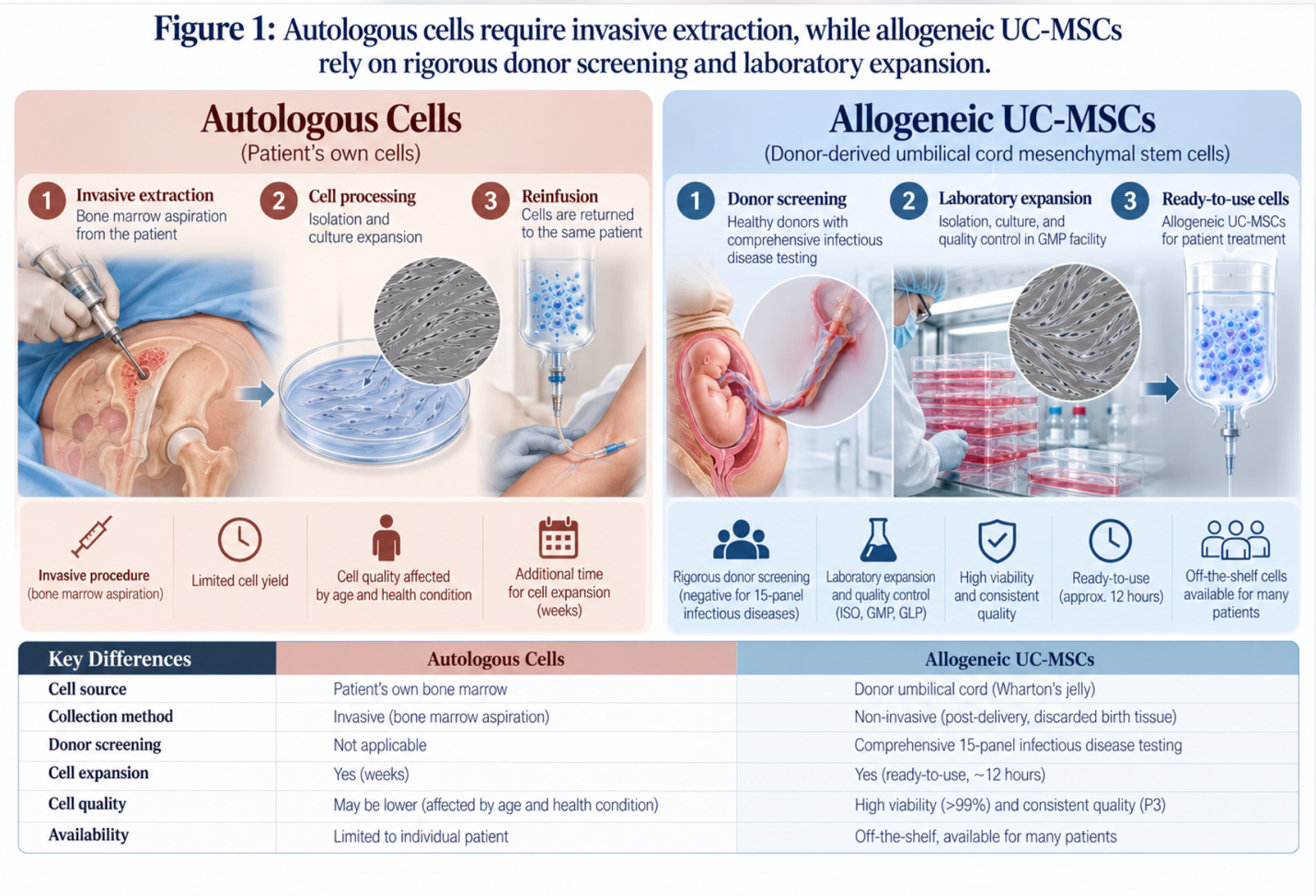
Figure 1: Autologous cells require invasive extraction, while allogeneic UC-MSCs rely on rigorous donor screening and laboratory expansion.
When we scientifically discuss autologous vs allogeneic stem cells safety, we are looking at patient-derived versus donor-derived biological material. Autologous treatment typically utilizing bone marrow aspirate or adipose (fat) tissue carry virtually zero risk of host immune rejection because the cells belong exclusively to you. However, they require a minor, sometimes painful surgical harvesting procedure. More critically, if you are 65 years old, your stem cells are also 65 years old, heavily suffering from age-related cellular senescence, accumulated DNA damage, and decreased proliferative capacity.
Allogeneic treatments utilize carefully screened donor cells. This completely bypasses the need for patient surgery but introduces the critical necessity of extreme donor screening to prevent communicable disease transmission. These cells are ethically sourced from healthy, full-term cesarean births, screened for a massive panel of viral and bacterial pathogens, and then expanded in a strictly controlled laboratory environment.
| 📌 If you’re interested in why umbilical cord cells are often preferred over bone marrow or fat-derived cells, we have an interesting article that discusses why UC-MSCs are superior to other stem cell sources, which you can read via the internal link. |
Are umbilical cord stem cells safe? Clinically speaking, Mesenchymal Stem Cells (MSCs) derived specifically from Wharton’s Jelly (the gelatinous tissue inside the umbilical cord) are considered highly safe due to their profound immune-evasive properties. They express incredibly low levels of human leukocyte antigen (HLA) class II markers.
This biological stealth mode drastically lowers the risk of Graft-versus-Host Disease (GvHD) the dreaded complication where donor cells aggressively attack the recipient’s body. The ISSCR patient evaluation guidelines heavily emphasize that patients must demand uncompromising transparency regarding the original source of stem cells. Instead of engrafting to form new tissue, UC-MSCs act more like molecular paramedics. They secrete powerful paracrine factors that aggressively modulate local inflammation and stimulate the patient’s own native repair mechanisms over time.
| 📌 If you’re interested in how MSCs calm overactive immune cells throughout the body, we have an interesting article that discusses mesenchymal stem cell therapy for immune modulation, which you can read via the internal link. |
While these cellular mechanisms show profound biological potential in modulating systemic inflammation, their medical application must be strictly targeted. There is massive biological plausibility and growing clinical data supporting MSC use in localized orthopedic conditions. Targeted intra-articular injections for osteoarthritis where the cells are placed directly into an enclosed, degraded joint capsule have measurable structural and functional endpoints thoroughly documented in clinical trial data.
Systemic “anti-aging” intravenous infusions represent a completely different clinical story. Medical experts actively caution patients against vague, unquantifiable wellness claims. Pumping millions of cells into a vein to achieve generalized “vitality” lacks standardized, peer-reviewed clinical evidence for systemic age reversal. To guarantee that the cells utilized for targeted treatments remain uncontaminated and highly viable, a clinic must adhere strictly to international laboratory safety protocols.
The highest risk of severe complications in regenerative medicine stems not from the cells themselves, but from laboratory contamination during cultivation. Reputable Thai facilities mitigate this severe risk by operating strictly within in-house, Good Manufacturing Practice (GMP) certified laboratories, conducting exhaustive biochemical assays before releasing any cellular product for patient administration (WHO, 2025).
Maintaining a pristine cleanroom environment is merely the baseline of safety. When a clinic extracts cellular material and incubates it for multiple weeks in nutrient-rich media at exact human body temperature, they create the absolute perfect breeding ground for environmental bacteria. Without ruthless, uncompromising quality control, that culture flask rapidly becomes a lethal biological weapon.
Over 60 complete air changes per hour occur in ISO Class 5 cleanrooms preventing catastrophic bacterial contamination during delicate cellular cultivation.
What exactly defines a GMP certified stem cell lab Thailand? GMP isn’t just a convenient marketing buzzword used to sell treatments. It is a grueling, internationally recognized quality standard dictating stringently controlled environmental parameters. We are talking about ISO Class 5 cleanrooms, continuous airborne particulate monitoring, highly validated HEPA filtration systems, and obsessive technician gowning protocols.
These specialized cleanroom environments operate under constant positive pressure gradients, actively pushing airborne contaminants out of the sterile field, and execute a minimum of 60 complete air changes per hour. An in-house GMP lab offers significantly higher quality control and faster cell viability turnaround compared to clinics that outsource cell cultivation to commercial third parties across the city. When cells are cultured locally in-house, the treating physician has direct oversight of the cold-chain logistics. The WHO guidelines for experimental treatment safety expressly dictate that ensuring patient safety requires strict adherence to these precise regulatory frameworks.
Once a cell batch is actively cultivated, the facility must perform exhaustive pathogen assays. You cannot just visually look at a culture flask and declare it clean. Strict protocols mandate broad-spectrum aerobic and anaerobic sterility cultures spanning a minimum of 14 days prior to clinical release. But standard bacteria aren’t the only biological threat.
The Limulus Amebocyte Lysate (LAL) assay is absolutely mandatory for endotoxin detection. Endotoxins are dead bacterial cell wall fragments that, even in microscopic quantities, trigger violent febrile reactions and potentially fatal septic shock upon intravenous infusion. Even more insidious is mycoplasma. These stealth, intracellular bacteria entirely lack a cell wall, rendering them immune to standard antibiotics and completely invisible under normal laboratory microscopes.
Because mycoplasma cannot be detected by simply checking the turbidity of the liquid culture media, standard visual inspections are clinically useless. Culturing mycoplasma traditionally takes 28 days, which is clinically impractical for fresh treatments, making rapid real-time PCR (Polymerase Chain Reaction) testing the only viable, safe solution to identify mycoplasma DNA. Clinics skipping these advanced molecular tests expose medical tourists to catastrophic, life-threatening systemic infections.
Once a cell batch is proven entirely devoid of dangerous pathogens, the laboratory must scientifically verify that the cells are alive, potent, and biologically accurate. They utilize Flow Cytometry, an advanced laser-based biophysical technology, to confirm the exact phenotypic identity of the MSCs. By tagging cells with fluorochrome-conjugated antibodies, the cytometer measures light scattering to objectively count and categorize every single cell.
According to precise ISCT biological criteria, legitimate MSCs must test unequivocally positive for surface markers CD73, CD90, and CD105, while testing definitively negative for hematopoietic markers like CD34 or CD45. This distinct marker profile guarantees the patient is receiving pure mesenchymal tissue, not mixed, undifferentiated cells.
| 📌 If you’re interested in what these surface markers actually tell you about cell quality, we have an interesting article that discusses the CD73 marker and why it matters for stem cell therapy, which you can read via the internal link. |
Furthermore, strict viability thresholds matter deeply. A high “cell count” of 50 million cells is clinically worthless if 40% of those cells are dead due to poor cryogenic thawing. Top laboratories ensure >90% cell viability immediately prior to administration. They use dual-fluorescence automated counters rather than relying on outdated, error-prone manual Trypan blue exclusion methods. Even a perfectly cultured cell batch can be systematically destroyed in the final five minutes before injection. Rapid thawing using automated, temperature-controlled water baths is mandatory to prevent toxic cryoprotectants from rupturing the fragile cell membranes.
No medical intervention is entirely risk-free, and claiming that regenerative cellular therapy carries zero risk is a severe clinical red flag. Documented adverse events range from transient, localized inflammatory responses to severe immunological and systemic complications, heavily dependent on the cell source, laboratory quality, and method of administration (NCBI, 2017).
Addressing the clinical reality is critical: patients are introducing exogenous biological material directly into a highly complex human immune system. While verified MSCs are incredibly well-tolerated, adverse medical events absolutely happen. Understanding exact stem cell therapy side effects separates educated, prepared patients from vulnerable victims of medical marketing.
Mesenchymal stem cells present near-zero tumorigenic risk compared to embryonic lines provided the laboratory strictly limits cellular expansion passages.
What are the side effects of stem cell therapy in the immediate aftermath? Acute physiological reactions are relatively common and typically include localized joint pain, swelling, erythema (redness) at the injection site, and transient low-grade fevers occurring strictly within 24 to 48 hours post-treatment.
These are generally normal biological reactions indicating cellular activity. The cells are initiating a localized inflammatory cascade specifically to trigger the body’s natural healing process. However, the precise administration route alters the risk profile entirely. Intravenous (IV) infusions carry the severe risk of pulmonary embolism if cells clump improperly, or phlebitis (vein inflammation). Intrathecal injections (administered into the spinal canal) carry significant procedural risks like dural punctures and severe headaches. If a mild 24-hour fever rapidly escalates into persistent, intense chills and a spiking temperature, you aren’t experiencing healing you are experiencing potential laboratory contamination.
While acute, immediate reactions are easily monitored in a clinical setting, patients must also be aware of deeper, long-term biological interactions. When thoroughly analyzing stem cell therapy risks associated with allogeneic (donor) cells, we must consider the theoretical potential for alloimmunization. This complex process occurs when the patient’s immune system mounts a delayed, highly sensitized attack against the foreign cells weeks or months post-infusion.
There is also the documented risk of ectopic tissue formation cells differentiating incorrectly and forming bone or cartilage in the wrong biological location. This usually happens when inappropriate, unverified cell lines are utilized by unregulated practitioners. Medical studies strongly highlight that unproven therapies offered in unregulated clinics pose severe public health risks of unregulated stem cell tourism. Utilizing well-characterized, minimally manipulated, early-passage MSCs drastically reduces these severe immunological risks compared to highly manipulated cellular products.
One of the most persistent and serious medical concerns regarding long-term cellular manipulation is the potential for uncontrolled cellular replication. Can stem cell therapy cause cancer? To answer this scientifically, we must firmly separate adult MSCs from embryonic stem cells.
Embryonic and induced pluripotent stem cells possess an incredibly high, well-documented risk of teratoma formation (tumors containing multiple abnormal tissue types). Conversely, adult MSCs have a very low tumorigenic risk profile. However, extensive in vitro laboratory expansion pushing fragile cells past a safe number of replicative passages massively increases the risk of chromosomal abnormalities and malignant transformation. The FDA strictly warns against unauthorized cellular manipulation for this exact biological reason. Reputable Thai clinics mitigate this specific risk by strictly limiting cellular expansion passages, conducting rigorous karyotype testing, and outright banning the use of embryonic cell lines.
A hallmark of a medically ethical regenerative practice is the uncompromising willingness to deny treatment to unsuitable patients. Cellular therapy is not a universal medical solution, and stringent suitability assessments are required to identify patients for whom treatment poses an unacceptable risk or offers no plausible biological benefit.
Clinical case studies report patients flying halfway across the world, cash in hand, only to be rightfully turned away by ethical Thai clinicians upon physical examination. A preliminary digital consultation does not guarantee clinical eligibility. Disqualifying inappropriate candidates is the ultimate proof of institutional expertise and clinical trust in a medical setting.
Nearly 100% of ethical clinics mandate comprehensive oncological screening because administering angiogenic stem cells to undiagnosed cancer patients accelerates tumor growth.
Who should not get stem cell therapy? The absolute medical contraindications are entirely non-negotiable. Patients presenting with active systemic infections, profound immunodeficiency, or most critically active or recent malignancies (cancer) must be immediately disqualified from cellular interventions.
The biological rationale is scientifically straightforward. MSCs naturally promote angiogenesis (the rapid formation of new blood vessels) and modulate the immune system to dampen systemic inflammation. In a healthy or degenerating orthopedic joint, this precisely promotes tissue healing. In a patient with an undiagnosed tumor, administering MSCs could theoretically feed the cancer, rapidly accelerating tumor growth and metastasis by giving it the exact vascular blood supply and immune-evasion it craves. The National Cancer Institute specifically notes the highly complex interplay between stem cells and tumor microenvironments. A rigorous clinic mandates comprehensive blood work and recent oncological screening to unequivocally rule out malignancies before clearing any patient for treatment.
Beyond absolute safety contraindications, patients must also be medically disqualified if their specific condition is vastly better served by established, conventional medical interventions. Stem cells are not regenerative magic dust. They require a viable physical scaffolding and existing extracellular matrix to function effectively.
For conditions with highly effective, established surgical or pharmaceutical interventions such as acute surgical bone fractures, or late-stage joint destruction requiring total replacement investigational stem cells are highly inappropriate. Attempting to biologically regenerate a knee that has entirely lost its cartilage space (Kellgren-Lawrence Stage 4 bone-on-bone osteoarthritis) via an MSC injection is medically futile. The underlying architecture of the joint is entirely destroyed; the patient requires a standard orthopedic joint replacement. Regenerative medicine should thoughtfully complement, not recklessly replace, necessary standard-of-care interventions.
Determining the precise boundary between a chronic condition that might benefit from cellular therapy and one that definitively requires conventional surgery necessitates a highly specialized evaluation. Clinical consensus strongly advises patients to seek a secondary opinion from a board-certified specialist like a rheumatologist or neurologist in their home country prior to committing to international travel.
The American College of Rheumatology frequently advises international patients to discuss complementary cellular therapies explicitly with their primary care teams. Bring comprehensive medical records, recent MRI/CT imaging, and complex laboratory findings to both your home physician and the Thai clinical consultation. This crucial step ensures objective, data-driven decision-making rather than medical decisions fueled by desperation and glossy promotional brochures.
Identifying a reputable clinical provider among heavily marketed medical tourism facilities demands a rigid, uncompromising evaluation methodology. To navigate this medical sector safely, international patients should strictly apply The Thai Stem Cell Safety Protocol, an evidence-based vetting framework focused entirely on institutional accreditations, laboratory transparency, and physician credentialing.
You cannot rely on Google reviews or influencer testimonials when your systemic health is heavily on the line. You need a cold, clinical checklist. If a medical facility stumbles on any of these parameters, you walk away immediately.
Let’s break down exactly how to choose a safe stem cell clinic in Thailand. The Thai Stem Cell Safety Protocol is a rigorous five-point evaluation framework designed specifically to strip away marketing fluff and expose clinical realities.
Treat this protocol as an uncompromising pass/fail matrix. If a clinic fails to provide documented, verifiable proof for any single tenet, they are prioritizing patient volume over clinical safety.
The first and most easily verifiable step in this safety protocol is checking the facility’s overarching institutional accreditations. Joint Commission International (JCI) accreditation is the recognized gold standard for global healthcare quality. It guarantees that the Thai facility adheres to the exact same rigorous patient safety, infection control, and emergency protocols as top-tier Western hospitals.
Do not just blindly trust a gold logo pasted on a clinic’s promotional webpage. Patients must use the Joint Commission International database to independently verify a Thai clinic’s JCI accreditation. A legitimate stem cell clinic in Thailand operates strictly within, or is deeply affiliated with, a JCI-accredited facility equipped with comprehensive intensive care units (ICUs) and rapid response teams. In the highly rare event of a severe adverse anaphylactic reaction, life-saving infrastructure must be immediately available.
While hospital-wide accreditation ensures a safe physical environment, the specific administration of cellular therapeutics must be overseen by highly specialized clinicians. You are not booking a wellness spa weekend; you are undergoing advanced molecular medicine requiring profound anatomical knowledge.
Demand the treating physician’s full, unabridged CV. You are specifically looking for board certifications recognized by the Thai Medical Council in highly relevant specialties immunology, orthopedics, neurology not just a basic general medical license. An orthopedic stem cell joint injection should be performed exclusively by a board-certified orthopedic surgeon utilizing advanced fluoroscopy or ultrasound guidance. If the physician operating the ultrasound is a cosmetic doctor who usually injects dermal fillers, you are in the wrong facility. The Medical Council of Thailand’s physician verification portal allows international patients to manually check the active credentials and sub-specialties of any licensed doctor in the country.
Yes, stem cell therapy in Thailand is strictly regulated by the Medical Council of Thailand and the Thai FDA. These governing bodies currently restrict the routine clinical application of cellular therapies to established, proven indications such as severe hematological disorders. Treatments utilizing cellular products for neurological, orthopedic, or autoimmune conditions are legally classified as investigational or experimental. Patients must ensure any facility they choose operates within these legal research frameworks or institutional ethics committee approvals.
The most common side effects of stem cell injections include localized pain, minor swelling, erythema, and transient low-grade fevers occurring within 24 to 48 hours post-procedure. These acute reactions typically represent a normal, temporary immunological response to the introduction of biological material. However, severe systemic complications, including severe febrile reactions, infections, or alloimmunization, pose significant risks if the cells are cultivated in sub-standard, non-GMP certified laboratories. Immediate medical consultation is required if symptoms persist.
Umbilical cord mesenchymal stem cells (UC-MSCs) generally demonstrate a superior immunological safety profile compared to older allogeneic sources due to their low expression of human leukocyte antigen (HLA) class II markers. This unique biological characteristic significantly reduces the probability of host immune rejection and Graft-versus-Host Disease (GvHD). Autologous bone marrow cells avoid rejection entirely, but require an invasive surgical harvest and may suffer from age-related cellular degradation. Both sources require stringent laboratory screening to guarantee patient safety.
You can verify a Thai stem cell clinic’s credentials by applying The Thai Stem Cell Safety Protocol, beginning with independently checking their hospital accreditation status on the official Joint Commission International (JCI) website. Furthermore, you must request documentation proving their in-house laboratory holds current Good Manufacturing Practice (GMP) certification. Finally, demand the treating physician’s curriculum vitae to verify specialized board certifications recognized by the Medical Council of Thailand, rather than relying on promotional testimonials.
For international patients facing complex chronic conditions, determining whether stem cell therapy is safe in Thailand requires bypassing promotional claims and focusing entirely on stringent medical regulations and laboratory quality. Clinical data demonstrates that rigorous pathogen assays and GMP laboratory standards are the primary barriers against severe medical tourism complications (WHO, 2025). The safest approach combines verifying JCI hospital accreditations, confirming ethical allogeneic cell sourcing, and requiring independent clinical suitability assessments.
Applying The Thai Stem Cell Safety Protocol empowers patients to systematically identify and eliminate predatory clinics. By demanding transparent laboratory Certificates of Analysis, verifying physician board certifications, and recognizing the red flags of guaranteed cures, you replace the anxiety of medical travel with objective, evidence-based decision-making.
Responsible regenerative medicine requires an individualized, data-driven evaluation of your specific pathology. Gather your recent medical records, imaging reports, and current treatment protocols, and book a formal, independent medical consultation with a board-certified specialist to determine if you are a legitimate candidate for investigational cellular therapies.