Our Services
Others
- DFPP
- Shockwave
- IV Drip

This article is for educational purposes only and does not replace consultation with a qualified medical professional.
While commercial clinics frequently market stem cells as a definitive intervention for neurodevelopmental disorders, the clinical reality is far more nuanced. Current research indicates that Umbilical Cord Mesenchymal Stem Cells (UC-MSCs) do not act as a structural cure, but rather as an investigational pathophysiology-informed tool targeting underlying neuro-inflammation.
The disconnect between scientific reality and commercial marketing remains staggering across the regenerative medicine field. The abundance of commercial regenerative medicine clinics makes it increasingly difficult for parents to distinguish between rigorous, IRB-approved clinical trials and unregulated commercial offerings. For families evaluating stem cell therapy for children with autism, understanding the precise mechanisms of action and the severe limitations of current data
This guide provides an evidence-led synthesis of UC-MSC mechanisms, clinical trial data, and a structured evaluation framework for assessing regenerative treatments. We examine the biological distinctions of UC-MSCs, the pathways of immune modulation in the brain, and the essential safety protocols required when consulting a qualified clinician.
UC-MSC stem cell therapy for children with autism is an investigational approach that targets neuro-inflammation rather than structural brain repair. According to the CDC, 1 in 36 children is identified with ASD, driving high demand for these emerging therapies.
UC-MSC stem cell treatment for autism is an investigational medical approach utilizing mesenchymal stromal cells to target neuro-inflammation and immune dysregulation associated with ASD. Approximately 1 in 36 children is identified with ASD, according to the Centers for Disease Control and Prevention (CDC, 2023). This staggering prevalence drives researchers to explore cellular therapies as pathophysiology-informed tools rather than mere behavioral management strategies. Consequently, researchers are aggressively exploring cellular therapies to address underlying biological symptoms at their systemic root. But commercial clinics often blur the lines between proven therapies and experimental research. To navigate this space safely, it is incredibly necessary to strip away the marketing jargon and examine the cellular Mesenchymal stem cell therapy targets neuro-inflammation shifting the clinical focus from mere symptom management to profound biological modulation.
Umbilical Cord Mesenchymal Stem Cells (UC-MSCs) act as highly specialized immunomodulatory agents rather than simple replacement tissue. They are an investigational multipotent cell type derived primarily from Wharton’s jelly the gelatinous, protective connective tissue found within the umbilical cord. Unlike embryonic stem cells, which carry massive ethical concerns and severe oncological (tumor-forming) baggage, UC-MSCs are ethically sourced from donated afterbirth following healthy, full-term deliveries. The isolation and expansion of these cells require highly sophisticated, rigorously controlled laboratory environments.
To harvest these cells, Wharton’s jelly must be carefully separated from the cord’s blood vessels, enzymatically digested using specialized collagenase, and centrifuged to isolate the viable stromal cells. From there, they undergo rigorous cell culture expansion in Current Good Manufacturing Practice (cGMP) compliant cleanroom facilities. These specialized ISO-7 laboratories utilize proprietary culture mediums (such as Alpha-MEM supplemented with specific growth factors) to multiply the cell count into the tens of millions while maintaining absolute genetic stability. The processing parameters are exhaustively strict to prevent contamination or spontaneous cellular mutation.
They are subjected to intense flow cytometry to verify their precise molecular signature before they can ever reach a patient. To be classified as true MSCs by international scientific standards, they must test overwhelmingly positive for surface antigens CD73, CD90, and CD105, while testing entirely negative for hematopoietic markers like CD34 and CD45. Furthermore, cellular senescence must be closely monitored. Culturing cells beyond passage 4 or 5 drastically reduces their therapeutic potency, leading to a phenomenon known as replicative senescence where the cells simply stop secreting helpful proteins.
| 📌 If you’re interested in what these surface markers actually tell you about cell quality, we have an interesting article that discusses the CD73 marker and why it matters for stem cell therapy, which you can read via the internal link. |
These cells are biologically classified as multipotent. In a highly controlled laboratory setting, they possess the innate ability to differentiate into various mesoderm-derived lineages, including osteoblasts (bone), chondrocytes (cartilage), and adipocytes (fat). But their ability to become bone or cartilage has almost nothing to do with why researchers are testing them in pediatric
UC-MSC stem cell therapy for children with autism relies heavily on the fact that these cells are essentially immune-privileged. They express exceptionally low levels of Major Histocompatibility Complex (MHC) Class I antigens and completely lack MHC Class II molecules, specifically HLA-DR. This biological reality means a child’s immune system is highly unlikely to recognize the donor cells as foreign invaders, dramatically reducing the risk of graft-versus-host disease (GVHD) without the need for harsh immunosuppressant drugs. A peer-reviewed clinical trial demonstrating improvements observed that the therapy demonstrated safety and correlated with objective improvements in Childhood Autism Rating Scale (CARS) scores following carefully dosed hUC-MSC administration (2019).
The confusion between hematopoietic stem cells (HSCs) and mesenchymal stem cells (MSCs) remains one of the most pervasive and financially dangerous misunderstandings in pediatric regenerative medicine. Many well-meaning parents assume that the cord blood banked at a child’s birth is the exact same biological product clinics use to treat neuro-inflammation. It isn’t. The biological properties, cell surface markers, and therapeutic applications of these two distinct products are fundamentally different, and confusing them leads to catastrophic treatment failures.
Breaking down the biological distinctions is crucial so families are not misled by opportunistic clinics offering the wrong biological product for neuro-inflammatory targets.
Mesenchymal stem/stromal cell-based therapies for autism focus entirely on the right-hand column of that table. If a clinic claims they will use banked cord blood (HSCs) to directly repair neural networks in a child with ASD, they are scientifically misaligned with current literature. Hematopoietic cells are strictly blood-formers. They rebuild an immune system after harsh chemotherapy or radiation. They do not possess the robust secretory, paracrine signaling capabilities that make MSCs so wildly attractive for neurodevelopmental research. Understanding this biological difference serves as a critical first line of defense during early clinical evaluations.
Stem cell treatment for autism in children is not a standardized, FDA-approved medical procedure; it is strictly an investigational intervention. The regulatory context surrounding these therapies in the United States is intentionally stringent to protect vulnerable patient populations from unproven, potentially harmful biological interventions. The FDA classifies stem cell products based on how extensively they are processed in a lab and how they function once introduced into the human body.
Most UC-MSC products intended for systemic intravenous or intrathecal administration fall squarely under Section 351 of the Public Health Service Act. This rigorous classification means they are legally regulated as biological drugs. Consequently, they require a formal Investigational New Drug (IND) application, phased clinical trials (Phase I for initial safety, Phase II for dosing and efficacy signals, Phase III for large-scale placebo comparison), and relentless safety oversight before they can be legally marketed or claimed as effective.
However, many rogue commercial clinics exploit complex regulatory terminology, falsely claiming their products are mere “361 biologics.” Section 361 covers human cells and tissues that require minimal manipulation and are meant exclusively for homologous use (like a skin graft for a burn victim or a bone graft for an orthopedic injury). Treating autism with umbilical cord tissue is absolutely not homologous use, because the umbilical cord’s natural anatomical job isn’t to regulate brain inflammation. Consequently, current FDA warnings and guidelines heavily emphasize that many stem cell treatments remain investigational and aggressively warn that unapproved therapies can cause severe, lasting adverse events (2020).
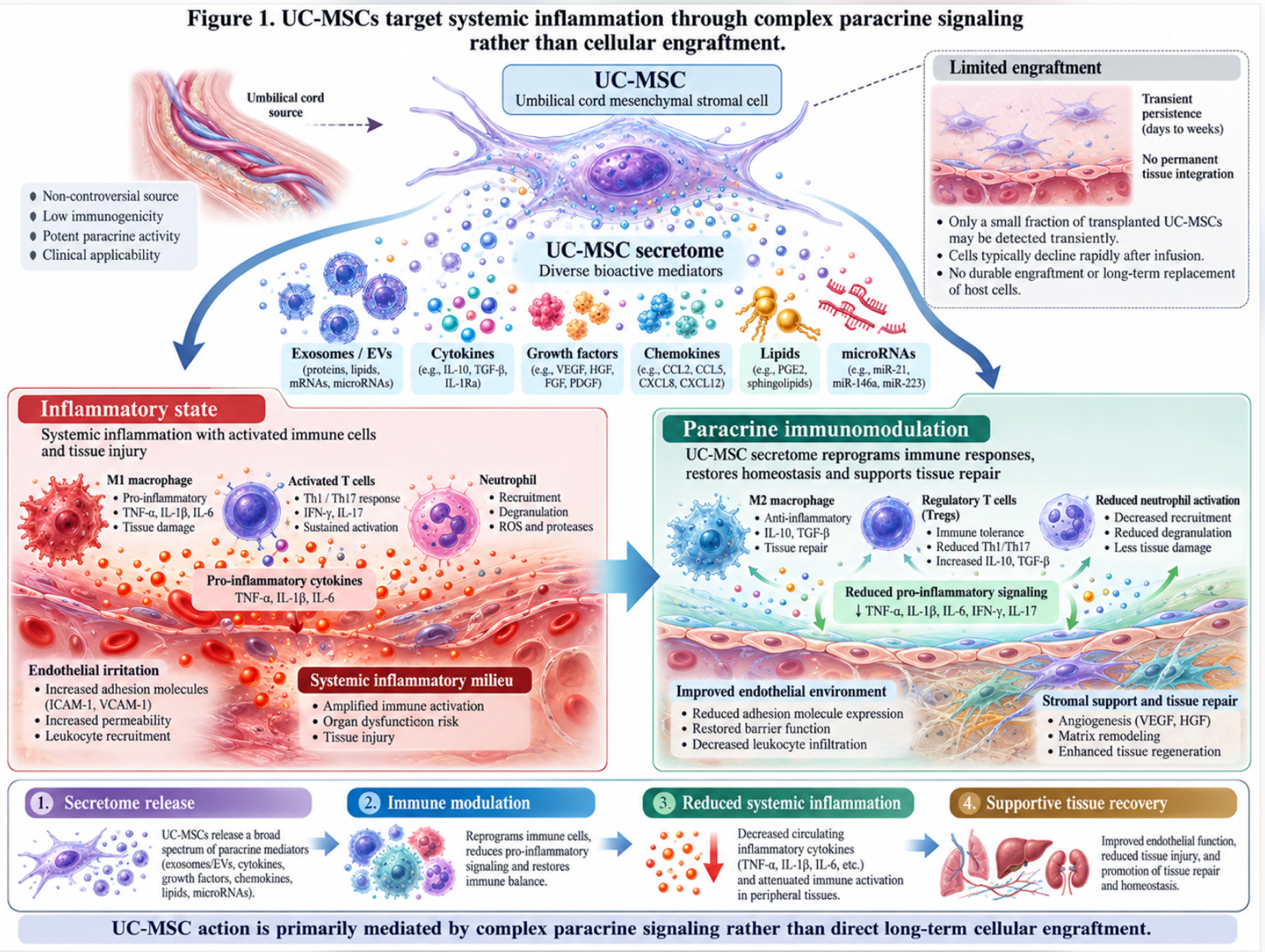
Figure 1: UC-MSCs target systemic inflammation through complex paracrine signaling rather than cellular engraftment.
While regulatory bodies maintain strict, necessary oversight, ongoing clinical trials are steadily revealing the staggeringly complex molecular pathways through which these cells operate in the central nervous system. The science is fascinating, but it must be separated from the hype.
A viable regenerative strategy for neurodevelopmental support in ASD relies heavily on mitigating chronic neuro-inflammation at the cellular level. Instead of physically replacing damaged neural tissue piece by piece, researchers hypothesize that administered stem cells act as highly responsive biological factories. Systematic reviews on paracrine signaling strongly indicate that MSCs secrete exosomes that target neuro-inflammation, offering a profound biological
The most persistent, damaging myth in pediatric stem cell therapy for autism is the widespread idea that injected cells travel straight to the brain, turn into brand new neurons, and physically wire themselves into the child’s neural circuitry. That simply does not happen. In fact, most intravenously administered MSCs get trapped in the capillary beds of the lungs within hours of infusion, a well-documented physiological phenomenon known as the pulmonary first-pass effect. So, if the cells never reach the brain intact, how do they influence it?
The therapeutic brilliance of this approach lies not in direct cellular engraftment, but in utilizing the stem cell as a biological factory to modulate the host’s existing neural architecture from afar. The primary mechanism driving this is paracrine signaling. Paracrine signaling is a sophisticated form of cellular communication where MSCs secrete bioactive molecules to heavily influence local and systemic microenvironments. Once infused, MSCs detect inflammatory distress signals in the host’s body. In response, they unleash a massive, tailored payload of secretomes a complex mixture of cytokines, chemokines, and growth factors. UC-MSC exosomes cross the blood-brain barrier seamlesslyอdelivering critical anti-inflammatory microRNAs directly to distressed neural networks.
Mesenchymal stem cells secrete over 30 distinct neurotrophic factors effectively reprogramming hostile immune microenvironments rather than acting as structural replacements. These secreted proteins include Brain-Derived Neurotrophic Factor (BDNF), Vascular Endothelial Growth Factor (VEGF), Basic Fibroblast Growth Factor (bFGF), and Glial Cell Line-Derived Neurotrophic Factor (GDNF). But the true heavy lifters in this intricate paracrine process are the exosomes.
Exosomes are nanoscale extracellular vesicles, measuring roughly 30 to 150 nanometers in diameter. Because they are incredibly small and carry a protective lipid bilayer, they can easily cross the tight junctions of the blood-brain barrier (BBB) via endocytosis something large, whole stem cells struggle to do efficiently. Inside these tiny exosomes is a highly specialized cargo of specific microRNAs (like miR-146a) and signaling proteins. When these exosomes reach the
To truly understand why targeted immune modulation is so vital, one must look closely at the neurobiology of severe ASD. Extensive post-mortem brain tissue analyses and advanced neuroimaging studies consistently reveal a state of chronic, unresolved neuro-inflammation in a significant subset of autistic children. The brain’s resident immune cells—specifically microglia and astrocytes—are frequently found locked in a chronically agitated, tissue-damaging pro-inflammatory state.
Microglia normally act as the brain’s diligent gardeners, pruning away weak synaptic connections so strong, necessary ones can thrive and consolidate. In a highly inflammatory environment, these microglia behave erratically. They over-prune or under-prune neural pathways, directly contributing to the atypical neural connectivity that manifests as severe behavioral, communicative, and sensory challenges in autism. This is exactly where WJ-MSC therapy neuroprotection comes into play to correct the microenvironment.
When the paracrine signals and exosomes from UC-MSCs reach the central nervous system, they initiate a profound biological process called macrophage polarization. They effectively instruct the agitated, tissue-destructive M1 microglia to biochemically switch into an anti-inflammatory, tissue-repairing M2 phenotype. This phenotypic reprogramming quiets the chaotic immune environment by instantly halting the production of neurotoxic cytokines. Research on neuroprotective effects clearly highlights that MSCs exert their neuroprotective benefits primarily through the robust secretion of neurotrophic factors rather than direct cellular engraftment (2022).
| 📌 If you’re interested in how MSCs calm overactive immune cells throughout the body, we have an interesting article that discusses mesenchymal stem cell therapy for immune modulation, which you can read via the internal link. |
Furthermore, the presence of UC-MSC exosomes actively down-regulates the production of highly pro-inflammatory cytokines like Interleukin-1 beta (IL-1β), Interleukin-6 (IL-6), and Tumor Necrosis Factor-alpha (TNF-α). Simultaneously, they massively up-regulate the production of
Beyond just calming an overactive immune system, the complex secretome of UC-MSCs actively deploys neuroprotective factors specifically designed to rescue and support distressed neural architecture. One of the most critical molecular pathways positively influenced by these cellular communications is the SIRT1 pathway. SIRT1 is an NAD-dependent protein that plays a foundational role in cellular survival, aging, and resistance to environmental stress.
In chronic neuro-inflammatory conditions, relentless oxidative stress wreaks absolute havoc on mitochondrial function. Neurons require massive amounts of energy to fire properly and maintain synapses; when their mitochondria are severely damaged by reactive oxygen species (ROS), the neuron struggles to communicate, leading to compounding cognitive and sensory processing delays. UC-MSCs secrete specific potent antioxidants and microRNAs that aggressively quench these reactive oxygen species. They literally rescue the mitochondrial membrane integrity of the host’s distressed neurons, restoring their metabolic capacity and heavily promoting mitochondrial biogenesis (the creation of new, healthy mitochondria).
Additionally, the robust secretion of VEGF strongly promotes angiogenesis—the formation of new, healthy blood vessels. While the brain already has a vast vascular network, improving local microcirculation ensures that vital nutrients, oxygen, and glucose are delivered far more efficiently to neural tissues that have been metabolically starved by years of chronic inflammation. Restoring this healthy microvascular network is fundamentally essential for enabling long-term neuroplasticity.
These deeply complex molecular mechanisms represent incredible biological plausibility. In petri dishes and highly controlled animal models, this precise cellular communication clearly protects neural networks. However, clinical researchers are still actively working to translate this seemingly flawless biological theory into proven, standardized, and entirely predictable functional clinical
Navigating everything parents should know about stem cell therapy for autism requires a fiercely objective methodology to assess clinic safety and scientific validity. Because these specific treatments are investigational, the gap between rigorous clinical trials and predatory commercial marketing is substantial and deeply concerning. Commercial trial participation can frequently exceed $20,000—making rigorous institutional review board verification essential to prevent devastating financial exploitation. To ensure patient safety, families must employ heavily structured evaluation metrics to verify cellular sources, institutional oversight, and clinical credentials before ever proceeding with treatment. This objective scrutiny separates legitimate medicine from commercial opportunism.
The Evidence-Led Regenerative Assessment (ELRA) Framework was developed specifically to help parents navigate the undeniably murky waters of commercial regenerative medicine. When a clinic makes grand, emotional promises regarding a child’s development, emotion often easily overrides logic. The ELRA framework forces a cold, hard evaluation of an institution based entirely on objective, verifiable medical standards rather than glossy marketing brochures or highly curated video testimonials.
If a clinic cannot easily and transparently satisfy the four pillars of the ELRA framework, families must simply walk away.
Drilling down into the practical execution of the ELRA framework, establishing absolute patient safety must be the primary focus of any consultation. The absolute baseline requirement for any investigational biological treatment is an active, independent Institutional Review Board (IRB). An IRB is an independent committee composed of physicians, statisticians, and community advocates tasked specifically with reviewing clinical research to ensure it is ethical, structurally sound, and safe for human subjects. Glossy marketing brochures and anecdotal testimonials must never supersede the absolute necessity of documented flow cytometry and communicable disease testing. Exorbitant trial participation fees represent a massive red flag legitimate Phase II clinical trials rarely charge patients for investigational biologics.
If a clinic flippantly claims they don’t need an IRB because they are practicing “innovative medicine” or operating under a vague “right to try” loophole for a non-terminal condition, they are deploying highly deceptive practices. The ISSCR safety checklist provides a critical resource for parents, emphasizing that legitimate clinical trials require strict Institutional Review Board (IRB) oversight to protect participants (2023).
| 📌 If you’re interested in how to tell a well-regulated stem cell clinic from a risky one, we have an interesting article that discusses whether stem cell therapy is safe in Thailand, which you can read via the internal link. |
Parents must ask incredibly pointed, specific questions during consultations. Are the cells expanded in a Current Good Manufacturing Practice (cGMP) compliant facility with verified ISO-7 cleanrooms? What is the maximum passage number of the cells being injected? (As noted, cells cultured beyond passage 4 or 5 lose their potency and can become highly genetically unstable). Can I see the independent laboratory’s endotoxin and sterility report?
Watch closely for glaring regulatory red flags. Clinics that charge exorbitant, non-refundable fees for participation in a “clinical trial” are highly suspect; legitimate Phase II trials are typically funded by massive grants or pharmaceutical sponsors. Furthermore, clinics that use the exact same batch of stem cells to broadly treat autism, osteoarthritis, erectile dysfunction, and multiple sclerosis out of the same strip-mall office are not conducting precise neuro-immunology. They are operating unverified, dangerous biological mills.
A comprehensive pre-treatment evaluation for pediatric stem cell therapy requires extensive, heavily detailed immunological, neurological, and metabolic testing. Clinicians operating legitimately will mandate exhaustive complete blood counts, specific inflammatory marker panels (testing specifically for IL-6, C-reactive protein, and TNF-alpha), broad metabolic profiles, and rigorous infectious disease screenings to firmly establish a biological baseline. You simply cannot track a reduction in inflammation if you never measure it beforehand.
Additionally, thorough neuro-metabolic and genetic assessments rule out critical contraindications. If a child possesses specific, underlying mitochondrial diseases or unmapped genetic deletions (like Fragile X or specific copy number variants), the cellular response to infused MSCs may be entirely unpredictable or wholly ineffective. Furthermore, baseline standardized behavioral assessments like the ADOS-2 (Autism Diagnostic Observation Schedule) or CARS (Childhood Autism Rating Scale) are required by reputable doctors to measure functional outcomes accurately post-treatment. These crucial tests rule out medical contraindications and ensure the child’s immune system can safely process the massive cellular infusion. Skipping these foundational diagnostic steps is a severe clinical red flag.
Managing deep emotional expectations is arguably the hardest, most vital part of evaluating these experimental treatments. Sweeping, immediate behavioral changes are incredibly rare. Biological medicine simply does not work like a light switch. It is crucially important to logically differentiate between biological changes and meaningful, everyday functional benefits.
A post-treatment blood panel performed at three months might show a beautiful, measurable drop in inflammatory cytokines. That is an exciting biological change. However, if the child still exhibits the exact same intense self-injurious behaviors, severe lack of eye contact, and profound expressive language deficits a year later, then the therapy has not yielded a functional benefit. The goal isn’t just to improve laboratory bloodwork; the ultimate goal is to improve the child’s daily quality of life.
Establishing a firm baseline using standardized behavioral assessments alongside a qualified clinician independent of the treatment center is vital. Tools like the Autism Diagnostic Observation Schedule (ADOS-2) or the Vineland Adaptive Behavior Scales (VABS) provide cold, objective data points. Dozens of active Phase II clinical trials registered with the U.S. government are currently investigating the specific dosing and efficacy profiles of UC-MSCs, actively seeking to standardize these outcome measurements (2026). The behavioral improvements observed in these trials are highly variable. Some children show marked, documented gains in receptive language and social awareness, while others show absolutely zero measurable response to the infusion despite identical dosing.
Intrathecal stem cell injections for children with ASD carry specific procedural and immunological risks and are strictly investigational. While some clinical trials report manageable safety profiles, the procedure involves lumbar puncture, which inherently carries risks of infection, bleeding, or cerebrospinal fluid leaks. Current medical consensus does not endorse this outside of highly regulated, IRB-approved clinical trials. Parents must weigh these significant procedural risks against the theoretical neuro-inflammatory benefits. Always consult a board-certified pediatric neurologist before considering intrathecal administration.
Most pediatric stem cell therapies require some form of sedation to ensure the child remains still and safe during the procedure. Intravenous (IV) infusions often utilize mild to moderate
A comprehensive pre-treatment evaluation for pediatric stem cell therapy requires extensive immunological, neurological, and metabolic testing. Clinicians typically mandate complete blood counts, inflammatory marker panels, metabolic profiles, and rigorous infectious disease screenings to establish a biological baseline. Additionally, standardized behavioral assessments like the ADOS or CARS are required to measure functional outcomes accurately. These essential tests rule out contraindications and ensure the child’s immune system can safely process the massive cellular infusion.
Stem cell therapy for autism is not widely available because it has not yet achieved FDA approval or proven definitive, standardized efficacy across large-scale Phase III clinical trials. While early Phase I/II data indicate exciting biological plausibility for reducing neuro-inflammation, the medical community requires rigorous longitudinal data proving long-term safety and consistent functional benefits. Regulatory bodies strictly limit administration to prevent patient harm from unverified commercial applications that lack safety oversight. Until large-scale, double-blind, placebo-controlled trials definitively conclude, the therapy remains strictly experimental.
Stem cell therapy is frequently investigated as an adjunct to, rather than a replacement for, foundational treatments like Applied Behavior Analysis (ABA). Researchers hypothesize that if MSCs successfully reduce neuro-inflammation, a child’s neuroplasticity and receptiveness to behavioral and speech therapies may theoretically improve. However, parents must continue evidence-based developmental therapies uninterrupted, regardless of biological interventions. Experimental therapies should never disrupt established educational and behavioral support
For families researching stem cell therapy for children with autism, UC-MSC administration remains a promising but strictly investigational tool aimed at powerfully reducing neuro-inflammation. With 1 in 36 children currently identified with ASD (CDC, 2023), the urgency for therapeutic advancements is undeniably clear; however, current data does not support stem cells as a structural, structural cure. The safest, most medically sound approach combines rigorous, evidence-based behavioral therapies with objective medical consultation.
To navigate this incredibly complex and often predatory environment, parents must strictly rely on the Evidence-Led Regenerative Assessment (ELRA) Framework. Prioritizing verifiable clinical trial data, demanding strict, independent IRB oversight, and ensuring safe, documented cellular sourcing is the only way to protect a child from commercial exploitation. If an institution cannot flawlessly meet these foundational scientific and ethical requirements, they simply do not deserve access to your child’s biology.
Before making any financial or medical commitments, proactively compile all complete medical records, recent diagnostic evaluations, and current behavioral therapy reports. The critical next step is to thoughtfully schedule an objective suitability assessment with a board-certified pediatric neurologist who operates strictly within regulated, evidence-based medical guidelines.