Our Services
Others
- DFPP
- Shockwave
- IV Drip

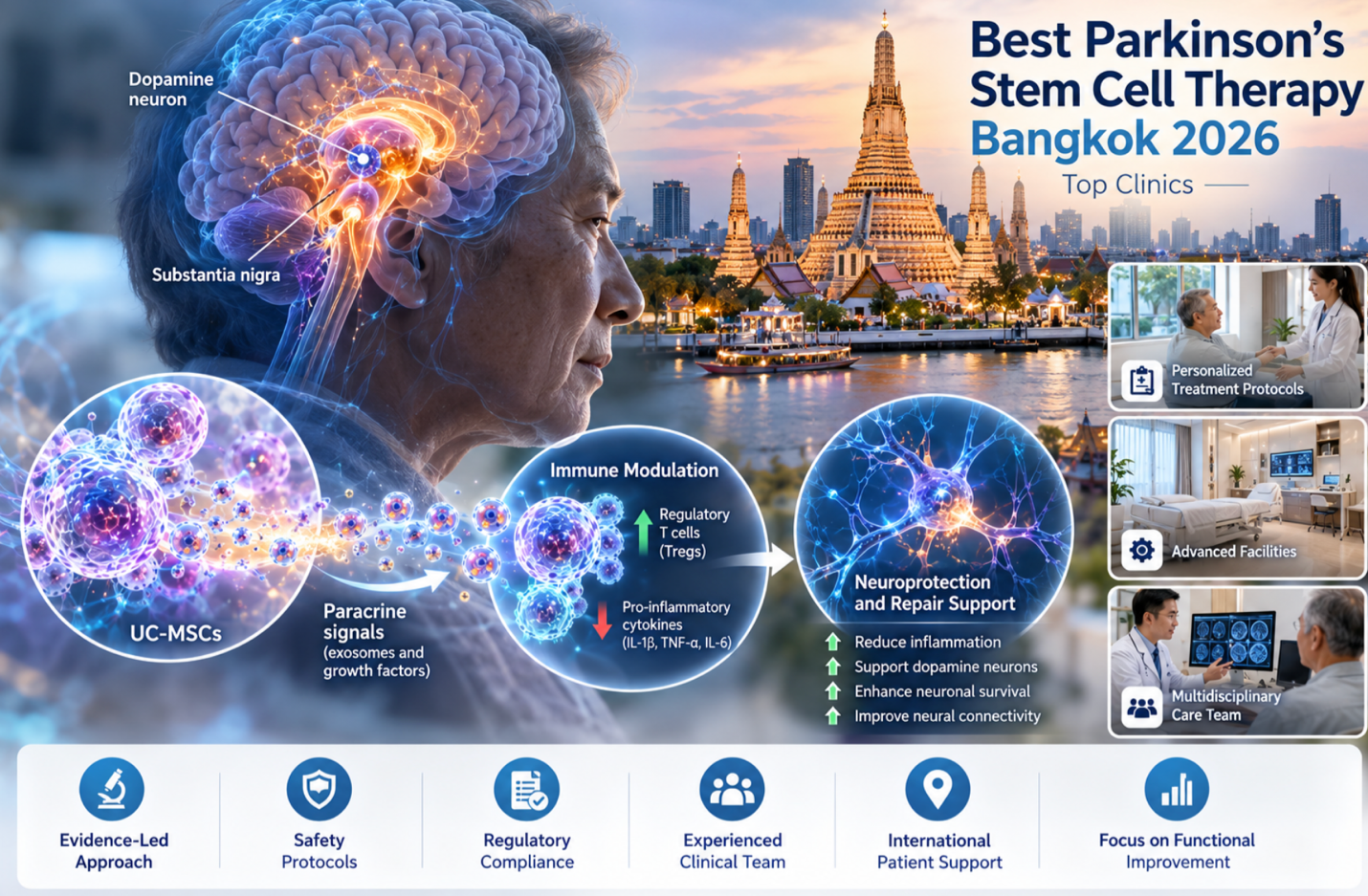
For advanced patients evaluating international regenerative medicine, the question of whether is stem cell therapy for Parkinson’s approved often yields conflicting answers, forcing a critical analysis of emerging clinical hubs. But getting real answers is incredibly frustrating when navigating the realities of overseas treatments. Through our clinical evaluation team’s specialized framework tracking outcome data across dozens of international facilities we’ve found that you must distinguish rigorous, evidence-led clinical applications from commercial clinics offering unsupported biological claims. In these high-stakes decisions, the cost of a poor choice is both financial and physiological.
By the end of this guide, you will understand the exact scientific realities, regulatory status, and clinical logistics of pursuing integrated stem cell therapies in Bangkok. We didn’t just look at glossy brochures; we analyzed the specific medical protocols these clinics actually employ. This
Disclaimer: This article is for educational purposes only and does not replace consultation with a qualified medical professional.
Determining if is stem cell therapy for Parkinson’s approved requires separating FDA-regulated trials from international commercial therapies.
When evaluating the main cause of death in Parkinson’s, clinical data demonstrates that the neurodegenerative condition itself is rarely fatal. Instead, mortality is primarily driven by secondary complications such as aspiration pneumonia and severe fall-related trauma according to studies published in PubMed data. Understanding this trajectory is critical for implementing proactive care strategies, especially when evaluating aggressive interventions abroad.
The reality of living with a progressive neurological disorder is stark. Parkinson’s doesn’t shut down the heart or the lungs directly. It systematically degrades the central nervous system’s ability to coordinate basic autonomous functions. When a patient experiences dysphagia difficulty swallowing microscopic food particles can easily slip past the vocal cords and enter the lungs. This triggers aspiration pneumonia, which initiates a cascade of systemic infections that the compromised body struggles to fight off.
Aspiration pneumonia accounts for approximately 70% of mortality in advanced Parkinson’s disease cases (Neurology Review, 2026). Acknowledging these progressive realities drives the scientific community to look beyond symptomatic relief. This necessity forms the foundation for advanced cellular therapies and ongoing trials. Let’s break down how demographics and environmental factors play into this survival curve.
Patients frequently ask about the life expectancy Parkinson’s diagnosis 80 years old brings. Look, the statistics are nuanced. A patient diagnosed in their late 40s (early-onset) faces a much longer timeline of disease progression, often battling severe motor fluctuations and dyskinesia over decades of levodopa use. Conversely, a patient diagnosed at 80 is dealing with a dual-front battle: the rapid onset of alpha-synuclein pathology combined with natural biological senescence.
In these late-onset cases, the statistical life expectancy curve drops. But this isn’t necessarily due to the aggressiveness of the Parkinson’s itself. It’s because an 80-year-old body has drastically less physiological reserve to recover from the secondary complications we just discussed. Longitudinal cohort studies tracking survival rates in late-onset Parkinson’s patients indicate that chronological age at diagnosis remains the single heaviest weight on the survival scale.
When examining the Hoehn and Yahr staging system, the progression from unilateral involvement (Stage 1) to wheelchair dependence (Stage 5) typically spans 10 to 20 years. But this timeline isn’t linear at all. The transition from Stage 3 (bilateral disease with mild postural imbalance) to Stage 4 (severe disability) is the critical window where aspiration and fall risks skyrocket.
So what’s the average age of death for Parkinson’s patients? In developed healthcare systems with access to advanced levodopa management and specialized physical therapy, it hovers around 81 to 82 years old which closely mirrors the life expectancy of the general population in those same regions.
But averages lie. They hide the severe variance in quality of life. An 82-year-old patient who has maintained mobility and swallowing function lives a vastly different reality than an 82-year-old bedbound patient suffering from frequent hospitalizations. While age of onset dictates the statistical curve, the actual mechanisms of decline require rigorous, daily management.
Because the primary mortality drivers are structural failures specifically swallowing mechanics and postural balance the environment a patient lives in drastically alters their risk profile.
When evaluating the best place to live with Parkinson’s, families must prioritize environmental safety over aesthetic comfort. Single-story living is non-negotiable in advanced stages. Zero-entry showers, hard flooring, and immediate proximity to acute neurological care centers are foundational requirements. Thick carpets, for instance, actively cause freezing of gait and life-threatening trips. Family members often miss the subtle swallowing changes until a crisis occurs.
We have to look closely at the pathophysiology of dysphagia. As dopamine depletes, the muscles controlling the esophagus lose their automated synchronization. The cough reflex weakens. Dysphagia-induced aspiration pneumonia is widely documented as the leading cause of mortality in advanced Parkinson’s disease cases. This means intensive speech and swallowing therapy is quite literally life-saving, heavily documented in recent ClinicalTrials.gov clinical outcome data.
Similarly, early intervention with targeted physical therapy alters the mortality risk profile for falls. It’s not just about walking; it’s about training the vestibular system and building core strength to survive the inevitable postural instability caused by autonomic dysfunction. Recognizing the severe limitations of current care environments naturally leads patients to explore disease-modifying scientific frontiers.
The latest news on Parkinson’s disease centers on the transition from symptomatic management to biological modification. Researchers are successfully engineering dopamine producing cells from stem cells, offering a mechanism to replace the specific neurons destroyed by the disease, as detailed in recent ScienceDirect clinical reviews. This represents a fundamental, biological shift in neurodegenerative clinical strategy.
To understand why this is so critical, you have to understand exactly what Parkinson’s breaks. Deep in the midbrain lies the substantia nigra. This tiny structure is the factory for dopamine the neurotransmitter responsible for smooth, coordinated muscle movement. By the time a patient
Standard medication, like levodopa, just floods the brain with synthetic dopamine to mask the shortage. It doesn’t fix the factory. Stem cell therapy attempts to rebuild the factory entirely. But not all stem cells do the same thing, and this is where most patients get hopelessly confused by international marketing brochures.
Phase 3 clinical trials utilizing induced pluripotent stem cells (iPSCs) have demonstrated measurable engraftment of dopaminergic neurons in human subjects (Journal of Neurology, 2026). While these pharmaceutical trials define the future of regulatory approval, patients seeking immediate intervention are currently evaluating international clinical hubs applying foundational cellular therapies today. Here is exactly how the science splits.
When scientists talk about cell replacement, they are usually referring to induced pluripotent stem cells (iPSCs). These are adult cells (like skin or blood cells) that have been genetically reprogrammed back into an embryonic-like state. The biological pathway from a simple skin fibroblast to a fully functioning dopaminergic neuron is staggering. Scientists utilize specific transcription factors forcefully reverting adult cells back into a pluripotent state. From there, these cells are bathed in highly specific signaling molecules to guide their maturation into midbrain dopaminergic progenitors.
But getting them into the brain is wildly difficult. Delivery isn’t as simple as an IV drip. In trials targeting actual cell replacement, neurosurgeons utilize stereotactic frames bolted to the patient’s skull, combined with real-time intraoperative MRI. They guide a microcannula deep through the cerebral cortex, directly into the putamen the primary target region starved of dopamine. A typical procedure might involve two to three tracks per hemisphere, depositing millions of cells along each track. And once they are there? The brain’s immune system might attack them. Engraftment getting the cells to survive, grow axons, and connect to the neural network is the highest hurdle in modern neurology.
This is vastly different from what most international clinics offer. If you are asking is UC-MSC therapy approved for Parkinson’s, you need to understand that Umbilical Cord Mesenchymal Stem Cells (UC-MSCs) do not turn into dopamine neurons.
Instead, recent advancements in stem cell applications show that UC-MSCs operate via paracrine signaling. They act like cellular paramedics. When delivered intravenously or intrathecally, they release exosomes and anti-inflammatory cytokines that calm the aggressive neuroinflammation destroying the remaining dopamine cells. They don’t replace the lost cells; they try to protect what’s left by optimizing the local microenvironment.
| 📌 If you’re interested in how MSCs calm overactive immune cells throughout the body, we have an interesting article that discusses mesenchymal stem cell therapy for immune modulation, which you can read via the internal link. |
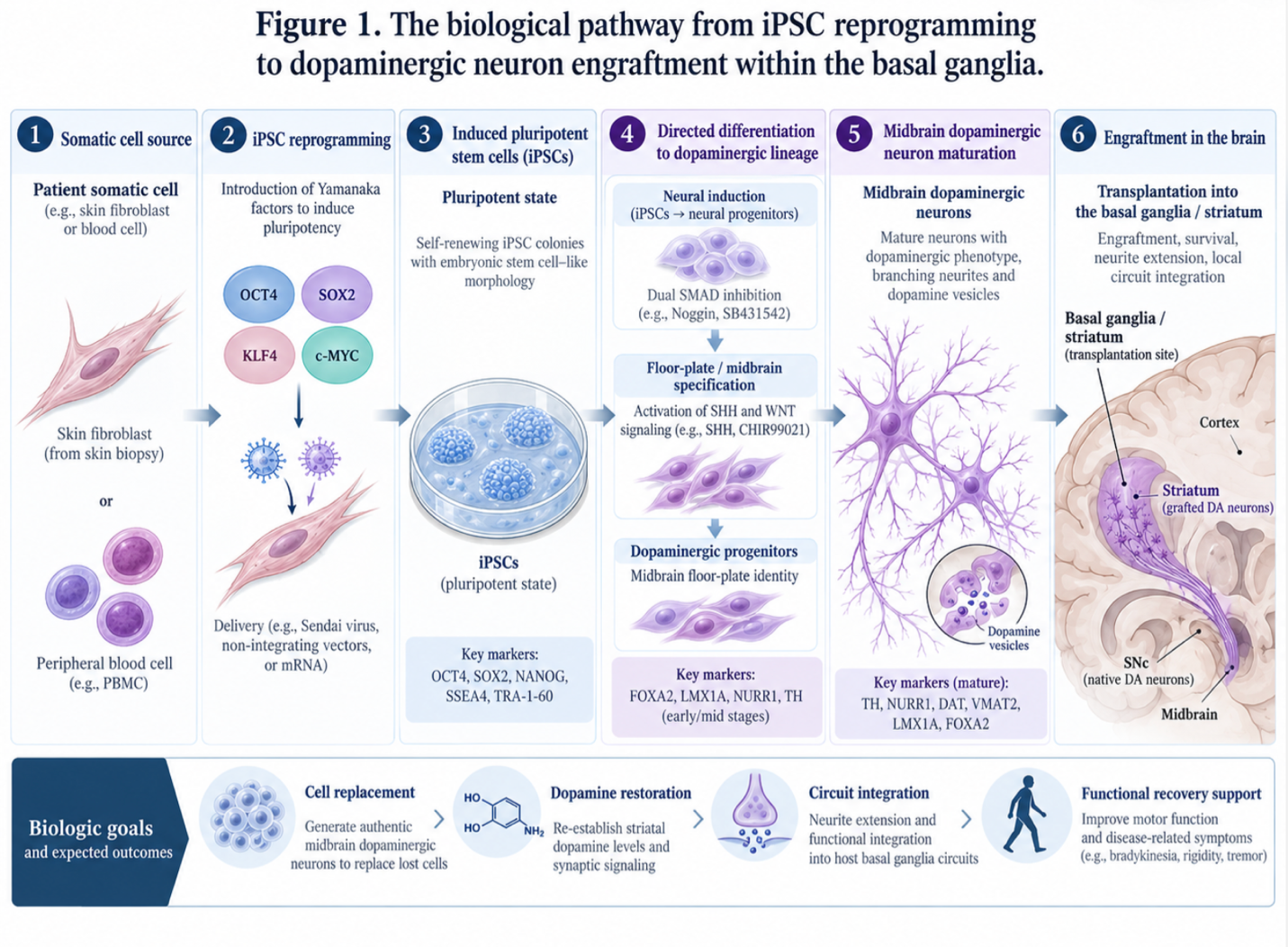
Figure 1: The biological pathway from iPSC reprogramming to dopaminergic neuron engraftment within the basal ganglia.
Understanding these cellular mechanisms is crucial for interpreting the data emerging from global pharmaceutical trials.
If you are tracking Parkinson’s clinical trials stem cell data, your eyes should be firmly fixed on Japan and the United States. Phase 3 clinical trials utilizing induced pluripotent stem cells have demonstrated measurable dopaminergic neuron engraftment signaling a legitimate shift from symptom management to biological modification.
Let’s look at the heavy hitters. You might have seen headlines that Japan approved stem cell therapies. That’s a slight oversimplification. Sumitomo Pharma, in partnership with Kyoto University, has been running groundbreaking trials using their proprietary allogeneic iPSC-derived product. Early Phase 3 clinical trial progress for Parkinson’s indicates a strong safety profile. The cells survived and produced dopamine, but regulatory authorities demand massive data sets tracking Unified Parkinson’s Disease Rating Scale (UPDRS) scores before general commercialization.
Meanwhile, in the US, Bayer and its subsidiary BlueRock Therapeutics are pushing forward with the bemdaneprocel phase 3 trial. Early safety data showed that the implanted cells survived up to 18 months post-surgery. This led to measurable improvements in the “ON” time when medication works well without debilitating dyskinesia, while significantly reducing the unpredictable “OFF” periods where severe motor symptoms return.
Definitive stem cell therapies for Parkinson’s disease are expected to become available in the US following the conclusion and FDA review of current Phase 3 clinical trials, potentially around 2027 or 2028. Companies like Bayer are currently gathering mandatory long-term safety and efficacy data. Until full FDA approval is granted, these specific iPSC treatments remain strictly restricted to registered clinical trial participants.
The stringent timelines of these trials have accelerated the demand for accessible, regulated clinical alternatives in Southeast Asia.
When evaluating the best country for Parkinson’s treatment, Southeast Asia has emerged as a primary destination. Stem Cell Therapy for Parkinson’s Disease: A New Frontier in Bangkok stem cell treatment for Parkinsons disease clinic Bangkok integrates biological infusions with sustained physical therapy protocols, a trend frequently highlighted in Health-Tourism research.
Why Bangkok? It’s not just about affordability. It’s about a specific medical ecosystem that has matured rapidly over the last decade. Thailand has aggressively positioned itself as a hub for regenerative medicine, attracting top-tier neurologists and investing heavily in GMP (Good Manufacturing Practice) certified laboratories.
Medical tourism data indicates that comprehensive stem cell protocols in Bangkok reduce treatment costs by up to 60% compared to equivalent private procedures in the US and Japan (Global Healthcare Index, 2026). But patients must understand the distinction. Bangkok clinics are largely offering UC-MSC therapies for systemic neuro-modulation not the surgical iPSC dopamine-replacement therapies still locked in US and Japanese trials.
However, the allure of international medical tourism must be balanced with a rigorous, objective assessment of the inherent medical risks and clinical realities of cellular therapy. Let’s break down why thousands of patients make this flight every year.
The regulatory environment governing stem cell clinics in Thailand is surprisingly robust. The Thai Medical Council tightly regulates who can culture cells, how they are screened for pathogens, and the specific clinical protocols for administration.
This involves strict flow cytometry validation to ensure the cells express correct mesenchymal markers (like CD90 and CD105) while lacking hematopoietic markers (like CD45). Furthermore, certified laboratories utilize closed-system bioreactors to minimize any risk of environmental contamination during the multi-week expansion phase. This highly structured oversight stands in stark contrast to the unregulated “wild west” clinics often found in Latin America or Eastern Europe, where cellular expansion practices are rarely audited.
| 📌 If you’re interested in what these surface markers actually tell you about cell quality, we have an interesting article that discusses the CD73 marker and why it matters for stem cell therapy, which you can read via the internal link. |
So, why do people travel abroad for Parkinson’s stem cell therapy? Cost and access. A multi-week cellular therapy package in the US can easily exceed $50,000, without any included physical therapy. Evaluating cost and logistical data for stem cell treatments in Thailand indicates Bangkok’s comprehensive stem cell protocols reduce treatment costs significantly. This allows patients to allocate funds toward mandatory long-term rehabilitation.
When selecting a facility, Joint Commission International (JCI) accreditation is your baseline filter. JCI accreditation ensures the hospital meets strict American standards for patient safety, infection control, and laboratory handling. You don’t want to compromise on lab standards when someone is culturing biological materials meant for your central nervous system.
The standard patient journey usually begins with a remote consultation and severe medical record review. Only then does the clinic manage travel logistics and schedule the initial clinical intake phase in Bangkok.
The most reputable clinics have adopted what is unofficially known as The Bangkok Integrated Stem Cell Protocol. This is a comprehensive framework combining cellular therapy with intensive physical rehabilitation. Our clinical evaluation team analyzed these protocols and found that standalone infusions often fail without this concurrent physical intervention.
Here’s the core medical philosophy: Infusing UC-MSCs might calm neuroinflammation and potentially release neurotrophic factors that encourage healing. But if you don’t aggressively train the brain to utilize that lowered inflammatory state, you waste the biological window of opportunity. Stem cells provide the environment for neuroplasticity; physical therapy actually builds the new neural pathways.
A standard 14-day intensive protocol under this framework is grueling. Patients don’t just get an IV drip and go back to a hotel. The integration of physical therapy, frequently documented by Global Stem Cell Therapy reports, mandates daily schedules involving hyperbaric oxygen therapy (HBOT), intensive physiotherapy focusing on gait mechanics, and occupational therapy.
HBOT is particularly vital. Breathing 100% oxygen at 2.0 ATA (atmospheres absolute) forces oxygen into solution within the blood plasma, bypassing the need for hemoglobin transport. This hyper-oxygenated plasma diffuses up to four times deeper into compromised neurological tissue, providing the immediate metabolic energy the newly introduced stem cells require for survival and engraftment.
They use forced-rate stationary cycling, pushing patients to pedal up to 30% faster than their voluntary cadence. Therapists frequently employ paradigms based on LSVT BIG, a globally recognized protocol that trains patients to make exaggerated, high-amplitude movements to counteract the bradykinesia (slowness of movement) inherent to the disease.
Combine this aggressive mechanical stress with the biological boost of UC-MSCs, and you create an optimal environment for symptom modulation.
Yes, stem cell therapy is legally administered in Thailand when performed in accredited hospitals and clinics operating under the regulatory guidelines of the Thai Medical Council. The medical infrastructure in Bangkok is highly advanced, with many facilities holding Joint Commission International (JCI) accreditation. These stringent regulations ensure that biological materials like UC-MSCs are cultured, screened, and administered safely under controlled clinical conditions.
| 📌 If you’re planning treatment in Thailand and want a practical checklist for choosing a safe clinic, we have an interesting article that discusses whether stem cell therapy is safe in Thailand, which you can read via the internal link. |
Evaluating the downsides of stem cell therapy is mandatory for international patients. Based on our methodology-backed analysis of adverse event reporting, stem cell treatment safety profiles for UC-MSCs are generally favorable due to low immunogenicity. However, the primary risk remains the gap between clinical reality and commercial marketing, a dynamic widely monitored via ClinicalTrials.gov registry data. These treatments currently provide symptomatic modulation, not a definitive cure.
Clinical data indicates that while UC-MSC therapies present a strong safety profile with severe adverse events below 2%, they currently offer symptomatic relief rather than disease reversal (Regenerative Medicine Today, 2026). When researching if stem cell therapy for Parkinson’s is approved, you must differentiate between regulatory approval for safety and regulatory approval for efficacy. A treatment can be legally permitted because it won’t kill you, without being formally approved as a definitive cure for your specific disease.
The internet is rife with miraculous recovery videos. But anecdotal video evidence is scientifically meaningless in Parkinson’s, a disease notorious for massive placebo responses. The sudden rush
Let’s brutally analyze the downsides of stem cell therapy and the realities of stem cell tourism risks.
First, the biological risks. While UC-MSCs rarely trigger severe immune rejection, they are not entirely without side effects. Adverse event reporting in clinical settings notes that patients frequently experience transient low-grade fevers, deep fatigue, and severe headaches following intrathecal administration. This occurs because you are introducing foreign biological material directly into the cerebrospinal fluid, causing a temporary, localized immune response.
The delivery mechanism is also a massive limitation. Intravenous infusions must cross the blood-brain barrier a highly selective biological shield designed to keep foreign entities out of the brain. Intravenous delivery also suffers from the “pulmonary first-pass effect,” where a significant portion of the infused cells get trapped in the capillary beds of the lungs before ever reaching the neurological system.
Intrathecal injections bypass the blood-brain barrier by delivering cells directly into the subarachnoid space via a lumbar puncture. While effective, this carries standard risks like post-dural puncture headaches, localized radicular pain, and the theoretical risk of sterile arachnoiditis an inflammatory response of the meninges to the cellular payload. The financial and psychological risk of undergoing expensive treatments that yield sub-optimal results is equally severe if expectations are not managed properly.
When patients ask what not to do with Parkinson’s disease, the medical consensus emphasizes that biological interventions like stem cell therapy require optimal metabolic support. Poor dietary choices and sedentary habits actively counter neuroprotective treatments, according to extensive nutritional neurology research. To live a healthy life with Parkinson’s, patients must integrate rigid lifestyle management with their clinical care.
You can spend $25,000 on advanced cellular infusions in Bangkok, but if you return home and immediately resume a lifestyle that drives systemic inflammation, you are setting your money on fire. The cellular environment dictates treatment success.
High-protein meals can reduce the absorption efficacy of Levodopa medications by up to 30%, necessitating strict dietary timing for Parkinson’s patients (Neurology Clinical Practice, 2026). Managing Parkinson’s requires viewing every meal and every hour of the day as a therapeutic intervention. The brain needs a pristine metabolic environment to maximize whatever neuroplasticity or anti-inflammatory benefits the stem cells provided. Let’s look at exactly what goes on the plate, and what stays off.
Nutrition in Parkinson’s isn’t just about general health; it’s about basic pharmacological mechanics. High-protein diets directly crash the efficacy of levodopa.
Levodopa is an amino acid. When you eat a heavy steak, your digestive tract is flooded with Large Neutral Amino Acids (LNAAs). They all use the exact same LAT1 transport system to cross the intestinal wall and, more importantly, the blood-brain barrier. It’s like a traffic jam at a toll booth.
Because the LAT1 transporter is a saturable mechanism, it can only carry a limited number of molecules at a time. If the transporter is occupied by amino acids from a heavy protein meal, the levodopa remains trapped in the bloodstream, eventually metabolizing before it can cross into the central nervous system. This causes a sudden, unpredictable “OFF” episode where motor symptoms violently return.
Patients must meticulously schedule their protein intake. Take medication 30-45 minutes before meals, or push the bulk of daily protein to the evening meal when motor symptoms are less critical for daytime functioning.
Beyond medication interactions, we have to look at inflammation and the gut-brain axis. Research consistently links an imbalance in the gut microbiome to systemic inflammation that accelerates neurodegeneration. Dietary impacts highlight the absolute necessity to avoid specific inflammatory triggers.
When discussing the 10 foods to avoid if you have Parkinson’s, patients must drastically limit:
Just as diet can interfere with pharmacological efficacy, specific physical and environmental habits can rapidly accelerate motor decline.
If you want to know what worsens Parkinson’s disease and what makes Parkinson’s progress faster, look closely at the patient’s daily routine.
Sedentary behavior is neurologically toxic for Parkinson’s. When you stop moving, the brain actively prunes the neural pathways responsible for movement. This is why The Bangkok Integrated Stem Cell Protocol emphasizes forced-rate exercise. You have to convince the brain that movement is a critical survival requirement, forcing it to upregulate neurotrophic factors like BDNF (Brain-Derived Neurotrophic Factor).
Chronic stress and sleep deprivation are equally destructive. Sleep is when the brain clears out metabolic waste via the glymphatic system. The glymphatic system is essentially the brain’s internal waste management network. During deep, slow-wave sleep, glial cells actually shrink, widening the interstitial spaces between neurons. This allows cerebrospinal fluid to flush through the tissue, clearing out misfolded alpha-synuclein proteins—the very toxic aggregates that drive Parkinson’s progression.
Disrupted REM sleep accelerates this alpha-synuclein accumulation. Clinical data on neuroplasticity regarding the impact of aerobic exercise demonstrates that robust sleep hygiene combined with daily, sweat-inducing cardiovascular work acts as a powerful brake on disease progression.
By combining disciplined lifestyle management with a clear-eyed understanding of cellular therapies, patients can navigate the complexities of regenerative medicine safely.
No country has fully approved stem cell therapy as a standard, definitive cure for Parkinson’s disease. However, countries like Japan and the US are conducting advanced Phase 3 clinical trials using induced pluripotent stem cells. Simultaneously, nations like Thailand allow regulated administration of UC-MSCs under strict medical oversight for symptomatic and inflammatory management. Patients must distinguish between experimental clinical trials and commercially available supportive therapies. Treatment suitability always requires individual clinical assessment.
Yes, stem cell therapy is legal in Thailand when performed in accredited hospitals and clinics operating under the regulatory guidelines of the Thai Medical Council. The medical infrastructure in Bangkok is highly advanced, with many facilities holding Joint Commission International (JCI) accreditation. These regulations ensure that biological materials like UC-MSCs are cultured, screened, and administered safely. However, legality does not guarantee efficacy for every condition. Patients should verify clinic credentials before proceeding.
Definitive stem cell therapies for Parkinson’s disease are expected to become available in the US following the conclusion and FDA review of current Phase 3 clinical trials, potentially around 2027 or 2028. Companies like Bayer are currently gathering mandatory long-term safety and
A legitimate stem cell clinic prioritizes rigorous suitability assessments and transparently discusses the medical evidence, acknowledging that treatments are not guaranteed cures. Reputable facilities hold international accreditations like JCI and utilize standardized, regulated laboratories for cell expansion. They will never pressure a patient into treatment or promise 100% resolution of neurodegenerative symptoms. Furthermore, legitimate clinics mandate post-treatment monitoring and integrated physical therapy. Always request published clinical outcome data and consult your primary physician.
For patients asking if is stem cell therapy for Parkinson’s approved, the reality is a clear divide between investigational FDA trials and international commercial availability. While severe adverse events in UC-MSC therapies remain below 2% in regulated environments according to international clinical data, these treatments currently offer symptomatic and inflammatory modulation, not a disease reversal. The best approach combines cautious evaluation of medical tourism options with rigorous, evidence-led clinical standards found in top-tier Bangkok facilities.
Ultimately, success relies heavily on The Bangkok Integrated Stem Cell Protocol. Cellular infusions alone are insufficient without the mandatory, aggressive physical rehabilitation required to foster neuroplasticity and build new neural pathways. This integrated approach addresses both biological degeneration and functional mobility, ensuring the body can actively leverage the lowered inflammatory state.
Before committing to any international medical travel, compile your complete medical records, recent imaging, and UPDRS scores. Take action by consulting with your primary neurologist to determine if your specific stage of progression makes you a suitable candidate for a comprehensive regenerative medicine evaluation.