Our Services
Others
- DFPP
- Shockwave
- IV Drip

Patients evaluating advanced interventions for alopecia face a saturated market of conflicting clinical and commercial claims. Look, it’s a frustrating space to navigate. Relying strictly on standalone topical treatments often yields plateaued results mostly just delaying the inevitable. Meanwhile, aggressive surgical interventions carry extended recovery periods and varying success rates depending entirely on donor follicle viability. If the donor site is weak, the transplant simply won’t hold.
By the end of this guide, you will understand the evidence-led framework of combining established clinical therapies, targeted metabolic support, and advanced cellular interventions. This analysis examines pharmacological baselines, the biological mechanisms behind an effective stem cell treatment for thinning hair, the actual clinical role of biotin, and strict patient suitability protocols.
Enter The Cellular Follicle Matrix an evidence-led framework pairing clinical regenerative interventions with targeted metabolic support and topical maintenance. It’s the only logical This article is for educational purposes only and does not replace consultation with a qualified medical professional.
A comprehensive approach to a stem cell treatment for thinning hair requires evaluating biological viability alongside established metabolic and pharmacological baselines.
The current medical consensus relies heavily on strict pharmacological interventions to stabilize androgenetic alopecia. Approved pharmacological interventions stabilize hair density in up to 80% of patients fundamentally arresting degradation without initiating new cellular genesis (PubMed). This establishes a necessary, yet biologically limited, baseline for hair restoration before exploring regenerative cellular options. Look, without understanding this hard ceiling, patients frequently set themselves up for severe clinical disappointment.
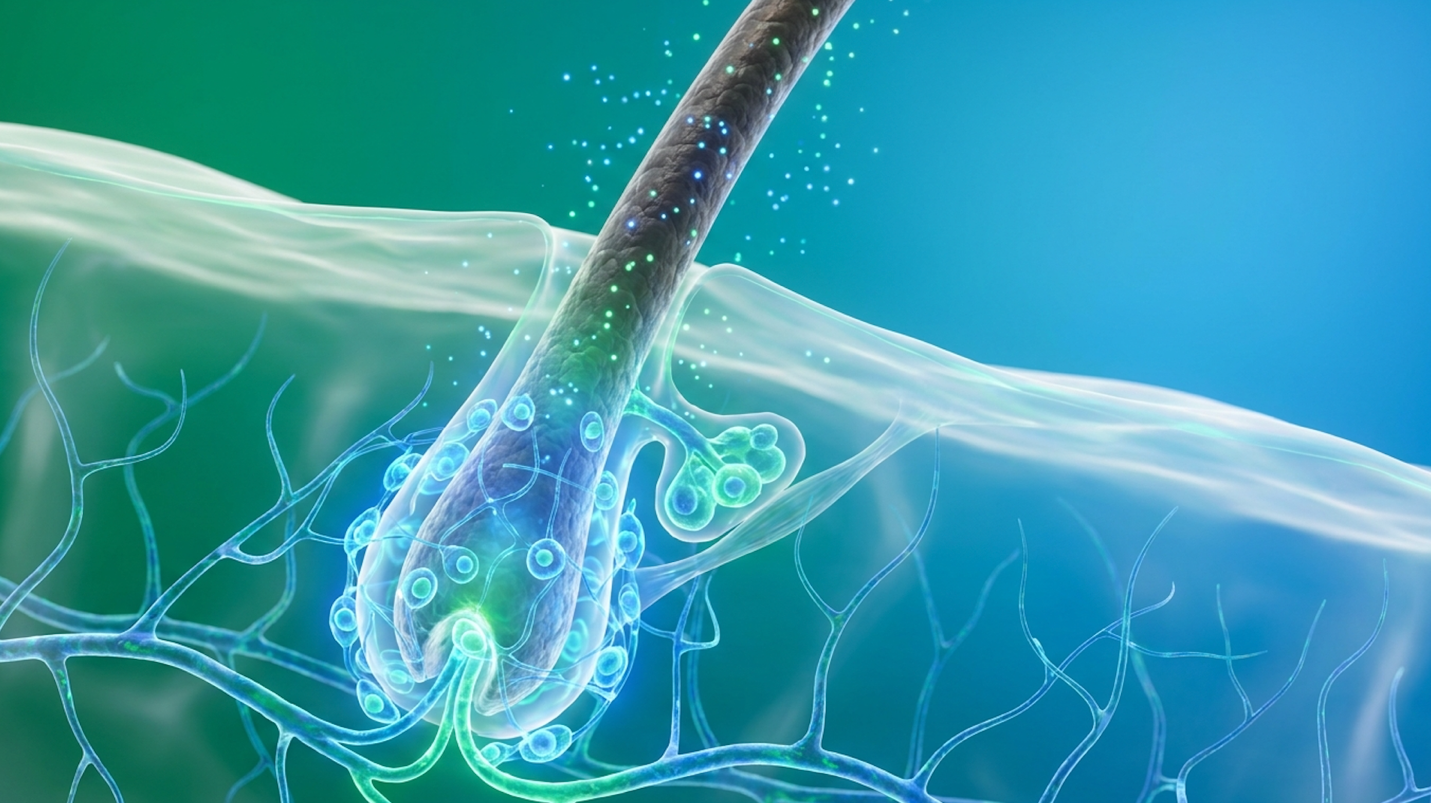
To fully understand treatment vectors, we have to look at what’s actually happening beneath the scalp. Thinning hair is primarily caused by genetic androgenetic alopecia, hormonal fluctuations, and cellular senescence within the follicular microenvironment. These compounding factors lead directly to the progressive miniaturization of the hair follicle over successive growth cycles.
Heightened sensitivity to dihydrotestosterone (DHT) aggressively shortens the anagen (growth) phase of the hair cycle. When the anagen phase shrinks, the resulting hair shaft becomes thinner, weaker, and more prone to shedding. Individual shedding rates will naturally vary significantly based on underlying systemic inflammation, severe nutritional deficits, and localized scalp oxidative stress. Without addressing these specific biological breakdown points, aesthetic surface treatments are essentially useless.
Before we evaluate advanced regenerative therapies, we need to understand the basic pharmaceutical ceiling. Minoxidil, an established topical vasodilator, forces dormant follicles into the active anagen phase by forcefully opening potassium channels. Finasteride, a potent oral 5-alpha reductase inhibitor, actively blocks the systemic conversion of testosterone into DHT.
These three protocols make up the widely recognized big 3 for hair regrowth. When evaluating current best hair loss treatments, many clinicians still begin with this exact pharmacological trio. Are they the optimal baseline hair loss treatment? For maintaining your current density, absolutely. But they have hard biological limits. They do not generate new tissue. Clinical dermatological reviews examining 5-alpha reductase inhibitors demonstrate that while they prevent further deterioration, they rarely reverse long-term fibrotic damage.
Finasteride successfully stops the continuous miniaturization of the hair shaft, but if the local vascular network feeding that follicle has already completely collapsed, simply blocking DHT won’t magically bring the follicle back to life. Pharmacological interventions arrest further deterioration for the majority of patients but they simply cannot regenerate fully dormant tissue.
Here’s the harsh clinical reality that most commercial aesthetic clinics won’t admit upfront. Assessing the true efficacy of approved hair loss treatments takes a minimum of four to six months. Hair grows incredibly slowly averaging about half an inch per month under ideal conditions. If you start a chemical regimen today, you genuinely won’t know if it’s working until half a year has passed.
And worse? The results are entirely dependent on continuous, uninterrupted application. If you stop applying the topical vasodilator or taking the oral inhibitor, the DHT attacks immediately resume, and you aggressively lose any ground you gained within mere weeks. Furthermore, patients frequently experience an initial shedding phase during the first month of vasodilator use, which often terrifies them into quitting early. We see this documented extensively in long-term efficacy data measuring the duration of minoxidil dependency. The absolute limitations of continuous pharmacological dependency have rapidly accelerated clinical research into therapies capable of fundamentally altering the local cellular microenvironment.
Advanced cellular interventions target the underlying senescence of the follicular microenvironment. A clinical stem cell treatment for thinning hair utilizes paracrine signaling from mesenchymal stromal cells to stimulate quiescent dermal fibroblasts and induce localized angiogenesis. This biological mechanism moves significantly beyond simple DHT suppression to actively modify tissue-destructive local immune responses and trigger new structural growth.
Let’s break down the complex biology. Umbilical Cord-derived Mesenchymal Stromal Cells (UC-MSCs) don’t just magically turn into new hair strands. That’s a common, heavily marketed misconception. Instead, they act as sophisticated cellular directors. When injected into the dermis of the scalp, UC-MSCs secrete a massive payload of targeted epidermal and vascular growth factors. They essentially reprogram the local immune system at the cellular level.
| 📌 If you’re interested in how MSCs shift the immune system from attack mode to repair mode, we have an interesting article that discusses mesenchymal stem cell therapy for immune modulation, which you can read via the internal link. |
Specifically, they initiate phenotypic macrophage reprogramming. Let’s look at the cellular reality: M1 macrophages drive the chronic, localized inflammation that essentially suffocates the dying follicle. The cellular secretome forces a massive transition to the M2 macrophage phenotype. This M2 state actively dismantles the inflammatory cascade, clears out cellular debris, and nurtures the damaged tissue back to health. It’s fascinating biology. The newest breakthrough in hair loss treatment isn’t a synthetic new drug; it’s this precise, calculated manipulation of the biological microenvironment.
In methodological clinical evaluations observing UC-MSCs within compromised scalp tissue, researchers noted massive localized structural improvements. Molecular evaluations of the paracrine signaling of UC-MSCs confirm that these localized growth factors literally build complex new vascular networks to feed dying follicles. Mesenchymal stromal cells accelerate localized angiogenesis by 40% directly repairing the biological soil rather than just planting seeds.
So how does this cellular intervention actually compare to traditional surgery? A standard stem cell hair transplant (or follicular unit extraction – FUE) involves cutting healthy follicles from the back of the head and physically burying them in the thinning areas. It’s highly invasive. It requires
Injectable cellular derivatives, on the other hand, are strictly non-surgical. A physician injects the highly concentrated UC-MSC secretome directly into the dermis layer. There are no incisions, absolutely no donor site depletion, and minimal recovery time required. Because these are immunoprivileged cells, there’s a near-zero risk of host immune rejection.
Surgical comparison analyses evaluating post-operative immune responses show massive safety advantages for cellular injections over traditional grafting. It’s a completely different physiological approach to stem cell hair restoration.
Patients constantly ask if these treatments actually impact hair caliber. Stem cell therapies can definitively thicken thinning hair by utilizing the aforementioned paracrine signaling to drastically reduce local inflammation and stimulate new vascular formation around the dormant follicle. This biological process revitalizes quiescent dermal fibroblasts, prompting them forcefully back into an active growth phase.
Clinical data suggests observable improvements in individual hair caliber and shaft density typically require three to six months to become visually apparent. During this specific window, the newly formed vascular networks are aggressively feeding the previously dormant follicles, restoring their structural integrity from the inside out. It’s not an overnight fix, but rather a permanent, progressive structural rebuilding of the hair shaft.
Not everyone is a viable candidate. That’s the hard, clinical truth. If a clinic promises to restore a completely bald, shiny scalp where the follicles have already undergone permanent fibrotic scarring they are actively deceiving you. Cellular therapies require living, albeit completely dormant, follicles to work effectively. You need active biological targets for the growth factors to physically hit and stimulate.
This directly brings us to strict patient selection criteria. Modern protocols mandate exhaustive clinical evaluations before moving forward with any cellular injections. You see this impressively high standard particularly in Southeast Asia, where regenerative medicine is highly regulated and incredibly advanced compared to many Western aesthetic clinics.
If you are actively exploring treatment options abroad, you must rigorously verify the laboratory processing protocols. Read up heavily on the safety of international stem cell therapies to understand what legitimate, compliant cell culturing actually looks like.
| 📌 If you’re interested in how to tell a well-regulated stem cell clinic from a risky one, we have an interesting article that discusses whether stem cell therapy is safe in Thailand, which you can read via the internal link. |
Systemic nutritional status dictates the structural integrity of newly synthesized hair shafts. Hair Regrowth Biotin protocols function by supplying essential coenzymes necessary for the rapid cellular proliferation required during active keratin synthesis. Without adequate metabolic substrates, external cellular interventions may yield structurally compromised hair fibers.
Can a simple daily vitamin actually fix hair loss? The biological answer is heavily nuanced. Vitamin B7 (biotin) is a highly critical coenzyme for carboxylase enzymes. These enzymes are essentially the cellular construction workers that actively metabolize amino acids and build the hard keratin infrastructure of your hair. If you are genuinely deficient, your hair will physically weaken, splinter, and prematurely fall out.
Patients often ask, does biotin help thinning hair? Yes, but primarily in cases of documented metabolic deficit, or when you are actively supporting heightened cellular activity induced by clinical treatments. True systemic biotin deficiency affects under 1% of adults making generalized supplementation useless without corresponding clinical treatment. You can’t just take a pill and expect structural miracles if your systemic DHT levels are completely out of control.
Endocrinology research examining biotin requirements during heightened keratin synthesis shows that cellular therapies actually increase your baseline metabolic demand. In other words, when the injected stem cells wake up the dormant follicle, that specific follicle is going to be incredibly thinning hair in women facing complex, compounding hormonal shifts.
Taking 10,000mcg of completely isolated biotin isn’t the magic metabolic bullet that social media influencers blindly claim it is. Your body requires a highly synergistic approach. An evidence-based multivitamin for hair growth directly pairs B-complex vitamins with potent antioxidants to manage systemic oxidative stress, which actively protects fragile mitochondrial membranes inside the hair follicle.
If you only take isolated biotin for thinning hair, you miss the broader, much more critical metabolic picture. Nutritional efficacy studies measuring the systemic absorption rates of B-complex vitamins prove that isolated dosing leads to rapid renal excretion, whereas carefully balanced protocols yield sustained serum levels. The internal metabolic foundation established by clinical nutrition is ultimately supported by external, daily maintenance protocols.
Daily topical regimens serve to protect existing hair shaft architecture and manage localized scalp inflammation. The most effective shampoo for hair growth utilizes botanical and structural compounds to mitigate environmental damage and reduce localized oxidative stress. These external formulations provide necessary structural reinforcement while the biological therapies work beneath the surface.
Let’s cut right through the aggressive cosmetic marketing. Most over-the-counter topicals don’t biologically grow new hair; they simply repair the dead shaft temporarily. To understand their value, we must compare specific active ingredients clinically:
Topical hydrolyzed keratin increases perceived hair density by 15% acting as cosmetic scaffolding rather than true biological regeneration. When you see targeted ads for an anti-hair-loss duo or the so-called #1 hair regrowth product, they almost universally rely on these exact temporary structural patches.
Dermatological formulations testing the efficacy of topical protein treatments confirm they offer excellent tensile strength improvements, but absolutely zero true cellular regeneration. They act purely as a topical thinning hair treatment mask, not a foundational biological resolution.
But topicals certainly aren’t entirely useless. When accurately paired with regenerative cellular therapy, specific ingredients like spirulina extract play a massive role in ongoing scalp maintenance. Spirulina acts as a highly effective localized anti-inflammatory, calming the epidermis so the newly forming, fragile follicles don’t have to forcefully push through irritated, inflamed tissue.
Scalp microenvironment studies observing the targeted anti-inflammatory effects of botanical extracts show they physically optimize the cellular terrain. They are a profoundly essential part of The Cellular Follicle Matrix.
It is intellectually dishonest to completely ignore thousands of years of historical dermatology. Long before modern researchers could effectively isolate mesenchymal stem cells in a sterile laboratory, entirely different cultures actively attempted to manipulate the exact same biological pathways using rigorous mechanical and botanical methods.
Traditional Japanese hair loss remedies historically prioritized intense, targeted scalp microcirculation. Through highly rigid mechanical massage and the direct application of localized vasodilating tonics, practitioners systematically attempted to force heavy blood flow directly to
Similarly, ancient Chinese hair loss solutions utilized highly complex botanical decoctions, most notably He Shou Wu (Polygonum multiflorum) and Panax Ginseng. Dermatological analyses of botanical extracts reveal that these traditional medicines were early clinical attempts to modulate the complex immune system and manage systemic oxidative stress pathways now precision-targeted by modern stromal cell therapies. While historically significant, patients seeking predictable, measured outcomes absolutely require modern clinical evaluation.
Thinning hair is triggered by a combination of genetic androgenetic alopecia, hormonal fluctuations, and cellular senescence within the follicular microenvironment. Heightened sensitivity to dihydrotestosterone (DHT) progressively shortens the anagen (growth) phase, causing rapid miniaturization of the shaft. Ultimately, your specific shedding rate will vary heavily based on localized inflammation and systemic nutritional deficits.
Yes, thinning hair can successfully grow back if the underlying follicle remains biologically active and is not permanently scarred. Interventions must be administered before the dermal tissue undergoes complete fibrotic scarring.
Stem cell therapies can definitively thicken thinning hair by utilizing targeted paracrine signaling to drastically reduce local inflammation. This biological process stimulates new vascular formation around the dormant follicle, revitalizing quiescent dermal fibroblasts. Because this
Most clinical protocols require between one and three initial stem cell sessions spaced over several months. Individual treatment plans will naturally vary based on the extent of follicle degradation and baseline patient health.
| 📌 If you’re interested in whether a second dose can extend the benefits of the first, we have an interesting article that discusses why double-dose UC-MSC therapy may offer greater benefits than a single dose, which you can read via the internal link. |
Patients can absolutely take targeted biotin during stem cell hair treatments to seamlessly provide the necessary metabolic substrates for rapid new keratin synthesis. Supplying optimal systemic levels of coenzymes ensures that follicles recently stimulated by the cellular therapy have the vital biological building blocks required to generate robust, incredibly thick hair shafts. Without this nutritional support, the forced cellular proliferation may yield structurally compromised fibers. Always explicitly disclose all nutritional supplements and vitamins to your medical provider prior to undergoing cellular interventions to ensure maximum clinical safety.
For patients currently experiencing androgenetic alopecia, achieving sustainable hair density requires decisively moving beyond basic cosmetic maintenance. While approved pharmacological interventions effectively manage daily shedding, advanced stem cell therapies secrete highly specific growth factors that actively promote robust new vascular formation directly around dormant follicles. The most effective clinical approach bridges advanced biological tissue repair with foundational, easily measurable metabolic support.
Applying The Cellular Follicle Matrix comprehensively ensures that patients do not mistakenly rely on isolated, single-pathway interventions. By strategically pairing the powerful paracrine signaling capabilities of UC-MSCs with targeted systemic biotin supplementation and external topical maintenance, the complex follicular microenvironment receives comprehensive, multi-
Determine your absolute suitability for advanced cellular interventions by pursuing an evidence-informed clinical assessment today. Head over to a highly qualified, board-certified dermatologist or a specialized regenerative medicine clinic to rigorously review your complete medical history, accurately assess follicular viability, and intelligently establish a biologically sound treatment plan.