Our Services
Others
- DFPP
- Shockwave
- IV Drip

This article is for educational purposes only and does not replace consultation with a qualified medical professional.
Cellular immunotherapies are advancing beyond traditional interventions, demanding rigorous clinical evaluation to differentiate established mechanisms from investigational hope. Look, the field is shifting rapidly. We’re moving away from toxic, highly personalized interventions and pushing toward scalable, biologically synergistic models. But navigating this transition requires separating concrete clinical mechanics from commercial exaggeration. This is especially true when evaluating treatments for complex chronic conditions or oncology integration.
In this guide, you will evaluate the exact biological mechanisms of stem cell immunotherapy. Specifically, I’ve outlined how the co-activation of Umbilical Cord Mesenchymal Stem Cells (UC-MSCs) and Natural Killer (NK) cells offers a sophisticated, evidence-led therapeutic alternative. It’s built around The UC-MSC/NK Co-Activation Model. We will assess innate immunity
Stem cell immunotherapy leverages cellular interactions to modulate inflammation and target pathology without guaranteeing cures.
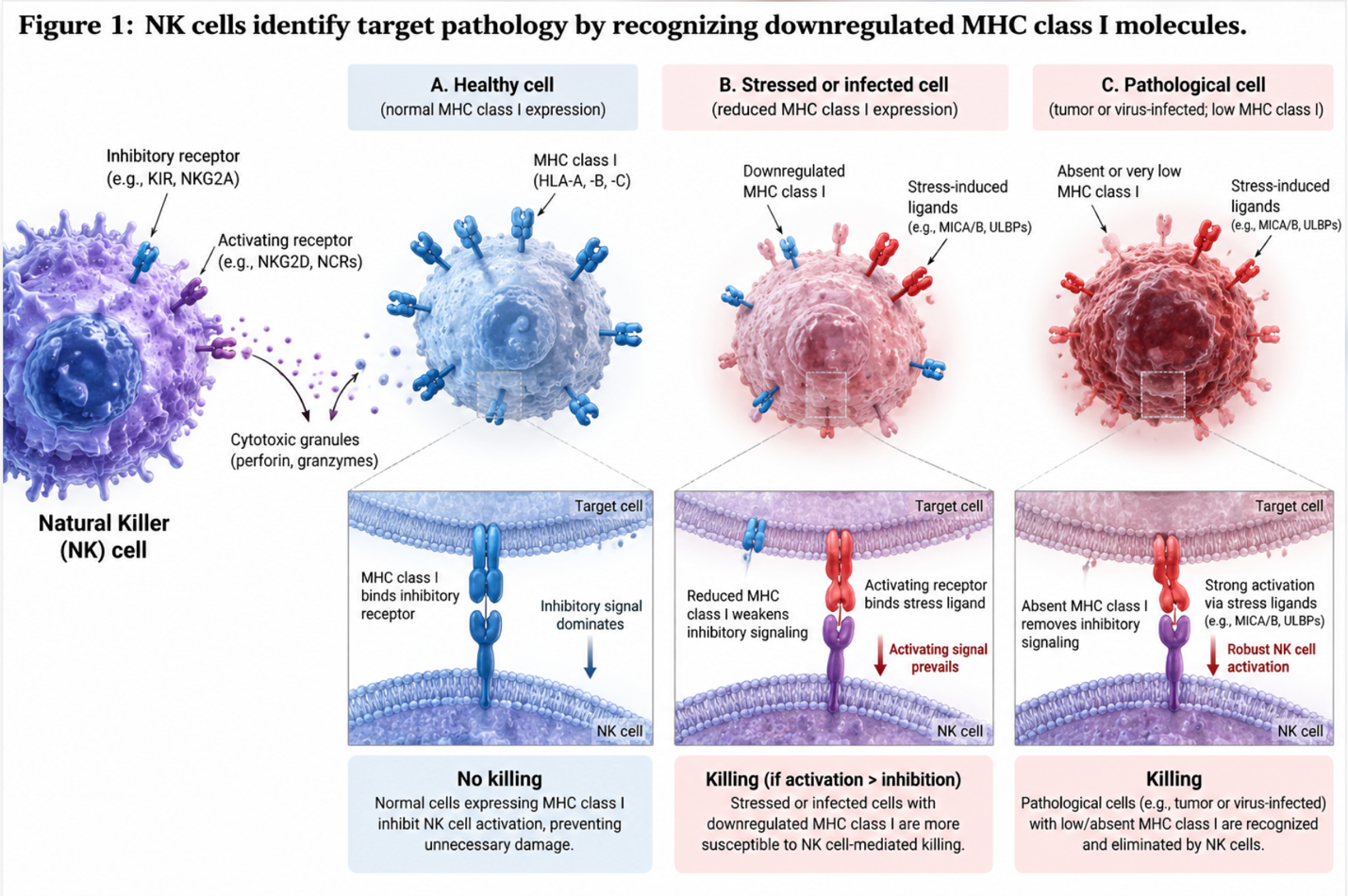
Natural Killer (NK) cell therapies utilize autonomous lymphocytes that identify and eliminate stressed or malignant cells without requiring prior antigen sensitization. Operating as primary components of the innate immune system, they detect downregulated major histocompatibility complex (MHC) class I molecules on cellular surfaces. This makes them highly efficient first responders.
Unlike T-cells, the primary agents of adaptive immunity, NK cells do not require specific antigen presentation to attack. They rely on a delicate balance of germline-encoded activating and inhibitory receptors. When an NK cell encounters a healthy tissue cell expressing normal MHC class I, inhibitory signals dominate. The cell is spared. But when viral infection or malignant transformation downregulates these markers, the NK cell goes to work.
This autonomy is crucial. In clinical observation of early-stage oncology data, waiting for T-cells to mount a delayed adaptive response often allows rapid tumor expansion. NK cells act immediately. Natural Killer cells represent approximately 10-15% of circulating lymphocytes (NIH, 2023). For clinical context, see this research on innate immune functionality.
How exactly do they know what to kill? It comes down to phenotypic markers. NK cells express CD56 and lack CD3. When they patrol the body, they scan for stress-induced ligands like MICA and MICB, which appear on damaged cells.
This biological mechanism allows clinicians to utilize these cells in targeted treatments without the strict HLA-matching required for T-cell infusions. If you mismatch T-cells, the patient risks severe graft rejection. NK cells don’t trigger this same catastrophic cascade. For deeper reading on immune surveillance, the National Cancer Institute’s immunology overview provides excellent background. While their natural capabilities are robust, comparing their clinical application directly against traditional T-cell therapies reveals significant safety advantages.
Comparing NK vs T cells reveals a critical shift in cellular oncology: managing efficacy against severe immunotoxicity. NK cell platforms offer a safer alternative to T cell-based therapies because their activation mechanisms naturally avoid triggering the runaway systemic inflammation heavily associated with engineered T-cell infusions. They kill without causing cross-collateral damage. And frankly, in clinical oncology, reducing collateral damage is half the battle.
Chimeric Antigen Receptor T-cell (CAR-T) therapy frequently induces life-threatening Cytokine Release Syndrome (CRS) and debilitating neurotoxicity. Patients often require intensive care unit monitoring post-infusion just to manage the cytokine storm. It’s a brutal, exhausting process for the patient’s already compromised system.
NK therapies change this math entirely. Because NK cells produce a different, safer profile of cytokines like IFN-γ and GM-CSF rather than IL-6 the systemic inflammatory response is significantly blunted. In Phase 1 and 2 clinical evaluations, patients treated with CAR-NK cells did not develop cytokine release syndrome or graft-versus-host disease (New England Journal of Medicine, 2020). You can verify these specific clinical trials showing no cytokine release syndrome directly. It opens the door to moving cellular interventions out of the ICU and into outpatient clinics a shift documented in recent oncology trial reviews.
But we must be transparent about the limitations of NK cellular therapy. They are not perfect. Their primary drawback? In vivo persistence.
Unlike memory T-cells that can circulate and monitor for recurrences over years, infused NK cells typically survive for only a few weeks. They do their job, then they die off. Furthermore, they struggle to physically penetrate the dense, fibrotic stroma shielding solid tumors. A bulky tumor mass creates a physical and chemical barrier that naturally occurring NK cells simply cannot
The future of emerging adoptive cancer immunotherapy relies heavily on engineered natural killer cells. By genetically modifying these cellular structures, clinical researchers are overcoming natural limitations, enhancing target specificity against solid tumors, and increasing the persistence of the cells within hostile physiological environments.
Let’s talk about engineering. Chimeric Antigen Receptor (CAR) modification involves retrofitting cells with synthetic receptors designed to recognize specific tumor antigens like CD19 or mesothelin.
When you apply CAR modification to NK cells, you direct their inherent cytotoxicity squarely at malignant tissue, bypassing the tumor’s natural evasion techniques. Unmodified NK cells often get exhausted or confused by a sophisticated tumor microenvironment. CAR-engineered NK cells, however, lock onto the target like guided munitions. They integrate the targeted precision of adaptive immunity with the rapid-response execution of innate immunity.
But engineering these cells isn’t a simple plug-and-play process. Researchers are actively working on complex bioengineering hurdles, like knocking out inhibitory receptors—such as NKG2A or CISH—to prevent the NK cells from being prematurely deactivated by the solid tumor’s defenses. These advanced modifications ensure the engineered cells maintain their aggressive cytotoxic posture even when pushed into highly immunosuppressive environments. Allogeneic NK cells serve as a scalable, off-the-shelf platform that can be engineered to target solid tumors effectively (Nature Reviews Immunology, 2020). This is heavily detailed in scalable, off-the-shelf platforms for targeting solid tumors and supported by ongoing translational research initiatives. Beyond targeted engineering, the source of these cells fundamentally changes their clinical accessibility.
Autologous therapies where a patient’s own cells are extracted, engineered, and reinfused—are incredibly expensive and agonizingly slow. For a critically ill patient, waiting four weeks for cell manufacturing is a death sentence.
This is where allogeneic natural killer (NK) cell immunotherapy shines. Relying on allogeneic platforms utilizing healthy donor cells creates an off-the-shelf platform. The cells are pre-manufactured, rigorously tested, and banked for immediate use. Because NK cells do not cause GvHD, you don’t need perfect genetic matching. You just pull them from the freezer, thaw, and infuse. It drastically reduces manufacturing costs and eliminates patient wait times.
Scaling this across global clinics requires strict logistical frameworks. Cryopreservation techniques have evolved massively, allowing these off-the-shelf therapies to be frozen, shipped globally, and thawed at the patient’s bedside without losing cellular viability or cytotoxic potency. It’s a fundamental shift in medical logistics. This cell-based immunotherapy model scales globally. While engineering improves targeting, maximizing the therapeutic environment requires a biological catalyst which is exactly where mesenchymal stem cells are introduced.
| 📌 If you’re interested in why the percentage of living cells matters so much at the time of treatment, we have an interesting article that discusses the importance of cell viability in UC-MSC stem cell therapy, which you can read via the internal link. |
Stem Cell Therapy Using UC-MSCs with NK Cells represents a highly sophisticated protocol for managing complex pathologies. Rather than relying on a single biological mechanism, this synergy pairs the targeted cytotoxicity of NK cells with the profound immunomodulatory and paracrine signaling capabilities of mesenchymal stem cells to optimize regenerative and immune health. It’s a two-pronged attack.
To truly understand this, you need to grasp The UC-MSC/NK Co-Activation Model. This is an evidence-based framework defining how Umbilical Cord Mesenchymal Stem Cells (UC-MSCs) secrete specific bioactive molecules like hepatocyte growth factor and various endothelial growth factors that actively reprogram the tissue microenvironment.
UC-MSCs are masters of phenotypic macrophage reprogramming. They flip the switch in the surrounding tissue from a hostile, pro-inflammatory state (M1) to a healing, anti-inflammatory state (M2). This isn’t just theory; it’s exact molecular signaling. UC-MSCs release Prostaglandin E2 (PGE2) and Indoleamine 2,3-dioxygenase (IDO), molecules that actively suppress the overactive inflammatory loops that usually fry infused immune cells. By cooling the localized inflammation, they essentially build a biological safe zone.
| 📌 If you’re interested in how MSCs shift the immune system from attack mode to repair mode, we have an interesting article that discusses mesenchymal stem cell therapy for immune modulation, which you can read via the internal link. |
Why does this matter for NK cells? Because a highly inflamed, fibrotic microenvironment exhausts NK cells almost instantly. By deploying UC-MSCs first, you essentially send in biological engineers to clear the path. They reduce the fibrosis, cool the inflammation, and prevent NK cell exhaustion. This allows the NK cells to effectively target senescent or malignant cells without damaging adjacent healthy tissue. For deep physiological context, read these NIH findings on UC-MSC immune modulation. This co-activation relies heavily on the molecular byproducts of the cells rather than just the physical cells themselves.
The regenerative ability of UC-MSCs stems largely from their secretomes and exosomes. Together, they establish a highly potent cell-free therapeutic environment.
Let’s dig deeper into the secretome. Exosomes derived from UC-MSCs carry microRNAs and specific immunomodulatory proteins directly to the target tissue, operating as cellular delivery vehicles. Through paracrine signaling a form of cell-to-cell communication these secreted factors clear reactive oxygen species and restore mitochondrial membrane integrity. They also promote the synthesis of essential extracellular matrix proteins. UC-MSCs possess a dual capacity to enhance tissue regeneration while simultaneously modulating Natural Killer cells to promote a cell-free therapeutic environment (NIH, 2022).
When evaluating immunotherapy with stem cells, clinicians focus heavily on this non-cellular signaling network. It’s critical to note that this synergy is not a guaranteed cure, but rather a biological optimization protocol currently undergoing rigorous clinical investigation. Review the research detailing MSC exosome properties and microenvironment interactions for specific cellular interaction mapping.
Let’s look at how this works in practice. Solid tumors build a dense fortress of stromal tissue. NK cells usually bounce right off it.
But when UC-MSCs engage the environment, they secrete matrix metalloproteinases (MMPs) that quite literally degrade that fibrotic shielding. They break the wall down. Once the stromal barrier is softened, the engineered NK cells can infiltrate the tumor bed deeply and begin executing their targeted cytotoxicity. Clinical observation indicates this dynamic changes the approach to how we handle refractory solid masses. The interplay between these two cell types is fascinating. UC-MSCs act as the architects, remodeling the hostile terrain so the NK cells, the soldiers, can maneuver without immediate systemic exhaustion. By mitigating the overactive inflammatory cascades, UC-MSCs prevent the patient’s own immune system from rejecting or neutralizing the infused NK cells prematurely. This extends the therapeutic window significantly. Translating this biological synergy from the laboratory into active treatment, however, requires precise integration with standard medical protocols.
When cellular therapies are used alongside other cancer treatments, careful sequencing is absolutely required to prevent standard chemotherapy or radiation from destroying the infused lymphocytes. Immunotherapy in Solid tumors presents unique challenges, as the pathology actively secretes immunosuppressive factors to neutralize biological interventions long before they can induce cytotoxicity. Treating cancer isn’t just about killing cells; it’s about timing.
The tumor microenvironment (TME), the cellular environment surrounding a tumor, is essentially a hostile biological dead zone. It actively disables standard immune responses by secreting TGF-beta and recruiting immunosuppressive regulatory T-cells (Tregs).
If you infuse NK cells into this environment blindly as an immune system restoration therapy, they will be neutralized. Clinical protocols aimed at maximizing NK cell activation focus heavily on dismantling this TME first. The synergistic application of UC-MSCs helps modulate this hostility, but it requires highly coordinated timing with the patient’s existing oncology regimen. You can track ongoing clinical trials evaluating allogeneic UC-MSCs to see how these combinations dismantle the TME’s defensive shielding in real-time. For a broader view, examine the National Institute of Health’s specific research on microenvironment dynamics.
Timing is everything. Often, integrating these therapies involves administering low-dose, lymphodepleting chemotherapy just prior to NK cell infusion.
This does two things. First, it kills off the patient’s regulatory T-cells that would otherwise suppress the NK cells. Second, it creates physical and physiological “space” for the newly infused cells to expand and persist. While these integration strategies show tremendous promise, evaluating their suitability requires confronting the strict limitations of current medical science.
Stem cell immunotherapy is an advanced biological treatment combining immune-modulating stem cells with targeted immune effector cells. It primarily utilizes Umbilical Cord Mesenchymal Stem Cells (UC-MSCs) to reduce systemic inflammation and Natural Killer (NK) cells to eliminate senescent or malignant tissues. This protocol aims to restore immune homeostasis rather than simply masking symptoms. Individual suitability depends heavily on thorough clinical assessment of the patient’s specific pathology.
Stem cells and NK cells work together through the UC-MSC/NK Co-Activation Model, where stem cells optimize the tissue environment for NK functionality. UC-MSCs secrete anti-inflammatory cytokines that reduce tissue fibrosis and reprogram macrophages. This biological preparation allows NK cells to infiltrate previously blocked tissues and execute their targeted cytotoxicity against diseased cells. Outcomes vary based on disease severity and the specific allogeneic platforms utilized.
Immune cell therapy utilizing NK cells is generally considered safer than traditional CAR-T cell therapy regarding systemic inflammatory risks. Clinical data demonstrates that NK therapies rarely trigger Cytokine Release Syndrome (CRS) or Graft-versus-Host Disease (GvHD). However, no biological intervention is entirely without risk. Safety depends on stringent laboratory processing standards, proper patient selection, and administration by qualified clinical professionals in monitored medical environments.
| 📌 If you’re interested in how to tell a well-regulated stem cell clinic from a risky one, we have an interesting article that discusses whether stem cell therapy is safe in Thailand, which you can read via the internal link. |
For patients evaluating regenerative medicine, stem cell immunotherapy delivers targeted biological modulation. Clinical evaluations indicate that CAR-NK cells avoid the severe cytokine release syndrome associated with traditional T-cell therapies (New England Journal of Medicine, 2020). The safest approach requires rigorous clinical evaluation of medical records before proceeding.
This efficacy is largely driven by The UC-MSC/NK Co-Activation Model. Balancing MSC immunomodulation with NK cytotoxicity directly addresses the fundamental challenges of the tumor microenvironment and cellular senescence discussed earlier. MSCs clear the fibrotic roadblocks, allowing NK cells to do their job.
To determine your eligibility, schedule a formal suitability assessment with a qualified clinician. Gather your complete medical records, recent imaging, and comprehensive lab findings to establish realistic functional goals before beginning any advanced cellular protocol.
This article is for educational purposes only and does not replace consultation with a qualified medical professional.