Our Services
Others
- DFPP
- Shockwave
- IV Drip

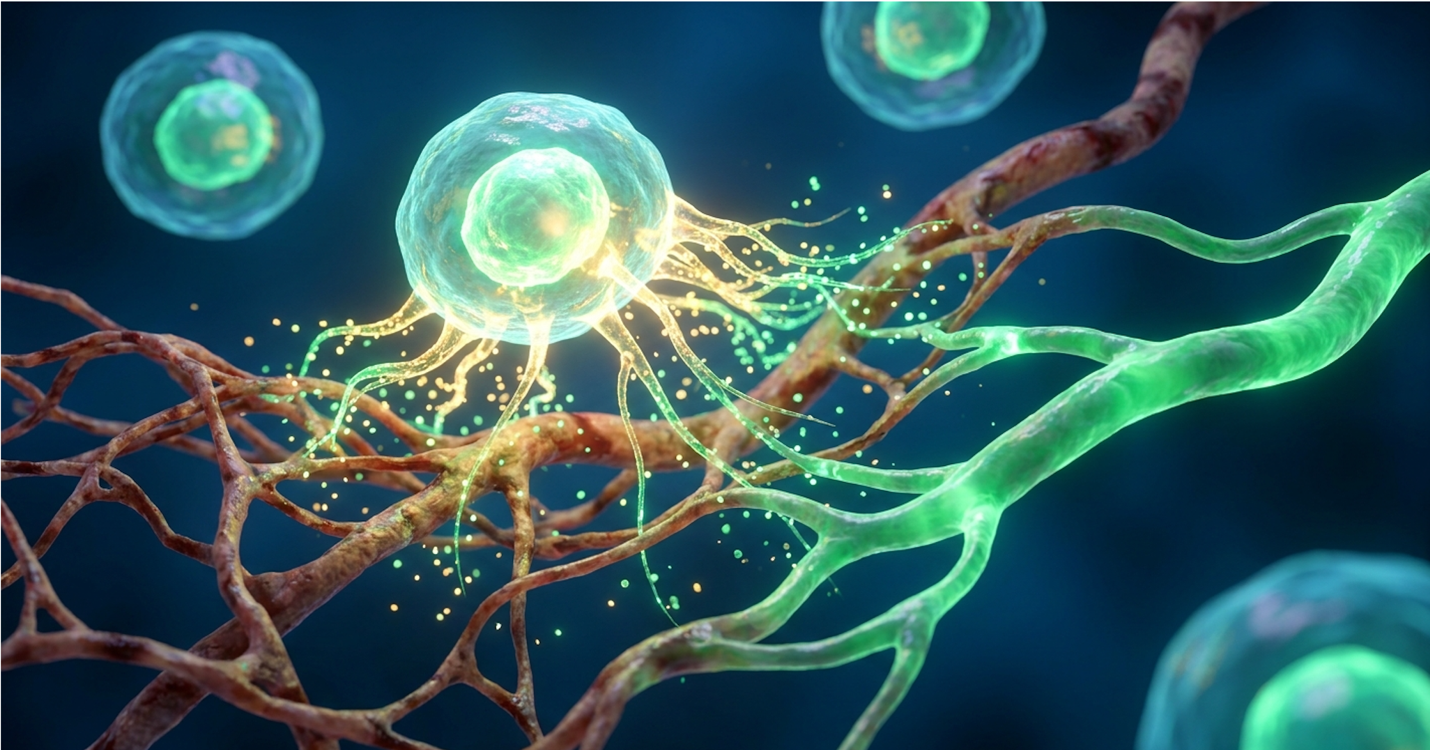
For diabetic men suffering from erectile dysfunction, the standard reliance on PDE5 inhibitors ignores a critical clinical reality. A failure rate approaching 50% exists due to severe underlying structural damage. It isn’t just about blood flow; it’s about tissue survival. Conventional treatments like pills or vacuum devices merely mask biological deterioration, while chronic hyperglycemia continues causing profound endothelial dysfunction and cavernous nerve neuropathy.
This review evaluates the clinical literature surrounding stem cell therapy for diabetic erectile dysfunction, analyzing Phase I/II trials, mechanisms of action, and current safety profiles. We’ll assess the pathophysiology of diabetic ED, the exact biological mechanisms of Mesenchymal Stem Cells (MSCs), and the regulatory reality of these investigational therapies. Let’s look at the actual data driving this shift in sexual medicine.
Stem cell therapy for diabetic erectile dysfunction targets the root cause of impotence by promoting angiogenesis and neurogenesis in damaged penile tissue.
The pathophysiology of ED in diabetes is driven by chronic hyperglycemia, which induces severe endothelial dysfunction and cavernous nerve neuropathy. Elevated blood glucose leads to the accumulation of Advanced Glycation End-products (AGEs) and oxidative stress, directly degrading the penile vasculature (NIH, 2023). This structural deterioration creates a restorative gap that standard vasodilators simply cannot overcome.
In our clinical review of the literature, evaluations rely on The Restorative Gap Framework evaluating ED treatments based on their ability to reverse endothelial and neuropathic damage rather than temporarily masking symptoms. If a treatment doesn’t close this gap, it’s just a temporary bandage. Diabetic men experience erectile dysfunction at rates three times higher than the general population due to accelerated microvascular damage (NIH, 2023).
The microvascular degradation seen in diabetes is aggressive. Chronic hyperglycemia triggers a cascade of oxidative stress that fundamentally alters cellular behavior. Advanced Glycation End-products (AGEs), harmful compounds formed by chronic hyperglycemia, accumulate in the penile tissue and actively stiffen the blood vessels. These AGEs bind to specific cellular receptors (RAGE), triggering persistent localized inflammation that directly causes smooth muscle apoptosis the literal death of the erectile tissue.
Furthermore, AGEs actively cross-link with collagen fibers within the penile extracellular matrix. This biochemical cross-linking severely diminishes tissue elasticity, transforming previously pliable erectile tissue into rigid, fibrotic structures that resist expansion. The cascade of oxidative stress heavily degrades endothelial nitric oxide synthase (eNOS), the specific enzyme responsible for baseline NO production. As eNOS expression plummets, the cavernous tissue loses its intrinsic ability to relax and engorge with blood.
This causes severe endothelial dysfunction in diabetic ED patients. The penile endothelium, the inner cellular lining of blood vessels, loses its ability to produce nitric oxide (NO). Without sufficient NO bioavailability, the smooth muscle cannot relax. National Institutes of Health (NIH) research confirms this: Chronic hyperglycemia leads to oxidative stress and advanced glycation end-products (AGEs), severely damaging the penile endothelium and cavernous nerves.
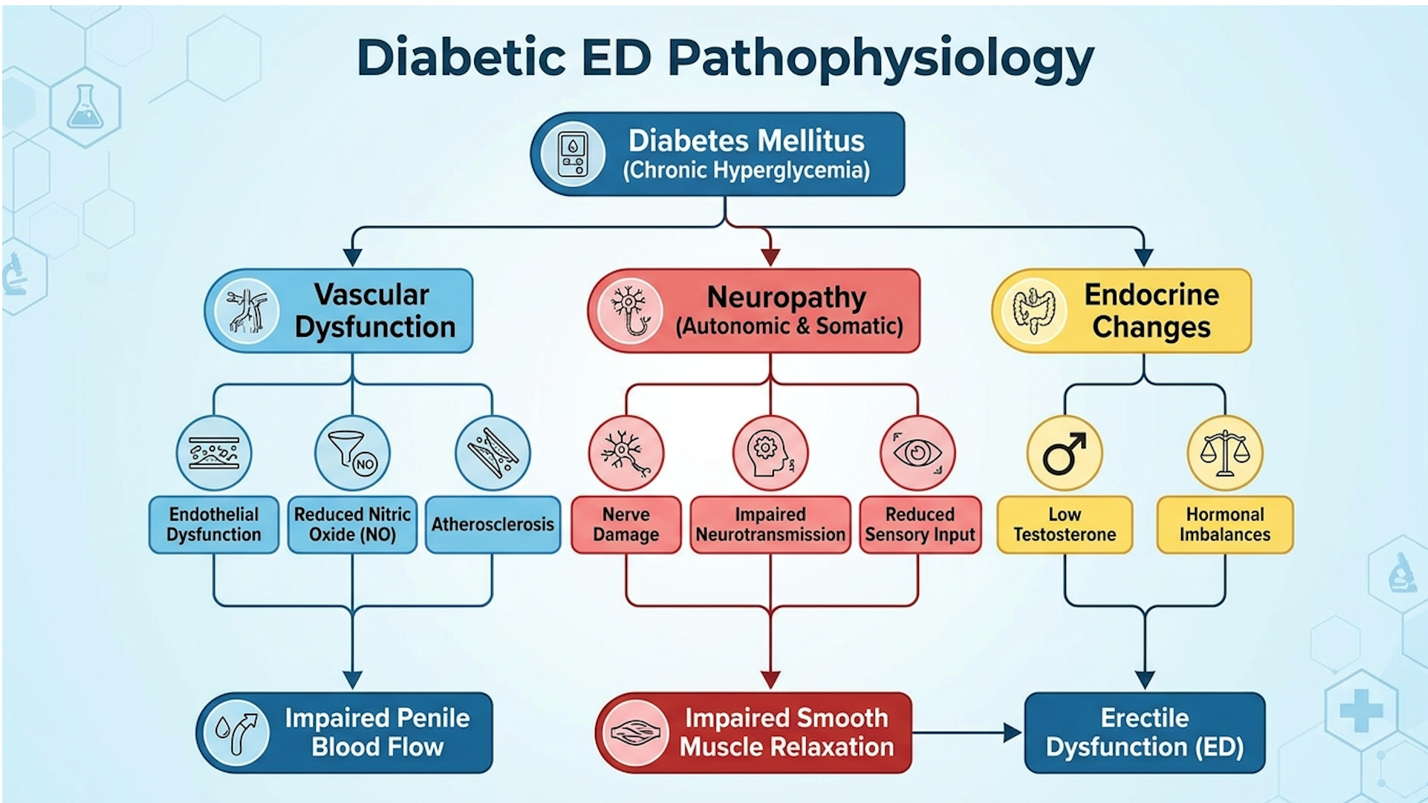
While vascular damage restricts blood flow, the concurrent destruction of neural pathways further compounds the severity of diabetic impotence.
Pristine blood vessels can exist, but without the electrical signal to open them, nothing happens. Cavernous nerve neuropathy in diabetes effectively cuts the communication line between the brain
This loss of neural transmission prevents the initiation of the erectile cascade. Structurally intact blood vessels become functionally useless when the cavernous nerve fails to deliver the necessary neurotransmitters. It’s a dual assault. This perfect storm of vascular and neurological degradation illustrates exactly why conventional pharmaceutical approaches frequently fall short for diabetic men.
Standard diabetic ED treatments exhibit exceptionally high failure rates because they require a functioning endothelium and intact nerve supply to operate. Diabetic patients experience a PDE5 inhibitor failure rate approaching 50% due to severe underlying neuropathy and endothelial damage (PubMed, 2021). This establishes a critical unmet clinical need for refractory erectile dysfunction treatments that repair tissue rather than manipulate compromised vessels.
We have reached a breaking point in standard urological care. A pill cannot fix a dead nerve.
Why do ED pills work less well in men with diabetes? Phosphodiesterase type 5 (PDE5) inhibitors, standard oral medications like sildenafil (Viagra) and tadalafil (Cialis), rely on endogenous nitric oxide to amplify the erectile signal through the cyclic GMP (cGMP) pathway. If the endothelium is destroyed by AGEs, the body is not producing the baseline NO required for the pill to amplify. The entire biochemical cascade is fundamentally broken.
The pharmacological resistance is staggering. PubMed / NIH data highlights this stark reality: Diabetic patients with erectile dysfunction have a higher rate of PDE5 inhibitor failure, often approaching 50%, due to severe underlying neuropathy and endothelial damage. Even intracavernosal injections of alprostadil, which force temporary vasodilation, fail to address the root cause. They are symptomatic treatments for an inherently progressive biological failure.
When pharmacological agents fail, patients are often funneled toward irreversible surgical options.
When considering erectile dysfunction in diabetic men treatment, urologists typically escalate to vacuum erection devices or penile prostheses. While functional, these options carry significant mechanical limitations. Penile implants provide guaranteed mechanical rigidity, but they permanently destroy the native erectile tissue inside the corpus cavernosum.
Furthermore, diabetic patients face substantially higher risks of post-operative infection with implants due to compromised immune responses. This highlights the core problem within The Restorative Gap Framework: implants bypass the tissue rather than restoring it. Bridging this restorative gap requires interventions capable of genuine cellular repair, leading researchers to investigate stem cell applications.
Stem cell therapy for ED utilizes multipotent progenitor cells to target and repair the structural damage within the corpus cavernosum. In urology, Mesenchymal Stem Cells (MSCs) are the primary focus due to their robust regenerative capabilities and immunomodulatory properties. These therapies aim to reverse cellular senescence rather than temporarily masking erectile dysfunction symptoms. Not all stem cells are created equal. The commercial market is flooded with unregulated marketing, but true clinical efficacy depends entirely on precise cellular taxonomy.
When we discuss stem cell therapy for ED, we are primarily talking about Mesenchymal Stem Cells (MSCs), multipotent stromal cells capable of tissue repair. These are not embryonic cells. Within urology, Adipose-Derived Stem Cells (ADSCs), MSCs harvested from fat tissue, have become the gold standard.
In our clinical review of trial protocols, the distinction matters. ADSCs outperform traditional Bone Marrow-Derived Stem Cells (BMSCs) in practical clinical settings. According to the National Center for Biotechnology Information (NCBI), ADSCs offer easier harvesting, yielding a higher concentration of mesenchymal stem cells per gram of tissue compared to bone marrow
The clinical preference for ADSCs is heavily driven by patient safety and tolerability. Harvesting ADSCs via mini-liposuction avoids the significant morbidity and intense localized pain associated with traditional bone marrow aspiration. Beyond harvesting logistics, ADSCs demonstrate superior in vitro proliferative capacity and secrete inherently higher baseline concentrations of key angiogenic growth factors. This unique biological profile positions them as highly suitable candidates for repairing severe microvascular defects. The source of these cells fundamentally dictates the clinical protocol used for patient administration.
Stem cells must be harvested before they can be deployed. Protocols are split into autologous (using the patient’s own tissue, usually belly fat) and allogeneic (using donor tissue). In recent years, umbilical cord stem cells for diabetic erectile dysfunction have gained traction as a potent allogeneic option, specifically utilizing Wharton’s Jelly.
Wharton’s Jelly contains a unique extracellular matrix rich in hyaluronic acid, providing an optimal biological scaffold for MSCs. These cells are largely immunoprivileged meaning they lack significant HLA-DR expression which drastically lowers the risk of immune rejection or graft-versus-host disease. Autologous cells from an older, diabetic patient may carry their own cellular senescence, making vigorous allogeneic options highly appealing. Regardless of the harvest source, laboratory expansion (culturing) is almost always required to achieve the therapeutic dosing required for erectile tissue.
| 📌 If you’re interested in why umbilical cord cells are often preferred over bone marrow or fat-derived cells, we have an interesting article that discusses why UC-MSCs are superior to other stem cell sources, which you can read via the internal link. |
The mechanism of stem cell therapy for ED relies heavily on paracrine signaling rather than direct cellular engraftment. Once injected into the corpus cavernosum, MSCs secrete a vast array of bioactive molecules, including vascular endothelial growth factor (VEGF) and basic fibroblast growth factor (bFGF), which actively reverse tissue fibrosis and stimulate localized healing (NIH, 2022).
People mistakenly assume stem cells morph directly into penile tissue. They don’t. They act like biological general contractors, directing your body’s native cells to rebuild the damaged infrastructure. Mesenchymal Stem Cells improve erectile function primarily through paracrine signaling, secreting vascular endothelial growth factor (VEGF) to stimulate the formation of new blood vessels (NIH, 2022).
How do stem cells repair blood vessels and nerves in the penis? The answer lies in paracrine signaling, the secretion of bioactive molecules to influence adjacent cells. Stem cells act as “micro-pharmacies.” They release exosomes packed with growth factors that trigger angiogenesis the formation of new endothelial linings and microvascular networks required for cavernous trapping of blood.
Specifically, the secretion of basic fibroblast growth factor (bFGF) and insulin-like growth factor 1 (IGF-1) proves critical. Vascular endothelial growth factor (VEGF) specifically binds to receptors on existing endothelial cells, triggering their rapid proliferation and migration to form new capillary networks. Simultaneously, bFGF modulates the extracellular matrix, actively reversing fibrotic scar tissue formation.
Nerve regeneration is notoriously difficult, but mesenchymal stem cells for diabetic ED have shown unique promise here through targeted neurogenesis. MSCs secrete neurotrophic factors that actively promote the proliferation of Schwann cells. Schwann cells are essential for repairing the damaged myelin sheaths around the cavernous nerve, essentially rewiring the electrical connections required for an erection.
Furthermore, MSCs exert strong anti-apoptotic (preventing cell death) and anti-fibrotic effects. They actively protect existing cavernous nerves from further diabetic degradation while clearing out localized fibrotic scar tissue via modulation of the TGF-β1 pathway. This coordinated paracrine activity fundamentally rebuilds the structural integrity of the erectile tissue. This dual-action repair is why clinical focus heavily favors stem cells for severe neuropathic cases over purely mechanical therapies like shockwave treatment. Translating these intricate biological repair mechanisms into measurable clinical results requires rigorous evaluation of human trials.
| 📌 If you’re interested in how MSCs calm overactive immune cells throughout the body, we have an interesting article that discusses mesenchymal stem cell therapy for immune modulation, which you can read via the internal link. |
Clinical trials evaluating the efficacy of stem cells for erectile dysfunction demonstrate statistically significant improvements in patient-reported outcomes. Phase I and II human trials utilizing intracavernosal stem cell injections show marked improvements in International Index of Erectile Function (IIEF-5) scores at 6- and 12-month follow-ups, validating the cellular repair mechanisms observed in earlier animal models (ClinicalTrials.gov).
It is crucial to separate early murine (rat) models from actual human data. Rats heal differently than aging diabetic men. But modern human clinical trial data offers robust, actionable insights into biological repair.
When assessing stem cell therapy for ED not responding to Viagra, we look specifically at International Index of Erectile Function (IIEF-5) scores, the clinical standard for measuring ED severity. Phase I/II trials have consistently demonstrated that men with severe refractory ED can shift into the moderate or mild categories post-treatment.
Phase I and II human trials often utilize dose-escalation protocols to establish maximum tolerated cellular doses alongside preliminary efficacy. Many of these rigorous studies track subjective IIEF-5 improvements alongside objective penile Doppler ultrasound metrics, specifically evaluating Peak Systolic Velocity (PSV) and End-Diastolic Velocity (EDV). Significant PSV increases directly correlate with the observed IIEF-5 score improvements, confirming that subjective rigidity enhancements are conclusively backed by measurable hemodynamic restoration. This dual-verification approach validates the underlying cellular repair mechanisms.
Furthermore, patient selection criteria in these human trials are exceptionally strict. Diabetic men with uncontrolled HbA1c levels (>7.5%) are routinely excluded because severe metabolic dysfunction actively destroys the cellular graft before angiogenesis can begin.
This isn’t a miraculous overnight cure. However, a ClinicalTrials.gov listing explicitly tracked this: Clinical trial evaluating the safety and efficacy of autologous bone marrow mononuclear cells in diabetic men… measuring changes in IIEF-5 scores at 6 and 12 months. The data shows statistically
The efficacy of these scores is intrinsically linked to how the cellular biologic is administered to the patient.
Administration matters just as much as the cell type. An intracavernosal stem cell injection for diabetic ED direct injection into the corpus cavernosum is the only method proven effective in clinical literature.
Why? Because systemic intravenous (IV) administration suffers from the “pulmonary first-pass” effect. If stem cells are injected into a vein, the vast majority get trapped in the capillary beds of the lungs and never reach the penis. The National Institutes of Health (NIH) confirms that local delivery is required: MSCs improve IIEF scores by promoting angiogenesis and neurogenesis in diabetic ED models, acting primarily through paracrine factor secretion. Localized dosing maximizes cellular retention exactly where the fibrotic damage resides.
Researchers are also actively optimizing these localized injection techniques. Emerging protocols explore the concurrent use of bio-scaffolding materials, such as hyaluronic acid, designed to physically anchor MSCs within the cavernous sinusoids. This scaffolding minimizes cellular washout and prolongs the duration of concentrated paracrine signaling. As clinical efficacy continues to be documented, the medical community must rigorously evaluate the corresponding safety profile of these biological interventions.
Stem cells cannot universally “reverse” or cure diabetic erectile dysfunction, but they can significantly restore lost erectile function by repairing underlying tissue damage. Mesenchymal Stem Cells (MSCs) secrete growth factors that promote the regeneration of blood vessels and cavernous nerves degraded by chronic high blood sugar. Clinical trials demonstrate measurable improvements in erectile rigidity and spontaneous erections following intracavernosal injections.
Clinical trial data indicates that improvements from stem cell therapy for diabetic ED typically persist for 6 to 12 months following the initial intracavernosal injection (ClinicalTrials.gov). The longevity of the restorative effects is heavily influenced by the patient’s underlying metabolic health and age. Because diabetes is a chronic, progressive condition, the newly generated vascular and neural networks remain susceptible to ongoing hyperglycemic damage over time. Consequently, patients may require subsequent cellular treatments or combination therapies to maintain long-term functional results.
| 📌 If you’re interested in whether a second dose can extend the benefits of the first, we have an interesting article that discusses why double-dose UC-MSC therapy may offer greater benefits than a single dose, which you can read via the internal link. |
For men suffering from refractory impotence, stem cell therapy for diabetic erectile dysfunction targets the foundational microvascular and neural damage that causes standard oral medications to fail in nearly 50% of patients (PubMed, 2021). By utilizing Mesenchymal Stem Cells to stimulate angiogenesis and neurogenesis, clinical trials demonstrate marked improvements in objective IIEF-5 scores over 6- to 12-month periods, offering a biological intervention for severe endothelial dysfunction.
This evidence directly supports The Restorative Gap Framework in modern urology: shifting the clinical focus from temporarily forcing vasodilation with PDE5 inhibitors toward genuinely repairing the corpus cavernosum at the cellular level. While these therapies remain investigational and require strict glycemic control to maintain efficacy, they represent a significant advancement over irreversible surgical prostheses.
Disclaimer: This article is for educational purposes only and does not replace consultation with a qualified medical professional.