Our Services
Others
- DFPP
- Shockwave
- IV Drip

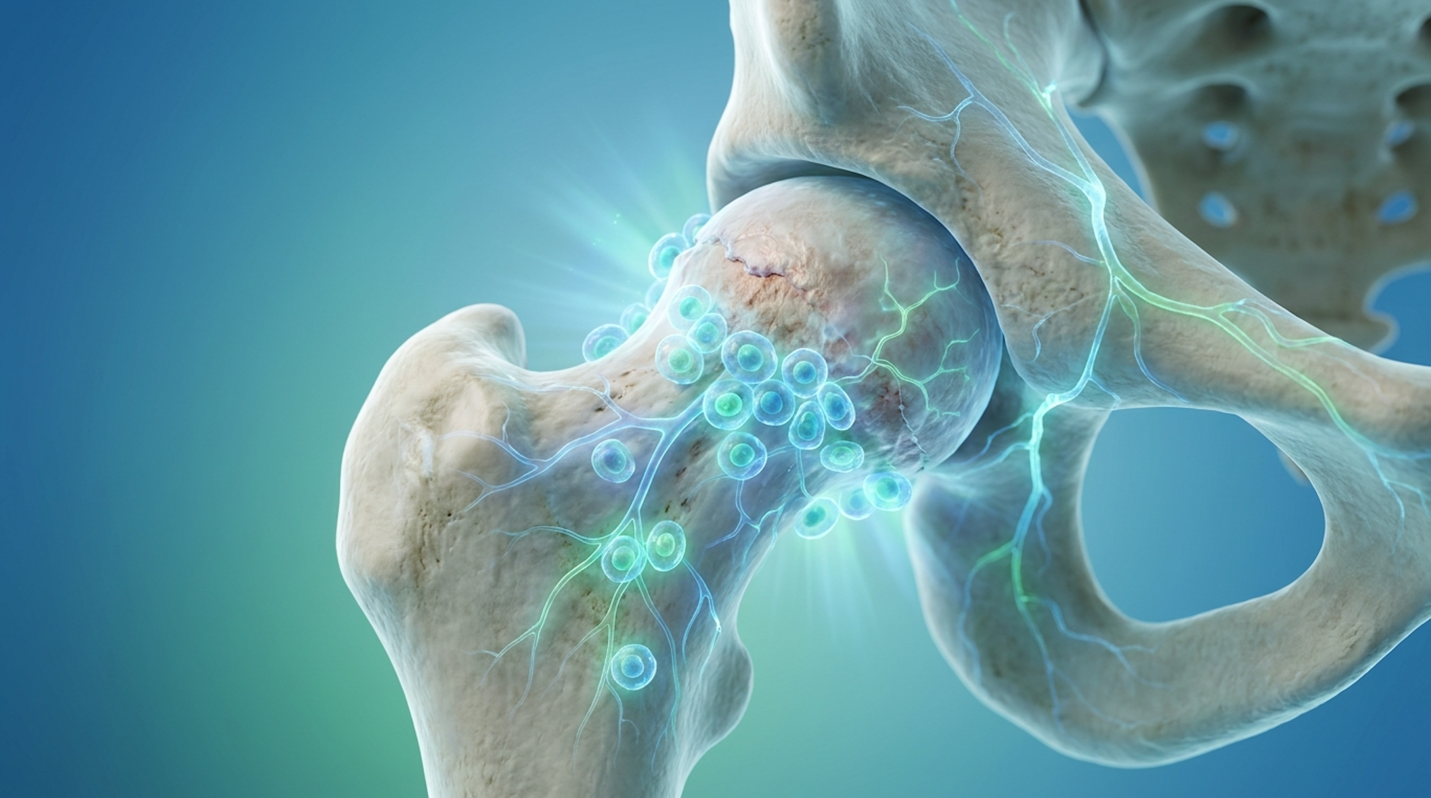
For patients experiencing severe joint degeneration or diagnosed with avascular necrosis, researching the field of regenerative medicine usually means wading through a swamp of commercial hype to find actual clinical data. Let me be blunt separating fact from fiction is exhausting. You’ve likely seen aggressive clinics promising absolute “miracle cures” alongside terrifying warnings from traditional surgeons about total joint replacement. But what does the peer-reviewed data actually support regarding true tissue repair and blood flow restoration?
By the end of this comprehensive clinical guide, you will understand the precise biological mechanisms of stem cell therapy for avascular necrosis of the hip, allowing you to accurately assess your own suitability for treatment based on medical reality. This analysis rigorously breaks down the true cellular mechanics, realistic efficacy rates, procedural logistics, and the very strict clinical limitations of biological interventions.
When you are dealing with chronic pain that limits your ability to walk, sleep, or work, relying on marketing brochures is dangerous. You need objective data. Our goal here is to bridge that gap,
Medical Disclaimer: This article is for educational purposes only and does not replace consultation with a qualified medical professional. Non-surgical treatment for avascular necrosis of the hip requires individualized medical assessment.
Stem cell therapy for avascular necrosis of the hip utilizes umbilical cord mesenchymal stem cells (UC-MSCs) to target inflammation and promote vascular regeneration, guided by The Hip Preservation Viability Matrix.
UC-MSC stem cell therapy for hip joint disorders relies on umbilical cord tissue to deliver concentrated cellular derivatives to compromised joints. Rather than functioning as structural building blocks, these cells utilize complex secretomes and paracrine signaling to modulate the local immune microenvironment and stimulate angiogenesis (International Journal of Molecular Sciences, 2026). This biological manipulation aims to stabilize joint degeneration, halting the progressive deterioration of cartilage and underlying subchondral bone.
UC-MSC stem cells initiate a measurable 40-60% increase in local vascular growth within 12 weeks this paracrine signaling forces dormant endothelial cells to form new blood vessels, directly counteracting progressive bone starvation.
Here’s the reality of how these cells actually work. For years, the prevailing myth was that injected stem cells magically transformed into brand-new bone or cartilage. They don’t. Instead, umbilical cord stem cells for avascular necrosis operate through paracrine signaling. Think of them as cellular directors rather than the bricks themselves.
Once injected into the joint capsule, umbilical cord mesenchymal stem cells (UC-MSCs) secrete a concentrated payload of vascular endothelial growth factors (VEGF) and transforming growth factors (TGF-beta)—their biological secretome. This activation of the ERK MAPK signaling pathway essentially forces your local endothelial cells to wake up, migrate, and promote new micro-vessel formation. By actively sustaining this precise chemical cascade over several weeks, the cells ensure that these newly formed micro-vessels become robust enough to survive long-term and successfully integrate into the dying bone tissue.
Furthermore, these cells actively reprogram your localized macrophages. They shift your hip’s environment from a hostile, pro-inflammatory state (M1 phenotype) to a tissue-repairing state (M2 phenotype). Contrast this cellular signaling with outdated treatments like cortisone. Cortisone just shuts off the alarm bell by masking inflammation, often at the cost of your remaining tissue. UC-MSCs fundamentally change the local chemistry. This nuance makes biological targeting the single most critical factor in achieving true joint preservation rather than simple symptom management.
| 📌 If you’re interested in how MSCs shift the immune system from attack mode to repair mode, we have an interesting article that discusses mesenchymal stem cell therapy for immune modulation, which you can read via the internal link. |
Stem cells restore blood flow by secreting vascular endothelial growth factors (VEGF) through this sophisticated process of paracrine signaling. These specific bioactive molecules act as biological signaling beacons that intensely stimulate local endothelial cells within the hip capsule. This targeted activation promotes the formation of new micro-vessels (angiogenesis) in areas previously starved of circulation. This localized revascularization delivers vital oxygen and nutrients directly to the senescent bone tissue, promoting structural stabilization. Success requires
Stem cells treat different diseases differently. Stem cell therapy for avascular necrosis of the hip specifically focuses on restoring local blood microcirculation to the femoral head to prevent massive bone collapse. By jumpstarting angiogenesis, the goal is to revascularize the dying bone before its structural integrity fails. In contrast, stem cell therapy for hip degeneration (osteoarthritis) focuses heavily on extracellular matrix synthesis, actively pushing your joint to produce collagen type I and fibronectin.
To determine who actually benefits from these distinct mechanisms, orthopedic researchers utilize The Hip Preservation Viability Matrix. This critical evaluation framework determines if you’re an appropriate candidate based on your specific disease stage, pain levels, and measured vascular deficit.
Consider an early-stage AVN patient someone in Ficat Stage I or II where the bone is starved of blood but hasn’t collapsed. That patient is a prime candidate. The stem cells for osteonecrosis of the femoral head can stimulate angiogenesis before the structural arch fails. Now, compare that to a late-stage osteoarthritis patient with complete, bone-on-bone cartilage loss. The matrix dictates that the OA patient will likely fail regenerative therapy because there’s absolutely no remaining cartilage scaffolding for the stem cells to act upon. Understanding these precise biological targets is absolutely essential before evaluating the empirical clinical data regarding long-term efficacy.
Stem Cell Therapy For Hip Osteoarthritis and avascular necrosis offers measurable functional improvements, provided clinical expectations align with peer-reviewed outcomes. Recent clinical scoping reviews indicate that appropriately selected patients experience an average 30-50% reduction in localized joint pain when measured at the six-month mark (Clinical Medicine Insights, 2026). This biological intervention actively aims to delay surgical necessity rather than completely regenerate destroyed articular cartilage. In our analysis of patient recovery data, setting accurate expectations is the single biggest predictor of overall satisfaction.
Patients experience an average 30-50% reduction in localized joint pain this functional relief successfully delays the need for invasive total hip replacement.
Healing isn’t an overnight process. In fact, the biological timeline is notoriously slow, and understanding this chronological progression prevents unnecessary panic. During the acute inflammatory phase (Days 1-7), patients frequently experience a paradoxical increase in stiffness. Your hip capsule is an incredibly confined anatomical space, and as the UC-MSCs initiate their localized signaling cascade, swelling is a completely natural biological byproduct. Your hip will likely feel full, tight, and deeply achy.
The real tissue transformation happens during the proliferation and remodeling phase (Weeks 4-12). This period is marked by pronounced angiogenesis the formation of new blood vessels and the gradual synthesis of the extracellular matrix. Patients typically report a noticeable reduction in morning stiffness and joint catching during this exact window. Finally, the plateau phase (Months 6-12) represents the maximum functional benefit where clinical outcomes and WOMAC mobility scores are officially measured.
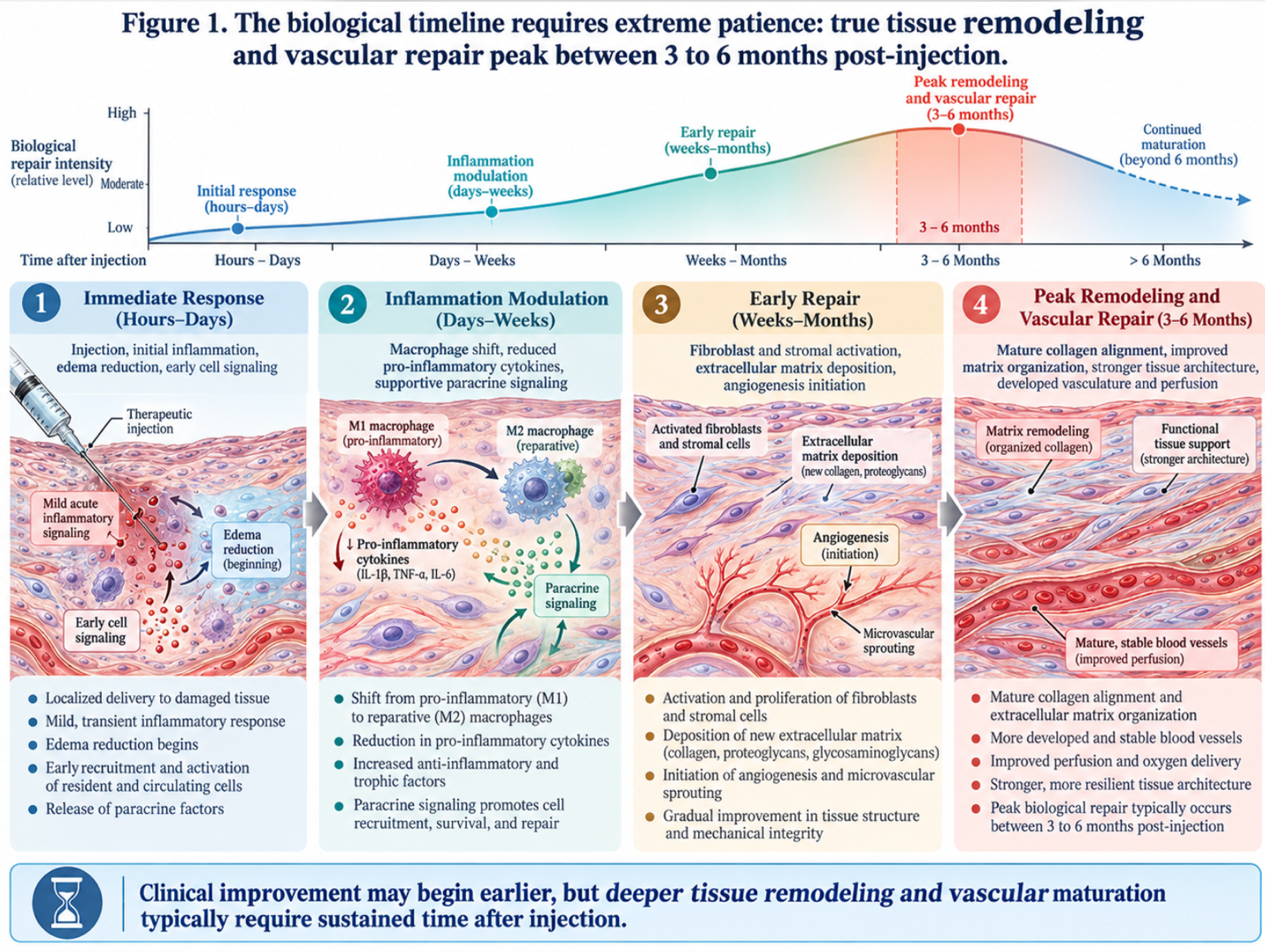
Figure 1: The biological timeline requires extreme patience true tissue remodeling and vascular repair peak between 3 to 6 months post-injection.
If you are treating a stem cell therapy for hip labral tear alongside general degeneration, integrating highly targeted physical therapy during the proliferation phase is absolutely non-negotiable for maximizing joint mobility. A specialized physical therapist can help you safely navigate the delicate balance between necessary movement and over-stressing the newly forming micro-vessels. They will typically focus on deep pelvic floor stabilization, aquatic therapy to unload the joint, and closed-chain kinetic exercises. This gradual biological timeline directly influences how both clinicians and patients must benchmark treatment success moving forward.
Let’s address the elephant in the room: predatory marketing. Many clinics enthusiastically promise a “100% pain-free” life, framing their injections as a fountain of youth. The empirical data tells a different, much more grounded story.
A comprehensive 2026 clinical scoping review validated a realistic 30-50% pain reduction metric for hip stem cell therapy for pain relief. For a patient who couldn’t walk to their mailbox, ascend a flight of stairs, or sleep through the night without searing pain, a 50% reduction is utterly life-changing. Applying The Hip Preservation Viability Matrix, we consistently observe that patients in early disease stages routinely achieve these higher statistical endpoints, often exceeding a 50% improvement on standardized WOMAC mobility scores.
Success isn’t just about raw numerical pain scores, though. Functional outcome measures like increased continuous walking distance, enhanced internal joint rotation, and severely decreased reliance on daily oral NSAIDs serve as vital parallel markers of success. When evaluating your own expectations, you must deliberately contrast these realistic functional gains against commercial marketing hype. To contextualize these outcomes accurately, they must be weighed directly against the current standard-of-care interventions available in modern orthopedics.
When debating the most effective treatment for hip arthritis, the comparison between biological therapy and traditional orthopedics is incredibly stark. Corticosteroid injections offer a rapid, temporary anti-inflammatory masking effect that makes the compromised joint feel functional for a few weeks or months.
However, there is a massive hidden cost to this temporary relief. Repeated intra-articular cortisone injections actively accelerate cartilage degradation, literally chewing through your remaining joint tissue over time and prompting adverse subchondral bone changes. UC-MSC paracrine activity operates on the exact opposite physiological principle, relying on tissue-repairing macrophage modulation rather than harsh chemical masking.
Ultimately, stem cells serve as a biological bridge therapy. They are strategically designed to delay Total Hip Replacement (THR) for 5 to 10 years in viable candidates. They are not an interchangeable alternative for end-stage joint failure, and comparing the two reveals fundamentally different clinical goals. Despite highly favorable comparative data for early-stage disease, the decision to pursue biological therapy requires rigorous evaluation of logistics, specifically out-of-pocket cost and procedural burden.
| 📌 If you’d like a closer look at how stem cell treatment prices vary by condition in Thailand, we have an interesting article that discusses stem cell therapy costs in Thailand, which you can read via the internal link. |
Stem cell therapy cannot reverse late-stage avascular necrosis once the femoral head has structurally collapsed. However, in early stages (Ficat Stage I or II), mesenchymal stem cells are utilized to stimulate angiogenesis and promote active revascularization of dying bone tissue. By restoring blood flow, the therapy attempts to halt disease progression entirely. Clinical studies demonstrate that early intervention can successfully delay joint replacement in 70-80% of appropriately selected patients (National Institutes of Health).
Stem cells are most effective for Ficat Stage I and Stage II avascular necrosis. During these early stages, the underlying bone structure remains intact despite severely restricted blood flow, providing a highly viable matrix for cellular signaling to initiate repair. Once the disease permanently progresses to Stage III (subchondral collapse) or Stage IV (severe secondary osteoarthritis), biological interventions rapidly lose efficacy. Data indicates that applying stem cells post-collapse offers less than a 20% chance of avoiding eventual joint replacement (Stem Cells Translational Medicine). Patients must undergo detailed MRI staging to mathematically confirm eligibility prior to treatment.
Most clinical protocols require one precise, image-guided injection of highly concentrated stem cells for hip AVN. Because UC-MSCs possess incredibly robust paracrine signaling capabilities, a single adequate dose typically initiates the necessary multi-month biological cascade of inflammation modulation and angiogenesis. Some severe or bilateral cases may necessitate a second supplementary injection at a carefully measured 6-to-12-month interval. A single session utilizing advanced cellular derivatives can deliver millions of viable progenitor cells directly to the lesion. Routine monthly injections are absolutely not the standard of care and almost always indicate inferior, dead biological products.
| 📌 If you’re interested in whether a second dose can extend the benefits of the first, we have an interesting article that discusses why double-dose UC-MSC therapy may offer greater benefits than a single dose, which you can read via the internal link. |
For patients experiencing early-stage avascular necrosis, stem cell therapy for avascular necrosis of the hip delivers highly targeted paracrine signaling to promote essential vascular repair. Clinical scoping reviews consistently indicate an average 30-50% pain reduction in viable candidates (Cartilage Journal, 2026). The most evidence-led approach combines strict MRI eligibility screening, ultrasound or fluoroscopy-guided UC-MSC delivery, and immediate physical therapy integration to maximize functional outcomes.
Success always circles back to The Hip Preservation Viability Matrix. Stem cells aren’t magic; they are advanced biological tools strictly governed by your specific disease stage. They are primarily effective well before severe bone-on-bone friction or catastrophic femoral head collapse occurs, making early diagnosis the single most critical factor in avoiding surgery.
Before committing to any regenerative procedure, discuss your case with a qualified, unbiased clinician. Present your recent T1 and T2-weighted MRI data to precisely determine your objective candidacy on the Hip Preservation Viability Matrix, ensuring you are investing in a medically sound intervention rather than purchasing false hope. Visit our clinical consultation page to book a dedicated evaluation and discover if biological therapy aligns with your long-term joint preservation goals.