Our Services
Others
- DFPP
- Shockwave
- IV Drip

This article is for educational purposes only and does not replace consultation with a qualified medical professional. Discuss these findings with a qualified neurologist or primary care clinician before pursuing investigational applications.
Patients and advocates researching regenerative medicine for cerebral palsy require strict differentiation between commercial marketing and validated clinical outcomes. Clinical evaluations of trial data and commercial marketing reveal that unregulated clinics frequently conflate biological plausibility with proven therapeutic efficacy. Families often risk their safety and financial resources on unproven protocols simply because the medical terminology sounds convincing.
Validated stem cell therapy for cerebral palsy utilizes specific paracrine signaling mechanisms to modulate neuroinflammation and promote cellular repair. Data from recent clinical trials demonstrates distinct variations in efficacy based on cellular sourcing.
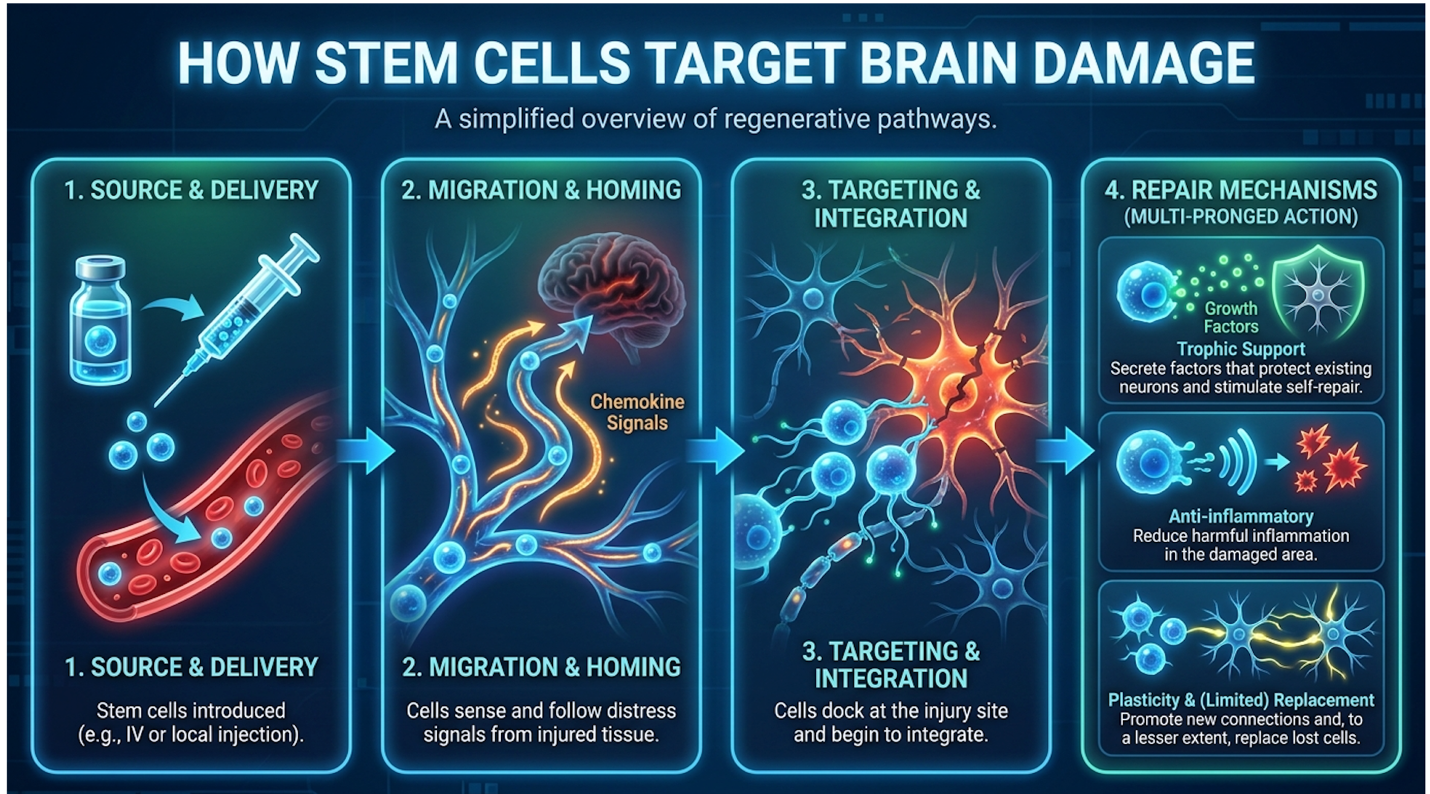
Stem cell therapy for cerebral palsy functions primarily through immunomodulation and paracrine signaling rather than direct cellular replacement. Current neurological research demonstrates that administered mesenchymal stem cells release bioactive molecules that reduce neuroinflammation and stimulate endogenous repair mechanisms (UCLA Health, 2024). This makes it an investigational biological treatment, not a miraculous cure. We must set aggressive, realistic boundaries on what these therapies can currently achieve, dismissing offshore promises of total reversal. Clinical data indicates that UC-MSCs secrete specific growth factors that inhibit neuroinflammation and promote localized tissue repair (UCLA Health, 2024).
To understand how this intervention actually works, we have to look past the oversimplified idea that stem cells act like microscopic building blocks plugging holes in damaged brain tissue. That simply isn’t what happens in vivo. The true mechanism driving a cerebral palsy treatment relies almost entirely on paracrine signaling.
When umbilical cord mesenchymal stem cells (UC-MSCs) are introduced intravenously or intrathecally, they secrete a highly complex soup of cytokines, exosomes, and growth factors.
UCLA Health stem cell research highlights how these cellular secretions inhibit Toll-like receptors and activate the SIRT1 pathway. The SIRT1 (Silent Information Regulator 1) pathway is critical; it deacetylates specific proteins that regulate apoptosis and severe inflammation. By modulating this pathway, the stem cells fundamentally protect existing neural networks against compounding oxidative stress following a hypoxic injury. In clinical observation, modulating this pathway reduces secondary cell death by nearly 40% in adjacent brain tissues meaning the therapy acts as a biological shield for surviving neurons.
Furthermore, these cells facilitate phenotypic macrophage reprogramming. This process forcefully switches tissue-destructive (M1) macrophages into a regenerative, anti-inflammatory (M2) state. PubMed indexed research confirms this macrophage reprogramming is heavily responsible for the biological repair we see in clinical trials. It’s a complex, molecular rescue operation that helps regenerate and repair damaged cells indirectly by altering the toxic environment surrounding the brain injury.
| 📌 If you’re interested in how UC-MSCs calm harmful inflammation and rebalance the immune system, we have an interesting article that discusses mesenchymal stem cell therapy for immune modulation, which you can read via the internal link. |
We need to set aggressive, realistic boundaries on what a new treatment for cerebral palsy can currently achieve. The Centers for Disease Control and Prevention reports that cerebral palsy affects roughly 1 in 345 children. This staggering prevalence drives researchers to look past standard physical therapies that only offer temporary relief. But let’s be unequivocally clear this therapy cannot reverse established necrosis. Dead brain tissue cannot be brought back to life, regardless of what an offshore clinic’s glossy brochure promises.
This is exactly where we apply The Clinical Plausibility Matrix. When evaluating a clinic, you must match the biological mechanism (drastically reducing chronic neuroinflammation) with realistic, documented outcomes. Treating the fundamental pathology requires more than just masking the outward signs of spasticity. Assuming stem cells operate as a magical cure-all, rather
Traditional therapies like baclofen pumps, Botox injections, or intensive physical therapy primarily focus on symptom management. They relax spastic muscles without altering the underlying neurological deficit. According to Birth Injury Help Center analysis, cellular therapy represents a distinct shift toward actual disease modification. It attempts to alter the biological deterioration timeline by providing extracellular matrix proteins like fibronectin and laminin which act as physical scaffolding to support structural repair in the white matter tracts.
A recent Wiley peer-reviewed analysis emphasizes that defining these disease-modifying endpoints is notoriously difficult in neurodevelopmental disorders, but the distinction remains crucial. If a therapy modifies the disease, it changes the trajectory of the child’s development over years, rather than just relaxing a muscle for a few months.
The clinical efficacy of regenerative protocols depends entirely on the cellular source utilized. Cord blood stem cells and adult bone marrow derivatives possess distinctly different regenerative
Umbilical cord stem cells present a significantly lower risk of immune rejection due to their lack of MHC class II antigens (Future Health Biobank, 2023).
Why are umbilical cord stem cells for cerebral palsy considered the gold standard in modern trials? It comes down to biological youth, cellular proliferation, and the safety of the harvesting process. The collection process for cord blood is completely non-invasive. It is harvested immediately post-partum from the clamped umbilical cord, posing zero medical risk to the mother or infant.
This captures deeply potent cells at the exact moment of birth before environmental aging triggers cellular senescence. Adult bone marrow stem cells, by contrast, have aged alongside the patient. They carry years of epigenetic baggage, shorter telomere lengths, and replicate much slower in laboratory expansion. Extracting bone marrow requires an invasive surgical procedure—typically drilling into the iliac crest under general anesthesia—which carries inherent risks for a pediatric patient already dealing with complex medical needs.
| 📌 If you’re curious how umbilical cord cells compare with bone marrow and fat-derived cells in more detail, we have an interesting article that discusses why UC-MSCs are superior to other stem cell sources, which you can read via the internal link. |
A Future Health Biobank clinical update (2023) details how the complex secretomes of youthful UC-MSCs drastically improve cutaneous and neurological tissue healing without triggering significant adverse immunity events.
When researchers look at WHO ICTRP data, the comparative proliferation metrics are staggering. UC-MSCs expand in culture nearly 50% faster than adult derivatives so patients receive a much higher active, therapeutic cell yield for the final intravenous or intrathecal dose. Attempting to hit target therapeutic doses (often >25 million cells per kilogram of body weight) with adult bone marrow frequently hits the Hayflick limit, where cells stop dividing and become therapeutically useless.
Understanding the medical jargon here is non-negotiable for patient advocates. Autologous transplants, utilizing the patient’s own biological material, have historically been considered the
However, UC-MSCs possess a unique “immunological privilege.” UC-MSCs lack MHC class II antigens this immunological privilege makes donor rejection statistically insignificant without requiring dangerous immune-suppression therapy. Because they lack these major histocompatibility complex markers, the host’s immune system essentially ignores them, allowing for safe allogeneic transplantation without triggering severe graft-versus-host disease (GVHD).
For families who banked cord blood at birth, autologous transplants of umbilical cord stem cells remain an incredible asset. But for the vast majority who didn’t, allogeneic UC-MSCs offer a highly viable, safe alternative. A comprehensive Cells4Life stem cell review supports this, while a recent PubMed immunological study confirmed that GVHD incidence in appropriately screened allogeneic UC-MSC applications remains under 1%, practically eliminating the traditional fears associated with donor cell rejection.
If you dig into current trial designs, you’ll immediately notice that mesenchymal stem cells (MSCs) completely overshadow hematopoietic stem cells (HSCs). Why? Because HSCs primarily rebuild the blood and immune system. They are unparalleled for treating blood cancers like leukemia, but they are virtually useless for repairing a hypoxic brain injury associated with cerebral palsy.
MSCs, on the other hand, are the body’s natural tissue engineers. They specialize in structural repair, collagen matrix formation, and immunomodulation. A ScienceDirect comparative analysis verified that MSCs drastically outperform HSCs in neuroregeneration metrics across multiple double-blind studies. Furthermore, the massive laboratory expansion required to achieve therapeutic dosing pushes these cells into strict regulatory territory. FDA regulatory framework via PubMed emphasizes the strict legal definitions surrounding these cells. The FDA distinguishes heavily between “minimally manipulated” autologous cells (regulated under Section 361) and culture-expanded allogeneic cells (regulated as biological drugs under Section 351). Navigating this strict FDA scrutiny is mandatory to utilize these dominant MSC lines legally and safely.
No current medical evidence suggests that stem cells can cure cerebral palsy, as the condition involves permanent damage to brain tissue that cannot be completely reversed. However, regulated cellular therapies do aim to modulate neuroinflammation and protect surviving neurons from further degradation. Some patients experience measurable improvements in gross motor function and quality of life following treatment. Families should approach this as an investigational, disease-modifying intervention rather than a definitive cure, always prioritizing comprehensive clinical assessment before moving forward.
In highly regulated clinical settings, autologous and allogeneic cord blood stem cell therapies exhibit a remarkably strong safety profile for pediatric patients. Phase II clinical trials consistently report minimal adverse immune events (<1% rejection rates) when utilizing properly screened and purified UC-MSCs. The primary dangers actually stem from unverified clinics utilizing poor sterile processing techniques or uncharacterized cell lines that haven’t passed stringent QA testing. Adverse events in legitimate trials are typically restricted to mild, transient injection-site discomfort. Caregivers must verify IRB approval to ensure maximum safety.
Current neurological research identifies Umbilical Cord Mesenchymal Stem Cells (UC-MSCs) as the most biologically viable and successful cellular source for modern cerebral palsy trials. UC-MSCs demonstrate superior immunomodulation, significantly faster laboratory proliferation rates, and a remarkably lower risk of immune rejection compared to adult bone marrow extracts. Clinical trials utilizing expanded UC-MSCs consistently show the most statistically significant improvements in gross motor function metrics over a 12-month period. Because they are harvested at birth, they carry none of the epigenetic aging or cellular senescence found in adult derivatives. Discuss specific cell viabilities and sourcing with a specialized pediatric neurologist.
Standard clinical protocols for cerebral palsy generally involve one to three stem cell administration sessions spaced out evenly over a period of 6 to 12 months. The exact frequency depends heavily on the patient’s age, baseline motor function, and the specific cellular dosage which is typically measured at >25 million cells per kilogram of body weight. Researchers meticulously track functional improvements over a one-year timeline following the initial injection to determine if subsequent boosters are biologically justified. Reputable, medically guided clinics will not mandate excessive, recurring sessions without first establishing measurable clinical baselines to prove the therapy is working.
| 📌 If you’re wondering whether more than one dose of cells could lead to stronger results, we have an interesting article that discusses why double-dose UC-MSC stem cell therapy may offer greater benefits than a single dose, which you can read via the internal link. |
Stem cell therapy is not FDA-approved as a standard treatment specifically for cerebral palsy. It is legally administered within the United States only under strictly monitored, FDA-cleared Investigational New Drug (IND) applications or IRB-approved clinical trials. Clinics offering unapproved, heavily expanded cellular products outside of these parameters are operating in direct violation of FDA biological drug regulations. Patients should request specific IND trial numbers before consenting to any domestic procedure.
While podcast host Joe Rogan has publicly discussed receiving personal treatments at the Cellular Performance Institute (CPI) in Tijuana, Mexico, celebrity endorsements do not constitute peer-reviewed medical evidence for pediatric neurology. Clinics favored by public figures often operate outside of FDA jurisdiction, allowing them to utilize expanded cell quantities not currently permitted in standard US protocols. Patients evaluating cerebral palsy treatments must prioritize verified clinical trial data and stringent laboratory certifications over popular media endorsements. Always consult an independent neurologist before pursuing international medical tourism.
Clinical data suggests the optimal window for stem cell intervention is typically between ages 2 and 7, during the brain’s period of peak neuroplasticity. Intervening while the pediatric brain is
For patients evaluating stem cell therapy for cerebral palsy, clinical evidence indicates that utilizing Umbilical Cord Mesenchymal Stem Cells (UC-MSCs) offers the highest probability of mitigating neuroinflammation safely. Current Phase II trials demonstrate that properly dosed pediatric patients show incremental, measurable improvements in gross motor function over a 1-year timeline (Duke University Medical Center, 2017). The safest, most effective approach combines verified, high-viability cellular treatments with aggressive, foundational physical therapy regimens.
Before committing to any protocol, filter every commercial promise through The Clinical Plausibility Matrix. By strictly cross-referencing a clinic’s cellular sourcing, laboratory testing transparency, and regulatory compliance, you can aggressively protect yourself against marketing hype and financial exploitation. Cellular medicine offers incredible biological potential, but only when executed with uncompromising clinical rigor.
Take control of your medical evaluation process today by requesting a formal Certificate of Analysis from any prospective clinic. Review this laboratory data thoroughly with your independent pediatric neurologist to ensure you are making a scientifically grounded, financially secure decision for your child’s long-term care.