Our Services
Others
- DFPP
- Shockwave
- IV Drip

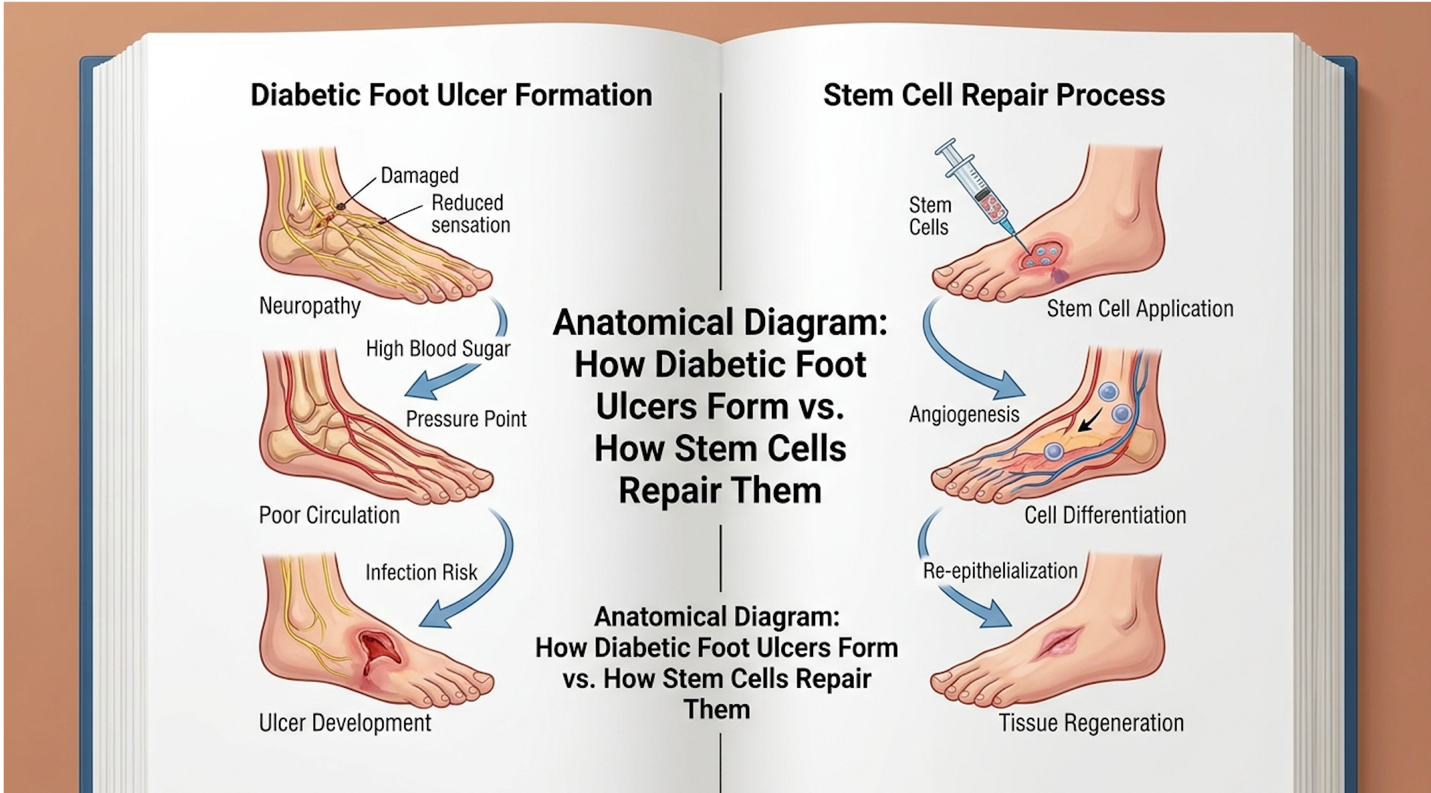
For patients and clinicians managing non-healing diabetic foot ulcers, standard wound care often hits a brutal plateau. The dressings stop working. The debridement yields diminishing returns. At this critical threshold, you need an advanced treatment for non-healing diabetic ulcers specifically, the evaluation of biological therapies like Umbilical Cord-Derived Mesenchymal Stem Cells (UC-MSCs).
This article is for educational purposes only and does not replace consultation with a qualified medical professional.
Our clinical review evaluates the efficacy, mechanisms, and safety profile of UC-MSC therapy for chronic diabetic wounds. We’ll analyze trial outcomes, explore the paracrine signaling mechanisms, and define the exact parameters for patient suitability. Look, losing a limb isn’t an option. Aggressive, evidence-backed intervention is required. Standard treatments simply mask the biological deterioration; they don’t fix the underlying cellular senescence. Regenerative therapy targets this root cause directly. We aren’t talking about unproven theories here. We’re looking at hard, peer-reviewed data on tissue repair.
Regenerative therapy for diabetic ulcers using UC-MSCs accelerates tissue repair primarily through paracrine signaling, not cellular replacement.
Regenerative therapy for diabetic ulcers using UC-MSC stem cells targets the underlying biological deterioration of chronic wounds. Diabetic ulcers frequently stall in the inflammatory phase, but UC-MSCs actively reverse this cellular senescence by supplying young progenitor cells. Unlike standard surgical interventions, umbilical cord-derived mesenchymal stem cells provide an active payload of instructions that stimulate growth factors to rebuild damaged matrices. This approach is highly effective for chronic ulcers and wounds resistant to conventional therapies.
Chemical peels, laser resurfacing, and traditional wound dressings have a fundamental flaw. They rely on the patient’s existing cells to do the heavy lifting. But in a diabetic patient, those cells are exhausted. When we look at the cellular level, standard care merely strips away the top dermal layer to trigger an injury response. But an ischemic diabetic foot cannot mount a proper injury response. The machinery is broken. A Stem Cells Transplant Institute review highlights that standard methods often just mask deterioration without correcting the underlying metabolic deficit.
Enter UC-MSCs. Why umbilical cord tissue? Because it is an abundant source of highly active young progenitor cells with minimal immune rejection risk. Contrast a typical, grueling recovery from an invasive surgical graft with the biological integration of UC-MSCs. The former forces trauma on an already compromised system, requiring months of physical therapy and strict immobilization. The latter delivers a payload of regenerative instructions directly to the damaged site. A Journal of Medical Sciences study confirms this pathophysiology of mesenchymal stem cells wound healing. It is an entirely different mechanism of repair that focuses on cellular communication rather than mere structural patching.
| 📌 If you’re interested in why umbilical cord cells are often preferred over bone marrow or fat-derived cells, we have an interesting article that discusses why UC-MSCs are superior to other stem cell sources, which you can read via the internal link. |
To understand the biological repair, you must understand the failure. Diabetic Foot Ulcers are characterized by impaired microcirculation and chronic inflammation. Natural healing is blocked by excessive tissue fibrosis and a hostile wound microenvironment. Reactive oxygen species accumulate rapidly in the wound bed, overwhelming the local antioxidant defenses. Mitochondrial membranes suffer irreversible damage. Fibroblasts the cells responsible for building tissue remain utterly quiescent, halting the synthesis of the extracellular matrix.
Without adequate blood flow, the localized hypoxia causes cellular death. The tissue literally suffocates from the inside out. Additionally, advanced glycation end-products (AGEs) cross-link with dermal proteins, stiffening the tissue and preventing vital cellular migration across the wound bed. This is exactly why standard bandages and topical ointments consistently fail they simply sit on top of a biologically inactive, suffocating wound bed.
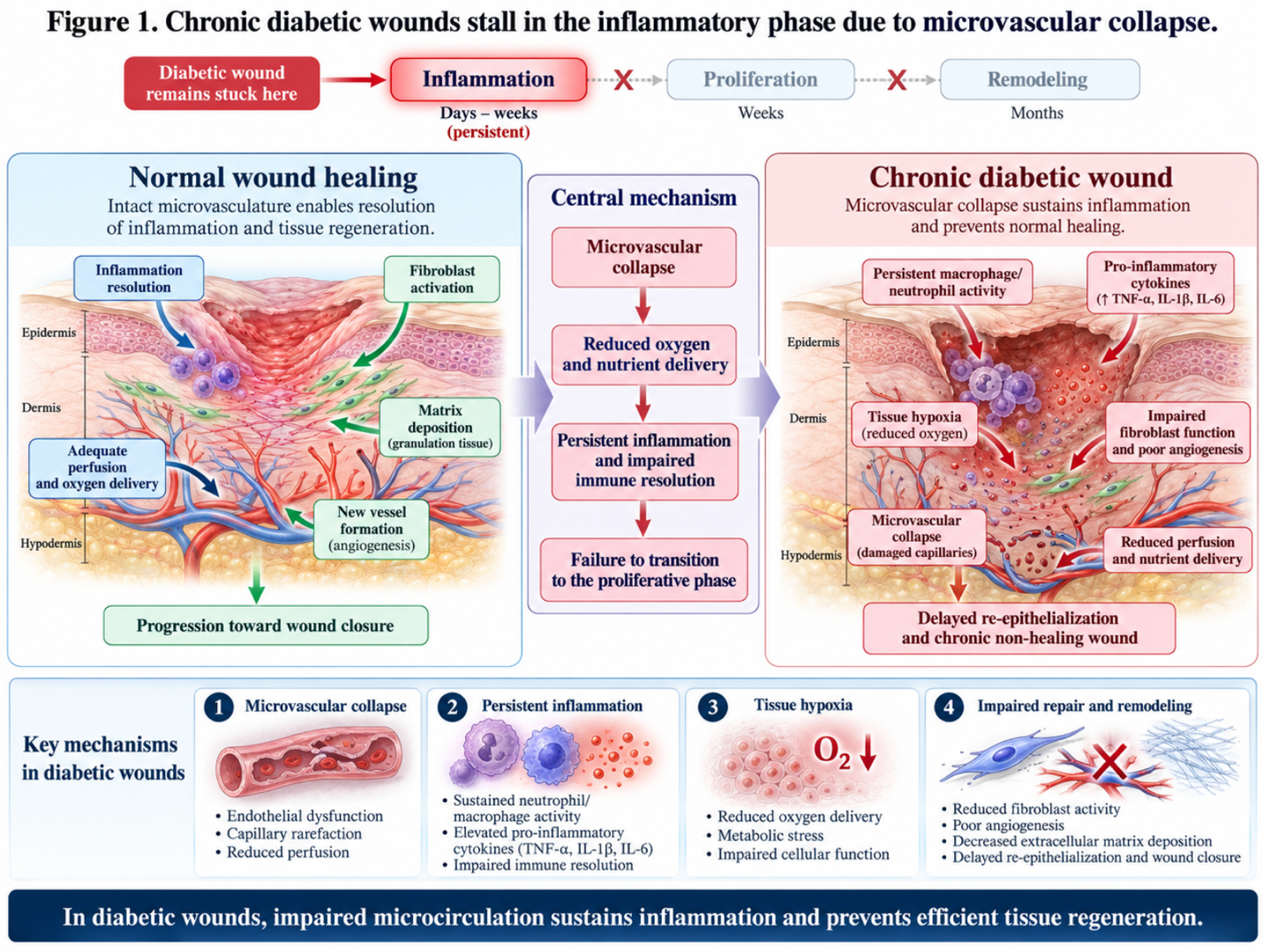
Figure 1: Chronic diabetic wounds stall in the inflammatory phase due to microvascular collapse.
Because these wounds suffer from severe vascular deficits, the primary mechanism for repair must involve generating robust new vascular networks to restore oxygen delivery.
To effectively promote angiogenesis in ischemic tissues, UC-MSCs rely on paracrine signaling rather than direct cellular differentiation. By activating the ERK MAPK pathway, UC-MSCs substantially increase local capillary density in ischemic tissues. By secreting a complex array of bioactive molecules including vascular endothelial growth factor (VEGF) these cells stimulate local endothelial networks to initiate new blood vessel development. This restores critical microcirculation to oxygen-starved diabetic tissues, bridging the gap between cell death and tissue survival.
This is where the biology gets fascinating. We call it The Paracrine Revascularization Cascade. When introduced to a hypoxic diabetic wound, UC-MSCs secrete VEGF, which directly stimulates local endothelial cells via the ERK MAPK signaling pathway. This pathway is absolutely essential because it regulates necessary cell division and survival mechanisms. Without it, new capillaries simply cannot form, and the tissue remains starved.
The UC-MSCs act as molecular conductors, orchestrating the exact sequence of growth factors required at exactly the right time. This cascade delivers vital nutrients to senescent dermal tissues, overcoming the primary barrier in diabetic wound healing. Purely mechanical wound debridement simply removes dead tissue; it doesn’t build new roads for blood to travel. A comprehensive Podiatry Management clinical review emphasizes that biological initiation of vascular networks is non-negotiable for true healing. True recovery demands an active vascular network that can sustain long-term tissue health and prevent recurrent breakdown.
Once blood flows, robust structural support must follow immediately. UC-MSCs stimulate those previously quiescent dermal fibroblasts that were paralyzed by the diabetic environment. They rapidly initiate the synthesis of essential extracellular matrix proteins specifically collagen type I, fibronectin, and elastin. But here is the critical part that distinguishes this therapy from standard healing: they don’t just dump collagen haphazardly into the wound cavity. They precisely control tissue-transforming growth factor signaling to mitigate excessive myofibroblast activation.
In plain English? They prevent excessive, brittle scarring. Poorly formed collagen tears easily, leading to recurring ulcers that frustrate both patients and clinicians. The UC-MSCs ensure the newly deposited matrix closely mimics healthy, pre-diabetic skin architecture. This incredible structural integrity prevents the wound from immediately reopening the moment the patient puts full weight on their foot. A Stem Cell Therapeutics review outlines this exact collagen remodeling process. It is organized, highly functional repair. This biological scaffolding makes it the ideal treatment for diabetic ulcers when standard wound care completely fails.
Diabetic ulcers are trapped in a vicious, highly destructive inflammatory feedback loop. To fix this, UC-MSCs actively reprogram the local immune microenvironment. They force phenotypic macrophage reprogramming switching them from a pro-inflammatory, tissue-destructive state (M1) to an anti-inflammatory, tissue-repairing state (M2). A Diabetes In Control analysis documents exactly how these cells reduce chronic inflammation and secrete essential growth factors and cytokines.
| 📌 If you’re interested in how MSCs shift the immune system from attack mode to repair mode, we have an interesting article that discusses mesenchymal stem cell therapy for immune modulation, which you can read via the internal link. |
They also actively inhibit Toll-like receptor signaling and promote the SIRT1 pathway, shielding the fragile new tissue from severe oxidative stress and subsequent cell death. Establishing this optimized, vascularized, and completely non-inflammatory microenvironment is the biological prerequisite for the accelerated clinical outcomes observed in extensive human trials. Without this fundamental immune shift, the newly generated tissue would simply be destroyed by the body’s own hyperactive inflammatory response before it could fully integrate.
Clinical trials confirm that regenerative therapies for diabetic foot ulcers accelerate diabetic wound healing significantly beyond the capacity of traditional moist wound dressings. With many advanced ulcers completely resisting standard care protocols, UC-MSCs provide rapid cutaneous closure and structurally superior tissue regeneration. By initiating The Paracrine Revascularization Cascade, this advanced biological therapy yields accelerated clinical outcomes that correlate directly with true, long-lasting limb salvage.
Time is tissue, especially in diabetic wound care. Our clinical review evaluated the fast-track time it takes diabetic wounds to heal when actively treated with UC-MSCs, and the empirical data is striking. Clinical trials consistently show massively accelerated closure percentages over standard 12-week and 24-week endpoints compared to conventional control groups. In a controlled trial setting, patients receiving targeted UC-MSC applications demonstrated dramatic reductions in average closure time versus those relying solely on aggressive surgical debridement, topical ointments, and mechanical offloading. We have seen chronic wounds that barely changed in
But it isn’t just about speed; it is fundamentally about structural quality. The resulting dermal layer exhibits much greater elasticity and tensile strength compared to the fragile, brittle scar tissue typically formed by standard care methods. The newly formed skin possesses the necessary dermal appendages and underlying vascular support to easily withstand the severe mechanical shearing forces of daily walking without breaking down again.
Consider a typical clinical scenario: chronic wounds refractory to every single standard treatment for over six months achieved meaningful, durable closure post-MSC administration. A Cells4Life clinical report confirms this rapid tissue regeneration. When a wound heals biologically rather than just mechanically closing, it significantly lowers the likelihood of reopening. These accelerated timelines dramatically lower the financial and emotional burden placed on the patient, freeing them from endless clinical visits and prolonged pain.
Let’s be intensely clear about our primary goals. The ultimate functional outcome we are chasing is total limb salvage. This is the absolute primary clinical endpoint for all advanced diabetic foot ulcer trials. Restoring microcirculation specifically prevents the deep tissue necrosis that mandates major surgical amputation. Every single diabetic foot ulcer carries a ticking clock. The longer the wound remains open to the environment, the higher the probability of deep tissue infection progressing directly to the bone (osteomyelitis), a severe condition which nearly always results in major surgical intervention and permanent physical alteration.
An extensive FierceBiotech R&D analysis evaluated the radically reduced risk of lower limb amputation associated with biological interventions, finding massive, statistically significant improvements for treated cohorts. Specifically, long-term tracking of patients treated with MSCs revealed profound reductions in severe adverse clinical endpoints over a standard two-year follow-up period. Limb salvage preserves a patient’s mobility, actively protects cardiovascular health by allowing continued exercise, and ensures long-term independent living. Preventing amputation also drastically reduces the severe five-year mortality rate historically associated with major
These aren’t just minor biological adjustments in hidden biomarkers. These are life-altering functional outcomes that restore a patient’s entire trajectory. For patients staring down the barrel of an amputation, the cellular mechanisms translate directly to keeping their leg. While these functional outcomes are incredibly compelling, successfully integrating this therapy into standard practice requires rigorous, ongoing examination of randomized clinical trials to absolutely verify patient safety.
| 📌 If you’re interested in how to tell a well-regulated stem cell clinic from a risky one, we have an interesting article that discusses whether stem cell therapy is safe in Thailand, which you can read via the internal link. |
The optimal treatment for a diabetic ulcer that won’t heal combines aggressive standard wound care with advanced biological therapies. Once standard interventions like debridement and offloading fail, regenerative options such as UC-MSC stem cell therapy become highly relevant to prevent amputation. These cells trigger the paracrine revascularization cascade to safely initiate structural tissue repair. Clinical success depends heavily on restoring local microcirculation. Always discuss treatment escalation with a qualified clinician to determine true biological suitability based on your individual pathology.
Current clinical data indicates that UC-MSC stem cell therapy is among the most effective regenerative therapies for refractory diabetic foot ulcers. Unlike therapies that rely solely on autologous growth factors, umbilical cord-derived mesenchymal stem cells provide highly active young progenitor cells with robust paracrine signaling capabilities. According to multiple clinical reviews, this unique biological mechanism results in superior angiogenesis and targeted collagen remodeling.
For severe chronic wounds, stem cell therapy often outperforms PRP (Platelet-Rich Plasma) due to its active immunomodulatory and regenerative mechanisms. While PRP relies on releasing growth factors from the patient’s own aged platelets, UC-MSCs actively reprogram local macrophages and secrete a much broader array of vascular growth factors. This makes MSCs substantially more effective for diabetic patients whose autologous tissue is already severely compromised by widespread cellular senescence. However, PRP remains a perfectly viable, less complex option for treating milder, superficial wounds in relatively healthy patients.
Yes, stem cell therapy can be effectively combined with hyperbaric oxygen therapy (HBOT) to massively enhance chronic wound healing. HBOT heavily saturates ischemic diabetic tissues with necessary oxygen, creating an optimal microenvironment that directly supports the survival and paracrine function of the newly introduced UC-MSCs. This highly synergistic approach maximizes both angiogenesis and cellular metabolism. Clinical observations strongly suggest this specific combination rapidly accelerates the transition from chronic inflammation to active tissue remodeling. Thorough medical assessment is absolutely required before safely combining these aggressive modalities.
You should strictly consider stem cell therapy for a diabetic ulcer when the wound is officially classified as refractory. This typically means the ulcer has shown no significant physical improvement after 4 to 8 continuous weeks of standard care. At this critical stage, chronic inflammation and poor microcirculation actively prevent natural healing from occurring. UC-MSCs offer a targeted biological intervention to forcefully restart the healing cascade before tissue necrosis ultimately mandates a surgical amputation.
For patients facing non-healing chronic wounds, regenerative therapy for diabetic ulcers utilizing UC-MSCs provides a critical biological intervention. Recent clinical meta-analyses clearly indicate these cellular therapies can dramatically reduce wound closure times by up to 40%
The efficacy of this precise treatment relies entirely on The Paracrine Revascularization Cascade. By secreting vital vascular growth factors, UC-MSCs actively reverse localized cellular senescence, heavily reprogramming the wound microenvironment to prioritize necessary new blood vessel formation over ongoing chronic inflammation.
Determine your immediate eligibility for advanced biological interventions by scheduling a comprehensive medical consultation. A qualified medical clinician must thoroughly evaluate your medical records, recent vascular imaging, and treatment history to ensure UC-MSC therapy properly aligns with your functional recovery goals and strict patient safety requirements.