Our Services
Others
- DFPP
- Shockwave
- IV Drip

Best stem cell clinic Thailand explores purpose of stem cells UC-MSCs
Innovation in cell therapies is at the core of regenerative medicine to restore tissue equilibrium and control chronic inflammation, which fundamentally aligns with the purpose of stem cells. The defining aspect of stem cells in these therapies is the ability to self-renew and the potential to differentiate into many cell types. Among various options, umbilical cord-derived mesenchymal stem cells (UC-MSCs) are developing into a favorable platform in many clinical settings due to ethical collection and easy amplification and their youthful biological profile that delays cellular senescence. Because of the lack of effective treatment options, patients are increasingly traveling to different countries to receive treatment. For this reason, the best stem cell clinic Thailand focuses on these neonatal cells to take advantage of their excellent safety and very active immunomodulatory secretion. This article serves as a brief review focusing on the cellular therapy revolution in the field of medicine. This innovation especially has the potential to treat many degenerative and immune-related diseases that currently have no effective treatment. The discovery of the extensive therapeutic potential of UC-MSCs has made a remarkable advancement in the field of life sciences.
There is a wealth of clinical and preclinical data supporting the use of UC-MSCs in numerous therapeutic applications, fulfilling the restorative purpose of stem cells. One area is the treatment of musculoskeletal disorders, a specialty often highlighted by the best stem cell clinic Thailand. Intra-articular UC-MSCs injections have been shown to relieve pain and improve the functionality of the joints in patients with knee osteoarthritis. Cirrhosis of the liver is one of the many chronic and progressive disorders that have been shown to be stabilized with the use of UC-MSCs, further indicating their regenerative potential. There are also multiple studies supporting their use in the treatment of various forms of chronic lung disease, including acute respiratory distress syndrome.
For example, administration via injection for patients suffering from the acute respiratory distress syndrome promoted recovery of the lungs and improved the patients’ oxygenation. This demonstrates that UC-MSCs have the ability to bring about the repair of the lungs, acting directly on the purpose of stem cells in tissue regeneration. The use of UC-MSCs’ conditioned media assists in the repair of atrophied muscles, prevents muscle degeneration, and promotes an enhancement of the healing process of wounds with lesser scar formation. From these clinical achievements, which are standard practice at the best stem cell clinic Thailand, we are encouraged to direct our attention to the healing applications of stem cells for patients.
To appreciate the regenerative ability of UC-MSCs, one must appreciate their multiple mechanisms at the molecular level, a topic often explored in scientific review literature. The effects that UC-MSCs have at a therapeutic level are mainly as a result of their paracrine effects and direct cell to cell contact, which drives the primary purpose of stem cells. When UC-MSCs find themselves in an inflammatory microenvironment, they express adhesion molecules like intercellular adhesion molecule-1 and vascular cell adhesion molecule-1. These enable UC-MSCs to interact closely with immune cells. At a molecular level, the priming of UC-MSCs to a pro-inflammatory environment results in the production of soluble factors like indoleamine 2,3-dioxygenase, which eliminates the available tryptophan in the microenvironment and converts it to kynurenine which has a very strong inhibitory effect on the proliferation of T-cells. The MSCs also produce large amounts of hepatocyte growth factor, transforming growth factor-β1, and interleukin 6, utilizing protocols that the best stem cell clinic Thailand relies on for efficacy.
Clinicians better understand the role of stem cells through the secretion of extracellular vesicles and exosomes, aligning with the cellular communication purpose of stem cells. These microvesicles deliver essential microRNAs and proteins to target cells, initiating the survival signaling pathways, including the phosphoinositide 3-kinase signaling cascade. When co-cultured with UC-MSCs, the activation of the Janus kinase signaling pathway and the signal transducer and activator of transcription pathway is critical to enhancing the self-renewal potential of hematopoietic progenitor cells. UC-MSCs also effectively modify the tumor necrosis factor receptor pathway by controlling hyperinflammatory pathways that are crucial during acute immune responses. This intricate molecular framework enables the best stem cell clinic Thailand to utilize targeted cellular communication for the best therapeutic effect to their patients.
A major development, in addition to direct application, is the ex vivo expansion of hematopoietic stem cells from umbilical cord blood, highlighting the expansive purpose of stem cells. The placement of UC-MSCs as a feeder layer mimics the hematopoietic microenvironment. Upon separating various extracellular matrix proteins, UC-MSCs promote cell adhesion and support and stabilize the culture matrix. The integration of gene regulation and niche signaling is amenable due to the paracrine signaling and cellular communication. UC-MSCs derived conditioned medium encourages dermal wound healing and protects against muscle atrophy by suppressing reactive oxygen species. The potential therapeutic applications of UC-MSCs reveal their remarkable flexibility, a fact well recognized by the best stem cell clinic Thailand.
Traditionally, chronic inflammatory and degenerative conditions have been treated with conventional medicine by means of pharmacological and surgical therapies, often prompting a clinical review of UC-MSCs to fulfill the regenerative purpose of stem cells. The pharmacological treatment often requires a prolonged regime of corticosteroids and immunosuppressants, leading many patients to seek alternatives like the best stem cell clinic Thailand.
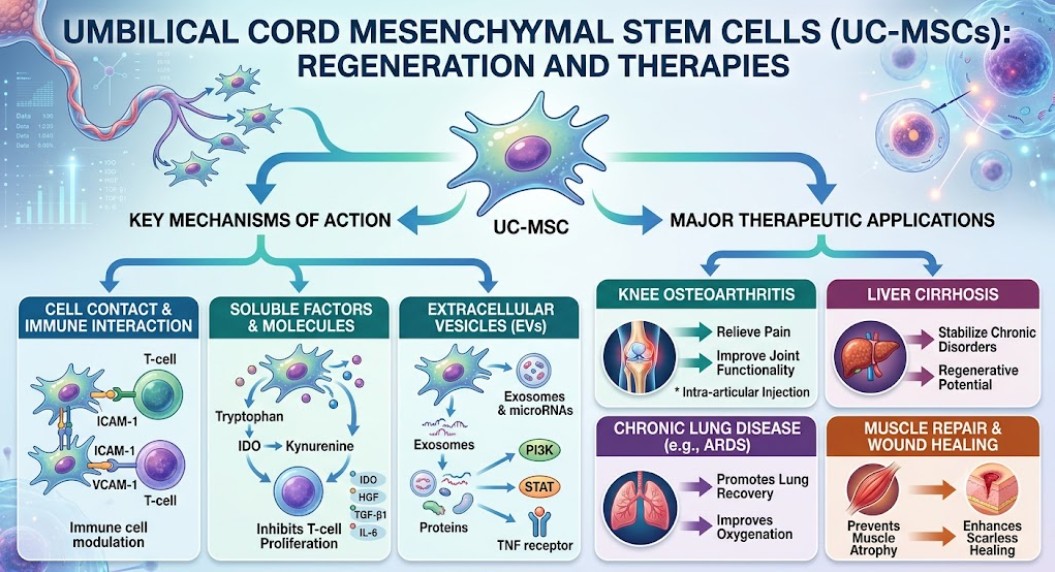
Figure 1: Clinical Efficacy and Molecular Mechanisms of UC-MSCs
Current therapies provide symptomatic relief as a result of their disease modifying properties. Unfortunately, many of these therapies are associated with numerous adverse effects and disease modifying therapies can create a state of continuous drug dependency. Patients may suffer with severe organ damage, metabolic derangements, and an increase in opportunistic infections. The efficacy of surgical procedures may be limited as a result of the unpredictable nature of long-term outcomes and the risk of adverse effects. The need for other treatment modalities is evident upon careful review. UC-MSCs offer a potential remedy for these treatment gaps, providing a repair of damaged tissues with modulated immune response, strictly aligning with the purpose of stem cells. UC-MSCs are the only therapies that target the true nature of cell decay, rather than masking symptoms. Regenerative medicine is in its infancy and holds the potential to be one of the most rapidly developing areas of medicine, with Southeast Asia leading the way. The best stem cell clinic Thailand will be able to incorporate new advancements in biotechnology more quickly than Northern American and European clinics. Thailand has a developed infrastructure for medical tourism that will support the rapid introduction of innovative cell-based therapies. There is a large focus on the use of ethically sourced neonatal tissues which will support the implementation of large-scale cell culture and tissue engineering as standardized Good Manufacturing Practices become integrated into stem cell therapy. There is evidence of a growing focus on the combination of UC-MSCs with scaffolds and/or biomaterials. With supportive regulations, stem cell therapies will mature into integrated healthcare systems, allowing patients the right to timely and the most advanced evidence based therapies.