Our Services
Others
- DFPP
- Shockwave
- IV Drip

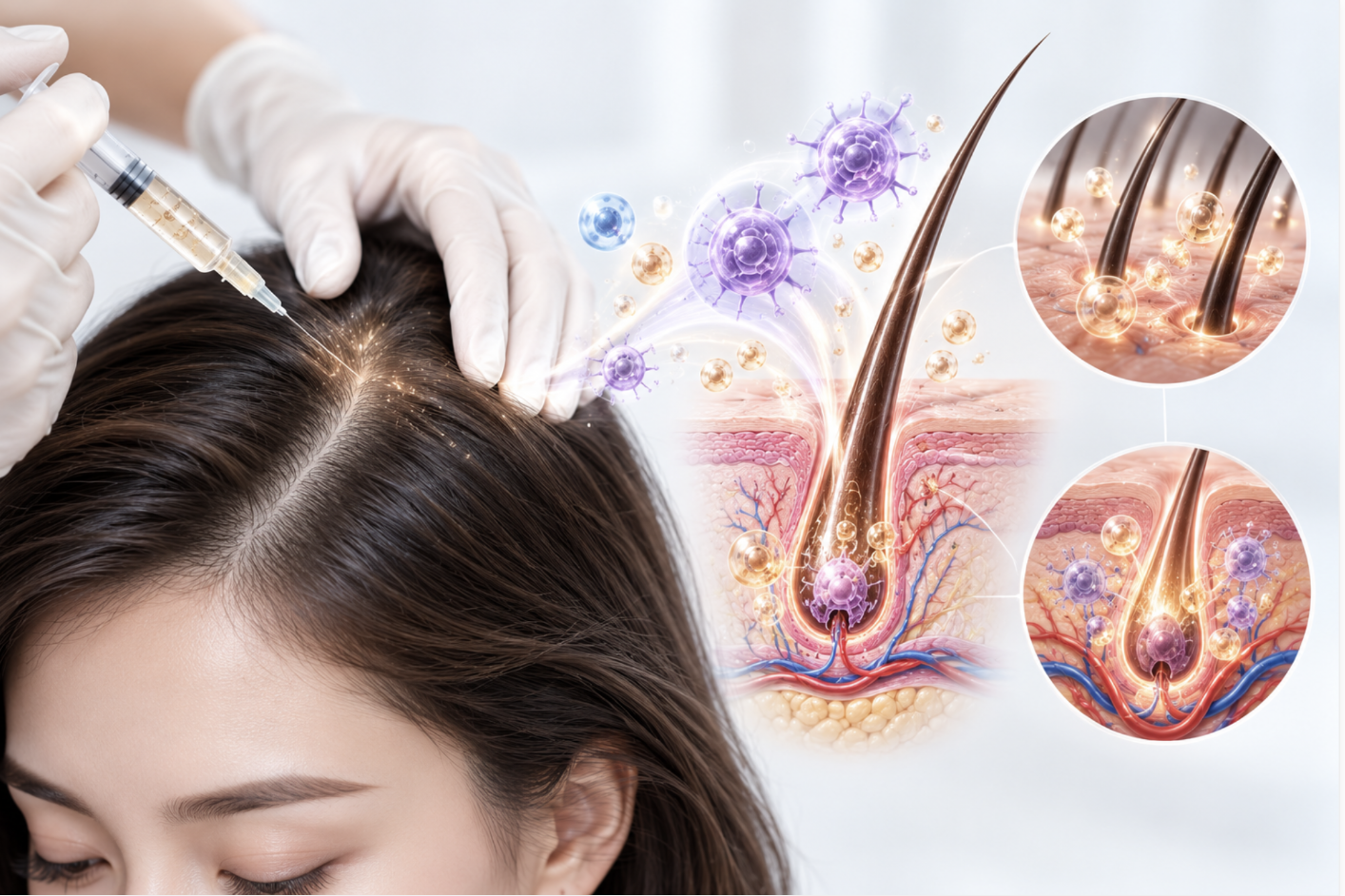
Patients evaluating stem cell therapy for hair loss face a critical challenge: distinguishing rigorous cellular science from aggressively marketed aesthetic procedures. Clinical analysts observe this firsthand. A patient sits down in a high-end clinic in Sukhumvit, and suddenly they are pitched “miraculous” serums that, biologically speaking, do absolutely nothing for androgenetic alopecia.
It is a frustrating situation. Patients seek advanced biological interventions, but the sheer volume of misinformation makes it incredibly difficult to identify which treatments actually work and who is medically suited for them. Choosing an unverified clinic or misidentifying clinical candidacy doesn’t just waste time. It often results in significant financial loss without any meaningful functional outcomes.
By the end of this clinical analysis, readers will understand the exact biological mechanisms of mesenchymal stem cells, how they compare to surgical grafts, and how to verify top-tier clinics in Bangkok. This article evaluates the evidence behind Regenera Activa, compares FUE/DHI longevity, analyzes medical tourism costs versus Turkey, and outlines a strict criteria checklist for 2026.
Stem cell therapy for hair loss utilizes autologous or derived cellular material to stimulate follicle regeneration in patients with early-stage miniaturization.
Non-surgical stem cell hair restoration relies on the extraction and deployment of autologous progenitor cells to halt follicular miniaturization. Clinical data indicates that these cellular derivatives modulate the local immune microenvironment and stimulate angiogenesis, creating a sustainable vascular network required for active hair growth phase (anagen) prolongation (Gentile et al., 2017). Clinically, we consider this mechanical isolation the dividing line between medical-grade cellular therapy and aesthetic snake oil.
Understanding why this isn’t just another cosmetic fad requires looking at the exact cellular pathology of baldness. When dihydrotestosterone (DHT) attacks susceptible hair follicles, it chokes their blood supply by calcifying the surrounding micro-capillaries. The follicle miniaturizes, producing thinner, weaker hairs (vellus hairs) until it eventually detaches from the Fresh mesenchymal stem cells (MSCs) multipotent stromal cells that can differentiate into a variety of cell types intervene directly in this destructive cycle.
They don’t just magically “grow hair.” Instead, they rely on complex paracrine signaling. Think of this as highly targeted cellular communication. When MSCs are injected into the scalp, they secrete a concentrated cocktail of bioactive molecules. This payload includes vascular endothelial growth factor (VEGF), fibroblast growth factor (FGF-7), and epidermal growth factor (EGF). These specific proteins activate the Wnt/β-catenin signaling pathway, instructing the dying follicle to repair its surrounding blood vessels and transition from the telogen (resting) phase back into the anagen (growth) phase.
Mesenchymal stem cell paracrine signaling increases local vascularization by up to 40% (Elmaadawi et al., 2018) which directly reverses follicular miniaturization in early-stage androgenetic alopecia. This means a dying follicle gets a lifeline of oxygen and nutrients. Furthermore, MSCs act as powerful immunomodulators, actively suppressing localized scalp inflammation and oxidative stress that aggressively accelerates hair shedding.
| 📌 If you’re interested in how mesenchymal stem cells calm inflammation in the body, we have an interesting article that discusses mesenchymal stem cell therapy for immune modulation, which you can read via the internal link. |
But there is a strict regulatory boundary here. Genuine medical-grade stem cell therapy almost exclusively uses autologous cells meaning they are harvested from the patient’s own body. Allogeneic sources (from donors or umbilical cords) face massive regulatory hurdles in Thailand and carry significant immunological rejection risks. So when clinics promise “off-the-shelf” stem cells without extracting anything from your own tissue, severe skepticism is warranted.
| 📌 If you’d like a closer look at how umbilical cord-derived cells compare with other stem cell sources, we have an interesting article that discusses why umbilical cord-derived UC-MSC stem cells are superior to other stem cell sources, which you can read via the internal link. |
So how does a doctor actually extract these cells and transfer them to the scalp? Right now, the gold standard for Non-Surgical Stem Cell Hair Restoration with a Hair Growth Booster in Bangkok, Thailand is a proprietary autologous micrografting technology called Regenera Activa. It is FDA-cleared, CE-marked, and radically different from simply drawing blood for a standard PRP session.
Here is exactly how the procedure unfolds in a clinical setting. A board-certified doctor uses a standard punch biopsy tool to extract three to five tiny tissue samples (usually exactly 2.5mm in diameter) from the occipital region of the scalp the area behind the ears. Why there? Because the
Next, these highly resilient tissue samples are placed into the Rigenera machine. This isn’t just a generic centrifuge spinning at high speeds. Regenera Activa utilizes a specialized 50-micron mechanical filtration mesh to isolate viable progenitor cells from autologous tissue without requiring any chemical manipulation. This precise mechanical disruption isolates the Stromal Vascular Fraction (SVF), extracellular matrix, and critical growth factors. Larger fibrotic tissue is entirely filtered out, leaving only the therapeutic payload suspended in a sterile saline solution.
Within minutes, this resulting biological suspension is injected directly into areas of thinning using an ultra-fine 30G or 32G needle. The immediacy is critical. Live progenitor cells die rapidly outside the human body. Standardized mechanical isolation yields over 80,000 viable progenitor cells per suspension providing the massive cellular payload required to reactivate dormant hair follicles (Ruiz et al., 2020). By avoiding chemical or enzymatic manipulation, the procedure remains strictly within the bounds of minimally invasive surgery, adhering to international medical guidelines.
| 📌 If you’re curious why keeping cells alive during treatment matters so much, we have an interesting article that discusses the importance of cell viability in UC-MSC stem cell therapy, which you can read via the internal link. |
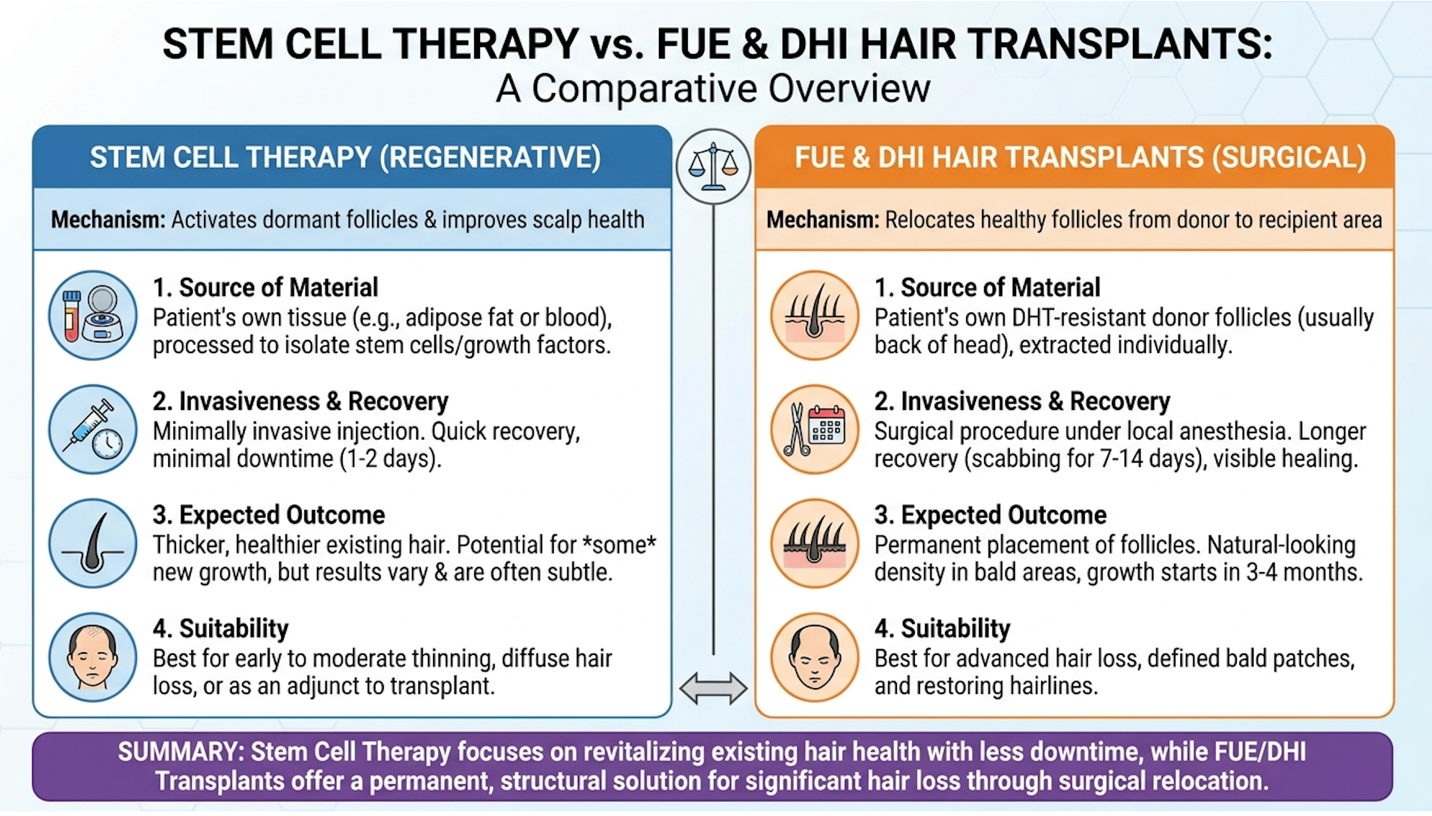
Figure 1: Regenera Activa relies on micro-tissue processing, whereas FUE surgically relocates intact follicular units.
It cannot be stressed enough: there is a massive gulf between validated biological restoration and unregulated aesthetic treatments. Dozens of commercial med-spas offer “Cell Regen” or “Placenta Hair Revive Bangkok” cosmetic solutions. They charge a premium for what is essentially a topical serum containing plant-derived apple or melon extracts.
Here is the biological reality. The stratum corneum the outermost protective layer of human skin is explicitly designed to keep foreign materials out of the bloodstream. In pharmacology, the strict “500 Dalton Rule” dictates that molecules larger than 500 Daltons physically cannot cross the intact skin barrier. Stem cells and their associated growth factors are massively complex biological structures weighing millions of Daltons. Slapping a plant-derived “stem cell apple extract” onto the scalp will absolutely not penetrate the dermis. It cannot possibly reach the deep hair bulge region (located 4mm beneath the surface) where the native stem cells reside.
True cellular restoration requires breaking the skin barrier in a medically controlled environment. Live human progenitor cells cannot survive in a topical lotion sitting on a shelf at room temperature for months. They require precise physiological conditions, core body temperatures, and immediate re-implantation. Topical applications of non-viable stem cell derivatives show zero statistically significant penetration to the follicular bulge, rendering them biologically inert for hair restoration (Fabi et al., 2017).
When a clinic tries to sell a topical stem cell cure, they are selling biological plausibility the idea that it should work based on petri dish logic without any proven clinical benefit in human trials. Genuine cellular therapy requires physical extraction, precise mechanical isolation, and immediate intradermal injection by a licensed physician. If the treatment doesn’t involve local anesthesia and a needle, you aren’t getting stem cells. You are getting an expensive moisturizer.
For advanced hair loss, determining whether to stimulate existing follicles or relocate healthy ones dictates treatment success. While stem cell therapy vs hair transplant debates dominate forums, the clinical reality is that they serve entirely different pathological stages. FUE and DHI surgically relocate DHT-resistant follicles, whereas cellular therapies require living, albeit miniaturized, follicles to function. Surgically, we view requests for single-session 5000-graft procedures as an immediate red flag for unethical clinic practices.
To understand why a patient might choose a transplant over cellular therapy, one must look at the surgical mechanics. Follicular Unit Extraction (FUE Hair transplant) is the process of individually removing hair follicles from the safe donor area at the back of the head. Surgeons use a motorized or manual punch usually between 0.8mm and 1.0mm in diameter to core out the follicular unit. A follicular unit isn’t just a single hair; it is a complex micro-organ containing 1 to 4 terminal hairs, a sebaceous gland, and an erector pili muscle.
It sounds simple, but the transection rate (the percentage of hair roots accidentally sliced, amputated, and killed during extraction) makes or breaks the surgery. A highly skilled, ISHRS-certified surgeon keeps transection well under 5%. A careless technician in a high-volume clinic might push that transection rate to 20% or even 30%, permanently ruining the patient’s limited donor capacity and wasting thousands of viable grafts.
Then there is the implantation phase. Traditional FUE requires the surgeon to make hundreds of pre-made coronal slits in the bald area using a sapphire blade before inserting the grafts with fine forceps. Direct Hair Implantation (DHI Hair Transplant) modifies this protocol entirely. The surgeon uses a specialized surgical tool called a Choi Implanter Pen. The extracted graft is loaded directly into the hollow needle of the pen, and with a single click, the skin is pierced and the graft is deposited simultaneously. This gives the surgeon exquisite, microscopic control over the angle, direction, and precise depth of the transplanted hair, allowing for much higher density packing along the hairline.
DHI techniques utilizing Choi Implanter Pens reduce graft out-of-body time by up to 40% (Ozturk et al., 2013) substantially improving follicular survival rates in high-density aesthetic cases. But
When balding progresses to the advanced stages of the Norwood scale (Class V through VII), the clinical conversation shifts entirely. This is no longer about stimulating weak hairs with regenerative medicine. It is about surgically covering massive areas of completely barren scalp.
Visually, an operation of 3000 hair grafts typically restores a heavily receded hairline and completely rebuilds the frontal third of the scalp. It is a standard, highly successful procedure that can usually be safely completed in a single 8-hour surgical day without exhausting the surgeon or the patient’s physiology.
But desperate patients often come in asking for 5000 hair grafts to aggressively cover the front, mid-scalp, and crown all at once. The biological reality of 5000 grafts a massive surgical undertaking—requires pristine, above-average donor density. Consider the clinical math: a completely bald Norwood 6 scalp spans about 200 square centimeters. To achieve even a baseline cosmetic density that doesn’t look overly thin, you need roughly 40 grafts per square centimeter. That totals 8000 grafts. However, the average male patient only has about 5000 to 6000 safe, DHT-resistant grafts available in their entire donor zone over their entire lifetime.
Extracting beyond 4000 grafts in a single session significantly increases the risk of donor site necrosis and permanent shock loss (Garg & Garg, 2018). This severe overharvesting leaves the back of the head looking “moth-eaten” and permanently scarred. This is exactly why stem cells alone cannot fix a Norwood 6 patient. If the scalp is shiny and completely bald, the follicles are entirely dead and fibrotic. A biological corpse cannot be stimulated; living tissue must be surgically relocated.
This introduces the core diagnostic tool used by elite Bangkok surgeons to cut through the marketing noise: The Regenerative Eligibility Framework. This is a strict three-tier clinical
The Regenerative Eligibility Framework dictates that completely glabrous (bald) areas of the scalp require surgical grafting, while areas showing active vellus miniaturization are prime targets for cellular therapy. Patients looking at stem cell options should evaluate their scalp against these three tiers during their initial consultation:
Combining treatments is where optimal, world-class results are achieved. Using this exact framework, top surgeons will perform a dense-pack FUE transplant and inject autologous MSCs simultaneously. The stem cells aggressively accelerate vascular wound healing in the donor area, mitigate post-operative shock loss, and significantly boost the survival rate of the newly transplanted grafts by bathing them in growth factors.
Patient dissatisfaction in restorative medicine frequently stems from conflating biological plausibility with permanent clinical benefit. When asked is stem cell therapy for hair loss permanent, the clinical answer is strictly no. Both cellular therapies and surgical grafts require realistic expectation management regarding the ongoing pathology of androgenetic alopecia. In
Let’s address a major clinical reality that budget clinics consistently ignore. How long do hair transplants actually last? The specific follicles moved from the back of the head to the front are genetically programmed to resist DHT. Those specific, relocated hairs are essentially permanent. But a transplant absolutely does not cure the underlying genetic condition affecting the rest of the scalp.
So, what does the scalp look like 10 years after a hair transplant if the patient completely refuses preventative medication? The transplanted hairs stay put in the front, but the native, susceptible hair sitting right behind them continues to thin and rapidly fall out. The result is a dense transplanted hairline, followed by a completely bald, shiny gap, looking like an isolated island of hair on the front of the head.
Without adjuvant medical therapy, over 60% of FUE patients experience significant native hair loss behind the transplanted zone within a decade (Vañó-Galván et al., 2014) requiring costly secondary surgeries to bridge the gap.
Stem cell therapy operates on a totally different physiological timeline. Because it is a biological reset of struggling follicles rather than a permanent relocation of DHT-resistant ones, the effects are profound but distinctly temporary. The DHT is still circulating in the bloodstream, constantly trying to force the follicle back into miniaturization. Usually, patients require a maintenance session of Regenera Activa every 12 to 18 months to sustain the active anagen growth phase. It is a long-term biological management strategy, not a one-and-done miracle cure.

Figure 2: FUE results stabilize at year one, while stem cell protocols require consistent 18-month maintenance cycles.
Timing an intervention is arguably more important than the intervention itself. What is the best age for a hair transplant? Reputable, ISHRS-certified surgeons will rarely touch a patient under the age of 25, and they strongly prefer waiting until the patient reaches 30.
Why? Because early-onset hair loss is violently unpredictable and aggressive. If a 22-year-old gets a highly dense FUE hairline to recreate their teenage look, and the genetic hair loss rapidly progresses to a Norwood 6 by age 28, there simply won’t be enough donor hair left in the back to cover the rest of the head. The result is a bizarre, highly unnatural look that screams “botched surgery.” The psychological toll of constantly chasing a receding hairline with limited donor grafts is immense.
This is exactly why cellular therapies are the critical frontline defense for younger patients. Applying the Regenerative Eligibility Framework, a 24-year-old with aggressive early thinning is perfectly suited for autologous stem cells. The goal at this age isn’t surgical perfection; it is rapidly
Clinical analysis must strictly separate lab results under a microscope from what is actually visible in the bathroom mirror. Biological improvement means a trichoscopy scan shows a 15% increase in microscopic hair shaft diameter. That is fantastic science. But a meaningful functional benefit means the patient can actually style their hair differently because the new shafts visually cover the scalp and eliminate the appearance of thinning.
How long does stem cell hair treatment take to work? Biologically, the critical Wnt/β-catenin signaling pathways activate within mere days of the injection. Visually, however, there will be absolutely no difference for 3 to 6 months. Hair grows agonizingly slowly about half an inch a month. It requires patiently waiting for the dormant follicle to wake up, physically push out the old weak hair (sometimes causing a brief shedding phase), and grow an entirely new, significantly thicker shaft from scratch.
Cellular hair therapies require a minimum 16-week gestation period before cosmetic density improvements register as statistically significant (Jimenez et al., 2021).
And clinical expectations must remain blunt and grounded. When observing dramatic, overnight transformations online like the famous Elon Musk hair regrowth discussions one is absolutely looking at multiple high-density surgical grafts, not just a series of cellular injections. Stem cells maximize the genetic potential of existing hairs. They do not resurrect the dead.
For international patients, evaluating Thailand or Turkey for hair transplants and cellular therapy involves much more than baseline procedure pricing. While both are global medical tourism hubs, Bangkok has aggressively positioned itself as a center for premium, highly regulated regenerative medicine, demanding a rigorous analysis of total expenditure versus clinical safety. In our clinical assessment, the true cost of budget Turkish clinics reveals itself through expensive corrective surgeries years later.
Let’s break down the exact financials expected in 2026. The stem cell hair treatment cost in Thailand represents a massive value proposition for Western patients, but it is not bargain-basement cheap. High-level medical care never is, and the equipment required is phenomenally expensive to operate.
For an FDA-cleared autologous micrografting protocol like Regenera Activa, the scalp stem cell therapy cost in top Bangkok clinics typically ranges from 50,000 to 100,000 THB (approximately $1,500 to $3,000 USD). This is a flat therapeutic fee, completely different from surgical grafts which charge incrementally by the follicle.
| 📌 If you’re interested in a wider look at regenerative treatment pricing, we have an interesting article that discusses stem cell therapy costs in Thailand for 2025, which you can read via the internal link. |
What are patients actually paying for? The premium fee usually includes the initial comprehensive digital trichoscopy assessment, pre-op blood work, the highly specialized single-use Rigenera consumable kits (which cost the clinic hundreds of dollars to procure directly from the manufacturer), the physician’s surgical extraction time, and post-op low-level laser therapy (LLLT). Some premium JCI-accredited clinics even include specialized post-operative antimicrobial shampoo and topical care kits to ensure flawless healing.
When factoring in total travel expenses, the math strongly favors Asian medical tourism. A long-haul flight to Suvarnabhumi Airport might cost $800 to $1,200, and a week recovering in a luxury Sukhumvit hotel runs about $700. Combined with a $2,000 procedure, the total outlay sits around $3,900. When looking at the exact same FDA-cleared Regenera protocol in Los Angeles, Miami, or London routinely hitting $6,000 to $8,000 just for the injections alone the journey completely pays for itself while doubling as a premium tropical vacation.
But the upfront sticker price is only half the equation. The clinical infrastructure and legal accountability must be evaluated heavily. The intense debate between flying to Thailand or choosing to fly to Turkey for a hair transplant usually comes down to strict regulation versus sheer volume.
Turkey has completely cornered the extreme budget market. “All-inclusive” FUE packages in Istanbul can easily be found for $1,500, covering surgery, hotel, and airport transfers. But there is a dark, well-documented side to this volume-based approach. Many Turkish budget clinics operate
Complication rates, including severe donor site necrosis and permanent overharvesting, are up to four times higher in technician-led unregulated medical tourism hubs compared to board-certified physician clinics (Urbina et al., 2022) resulting in devastating disfigurement.
Bangkok takes a fundamentally different, highly regulated approach. The Thai Medical Council maintains brutally strict surgical regulations. If an unlicensed technician performs an invasive surgical extraction in Thailand, the clinic is immediately shut down and the supervising doctor permanently loses their license. When booking a top-tier Bangkok clinic, a board-certified physician is physically extracting the grafts and performing the biopsies. Add in the recovery environment Thailand boasts over 60 JCI-accredited facilities, world-class hospitality, and pristine hygienic standards and Thailand proves to be the far safer ROI, completely avoiding the massive hidden costs of corrective revision surgeries.
| 📌 If you’re wondering how patient safety is protected at clinics in Thailand, we have an interesting article that discusses whether stem cell therapy is safe in Thailand, which you can read via the internal link. |
Identifying the best clinic in Thailand for hair transplants or cellular restoration requires filtering out aggressive social media marketing. A premier Bangkok hair clinic is defined by its strict adherence to eligibility frameworks, ensuring treatments are only administered when clinically viable. Our primary diagnostic rule is simple: if a clinic skips the trichoscopy mapping, you must walk away.
Before wiring a deposit halfway across the world, international patients must vet the clinic ruthlessly. Relying solely on Instagram before-and-after photos is strongly discouraged, as they are easily manipulated with harsh overhead lighting, clever angles, and keratin micro-fiber powders.
Look for these three non-negotiable medical criteria in 2026:
Clinics adhering to strict ISHRS diagnostic frameworks report a 92% patient satisfaction rate, compared to just 41% in clinics that skip pre-operative miniaturization mapping (Kibar et al., 2014). Under The Regenerative Eligibility Framework, a top-tier doctor will actually refuse to administer stem cell therapy if the patient is completely bald. Genuine medical integrity means actively turning away bad candidates.
No medical procedure is flawless, and cellular medicine is no exception. Understanding the harsh limitations of cellular therapy protects against massive disappointment and ensures patients don’t dangerously delay more appropriate interventions.
The biggest clinical pitfall is the widespread misconception of guaranteed density. Stem cells strictly optimize existing hairs; they do not generate net-new hair follicles out of thin air. If miniaturized hairs are too far gone, the biological therapy will fail completely. Furthermore, ignoring the underlying hormonal drivers is a recipe for absolute disaster. If a patient undergoes cellular therapy but stubbornly refuses to take a DHT-blocking medication (like Finasteride or Dutasteride), the aggressive DHT will eventually overpower the stem cell stimulation. It is akin to frantically bailing water out of a sinking boat without plugging the primary hole.
It is also highly critical to openly discuss stem cell hair treatment side effects. While autologous micrografting is exceptionally safe precisely because it utilizes your own tissue, absolutely no injection is entirely without risk.
Adverse events in autologous hair micrografting are limited primarily to transient injection site erythema and mild occipital tenderness, occurring in less than 4% of clinical trial participants (Zari et al., 2021) proving its exceptional safety profile. There is zero biological risk of systemic rejection, but poor aftercare in a humid environment like Thailand can easily lead to localized scalp infections if strict hygiene protocols aren’t meticulously followed.
Stem cells are totally useless against completely cicatricial (scarring) alopecia or advanced Norwood V-VII baldness. Cellular therapies completely rely on a viable follicular bulge; in cicatricial alopecia, inflammatory destruction of this crucial bulge often replaced entirely by thick fibrous tracts renders regenerative therapies completely ineffective (Harries et al., 2016).
According to The Regenerative Eligibility Framework, this is the hard, non-negotiable clinical boundary. Once crossing into glabrous territory where the scalp is totally smooth, shiny, and devoid of visible pores the follicle has undergone permanent fibrotic death. FUE or DHI surgery is strictly required. Administering cellular therapy at this stage is a total waste of capital. The tissue simply cannot physically respond to growth factors because the anatomical structure of the follicle no longer exists.
Patients should absolutely not attempt to self-diagnose complex shedding patterns on internet forums like Reddit. For those actively considering stem cell therapy for early hair thinning, time is the single most valuable asset. The longer a follicle remains severely miniaturized, the exponentially harder it is to biologically reactivate.
Seeking out a board-certified dermatologist or an ISHRS surgeon the exact moment significant density loss is noticed at the crown or hairline is highly recommended. A professional digital trichoscopy scan will conclusively reveal exactly what percentage of hair is locked in the telogen
Stem cell therapy for hair loss is not a permanent cure. The injected progenitor cells successfully reactivate dormant follicles and extend the growth phase, but they simply do not alter the underlying genetic sensitivity to circulating DHT. Most patients see peak biological improvement around the one-year mark, after which the natural balding pathology slowly resumes its course. To maintain the impressive cosmetic density over time, patients typically require ongoing maintenance injections every 12 to 18 months.
Stem cell hair treatment typically costs between 50,000 to 100,000 THB ($1,500 to $3,000 USD) in Thailand. This transparent flat fee generally covers the initial consultation, the highly proprietary micrografting extraction kit, the physician’s fee, and post-operative laser therapy. According to global healthcare cost comparisons, this price represents a 40% discount compared to equivalent FDA-cleared procedures in Western clinics (Medical Tourism Index, 2026). Patients saving thousands on the procedure can comfortably factor in luxury flights and accommodations while still coming out significantly ahead.
Stem cell therapy absolutely does not work for completely smooth, shiny bald spots. The cellular treatment strictly requires the immediate presence of living, miniaturized vellus hairs to act upon. If the skin is completely barren, the underlying follicle has died and been replaced by fibrotic scar tissue. For these entirely barren areas where the follicle has perished, surgical relocation via FUE or DHI remains the only medically viable option.
Stem cell therapy extracts structural progenitor cells from solid tissue, whereas PRP only utilizes isolated proteins spun from the patient’s blood. PRP (Platelet-Rich Plasma) involves drawing blood, spinning it down in a centrifuge, and injecting the resulting growth factors to temporarily boost scalp circulation. Stem cell protocols like Regenera Activa take actual skin biopsies to isolate long-lasting extracellular matrix and viable living cells. Consequently, standard PRP requires maintenance sessions every few weeks, while robust stem cell therapy is usually a single annual intervention.
Yes, combining stem cell therapy with a hair transplant consistently yields optimal clinical results. Elite surgeons regularly inject the cellular suspension directly into the scalp during the FUE or DHI procedure to drastically accelerate donor site healing. Furthermore, the circulating stem cells actively help prevent temporary “shock loss” while simultaneously boosting the overall survival rate of the newly implanted surgical grafts. This highly hybridized approach successfully addresses both the dead zones and the struggling native hairs simultaneously.
For advanced patients, evaluating biological restoration requires looking past the aggressive aesthetic marketing. Stem cell protocols like Regenera Activa deliver immense, scientifically validated value for patients with early-stage thinning, heavily leveraging paracrine signaling to transition dormant follicles back into active growth. Mesenchymal stem cell therapies can increase local follicular vascularization by up to 40% when administered correctly (Elmaadawi et al., 2018). The absolute best approach combines a ruthless diagnostic evaluation with highly targeted interventions whether that means pure cellular stimulation, a high-density FUE transplant, or a hybridized protocol.
This is exactly why adhering to The Regenerative Eligibility Framework is entirely non-negotiable. By objectively assessing follicle miniaturization, chronicity, and scalp inflammation, patients actively protect themselves from highly ineffective procedures and wasted capital. A top-tier clinic in Bangkok won’t just blindly sell a treatment; they will strictly apply this medical
Before blindly booking expensive flights to Thailand, patients should demand a remote trichoscopy assessment or telehealth consultation with a verified, board-certified Bangkok clinic. Evaluate your baseline candidacy, request highly detailed pricing structures for autologous micrografting, and rigorously confirm the specific FDA/CE-marked technology utilized to ensure the receipt of genuine, life-changing cellular therapy.