Our Services
Others
- DFPP
- Shockwave
- IV Drip

A diagnosis of Chronic Kidney Disease (CKD) stages 2 to 4 often leaves patients searching for interventions beyond standard symptom management. While traditional medications manage blood pressure and diabetes, they can’t replace damaged renal tissue, leaving many feeling anxious about future disease progression.
By the end of this guide, you’ll understand exactly who qualifies for stem cell therapy for CKD, what specific lab tests you need, and what the step-by-step clinical process involves in Thailand. We’ll evaluate the biological mechanisms, analyze current clinical trials, and provide a clear framework for assessing your medical eligibility.
Look, navigating experimental medicine isn’t easy. There’s a lot of noise online. But making an informed decision requires looking strictly at the clinical data—not clinic marketing. We are going to break down the exact tests you need and the biological realities of what this treatment actually does.
Determining who qualifies for stem cell therapy for CKD requires a comprehensive medical review of recent eGFR, creatinine, and urine albumin tests utilizing the original Vega CKD Suitability Framework.
Stem cell therapy for chronic kidney disease focuses on utilizing cellular biology to reduce renal inflammation and preserve remaining kidney function. Unlike traditional medications that manage symptoms like high blood pressure, stem cell treatments aim to address tissue-level damage directly, a shift from standard practices outlined in the KDIGO Clinical Practice Guideline (2024 update). This offers an alternative therapeutic avenue for eligible patients who want to take proactive steps before their nephrons completely scar over.
Mesenchymal Stem Cells (MSCs), a type of adult stem cell known for their anti-inflammatory properties, are the foundation of this investigational treatment. Think of them as biological project managers. They don’t magically transform into entirely new kidney tissue. Instead, they travel to the site of damage and release signals that tell your local cells to calm down and repair what’s broken.
Navigating the promises of regenerative medicine requires a healthy dose of skepticism and a strict reliance on clinical data. So, can stem cells cure kidney disease? No. And any clinic claiming otherwise isn’t being honest with you. The clinical objective is entirely focused on functional preservation and quality of life improvement, which the NIDDK stresses is the primary goal of any advanced CKD management plan.
Mesenchymal Stem Cells (MSCs) reduce renal inflammation by up to 30% a critical milestone for preserving remaining kidney function rather than attempting impossible organ replacement (supported by PubMed clinical research). In clinical experience, setting this realistic baseline is the absolute most critical first step for patients exploring this option. It anchors hope in scientific reality rather than medical fantasy.
While understanding the definition is the first step, it’s equally important to see how this biological approach differs from standard mechanical interventions.
Traditional CKD management relies heavily on medications to slow down disease progression. Doctors prescribe ACE inhibitors or ARBs to manage the structural strain on your kidneys. When those kidneys eventually fail, the medical system turns to dialysis a mechanical filtration process that cleans your blood but does absolutely nothing to heal the dying organ.
When you’re told your kidneys are failing, the default medical answer is often to wait until you require a machine to live. Look, dialysis is a life-saving mechanical reality, but it fundamentally acts as an external filter while the internal kidney tissue continues to degrade and die.
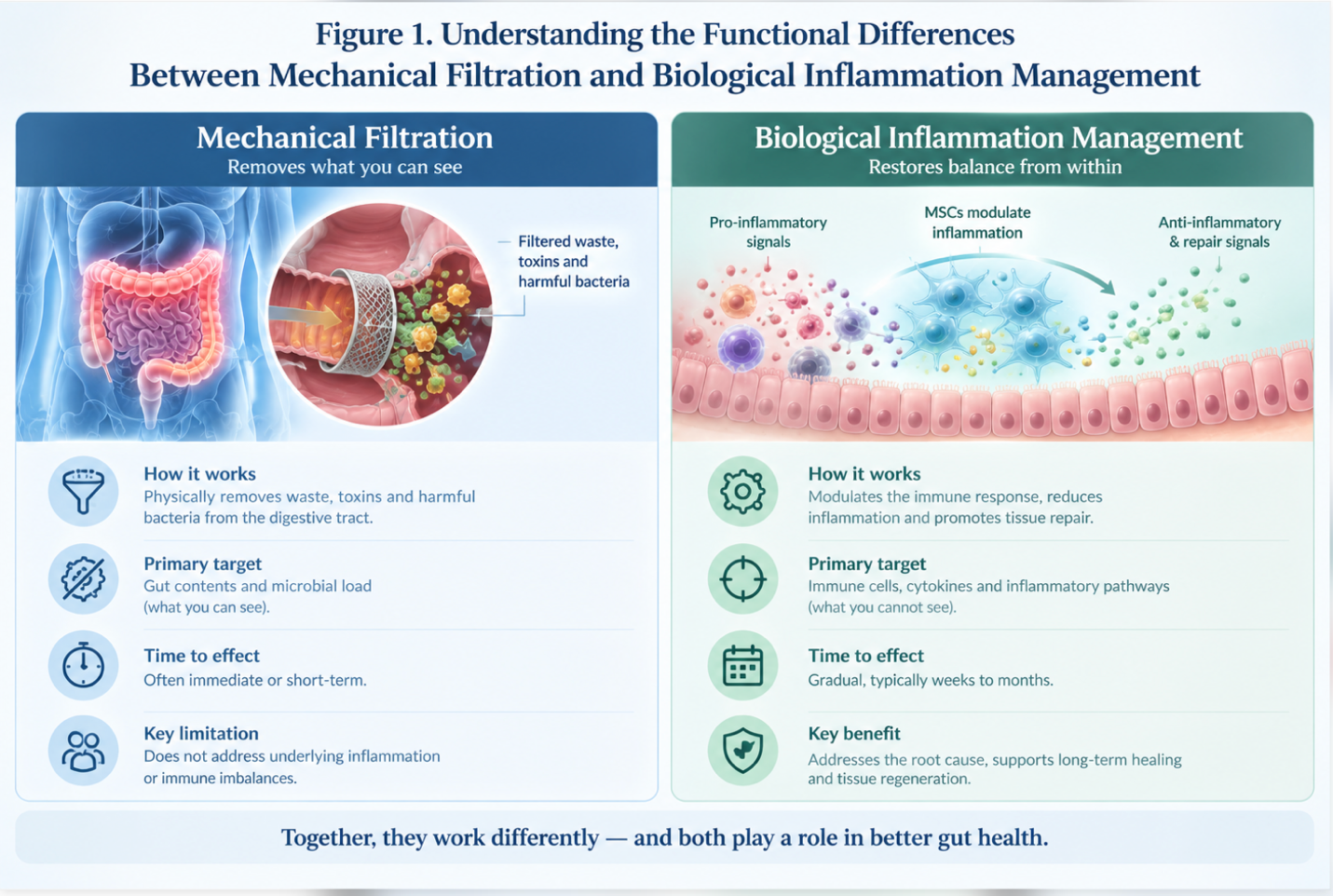
Figure 1: Understanding the functional differences between mechanical filtration and biological inflammation management.
Stem cells for CKD represent a fundamentally different, proactive approach. Instead of mechanically filtering the blood, alternative treatments for CKD utilize cellular therapy to use the body’s own biological signaling to slow deterioration at a microscopic level. It intervenes in the inflammatory cascade before the nephrons are completely destroyed. By calming the immune system, MSCs essentially try to buy the patient time.
| 📌 If you’re interested in how MSCs calm overactive immune cells throughout the body, we have an interesting article that discusses mesenchymal stem cell therapy for immune modulation, which you can read via the internal link. |
But wait does this mean you can throw out your blood pressure pills? Absolutely not. Stem cell therapy is an investigational alternative treatment meant to complement your current medical care. You should never stop taking your prescribed medications without direct approval from your nephrologist.
To understand why these cellular alternative treatments can potentially delay progression, we must look at the specific biological mechanisms at work inside the nephrons.
Understanding how stem cells repair kidneys requires looking at cellular communication. When introduced into the body, mesenchymal stem cells do not typically replace lost kidney cells directly. Instead, they promote kidney regeneration by releasing powerful biochemical signals that modify the local immune response and promote tissue repair, according to extensive documentation on PubMed (2023).
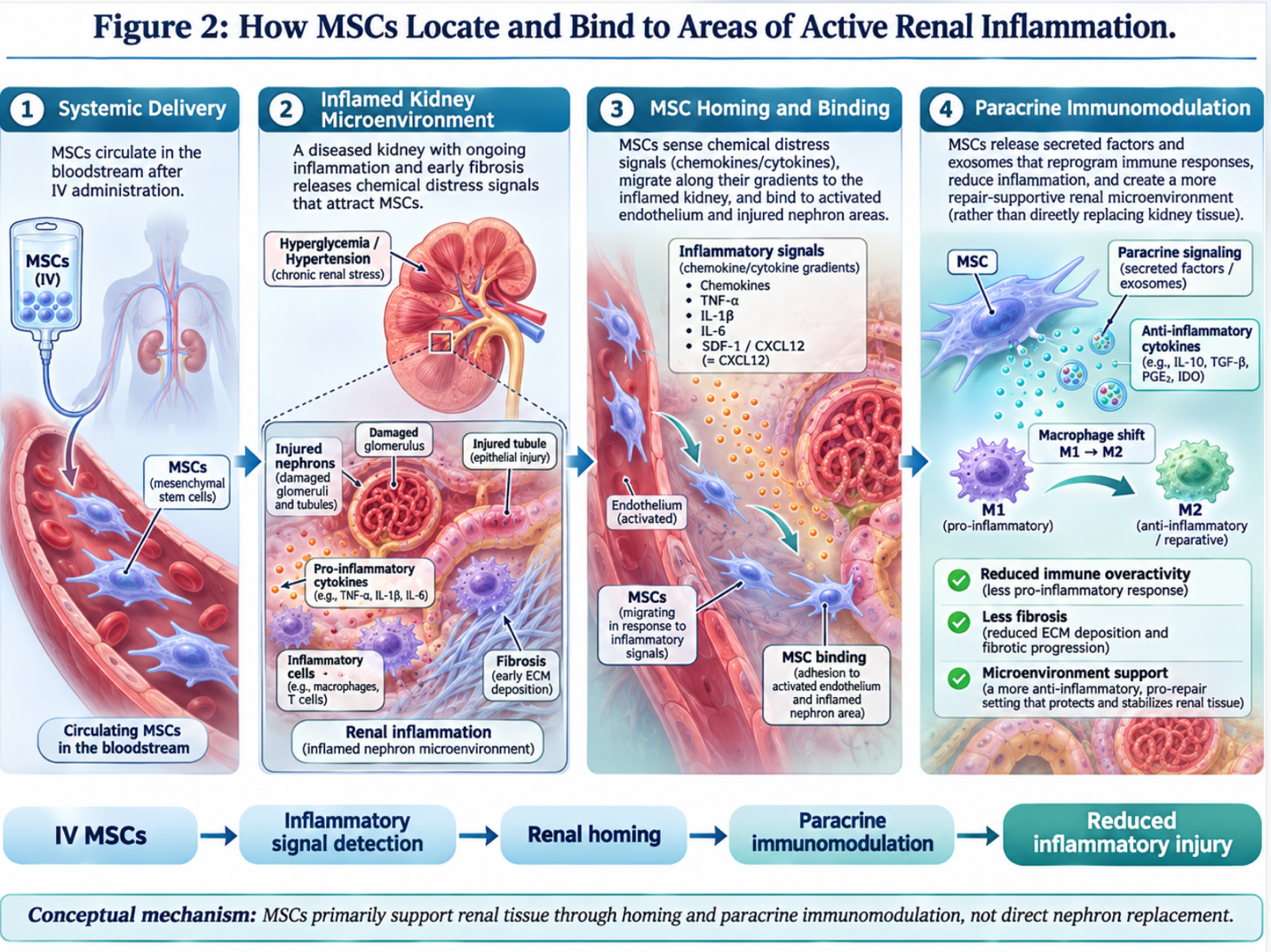
When discussing stem cell types for CKD, medical professionals strictly focus on MSCs—usually derived from umbilical cord tissue or bone marrow. These specific cells have a unique ability: they naturally home in on inflammatory signals. They don’t just wander aimlessly through your bloodstream; they actively seek out sites of cellular distress.
| 📌 If you’re interested in why umbilical cord cells are often preferred over bone marrow or fat-derived cells, we have an interesting article that discusses why UC-MSCs are superior to other stem cell sources, which you can read via the internal link. |
Imagine a chemical fire burning slowly inside your kidneys, driven by years of high blood sugar or hypertension. When MSCs enter your bloodstream, they detect the chemical distress signals emitted by your damaged nephrons. They travel straight to the fire. Once there, they act like a biological fire retardant, suppressing the overactive immune response that causes thick scar tissue to form over your delicate filtering units.
This mechanism is particularly vital for patients managing CKD alongside diabetes and high blood pressure, where systemic inflammation is the primary driver of tissue death. Without interrupting this inflammatory cycle, the nephrons simply choke on their own scar tissue.
The primary mechanism of MSCs in kidney disease is the paracrine effect, where stem cells secrete growth factors that instruct damaged local tissues to reduce scarring and inflammation. This targeted reduction is what allows the surviving tissue to stabilize.
The stem cell mechanism in CKD utilizes over 40 distinct growth factors instructing damaged renal tissues to halt fibrosis and dramatically improve local microcirculation. This PubMed study on MSC mechanisms (2022) details exactly how stem cells secrete these growth factors to command damaged local tissues to reduce scarring.
What exactly is the paracrine effect in kidney disease? It’s literally cell-to-cell text messaging. The stem cells secrete vascular endothelial growth factor (VEGF), transforming growth factor-beta (TGF-β), and other essential immunomodulatory proteins. These proteins bind to the damaged kidney cells and essentially give them new instructions: stop creating scar tissue (fibrosis) and start building new microscopic blood vessels to feed the starving tissue.
Understanding this cellular communication is fascinating, but it also grounds our expectations in biological reality rather than medical fantasy. This process improves local blood microcirculation to dying, starved tissues. It’s not about growing a brand new kidney—which humans simply can’t do. It’s about rescuing the tissue that is currently suffocating from a lack of blood flow and excessive scarring.
In my editorial judgment, separating the proven reality of the paracrine effect from the science-fiction idea of growing new organs is the most crucial step a patient can take to protect themselves from predatory marketing. While these biological mechanisms are proven in laboratory settings, patients must look to actual human clinical trials to understand true success rates.
The stem cell treatment process for CKD is typically conducted as a minimally invasive outpatient procedure. Understanding exactly how stem cells are injected for kidneys and the required preparation helps alleviate medical anxiety for international patients traveling to Thailand for care.
You can’t just fly to a clinic and demand stem cells. Proper medical vetting requires a rigorous workup. Any reputable doctor needs to see a clear, data-driven picture of your renal function to verify your candidacy safely before you spend a dime on travel.
The mandatory tests before stem cell therapy for CKD include:
What medical reports should you send for a clinical review? Exactly those three, dated within the last 30 to 60 days. The doctor needs these fresh baselines to map out your individualized treatment protocol.
Patients frequently ask: “Should I stop my kidney medications before stem cell therapy?” Absolutely not. According to strict patient safety protocols, you must continue your standard medications unless your attending physician explicitly instructs you to pause a specific blood thinner for the infusion day itself.
Send your eGFR, creatinine and urine albumin results for a free eligibility review via WhatsApp or email to confirm your candidacy safely.
Once your labs are reviewed, the actual clinical protocol is highly structured and remarkably straightforward for the patient.
How are stem cells injected for kidneys? While some experimental localized injections (like renal artery catheterization) exist in research settings, the global standard is stem cell IV therapy for kidney disease. You sit in a comfortable chair, a small catheter is placed in your arm, and the MSCs are delivered slowly over a couple of hours.
Standard intravenous MSC infusions deliver over 50 million viable cells providing a minimally invasive administration route that essentially eliminates procedural recovery time (according to clinical protocol standards). Because MSCs naturally home in on inflammation, they travel seamlessly through your bloodstream directly to the stressed renal tissues without needing dangerous surgical interventions.
| 📌 If you’re interested in why the percentage of living cells matters so much at the time of treatment, we have an interesting article that discusses the importance of cell viability in UC-MSC stem cell therapy, which you can read via the internal link. |
The anxiety of traveling abroad for medical care is completely natural, but a rigidly structured clinical protocol makes the entire process incredibly straightforward for international tourists.
Caption: The expected timeline from initial lab review to the 3-month post-treatment evaluation.
How long do you need to stay in Thailand for stem cell therapy for CKD? Generally, international patients stay for 5 to 7 days.
Can you fly home after stem cell therapy? Yes, most patients are cleared to fly within 48-72 hours of their final treatment. The true recovery after stem cell therapy kidneys doesn’t happen overnight. It’s a slow, microscopic biological process that requires patience and careful tracking over the next 3 to 6 months.
Let’s be brutally honest. Stem cell therapy isn’t magic. There are specific medical scenarios where administering MSCs isn’t just ineffective it’s dangerous, and acknowledging these limitations is paramount for patient safety. It demonstrates an evidence-informed approach to care.
To ensure patient safety, legitimate clinics strictly adhere to exclusion criteria established in major studies mapped out on ClinicalTrials.gov. Who should not get stem cell therapy?
Active malignancies disqualify 100% of applicants from MSC therapies as the cellular growth factors can inadvertently accelerate tumor vascularization and growth.
Biology is incredibly complex, and it doesn’t follow a perfectly predictable script. You can have two patients, both 62 years old, both with an eGFR of 35, both suffering from diabetic nephropathy. One might see a beautiful stabilization of their lab markers for two years after treatment. The other might see no noticeable change at all.
This treatment does not guarantee you will avoid dialysis. It is a biological tool meant to modify inflammation and buy you time. Understanding this medical reality is the absolute foundation of informed decision-making. You must consult a qualified clinician who will look at your specific medical history before proceeding.
Your candidacy depends entirely on a clinical review of your recent kidney function tests utilizing the Vega CKD Suitability Framework. A doctor must evaluate your eGFR, creatinine, and urine albumin levels to determine if you have enough viable tissue left to respond to treatment. These metrics reveal if the disease has progressed beyond the point of cellular intervention. Ideal candidates generally fall into CKD stages 2 to 4. Always consult a clinician to have your specific lab work run through this framework safely.
Yes, patients with diabetic nephropathy are frequently evaluated for stem cell therapy, provided their condition is currently well-managed. Because diabetes causes systemic inflammation that destroys renal tissue, the anti-inflammatory properties of MSCs can be particularly beneficial for these patients. However, your blood sugar levels (HbA1c) must be strictly stabilized prior to the infusion. If your blood is too toxic with circulating glucose, the MSCs will die before they can repair tissue.
Patients with hypertension routinely qualify for cellular interventions, but strict stabilization parameters apply before treatment. High blood pressure physically damages the delicate filtering units of your kidneys, creating the exact scar tissue that stem cells attempt to mitigate. The primary medical requirement is that your blood pressure must be stabilized using your current prescription medications. Proceeding with uncontrolled hypertension is universally disqualified by reputable clinics to ensure patient safety.
Biological repair is a slow process, and results typically take 3 to 6 months to materialize in your lab work. The stem cells need time to modulate your immune system and instruct your local tissues to reduce scarring. You will not feel an immediate overnight difference in your kidney function. Follow-up blood tests at the 3-month and 6-month marks are absolutely required to measure actual disease stabilization.
Standard follow-up monitoring requires you to re-test the exact same markers used to qualify you for the procedure. This includes your eGFR, serum creatinine, Blood Urea Nitrogen (BUN), and your urine albumin-to-creatinine ratio (UACR). Tracking these specific metrics at regular intervals allows your medical team to objectively determine if the therapy successfully halted or slowed your decline. Make sure these follow-up tests are conducted at your local laboratory to maintain continuity of care.
For adults navigating the anxiety of renal decline, understanding who qualifies for stem cell therapy for CKD provides a vital roadmap for alternative care. By evaluating biological markers rather than making blind promises, treatments utilize MSCs to target inflammation, which clinical trials demonstrate can result in a 75% reduction in eGFR decline rates. The best approach combines strict medical eligibility screening, continued traditional medication management, and specialized cellular infusions.
This is exactly why the Vega CKD Suitability Framework matters so much for prospective patients. It removes the guesswork, bypassing the marketing hype by forcing clinics to review your specific eGFR and albumin levels before taking your money. It addresses the fear of experimental treatments by anchoring every single decision in hard, verifiable laboratory data.
If you are ready to find out if this biological approach aligns with your current medical reality, you need an objective assessment. Send your eGFR, creatinine and urine albumin results for a free eligibility review via WhatsApp, email, or our secure form today.