Our Services
Others
- DFPP
- Shockwave
- IV Drip

The beauty industry has fully embraced regenerative medicine terminology, making stem cell skincare one of the most sought-after categories in modern aesthetics. But when you purchase stem cell beauty products, what are you actually applying to your face? Are these serums utilizing advanced cellular biology, or is the terminology a sophisticated marketing strategy? If you are standing in front of a luxury cosmetic display deciding whether to invest, this honest clinical guide separates cosmetic fiction from medical reality.
Stem cell skincare refers to topical creams and serums formulated with botanical or animal cell extracts. These products contain no living stem cells, as live cells require strict laboratory conditions and cannot survive inside a cosmetic jar or penetrate the human skin barrier.
Over the last decade, genuine medical breakthroughs in regenerative therapy made global headlines. Recognizing that the phrase “stem cell” carries an aura of youth, repair, and cutting-edge science, cosmetic brands began borrowing this clinical terminology to sell over-the-counter moisturizers. However, the biological science conducted inside a sterile medical laboratory is vastly different from the chemistry used in cosmetic manufacturing.
Today, the most transparent and advanced cosmetic brands are shifting their language away from misleading terms and toward biotech skincare. Biotech skincare is a far more accurate description: rather than putting whole cells into a jar,cosmetic chemists utilize biotechnology to extract specific, beneficial biochemicals such as peptides, antioxidants, and amino acids from laboratory-grown cell cultures. This process yields highly stable, effective ingredients that support the skin’s daily health without making scientifically impossible claims.
The vast majority of products on the market are categorized as plant stem cell skincare. Botanicals like grape, edelweiss,and rose are highly resilient to environmental stress. When chemists extract compounds from the stem cells of these plants, they are harvesting a concentrated dose of phytochemicals and antioxidants. While these plant extracts are excellent at protecting human skin from daily environmental damage (like pollution and UV rays), a plant cell cannot communicate with a human cell to trigger human tissue regeneration.
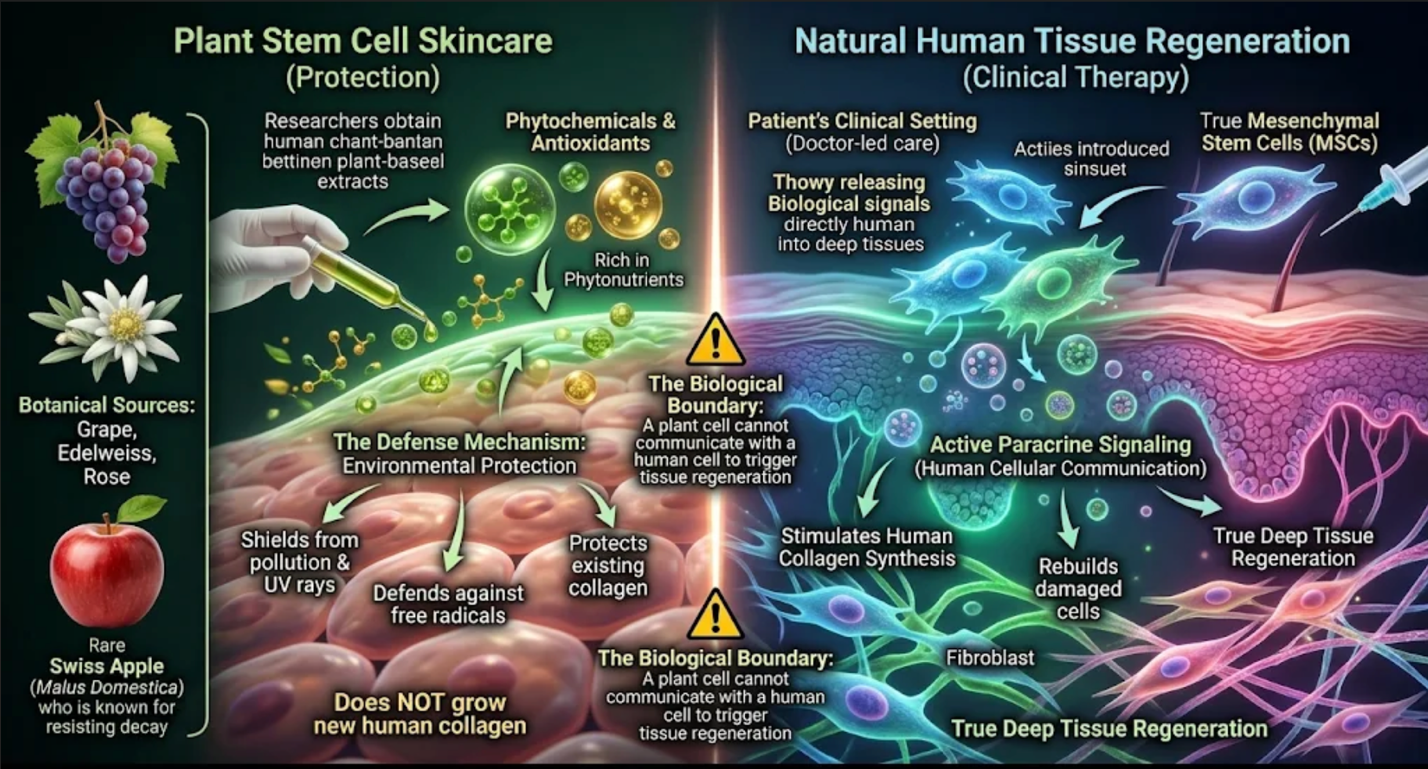
Figure 1: Comparison between Plant Stem Cell Extracts (daily protection) and Human Stem Cell Therapy (clinical-grade tissue regeneration) on human skin cells.
You will frequently see Malus Domestica on high-end ingredient lists. So, what is apple stem cell extract in skincare? It originates from a rare, incredibly resilient Swiss apple known for not rotting after being picked. Scientists cultivated the stem cells of this apple to extract its protective phytonutrients. In a daily serum, this extract acts as a high-quality antioxidant that helps defend your skin against free radicals. It does a wonderful job of protecting your existing collagen,but it does not physically grow new human collagen.
To be absolutely clear on the biology: do stem cell creams contain live stem cells? No. Living stem cells require extremely precise, sterile laboratory environments, tightly controlled temperatures (often cryogenic freezing), and specialized nutrient broths to survive. Furthermore, a whole stem cell is physically too large to penetrate the epidermis (the outer layer of your skin). Any product sitting on a store shelf at room temperature contains only the dead, extracted biochemical components of cells.
To know what you are actually buying, you must understand the INCI (International Nomenclature of Cosmetic Ingredients) list on the back of the box. Here is a decoder for common stem cell skincare ingredients.
| What the Label Says (INCI) | What It Actually Is | What It Does for Your Skin |
| Malus Domestica Fruit Cell Culture Extract | Plant Stem Cell Extract (Apple) | Provides antioxidant protection and surface hydration. |
| Vitis Vinifera Callus Culture Extract | Plant Stem Cell Extract (Grape) | Defends against UV-induced free radical damage. |
| Human Stem Cell Conditioned Media | The filtered liquid/broth that human cells were grown in (cells removed) | Contains peptides and growth factors to support the skin barrier. |
| Palmitoyl Tetrapeptide-7 | Synthetic Peptides | Mimics cellular signals to encourage mild surface firming. |
| Lactobacillus Ferment | Postbiotics / Biotech ingredients | Balances the skin microbiome; often paired with cell extracts. |
Cosmetics are legally defined as products meant to cleanse or beautify the surface of the skin. They are not permitted to alter the body’s underlying biological functions. Consequently, stem cell cosmetics regulation is incredibly strict regarding what can and cannot be placed in an over-the-counter bottle.
Because of strict global regulations, are human stem cells allowed in cosmetics? The answer is no. You will never find live human stem cells in a legal cosmetic product. The EU Cosmetic Regulation 1223/2009, the US FDA, and the ASEAN Cosmetic Directive (which governs Thailand) strictly prohibit the use of human-derived cells and tissues in cosmetic products. Any brand claiming to sell “human stem cells” in a topical cosmetic jar is either utilizing conditioned media (the liquid the cells used to live in) or is operating outside of regulatory compliance.
Exosomes the signaling vesicles released by cells are the newest trend in beauty. Are exosome skincare products regulated? Yes. Just like stem cells, if an exosome product is sold as a topical cosmetic, it must comply with cosmetic safety laws and cannot make medical claims. Because of the restrictions on human biological materials, most over-the-counter exosome serums utilize plant-derived (phytogenic) exosomes or synthetic mimics. (For clinical-grade, medical applications of exosomes, see our [Facial Aesthetic Innovations Thailand] page).
Patients frequently ask: do stem cell skincare products work, and is stem cell skincare worth the money?
If you are looking for a luxurious, antioxidant-rich moisturizer that hydrates the skin, protects against environmental stress, and provides a temporary plumping effect, high-quality biotech and plant-extract skincare can be a lovely addition to your routine. However, if you are spending premium prices expecting the cream to lift sagging skin, erase deep structural folds, or fill in acne scars, you are wasting your money. No topical cosmetic can replicate the structural results of a clinical medical procedure.
There is a hard biological limit to what a topical cream can achieve. Knowing when to see a doctor instead of buying stem cell skincare saves you time, money, and frustration. You should transition from the beauty aisle to a doctor’s clinic if you are dealing with:
If you have exhausted your cosmetic options and want true biological results, it is time for clinical intervention. Opting for a doctor-led stem cell skin treatment in Thailand allows you to move beyond the limitations of over-the-counter beauty products. At Vega Stem Cell in Bangkok, we bridge the gap between everyday skincare and advanced regenerative medicine. We utilize ethically sourced, lab-processed biological therapies such as targeted injections and clinical microneedling to deliver active cellular signals directly into the dermis, bypassing the epidermal skin barrier entirely.
What is stem cell skincare?
Stem cell skincare refers to beauty products containing extracts, proteins, or antioxidants derived from plant or animal cells. They are designed to hydrate and protect the skin’s surface but do not contain live stem cells.
Do stem cell creams contain live stem cells?
No, Live stem cells cannot survive in cosmetic formulations at room temperature, nor can they penetrate the human skin barrier. Products contain only the dead, extracted biochemicals of cells.
What is apple stem cell extract in skincare?
It is a botanical extract derived from the Malus Domestica Swiss apple. In skincare, it acts as a potent antioxidant, helping to defend the skin against free radicals and environmental stress.
Are human stem cells allowed in cosmetics?
No, Global cosmetic regulations, including the EU Cosmetic Regulation,US FDA guidelines, and the ASEAN Cosmetic Directive, prohibit the inclusion of human-derived cells or tissues in over-the-counter cosmetic products.
Are exosome skincare products regulated?
Yes, when sold as topical cosmetics, exosome products must adhere to standard cosmetic regulations. This means they cannot contain human biological material (in most regions) and cannot make medical claims about treating diseases or regenerating tissue.
How to spot misleading stem cell skincare claims?
Watch out for products claiming to contain “live cells” in a jar,promising to “repair DNA,” or suggesting that botanical plant cells can magically communicate with your human cells to build new collagen.
Is stem cell skincare worth the money?
If you view it as a high-quality antioxidant moisturizer, it can be beneficial.However, if you are buying it expecting it to mimic a clinical facelift, erase deep wrinkles, or cure scarring, it is not worth the premium price tag.
When to see a doctor instead of buying stem cell skincare?
You should consult a medical professional when you are dealing with issues that originate below the skin’s surface, such as deep structural folds, significant volume loss, severe sagging, or pitted acne scars, as these cannot be corrected by any topical cream.