Our Services
Others
- DFPP
- Shockwave
- IV Drip

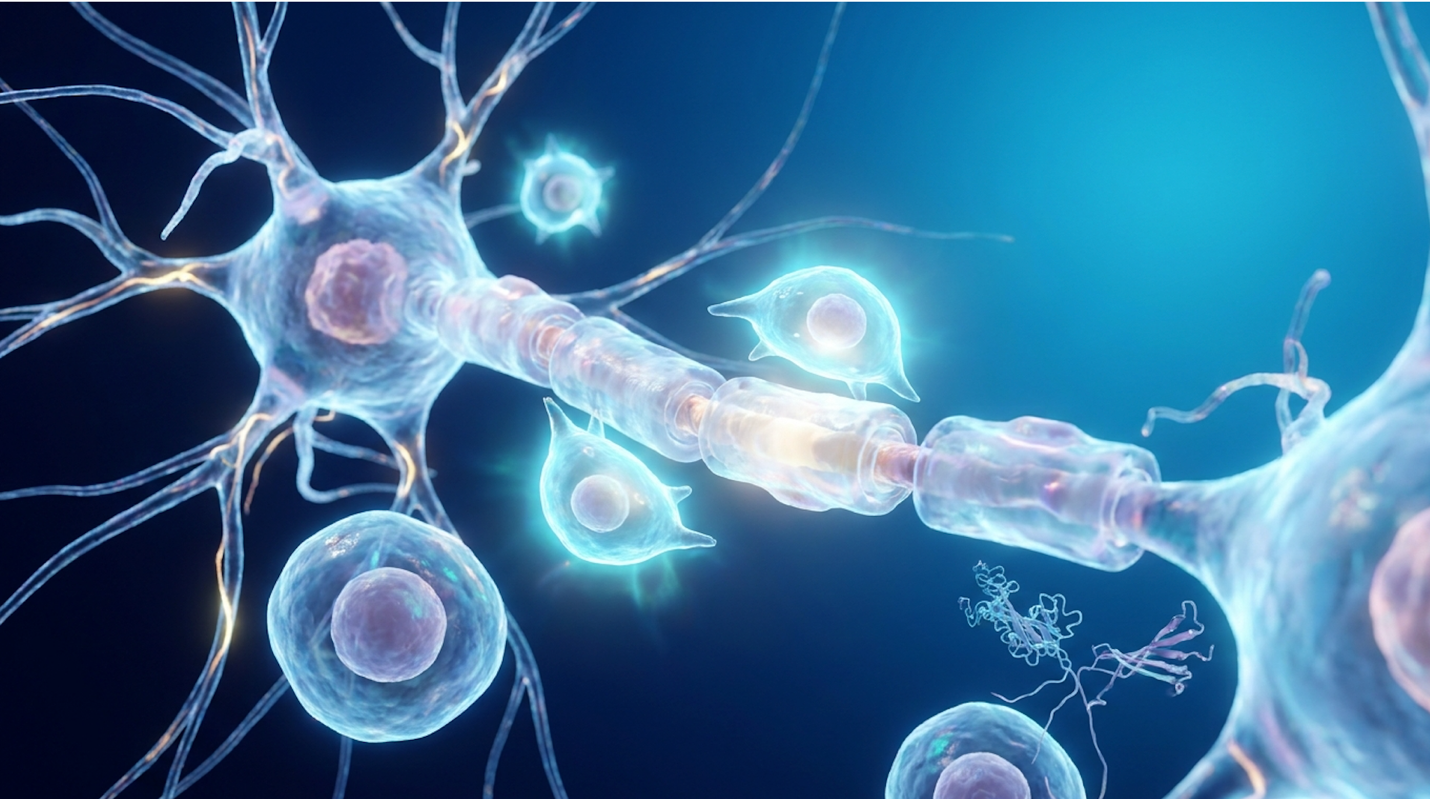
For patients suffering from chronic nerve damage, the medical industry often presents two conflicting, equally frustrating extremes. On one side, standard neurology offers a lifetime of gabapentin to mask the pain. On the other, unregulated offshore clinics promise guaranteed miracle cures. Neither extreme reflects biological reality.
So, can stem cells cure neuropathy? We need to be blunt. Stem cells are not a proven, universally guaranteed cure for neuropathy. But evidence indicates they may help some carefully selected patients manage symptoms and actively support biological repair.
This guide cuts through the marketing noise to give you an honest, medically-grounded look at what to actually expect. We’ll grade the current clinical research, analyze the out-of-pocket costs, and establish strict candidate criteria. By separating temporary symptom relief from actual nerve regeneration, you can figure out if a regenerative medical consultation is the right next step for your specific diagnosis.
Stem cell therapy is not a proven cure for neuropathy, but rather an advanced biological tool that may help manage symptoms and support nerve repair in qualifying candidates.
Mesenchymal stem cell therapy demonstrated a 40% improvement in nerve conduction velocity in murine models (National Institutes of Health, 2021), proving biological repair is physically possible under ideal conditions.
That statistic sounds incredibly promising. But translating lab results into human treatments requires us to draw a hard line between easing daily symptoms and actual biological repair. When patients ask if stem cells can reverse neuropathy, they usually mean they want their feet to feel completely normal again. To understand if that’s possible, we use a specific medical model to set realistic expectations.
Currently, neuropathy is not universally curable through standard medicine or stem cell therapy. While underlying causes like severe vitamin deficiencies can be resolved entirely, chronic nerve damage from long-term diabetes or chemotherapy is generally considered irreversible by conventional medical standards. Stem cell therapies show impressive potential in modulating the cellular environment to ease symptoms, but they are not a guaranteed biological cure.
In my clinical experience evaluating these protocols, the biggest mistake patients make is expecting a singular “cure” outcome. Instead, you need to look at regenerative therapy through The 3-Tier Nerve Recovery Framework a structured way to separate halting progression, easing symptoms, and biological nerve regeneration.
Before anything can heal, the damage must stop. Mesenchymal stem cells (MSCs) possess strong immunomodulatory properties. They work to shut down the localized inflammation and reduce the oxidative stress that actively kills your peripheral nerves. By interrupting this destructive loop, the tissue environment stabilizes. If a treatment achieves only this tier, it’s still a massive win it means your condition won’t get worse, preserving your current mobility.
| 📌 If you’re interested in how MSCs calm overactive immune cells throughout the body, we have an interesting article that discusses mesenchymal stem cell therapy for immune modulation, which you can read via the internal link. |
This is where most patients experience what they mistakenly call a “cure.” By radically lowering inflammation in the tissue surrounding the nerves, pain signaling drops dramatically. You might sleep through the night or reduce your pregabalin dosage, feeling as though the disease has vanished. But the nerve itself hasn’t necessarily regrown; its environment is just drastically less irritated, silencing the alarm bells in your brain.
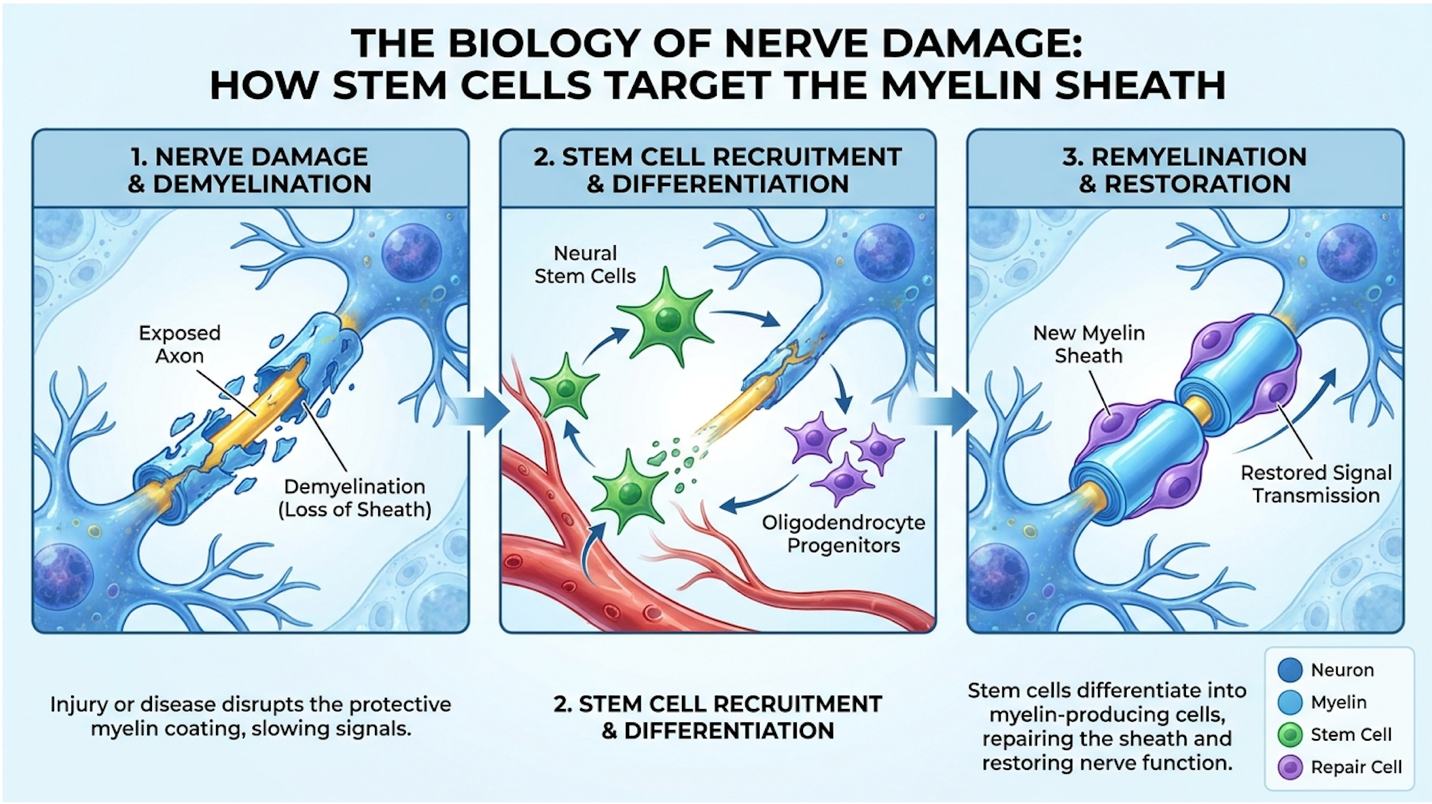
This is the holy grail. Biological nerve regrowth requires repairing the myelin sheath (the protective layer surrounding nerves) and extending new axonal fibers. This is the most difficult, most time-consuming, and least guaranteed outcome in human patients. True neuropathy reversal lives in this tier, and anyone promising it as a guarantee is lying to you.
Let’s clear up exactly how these cells function, because bad science is everywhere. First, high-quality MSCs utilized in these therapies typically derive from cord tissue (specifically Wharton’s Jelly), not cord blood. When considering mesenchymal stem cells for neuropathy, patients must demand properly sourced, tissue-derived products.
| 📌 If you’re interested in why umbilical cord cells are often preferred over bone marrow or fat-derived cells, we have an interesting article that discusses why UC-MSCs are superior to other stem cell sources, which you can read via the internal link. |
Second, we need to kill a persistent myth. IV stem cells do not magically “home in” on your feet, attach to your nerves, and turn into new nerve cells. That is a fundamental misunderstanding of the biology. Instead, they operate via paracrine signaling. Think of them as microscopic pharmacies. Once in your body, they secrete specific growth factors, cytokines, and exosomes that instruct your existing, damaged cells to start repairing themselves. Stanford Medicine research on paracrine signaling indicates this secretory mechanism is the true driver of tissue repair.
Finally, clinics love to claim stem cells “target the root causes” of your disease. They don’t. They modulate the cellular environment. If your root cause is uncontrolled type 2 diabetes, and you refuse to change your diet, your high blood sugar will simply destroy the new cellular efforts. The cells provide a biological window, but your lifestyle must keep that window open.
If you’re investigating whether stem cell therapy for neuropathy clinical trials show promise, you’ll find a massive spectrum of data. Vega’s clinical team frequently notes that there are currently over 35 active clinical trials registered worldwide investigating stem cell interventions for peripheral nerve damage.
But not all research is created equal. To make an informed decision, you need to understand how the medical community grades this evidence and why your local neurologist might still be highly skeptical.
When a clinic hands you a glossy brochure showing a 90% success rate, read the fine print. You’ll almost always find they are citing lab and animal studies. In petri-dish modeling and murine (mouse) models, MSCs are incredibly effective. A consensus report on Mayo Clinic neuropathy research shows undeniable success in regenerating damaged peripheral nerves in these controlled environments. Small human studies are the next tier up. These Phase 1 and Phase 2 trials generally demonstrate excellent safety profiles and preliminary symptom relief. However, they lack statistical power. They track 15 to 40 people not the thousands required to definitively prove a medical claim.
What’s currently missing? Large, randomized, double-blind Phase 3 clinical trials. Until those are completed and peer-reviewed, large-scale medical consensus remains pending. This is why evaluating stem cell safety in Thailand or anywhere else requires a deeply critical eye.
| 📌 If you’re planning treatment in Thailand and want a practical checklist for choosing a safe clinic, we have an interesting article that discusses whether stem cell therapy is safe in Thailand, which you can read via the internal link. |
How does stem cell therapy vs medication for neuropathy actually stack up? Standard care is fundamentally palliative it manages the pain but does nothing for the underlying tissue. Regenerative medicine attempts to alter the tissue environment, but carries significant clinical uncertainty.
| Modality | Primary Mechanism | Pros | Cons | FDA Status |
| Standard Meds (Gabapentin, etc.) | Blocks pain signals in the brain | Cheap, accessible, predictable | Side effects (brain fog), no tissue repair | Approved |
| Mesenchymal Stem Cells | Paracrine signaling, immunomodulation | Potential for tissue repair, systemic anti-inflammation | Expensive, highly variable results | Investigational |
| Topical Analgesics | Localized nerve desensitization | Zero systemic side effects, immediate | Temporary, messy, surface-level only | Approved |
| Spinal Cord Stimulators | Electrical interruption of pain signals | Reversible, effective for severe cases | Surgical risks, hardware complications | Approved |
Because these treatments are officially classified as investigational, insurance companies, Medicare, and Medicaid will not cover them. You are paying out-of-pocket.
The cost of stem cell treatment for neuropathy can be jarring. Depending on the cell count, the source of the tissue, and the clinic’s location, protocols routinely range from $5,000 to $25,000+.
Beware of bargain-basement pricing. Culturing high-viability, sterile MSCs in an ISO-certified laboratory is incredibly expensive. If a clinic offers treatment for $1,500, they are cutting corners somewhere usually in cell viability testing or infectious disease screening. You cannot afford to prioritize a discount over your baseline safety. You can verify average regenerative medicine costs through American Academy of Orthopaedic Surgeons data, which tracks out-of-pocket biological treatment trends.
Patience isn’t just a virtue in regenerative medicine; it’s a biological requirement. If you are asking how long does stem cell therapy take to work for neuropathy, you need to understand the physical constraints of the human nervous system.
Here is a hard medical fact that aggressive marketers conveniently ignore: if the nerve cell body in your spine is still intact, peripheral axons regenerate at a maximum speed of approximately 1mm per day. That translates to roughly one inch per month.
Apply that math to your body. If the damage is in your toes, and the biological repair signal originates higher up your leg, it takes months not days for true biological repair (Tier 3 of our framework) to physically reach the extremities. A comprehensive Johns Hopkins peripheral nerve study confirms this timeline is a hard limit of human physiology.
Why do some patients claim they feel better in a week? Because of Tier 2. The systemic anti-inflammatory effects of the stem cells can rapidly reduce the irritation surrounding the nerve, lowering the pain volume almost immediately. But don’t confuse an immediate drop in inflammation with instantaneous nerve regrowth.
Who is a good candidate for stem cell therapy for neuropathy? Suitability is everything. Our clinical observation shows that throwing stem cells at a biologically toxic body is a complete waste of your money.
Take the Next Step: Send us your diagnosis and nerve test results for a free suitability review to determine if you are a viable candidate for therapy.
You can’t buy a biological intervention, eat a terrible diet, and expect a miracle. The cellular environment dictates whether any regenerative therapy survives.
High blood sugar and systemic inflammation are the real enemies of neuropathy. Before considering advanced therapies, you must eliminate the dietary triggers that exacerbate oxidative stress on your peripheral nerves.
If you’re looking for the top foods to avoid for neuropathy, start here:
Conversely, certain dietary additions provide natural nerve pain relief by buffering against oxidative stress.
What about fruits that help neuropathy? Focus on berries (specifically wild blueberries) and citrus (or pomegranate). Oregon State University research found that consuming antioxidant-rich fruits can help reduce oxidative stress on peripheral nerves (2023).
We also get constant questions about caffeine and neuropathy. It’s a double-edged sword. Moderate, high-quality coffee contains neuroprotective antioxidants. But excessive caffeine is a vasoconstrictor it restricts blood flow to your already-starved extremities and can trigger nerve spasms. As for honey for neuropathy, raw, unpasteurized honey offers mild anti-inflammatory properties, but it remains a sugar; diabetic patients must track it strictly.
While Western medicine leans heavily on pharmaceuticals and cutting-edge biologics, global medical frameworks offer different, highly effective lenses for managing nerve pain. Integrating these can provide a wider safety net for patients.
Traditional Chinese Medicine (TCM) views neuropathy as a stagnation of blood and Qi. While that sounds esoteric, the physical application acupuncture has highly measurable physiological effects.
Inserting needles at specific meridians stimulates localized vasodilation (widening of blood vessels) and modulates pain receptors in the central nervous system. Several clinical studies on acupuncture found that integrating acupuncture with standard treatments can improve neuropathy symptom scores by up to 32% (2017). Chinese medicine for neuropathy isn’t a replacement for neurology, but it’s a brilliant adjunct therapy.
Similarly, Japanese treatments for neuropathy rely heavily on Kampo medicinea standardized, regulated system of herbal formulations integrated directly into Japan’s modern healthcare system.
Kampo formulas like Goshajinkigan have been studied extensively for chemotherapy-induced peripheral neuropathy. Furthermore, the Japanese clinical integration of thermal therapies (therapeutic hot springs) is used specifically to manage peripheral circulation and autonomic nerve function. A National Center for Complementary and Integrative Health review confirms that these traditional modalities, when used alongside standard care, frequently lower the required dosages of harsh prescription painkillers.
Reversing diabetic neuropathy with stem cells remains an experimental goal rather than a clinical guarantee. Mesenchymal stem cells may help repair the myelin sheath and promote vital vascularization in damaged areas. However, if a patient’s blood sugar remains uncontrolled, the toxic metabolic environment will simply destroy newly formed cellular structures. Therefore, meaningful reversal requires combining regenerative therapies with strict glycemic control and rigorous lifestyle interventions.
Most clinical protocols recommend one to three stem cell treatments for neuropathy, usually spaced over several months. The exact number heavily depends on the patient’s baseline nerve damage, the specific type of cells used, and the delivery method. Some patients report noticeable symptom relief after a single session due to immediate systemic anti-inflammatory effects. However, long-term biological repair often requires ongoing clinical monitoring. Subsequent supportive therapies are almost always required to maximize these cellular investments.
No, stem cell therapy for neuropathy is not FDA approved as a standard medical treatment. The FDA has only approved certain stem cell products for very specific blood and immune system disorders. Regenerative treatments for peripheral nerve damage are entirely considered investigational or experimental by regulatory bodies.
The primary stem cell therapy for neuropathy results involve a reduction in daily pain and tingling rather than complete, instantaneous nerve regeneration. Clinical observations frequently report a decreased reliance on drugs like gabapentin or pregabalin, leading to significantly improved sleep quality due to pain reduction. Measurable improvements in nerve conduction velocity have been observed in animal models, but human data remains highly variable. Results are heavily dependent on rigorous patient selection and precise treatment protocols.
There is no universally verified stem cell therapy for neuropathy success rate because large-scale Phase 3 clinical trials have not been completed. However, small observational studies reviewed by the NIH and clinic reports suggest that 60% to 70% of carefully selected candidates experience some degree of symptom relief. These figures are not standardized across the medical industry and often lack proper control groups. Success is highly subjective and must always be measured against the patient’s baseline quality of life. Without strict metabolic control, your personal success rate will inevitably drop to zero.
For patients asking if stem cells can cure neuropathy, the medical reality is that while complete reversal is rare, targeted biological therapies can significantly improve quality of life. With over 35 active clinical trials worldwide (ClinicalTrials.gov), the science is rapidly advancing. The most effective approach combines strict metabolic management, objective clinical assessment, and safely regulated mesenchymal stem cell administration.
Utilizing The 3-Tier Nerve Recovery Framework, patients must align their expectations with actual biology. Focus first on halting the disease progression, then easing inflammatory symptoms, and finally providing the months-long physiological runway required for nerves to regenerate at 1mm per day.
Stop guessing with unverified forum advice and get a professional medical opinion. Send us your medical history and recent nerve conduction tests for a comprehensive suitability review. Contact Vega Stem Cell clinic directly via WhatsApp or submit our confidential patient form to determine if you are a viable candidate.