Our Services
Others
- DFPP
- Shockwave
- IV Drip

The escalating incidence of neurodegenerative disorders, including Alzheimer’s Disease, threatens an individual’s quality of life. Alzheimer’s Disease leads to early onset dementia and profound memory loss, removing a person’s autonomy. The promise that an innovative approach to treatment at the best stem cell clinic provides is a reason for optimism for afflicted families. This review article provides a comprehensive analysis of the potential of treating Alzheimer’s Disease with UC-MSCs. It describes the open-ended nature of current treatments and the molecular therapeutic mechanisms of UC-MSCs. Additionally, it describes the reasons that make Thailand a premier center for stem cell treatments.
There are documented tangible therapeutic results from premier stem cell clinics. One documented case describes the treatment of an afflicted 61-year-old woman, diagnosed with severe Alzheimer’s Disease, who had lost her ability to both sit and walk unassisted. Her condition was also characterized by neck stiffness that impaired her ability to eat, and she lacked the ability to smile or gaze. The medical professionals at the best stem cell clinic administered MSCs derived from the woman’s own bone marrow. After the treatment, she was able to smile and gaze, and her neck stiffness returned to normal, allowing her to eat. These positive results motivated the best stem cell clinic to adopt similar cell therapies, paving the way for advanced UC-MSCs applications. The positive effects that stem cell treatments yield on Alzheimer’s Disease are described in several international review publications.
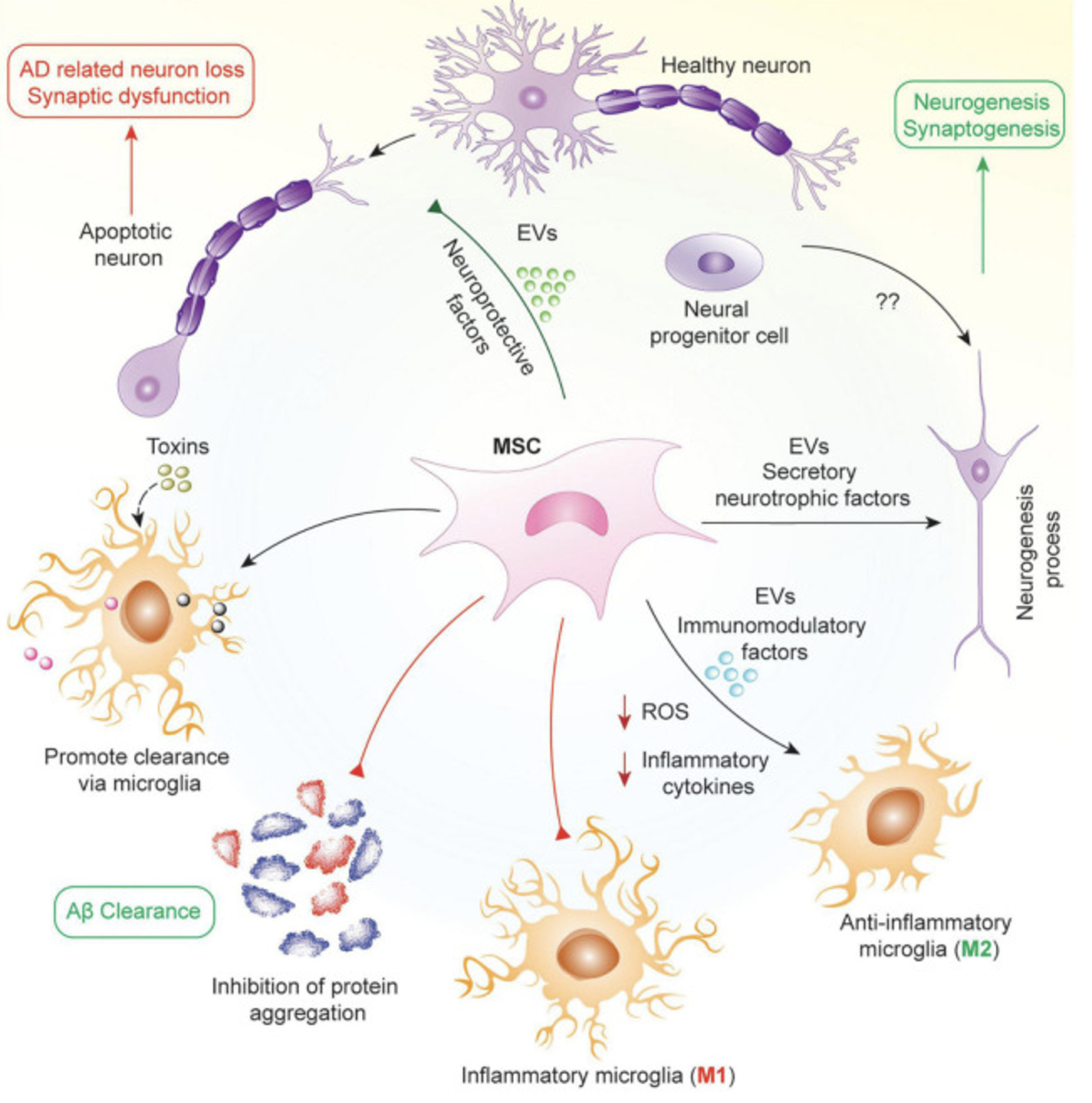
Therapeutic mechanisms of UC-MSCs operate at the molecular level to combat Alzheimer’s Disease, an approach highly refined at the best stem cell clinic. The use of UC-MSCs at the best stem cell clinic relies upon the therapeutic factors secretion to modify disease processes. The primary pathway is to decrease the burden of amyloid β and tau pathologies in the brain. Upon the arrival of UC-MSCs at the target tissues, they release factors that activate microglial enzymes to dismantle aggregated amyloid-β. These UC-MSCs also inhibit certain kinases to block hyperphosphorylation to decrease the formation of neurofibrillary tangles that are destructive to neurons in Alzheimer’s Disease.
A key pathway is the release of extracellular vesicles that are rich in microRNAs. These vesicles are nanometer sized and reprogram microglia to reverse their inflammatory response and promote an anti-inflammatory response. The clinicians at the best stem cell clinic utilize this pathway, as UC-MSCs release anti-inflammatory cytokines and defend the brain from chronic inflammatory processes. Additionally, the neurotrophic factors from UC-MSCs enhance the formation of new neurons and new synapses to reconstruct the neural networks that have been damaged. Furthermore, UC-MSCs are capable of reactivating injured neurons by the transfer of healthy mitochondria. This transfer reduces oxidative stress and enhances the energy status of target cells to a great extent. The practitioners at the best stem cell clinic concur that the diverse and complementary effects of UC-MSCs pose a strong challenge to Alzheimer’s Disease. Beyond cytokine secretion, UC-MSCs also trigger autophagy in neural cells. This process is initiated to remove cellular debris and disordered proteins that are the key contributors to Alzheimer’s Disease in the elderly. This effect is sustainable in the long-term, enabling patients at the best stem cell clinic to regain control of their ailments.
Review studies suggest the ability of UC-MSCs to inhibit neuronal apoptosis is an advanced mechanism that typical pharmaceuticals do not offer. The best stem cell clinic utilizes this unique setting to enhance the capacity of UC-MSCs to target the treatment of Alzheimer’s Disease. Most pharmacological treatments of Alzheimer’s Disease focus primarily on palliation. These may involve the administration of acetylcholinesterase inhibitors, which facilitates the balance of one’s brain transmitters and may lead to some temporary improvements of cognitive function. However, the limitation of these agents is their inability to reverse the progressive nature of Alzheimer’s neurodegeneration. Further, the traditional pharmacological therapies will lead to the development of a variety of side effects that may be disruptive to an individual’s ability to manage the activities of daily living, such as severe nausea and constant fatigue. These may be supplemented by lifestyle and dietary changes along with the intake of antioxidant supplements. However, all of these remain only palliative to the therapeutic challenge of Alzheimer’s Disease. An unreasonably long wait for regenerative technology is the challenge that the best stem cell clinic addresses by focusing UC-MSCs guided technology to the repair of the structures of the brain.
Figure 1: Mechanism of protective effects of MSCs in AD
(Note. Adapted from “Mesenchymal stromal cells for the treatment of Alzheimer’s disease: Strategies and limitations”., Regmi S, Liu DD, Shen M, Kevadiya BD, Ganguly A, Primavera R, Chetty S, Yarani R, Thakor AS. Front Mol Neurosci. 2022 Oct 6; 15:1011225. doi: 10.3389/fnmol.2022.1011225.)
The treatment trend in Thailand is promising, especially the UC-MSCs treatment of Alzheimer’s Disease offered at the best stem cell clinic. Thailand has up-to-date medical technologies and well-trained medical staff. Compared to Western countries, the prices are reasonable. Thai medical infrastructure offers enhancement and control of UC-MSCs quality to the highest international safety standards. A recent cellular technology review indicates that an increasing number of patients with Alzheimer’s Disease are traveling to Thailand for elite care at the best stem cell clinic worldwide. Thailand will be propelled further ahead as advances are made on safely delivering UC-MSCs into the brain. The numerous expansions of the best stem cell clinic illustrate that treating Alzheimer’s Disease with UC-MSCs is a significant medical breakthrough. This advancement substantially improves the quality of life of patients and offers them renewed hope.