Our Services
Others
- DFPP
- Shockwave
- IV Drip

This article reviews the proposed biological mechanisms and current evidence surrounding umbilical cord–derived mesenchymal stem cell (UC-MSC) therapy as an investigational, supportive approach for Autism Spectrum Disorder (ASD). It summarizes research on immunomodulation, trophic support, and neurotransmitter modulation as proposed mechanisms, and outlines what preliminary studies do and do not demonstrate. The therapy remains experimental: it is not established as a treatment or cure for autism, and further controlled clinical research is needed before firm conclusions can be drawn. This article is intended for parents and caregivers seeking a balanced, evidence-aware overview.
Signs of autism can sometimes be noticed by parents and clinicians from an early age, and developmental delays associated with autism may be observable before a formal diagnosis is made. Diagnostic timing varies by child and by healthcare system, and parents who have concerns about their child’s development are encouraged to seek a professional evaluation as early as possible, since early access to developmental support is associated with better outcomes.
This article looks specifically at umbilical cord–derived mesenchymal stem cell (UC-MSC) therapy: what is being studied about how it may work, and what current evidence does and does not support. For a fuller explanation of the underlying biology, see our companion article, “How UC-MSC stem cell therapy in Bangkok May Support Autism: The Biological Rationale.”
Proposed Mechanisms of Action
Researchers have proposed several biological mechanisms by which UC-MSC stem cell therapy in Bangkok might interact with processes relevant to autism spectrum disorder (ASD). These remain areas of active study rather than confirmed treatment pathways.
Immunomodulation
UC-MSC stem cell therapy in Bangkok is studied for their potential to influence immune system activity. In some individuals with ASD, immune irregularities and inflammation have been reported, and researchers are exploring whether modulating this activity may be biologically relevant to symptom presentation.
Trophic Support
UC-MSC stem cell therapy in Bangkok secretes growth factors and neurotrophic factors that are being studied for their potential role in supporting neuron survival, growth, and function. The working hypothesis is that this may help support neural circuit connectivity, though this remains under investigation rather than established for ASD specifically.
Neurotransmitter Modulation
Some research explores whether UC-MSC stem cell therapy in Bangkok may influence neurotransmitter balance in the brain. This is an early-stage area of study, and any link to behavioral or cognitive changes in ASD has not been firmly established.
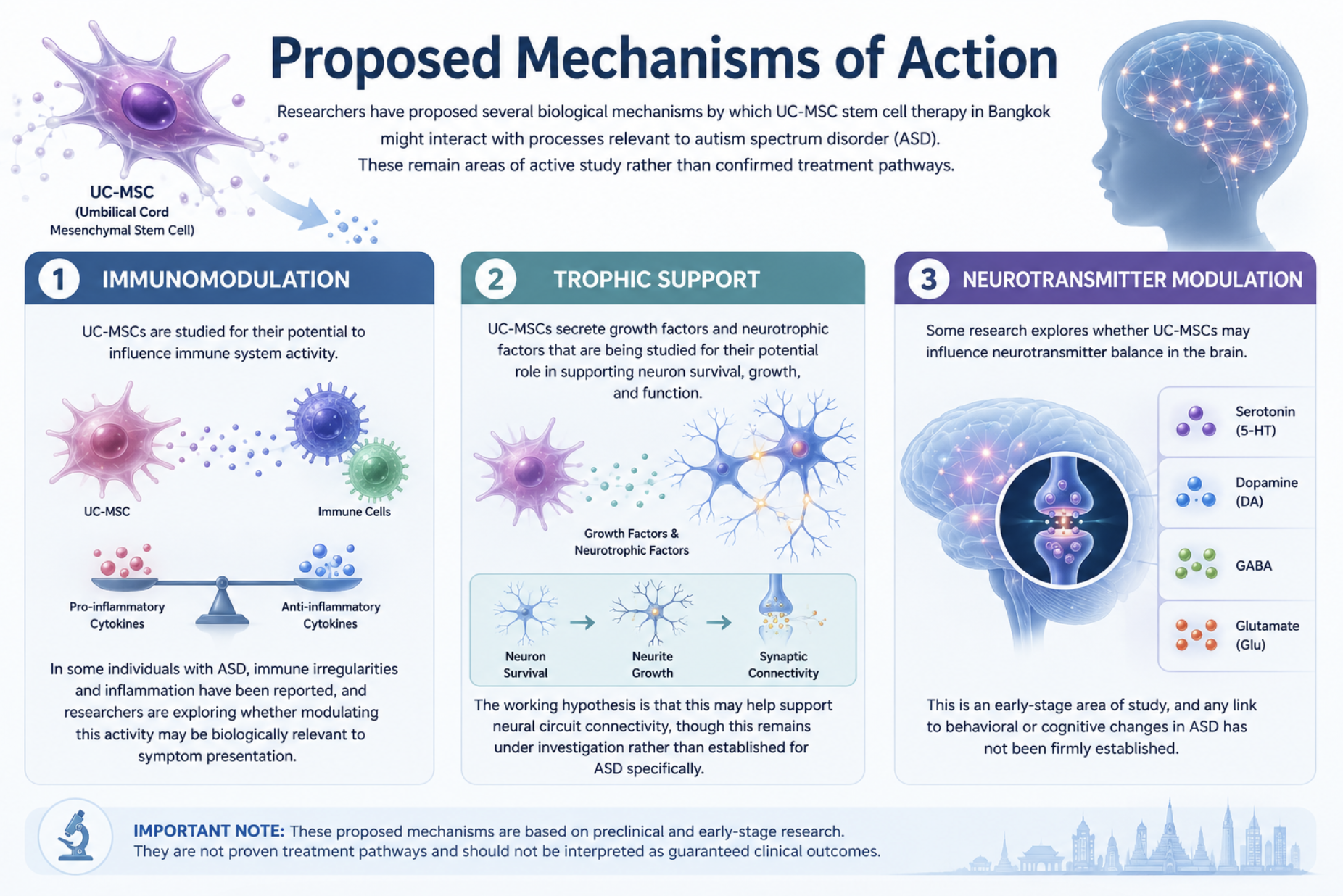
Figure 1: Proposed Mechanisms of Action of UC-MSC Therapy in Autism Spectrum Disorder (ASD)
What Current Research Suggests and Its Limits
Some preliminary studies and clinical observations have reported associations between UC-MSC stem cell therapy in Bangkok and changes in social responsiveness, communication, repetitive behaviors, attention, and inflammatory markers in a subset of individuals with ASD. It is important to be precise about what this means: these are early, preliminary findings and, in many cases, anecdotal clinical observations rather than results from large, controlled clinical trials. They should not be read as confirmed or guaranteed outcomes for any individual child.
Based on completed clinical research to date, UC-MSC stem cell therapy in Bangkok has generally been reported as well-tolerated, though as with any medical procedure this should be discussed in detail with a treating physician, including a full, specific disclosure of known and possible risks.
How UC-MSC stem cell therapy in Bangkok Are Believed to Interact with Tissue
At a cellular level, mesenchymal stem cells are studied for several general biological behaviors, which researchers are examining in the context of neurodevelopmental conditions:
Crossing the blood-brain barrier in certain conditions
Migrating toward sites of tissue stress or injury (chemotaxis)
Interacting with and influencing surrounding cells (paracrine signaling)
Supporting the repair processes of existing cells (autocrine effects)
Contributing to immune regulation
Interacting with glial cells and neurons
Supporting nerve fiber growth processes (axogenesis)
Releasing neuroprotective signaling molecules
Supporting the nervous system’s capacity to adapt (neuroplasticity)
These are general biological properties of mesenchymal stem cells studied across multiple fields of regenerative medicine their specific relevance and effect size in autism spectrum disorder remains an active area of research, not an established outcome.
Areas Being Studied as Potential Outcomes
Research in this area has explored a range of possible associations, including immune function, metabolic markers, communication ability, learning and memory, and attention and self-care skills. These are described in the literature as areas of interest for further study not as confirmed, guaranteed, or universal outcomes of treatment. Responses vary significantly between individuals, and no legitimate provider should present a fixed list of expected results.
Conclusion
stem cell therapy in Bangkok for autism remains in an experimental stage and requires more thorough, well-controlled clinical trials to properly validate both safety and efficacy. Preliminary research has shown biological plausibility particularly around inflammation, immune regulation, and neural support but this does not yet amount to proof of clinical benefit for core autism symptoms. Long-term data are still needed, and treatment should only be pursued through credible clinical research settings or with qualified, transparent medical practitioners who are clear about what is and is not yet known. If stem cell therapy continues to show promising results in rigorous research, it may become a more clearly defined part of autism care in the future, but that point has not yet been reached.
This article is for educational purposes and does not constitute medical advice. UC-MSC stem cell therapy for autism is investigational, is not a cure, and should not replace established developmental therapies. Please consult a qualified physician for a full discussion of your child’s specific situation, including realistic expectations and a complete risk disclosure.