Our Services
Others
- DFPP
- Shockwave
- IV Drip

Recovering from a stem cell transplant requires navigating a precarious biological window where cellular engraftment races against the risk of systemic infection. When the preparative chemotherapy decimates your bone marrow, you are left entirely without an immune system. Without a rigorous, medically sound framework, patients face severe complications ranging from opportunistic infections to sudden graft failure.
Misunderstanding this fragile timeline often leads to critical lapses in hygiene or unwarranted psychological distress. And for those dealing with cutaneous complications where prolonged immunosuppression actively prevents tissue repair understanding how and when to navigate clinical interventions, including emerging discussions around stem cell therapy for non-healing wounds, becomes an urgent priority.
By the end of this guide, you will understand the exact physiological milestones of the first 100 days, equipping you to manage daily care safely. This analysis examines engraftment timelines, strict hygiene protocols, symptom management, and the clinical realities of relapse and secondary
Effective post-transplant recovery relies on strict adherence to The Post-Engraftment Home Adaptation Framework, minimizing infection risks while immune counts rebuild.
Recovery time after a stem cell transplant follows a distinct biological timeline governed by the rate of cellular engraftment. While preliminary blood counts begin to recover within 15 to 30 days, complete immune reconstitution takes upwards of 100 days to a year depending on whether the transplant was autologous or allogeneic (MSKCC clinical guidelines). Understanding this physiological trajectory is critical for setting realistic clinical expectations.
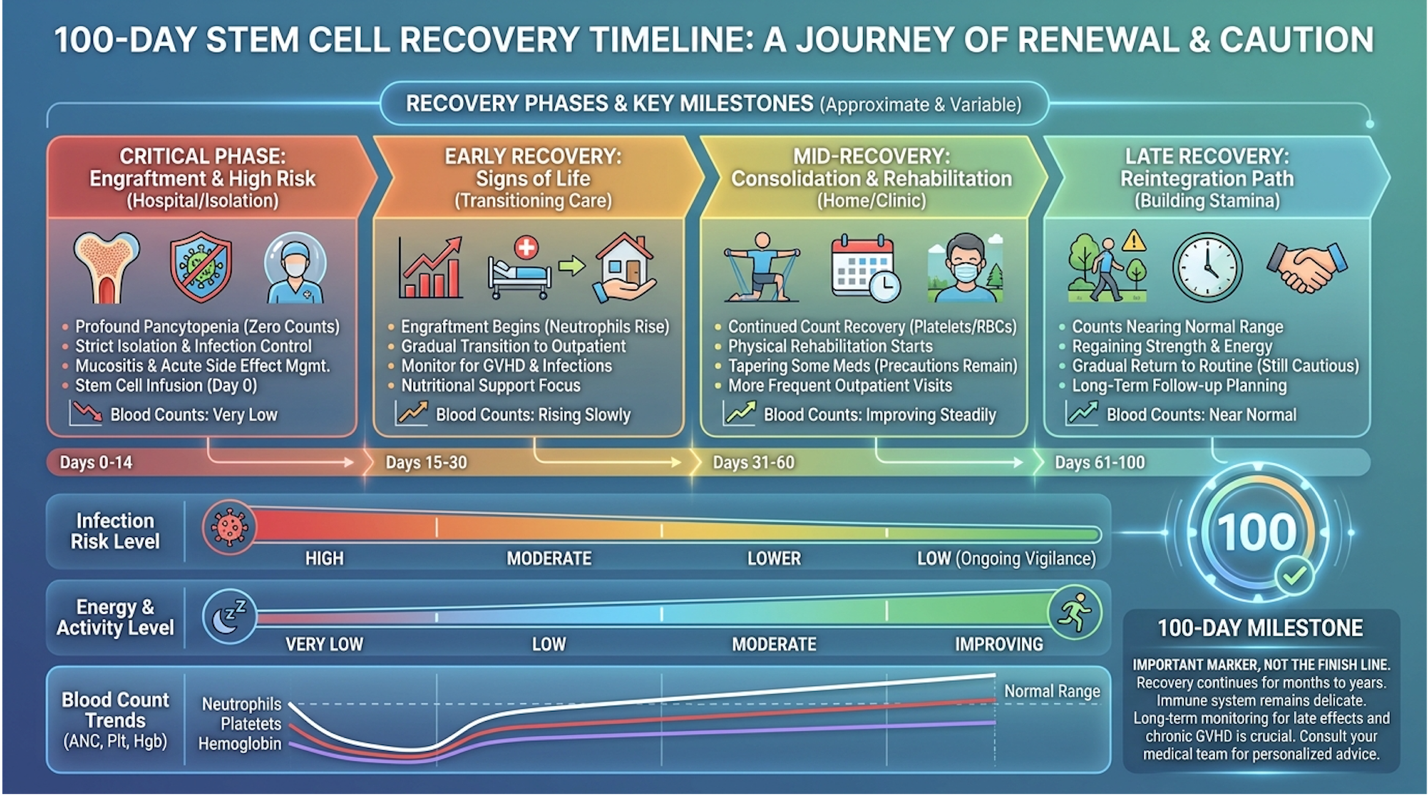
The first thirty days dictate the trajectory of your entire recovery. After the actual infusion of cells (Day 0), you enter a harrowing waiting period. High-dose conditioning chemotherapy typically utilizing severe agents like busulfan, melphalan, or fludarabine has completely destroyed your native bone marrow. Between days 7 and 14, you hit what hematologists call the “neutropenic nadir.” Your Absolute Neutrophil Count (ANC) drops to near zero, stripping your body of its primary defense against bacterial invaders.
These are universally considered the worst days after stem cell transplant. Patients don’t just feel tired; they experience profound, systemic biological depletion. During this nadir, patients remain in strict hospital isolation, relying on intravenous broad-spectrum antibiotics, heavy antifungals, and frequent platelet transfusions to prevent spontaneous hemorrhage. National Institutes of Health hematology research indicates that the median time to neutrophil engraftment sits around 14 to 21 days for peripheral blood stem cells, though cord blood grafts can take considerably longer.
Because the mucosal barriers lining the digestive tract are rapidly dividing tissues, the chemotherapy destroys them alongside the cancer cells. This results in severe mucositis a painful inflammation and ulceration extending from the mouth to the gastrointestinal tract. Swallowing water often feels like swallowing shards of glass. Nausea peaks relentlessly. Fevers spike almost
Contrast an autologous transplant (using your own rescued cells) with an allogeneic transplant (using a donor’s cells). Autologous patients generally engraft a few days faster and face zero risk of their new immune system attacking their own organs. Allogeneic patients, however, require heavy immunosuppressive drugs like tacrolimus right out of the gate to prevent graft rejection. This paradoxically extends their vulnerability to severe infections, requiring intense continuous monitoring.
| 📌 If you’re interested in how donor umbilical cord cells compare with cells taken from your own body, we have an interesting article that discusses why UC-MSCs are superior to other stem cell sources, which you can read via the internal link. |
Engraftment isn’t a subjective feeling of wellness; it is a rigid mathematical equation. Physicians look for your ANC to rise and remain above 500 cells per cubic millimeter for three consecutive days. Once the newly seeded marrow wakes up and begins churning out functional white blood cells, the acute risk of fatal bacterial sepsis finally begins to drop. Cellular engraftment typically occurs between 15 and 30 days meaning early hospital discharge relies entirely on stringent home sterilization.
But here is the reality that catches many patients entirely off guard: the massive discrepancy between biological improvement and physical energy. Your blood tests will look better, but you will still feel profoundly exhausted. During this Day 30 to 60 window, the gastrointestinal tract is still physically rebuilding its villi, meaning calorie absorption remains severely impaired. Patients frequently face nutritional setbacks, struggling to consume enough solid protein to rebuild the muscle tissue lost during weeks of bed rest.
Sarcopenia the rapid loss of muscle mass from being bedbound combines with the lingering mitochondrial toxicity of the chemotherapy to create a bone-deep, unrelenting fatigue. Frankly, relying on subjective feelings of wellness during this phase is a dangerous mistake; blood counts are the only reliable metric of true recovery. To transition home safely, patients must meet strict physiological criteria. You must be able to keep oral medications and a minimum threshold of daily calories down without requiring intravenous support.
Medication tapering during this phase is excruciatingly deliberate. Physicians do not simply stop antimicrobials. Drugs like oral acyclovir (for viral prophylaxis) and fluconazole (for fungal
The 100-day mark holds near-mythic status in transplant oncology. It represents the crucial point where acute complications like early graft rejection or severe viral reactivations statistically plummet. It is the standard timeline for the first major post-transplant disease restaging. This evaluation typically involves a painful bone marrow biopsy and comprehensive PET scans to confirm that you are still in deep molecular remission and that the donor cells are fully controlling your marrow space (achieving 100% chimerism).
However, “100 days” does not mean “fully cured.” Your immune memory is essentially wiped clean. The newly minted T-cells and B-cells take a year or more to fully mature and recognize complex pathogens. You are effectively walking around with the naive immune system of a newborn baby. Because of this, patients must undergo a complete, rigorous revaccination schedule for childhood diseases (including polio, tetanus, measles, and pneumococcus) starting around six months to a year post-transplant.
At this 100-day juncture, physicians will rigorously evaluate tapering your prophylactic antibiotics and antivirals. Memorial Sloan Kettering Center guidelines dictate that clinical evaluation and medication tapering at the 100-day milestone depend entirely on your CD4 T-cell counts recovering past safe thresholds. If CD4 counts remain dangerously low (often below 200 cells/mm³), antiviral and antifungal prophylaxis will be extended well into the 6-month or 1-year mark. Restrictions on your daily diet and public exposure begin to cautiously taper at this point, but only with explicit physician approval.
Post stem cell treatment care necessitates a complete, non-negotiable transformation of the home environment to eliminate vectors for infection. Understanding exactly what not to do after stem
Food safety is quite literally a matter of life and death during the first few months of recovery. The “Neutropenic Diet” often updated in modern oncology clinics to “strict safe food handling guidelines” strips away anything carrying a potential bacterial or fungal load. A single microscopic exposure to Listeria or Salmonella can induce fatal septic shock in a patient lacking mature white blood cells. Immunocompromised patients are nearly 20 times more susceptible to Listeria so rigorous pasteurization of all dairy and meat is absolutely non-negotiable.
Explicit dietary avoidances are strict. You cannot consume unpasteurized dairy, raw or undercooked meats, sushi, raw honey, unwashed produce, or deli meats unless they are heated to steaming. Even seemingly healthy, vibrant choices like raw sprouts, unpasteurized kombucha, or a fresh organic spinach salad are incredibly dangerous vectors for E. coli. Normal stomach acid and a robust gut microbiome usually neutralize these common threats instantly; your post-transplant system will not.
Food preparation requires almost surgical precision in the home kitchen. Countertops must be washed diligently with a 10% dilute bleach solution or an EPA-registered hospital-grade disinfectant before and after cooking. Cross-contamination between raw meats and cooked foods must be ruthlessly prevented using entirely separate cutting boards and utensils. You must strictly monitor all food expiration dates and consume all cooked leftovers within 24 hours of preparation.
Relying on “sniff tests” for food safety is dangerously inadequate, as pathogenic bacterial growth often occurs long before food visibly spoils. City of Hope dietary guidelines strictly prohibit raw foods to prevent severe gastrointestinal infections during profound immunosuppression. A typical “healthy” diet might include raw vegetable salads, but a “transplant-safe” diet requires that all vegetables be thoroughly cooked until soft to ensure microbial safety.
Your home is covered in microscopic threats that you have previously coexisted with peacefully. Standard personal hygiene rules change radically once you return from the hospital. Patients must take daily showers using mild, unscented, hypoallergenic soaps to protect fragile, chemotherapy-thinned skin from breaking down. You must use extra-soft toothbrushes to prevent gingival bleeding (since platelet counts remain precariously low) and avoid heavy chemical cosmetics, perfumes, or harsh deodorants entirely.
Environmental avoidances are equally strict and require significant behavioral adjustments from the entire family. You cannot have potted plants or fresh flowers anywhere indoors. Soil naturally harbors Aspergillus a ubiquitous fungal spore that, if inhaled by a severely immunocompromised patient, causes an aggressive, highly lethal necrotizing pneumonia. You must restrict all interaction with pet waste; someone else must handle the litter boxes, clean up the yard, and wash their hands meticulously afterward.
Air quality management is non-negotiable. Utilizing high-efficiency particulate air filtration in the primary bedroom and living areas is highly recommended. Specifically, patients should install True HEPA (H13 or H14) filters capable of scrubbing 99.97% of ambient particles down to 0.3 microns, effectively trapping dormant mold spores and pet dander. You must completely avoid active construction sites, basement remodels, or any home renovations, which kick up massive amounts of drywall dust.
Furthermore, you must strictly bar anyone with even mild viral symptoms from entering the home. Standard house cleaning should be executed entirely by caretakers, not the patient. The patient should avoid vacuuming, sweeping, or dusting to prevent inhaling aerosolized particles that could seed lung infections. Caretakers must assume the burden of keeping high-touch surfaces (doorknobs, light switches, refrigerator handles) wiped down daily with alcohol-based wipes.
One of the most insidious, poorly understood consequences of profound post-transplant immunosuppression is the complete halt of normal tissue repair. The severe chemotherapy conditioning regimens drastically impair the body’s natural cellular repair mechanisms by
Because of this physiological standstill, minor cuts, central line catheter insertion sites, or pressure points from lying in bed can rapidly devolve into complex, necrotic complications. Standard wound healing requires active immune responses and robust angiogenesis (the formation of new blood vessels), both of which are thoroughly depleted post-transplant. A simple medical tape tear on fragile skin can easily turn into an infected, weeping ulcer if not aggressively managed.
In advanced clinical regenerative medicine, targeted stem cell therapy for non-healing wounds utilizes specialized mesenchymal stem cells (MSCs) to actively secrete growth factors that promote tissue repair and vascularization. Nature clinical research reviews note the efficacy of MSC applications for complex, refractory diabetic or radiation wounds. However, for a recovering oncology transplant patient, the immediate goal is purely preventative skin care. You cannot rely on spontaneous healing; you must avoid creating wounds altogether.
| 📌 If you’re interested in how MSCs work through signaling rather than replacing tissue, we have an interesting article that discusses mesenchymal stem cell therapy for immune modulation, which you can read via the internal link. |
You must meticulously inspect your skin daily, use medical-grade barrier emollients, and avoid friction on pressure points to prevent bedsores. Prolonged immobility drastically increases the risk of deep vein thrombosis and severe pulmonary pooling, which invites pneumonia. Patients should engage in light, low-impact walking inside the sterilized home aiming for 10 to 15 minutes of gentle pacing every few hours to stimulate circulation while balancing mandatory tissue rest.
Patients frequently ask for a definitive list of forbidden activities following discharge. The rules are unbending and exhaustive. Do not, under any circumstances, go swimming in public pools, hot tubs, or lakes; the risk of waterborne pathogens like Pseudomonas is catastrophically high. Do not use public transportation or attend large indoor gatherings (like movie theaters or crowded grocery stores) during the first 100 days.
Do not clean bird cages, fish tanks, or reptile enclosures, as these harbor Salmonella and severe mycobacteria. Do not consume water from private wells unless it has been boiled vigorously for a full minute, as untreated groundwater can carry hidden bacterial loads. Furthermore, never alter your prescribed pain management or antimicrobial prophylactic medication schedules without
Quality of life after a stem cell transplant follows a steep, often demoralizing initial decline before slowly stabilizing and improving over several months. Patients frequently experience severe physical depletion compounded heavily by the intense psychological stress of strict medical isolation. Acknowledging this difficult reality allows patients and caretakers to proactively manage these overwhelming symptoms rather than feeling personally defeated by them.
Based on our structured clinical evaluation of patient recovery cohorts, the sheer magnitude of exhaustion catches families off guard. When addressing how sick you are after a stem cell transplant, total honesty is required. You will experience extreme fatigue, severe muscle wasting, neuropathic pain in the extremities, and gastrointestinal distress ranging from persistent, low-grade nausea to sudden, severe diarrhea.
Over 75% of patients report debilitating fatigue beyond six months—proving recovery hinges on radical rest, not just initial cellular engraftment. The mandatory anti-rejection medications (specifically calcineurin inhibitors like tacrolimus or cyclosporine) frequently cause noticeable hand tremors, dangerous magnesium wasting, and painful peripheral neuropathy that makes walking difficult. Managing pain after a stem cell transplant requires strict, specialized physician oversight.
It is rarely treated with simple over-the-counter NSAIDs like ibuprofen, aspirin, or naproxen. Why? Because NSAIDs directly interfere with platelet function dramatically increasing your risk of internal bleeding and they can mask fevers, which are often your only warning sign of brewing sepsis. Pain management protocols instead rely on specialized neuropathic agents (like gabapentin) or highly controlled analgesics titrated by a pain specialist.
The most critical physical balancing act is managing restorative rest against necessary movement. Structured daily movement prevents rapid muscular atrophy and reduces deep vein thrombosis risk
We talk endlessly in oncology about ANC counts, liver enzymes, and hemoglobin levels, but we rarely allocate enough attention to the devastating mental toll of prolonged medical isolation. The psychological realities of coping after stem cell transplant include intense fear of disease relapse (often manifesting as clinical PTSD), isolation-induced depression, and a profound, agonizing loss of pre-transplant identity and physical independence.
You spend 100 days trapped in a house, terrified that eating the wrong piece of fruit or touching the wrong surface might kill you. Evidence-based coping strategies are absolutely essential to surviving this marathon. Integrating cognitive behavioral therapy (CBT) and engaging with specialized psycho-oncology support groups via telehealth provides necessary grounding. To combat depressive spirals, you must maintain a rigid, uncompromising daily routine.
Getting out of bed, showering, changing into fresh daytime clothes, and eating at strictly scheduled times simulates normalcy and prevents the days from blurring into a state of clinical depression. We must also explicitly acknowledge the caregiver’s burden. The spouse, child, or parent taking care of you is effectively functioning as an unpaid, highly stressed nurse living under extreme psychological pressure. They are managing complex medication schedules and aggressively sanitizing the environment.
Caregivers require their own dedicated support networks and scheduled respite time to prevent catastrophic burnout during the 100-day window. In clinical cohort observations tracking home recovery, caregiver fatigue is frequently cited as the primary reason for medication scheduling errors. Bringing in rotational help even if they just handle grocery drop-offs or exterior home maintenance is vital.
Many patients ask exactly how sick they will feel upon returning home. The reality is that the sickness shifts from acute hospital crises to a chronic, grinding depletion. You will not have the energy to climb a flight of stairs without severe breathlessness. Your taste buds will likely be heavily altered by the chemotherapy, making your favorite foods taste like metal or cardboard.
You will likely experience sudden, unpredictable bouts of neuropathy, causing tingling or shooting pain in your fingers and toes. Hair loss, skin peeling, and chronic dry eyes are ubiquitous. It is crucial to understand that feeling this level of sickness is normal. It does not mean the transplant has failed; it means your body is diverting every ounce of available cellular energy into rebuilding your bone marrow from scratch. Radical patience is the only path forward.
Understanding the exact causes of stem cell transplant failure empowers patients to monitor for objective clinical signs rather than living in a state of generalized, paralyzing fear. Post-treatment complications broadly fall into three distinct categories: immunological conflicts (like GVHD), primary graft rejection, and the recurrence of the underlying malignancy. Distinguishing between these distinct biological mechanisms is vital for assessing your personal long-term survival statistics.
There is a fundamental, critical difference between Primary Graft Failure (where the transplanted cells simply refuse to grow) and Graft-Versus-Host Disease. Primary graft failure occurs when the recipient’s marrow microenvironment is too damaged to support the new cells, or when the recipient’s residual, surviving immune system attacks and destroys the incoming donor graft before it can take root. In these cases, blood counts never recover.
GVHD, however, is the exact opposite problem: the newly engrafted immune system works too well and falsely recognizes your healthy organs as foreign invaders. This complication applies strictly to allogeneic transplants. The newly engrafted donor T-cells aggressively attack the recipient’s tissues. Acute GVHD usually manifests within the first 100 days, primarily targeting
Chronic GVHD can appear many months or even years later, often causing sclerotic, tightened skin, dry eyes, and joint stiffness that closely resembles severe autoimmune conditions. Physicians play a dangerous, high-stakes game of pharmacological chess here. They must delicately balance immunosuppressive drugs to prevent severe GVHD while simultaneously maintaining the critical “graft-versus-tumor” effect. This is the phenomenon where the new immune system actively hunts down and destroys microscopic remaining cancer cells a process essential for long-term cure.
When patients frantically research the stem cell transplant failure rate, they are almost always asking about disease recurrence. To provide objective context: relapse rates vary radically depending on the exact disease biology (e.g., Acute Myeloid Leukemia versus Multiple Myeloma), the patient’s age, genetic markers of the tumor, and the depth of remission achieved prior to undergoing the transplant.
Monitoring for relapse after stem cell transplant is aggressive and continuous. Physicians utilize highly sensitive blood draws to check donor chimerism (the exact percentage of your blood that belongs to the donor versus your original cells). A dropping donor chimerism percentage is frequently the very first microscopic warning sign of impending relapse. Bone marrow biopsies and comprehensive PET scans conducted at specific intervals check for Minimal Residual Disease (MRD) down to the molecular level.
Patients must focus their anxiety on monitoring for objective clinical signs. Report sudden, drenching night sweats, new and unexplained deep bone pain, or rapidly enlarging lymph nodes to your physician immediately. Do not panic over standard afternoon fatigue or a minor muscle ache from physical therapy. National Cancer Institute documentation notes that careful post-transplant surveillance is designed to catch microscopic relapse before systemic symptoms fully manifest.
Patients constantly ask: how common is relapse after a stem cell transplant? The numbers can be daunting. Relapse rates range anywhere from 20% to over 50%, dictated entirely by the original
Conversely, transplants performed during a complete first molecular remission yield significantly higher long-term survival rates. The most critical period for relapse is typically within the first two years following the procedure. If a patient remains in deep molecular remission past the two-year mark, the statistical probability of a late relapse drops precipitously, though lifelong oncological monitoring remains a permanent fixture of your medical care.
When a primary transplant fails to yield long-term remission, or if the initial graft is rejected, patients frequently inquire about the feasibility of undergoing a second stem cell transplant. While multiple stem cell transplants are routinely performed in advanced clinical practice, qualifying for subsequent procedures requires meeting incredibly stringent hematological and systemic health criteria to survive the compounded toxicities of repeated conditioning regimens.
The question “how many stem cell transplants can you have?” lacks an absolute numerical limit, but human physiology imposes a hard, unforgiving ceiling. The profound organ toxicity associated with high-dose chemotherapy and total body irradiation severely limits what a human body can withstand. Practically speaking, most oncology patients max out at one or two allogeneic transplants.
Qualifying for a second stem cell transplant requires passing rigorous physiological thresholds. Physicians evaluate the duration of remission achieved from the first transplant. If you relapse within 6 months of an allogeneic transplant, it typically rules out a second attempt with the same exact protocol, as the disease has proven itself highly chemo-resistant. Next, they assess your Karnofsky or ECOG performance status a clinical measure of your daily physical independence and vitality.
Finally, they measure cumulative organ toxicity. If your first transplant caused veno-occlusive disease of the liver, severe pulmonary fibrosis, or significant cardiac toxicity, your body simply cannot survive a second round. Often, a secondary transplant utilizes a completely different donor or employs a modified, reduced-intensity conditioning (RIC) regimen to mitigate physical damage while attempting to overcome the tumor resistance mechanisms that caused the first failure. ClinicalTrials.gov registry data outlines stringent clinical viability limits for these secondary interventions.
Increasingly, alternative investigational therapies are stepping in where multiple stem cell transplants are deemed too dangerous. Advanced CAR T-cell therapy, novel bispecific antibodies, or targeted pathway inhibitors might be recommended prior to, or instead of, a second traditional bone marrow transplant. These targeted cellular immunotherapies often provide a bridge to a secondary transplant or serve as a standalone curative intent treatment for patients whose organs are too heavily damaged by their initial high-dose conditioning regimen.
Understanding the strict bounds of current medical science is critical. Not all cellular therapies are equal, and assuming they possess identical safety profiles carries massive physical and financial risks that patients must carefully evaluate. Unregulated commercial stem cell therapies account for thousands of adverse events annually so distinguishing them from FDA-approved hematological transplants is medically vital.
| 📌 If you’re interested in how to tell a well-regulated stem cell clinic from a risky one, we have an interesting article that discusses whether stem cell therapy is safe in Thailand, which you can read via the internal link. |
The most dangerous pitfall is conflating unproven, heavily marketed commercial stem cell clinics with rigorous, FDA-approved hematological transplants. Validated hematopoietic transplants rebuild bone marrow to save lives. Unapproved commercial clinics offering intravenous stem cells to treat aging, autism, or chronic fatigue are scientifically baseless and incredibly dangerous, frequently causing severe embolisms or rogue tissue growth.
FDA consumer updates explicitly distinguish established hematopoietic transplantation from these unapproved, predatory commercial cellular therapies. Another fatal pitfall is assuming engraftment equates to completely normal immune function. Patients see their blood counts rise at Day 60, feel a sudden burst of energy, and prematurely abandon their infection precautions. This hubris routinely leads to fatal opportunistic pneumonia or severe fungal infections.
Lastly, never rely on internet forums or social media groups for GVHD symptom interpretation. A subtle rash discussed online as “probably eczema” might actually be the onset of acute cutaneous GVHD. Report any new dermal or gastrointestinal symptoms directly to your designated physician immediately to prevent life-threatening delays in immunosuppressive intervention.
A stem cell transplant is firmly contraindicated if you have severe preexisting organ dysfunction, uncontrolled active infections (like active pneumonia, hepatitis, or HIV with high viral loads), or a highly frail performance status. The exact thresholds for these contraindications are uncompromising. If a patient presents with a Left Ventricular Ejection Fraction (LVEF) below 40%, severe pulmonary fibrosis, or acute hepatic veno-occlusive disease, the transplant simply cannot proceed safely.
In these fragile scenarios, the mortality rate of the procedure itself dramatically outweighs the potential therapeutic benefit. Subjecting a failing liver or weakened heart to total body irradiation or high-dose busulfan will lead to near-certain multi-organ failure. When these specific physiological barriers are hit, targeted immunotherapies, specialized monoclonal antibodies, or gentler conventional chemotherapy become the much safer, viable alternatives for these vulnerable populations.
During the first 100 days, you do not wait to see if a symptom naturally improves. You seek emergency medical help immediately if you experience any fever over 100.4°F (38°C). Neutropenic fevers are an absolute medical emergency requiring intravenous antibiotics within the hour to prevent septic shock. Likewise, sudden shortness of breath, profound uncontrolled bleeding from the gums or nose, or sudden neurological changes (such as acute confusion or slurred speech) demand a 911 call or immediate transport to your designated oncology emergency room.
At 100 days post-transplant, the most critical risks of early acute complications diminish, allowing physicians to conduct a major restaging evaluation. This milestone involves bone marrow biopsies, PET scans, and comprehensive blood panels to confirm disease remission and assess graft integrity. Depending on absolute neutrophil and lymphocyte counts, prophylactic medications are often tapered, and stringent dietary or isolation restrictions may be cautiously reduced. However, complete immune reconstitution takes up to a year, requiring continued vigilance. Patients must undergo revaccination for childhood diseases once their B-cells and T-cells mature sufficiently.
Full recovery from a stem cell transplant takes anywhere from six months to over a year, depending heavily on the transplant type and patient age. Biological engraftment of the new cells occurs within 15 to 30 days, allowing the patient to leave the hospital. However, regaining pre-treatment energy levels, muscle mass, and full immune competence is a protracted process. Autologous transplant patients generally recover functional stamina faster than allogeneic patients, who must navigate the added complexities of immunosuppression and potential graft-versus-host disease.
Yes, a second stem cell transplant is possible, but it requires meeting exceptionally stringent clinical criteria regarding organ function and performance status. If a patient relapsed very quickly after the first procedure or suffered severe organ toxicity (like liver or lung damage) from the initial chemotherapy conditioning, a second transplant is typically contraindicated. When performed, physicians often use a different donor or a reduced-intensity conditioning regimen to minimize cumulative physical trauma while attempting to overcome disease resistance.
The stem cell infusion itself is entirely painless, much like a standard blood transfusion, but the preceding conditioning chemotherapy causes significant physical pain. The most intensely painful
Success rates for autologous stem cell transplants depend entirely on the specific disease being treated and the depth of remission achieved prior to the procedure. For conditions like Multiple Myeloma, the transplant is rarely considered curative, but it successfully extends progression-free survival by several years in the majority of patients. For relapsed Hodgkin lymphoma, an autologous transplant can offer a long-term cure for roughly half of the patients who undergo the procedure, according to NCI oncological reviews. Outcomes improve dramatically when patients strictly adhere to post-treatment isolation guidelines.
For patients navigating the aftermath of high-dose conditioning and cellular infusion, adhering strictly to a structured home isolation protocol reduces preventable hospital readmissions by prioritizing infection avoidance over rapid normalization. While initial cellular engraftment occurs within 30 days, complete immune reconstitution takes up to a year, requiring meticulous daily hygiene and nutritional discipline (MSKCC, 2024). The safest approach combines rigorous environmental sterilization, proactive psychological support, and meticulous clinical monitoring for GVHD.
The Post-Engraftment Home Adaptation Framework dictates rigorous adherence to these protocols throughout the first 100 days. This framework ensures patients systematically eliminate microbial exposure vectors and focus on objective, day-by-day infection control rather than becoming overwhelmed by the overarching timeline. By understanding the exact physiological markers of recovery, patients transition from a state of medical anxiety to empowered, proactive daily management.
Consult a qualified medical professional to assess individual suitability for secondary therapies or specific rehabilitation protocols. Patients experiencing any sudden fevers, dermal changes, or signs