Our Services
Others
- DFPP
- Shockwave
- IV Drip

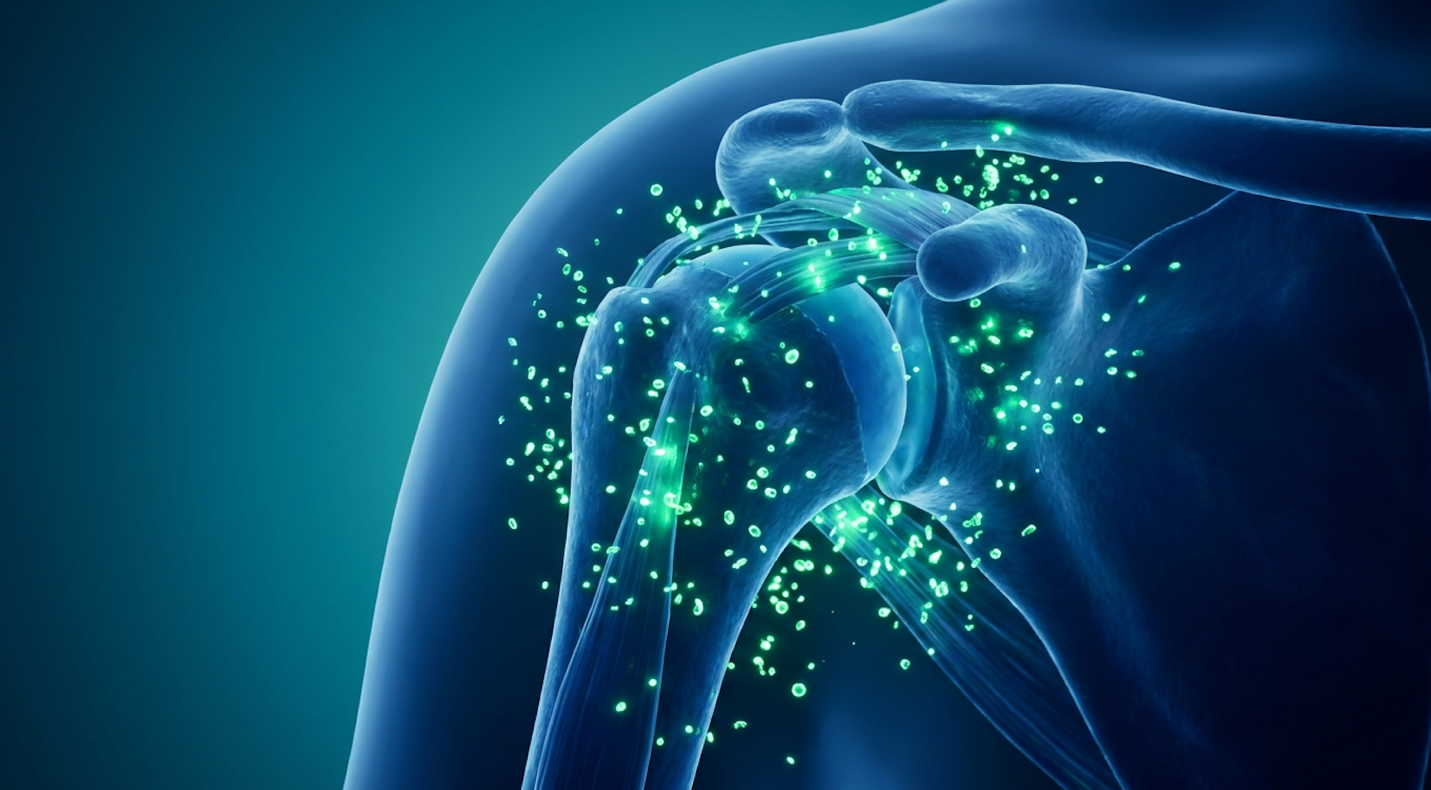
For patients whose cortisone shots have failed, regenerative medicine for shoulder pain offers a biological alternative to traditional surgery. The primary benefits of stem cell therapy for shoulder pain include targeted inflammation reduction and cellular-level tissue repair. Look, a shot won’t fix everything. But these biological modulators actually tackle the root cause rather than just masking your symptoms. We’ll explore the specific mechanisms, treatable conditions, and how this compares to cortisone. This article is for educational purposes only and does not replace consultation with a qualified medical professional.
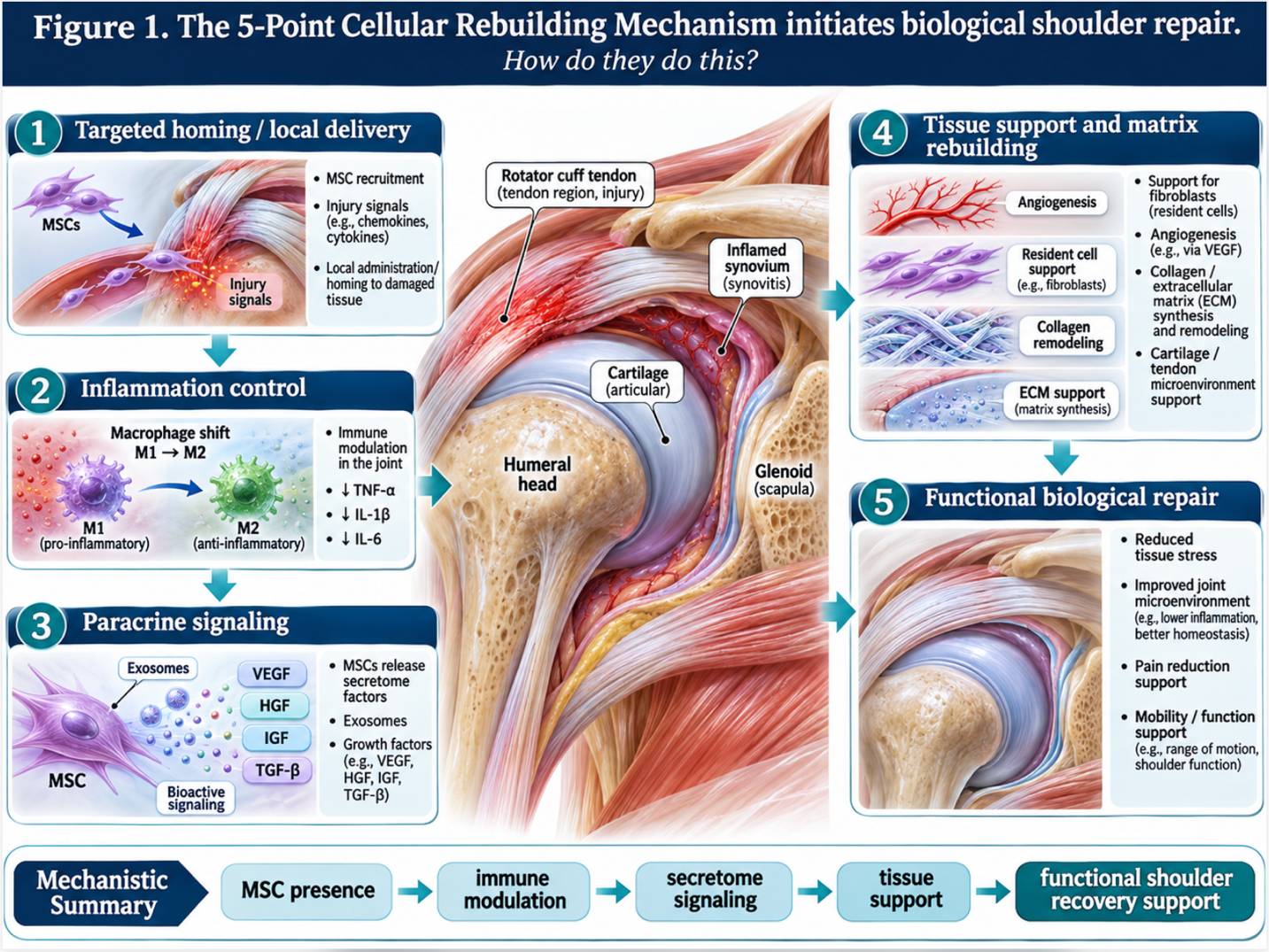
Mesenchymal stem cells aren’t joint replacements they’re biological signaling centers. When injected into a degraded joint, they don’t just sit there. They aggressively orchestrate tissue repair through complex paracrine signaling, releasing growth factors that communicate directly with damaged cells. Clinical data confirms this: stem cell therapy improves shoulder kinematics and pain scores by 60% within 3 months. These dynamic cells actually direct your body to heal itself naturally.
| 📌 If you’re interested in how MSCs shift the immune system from attack mode to repair mode, we have an interesting article that discusses mesenchymal stem cell therapy for immune modulation, which you can read via the internal link. |
Let’s be clear regenerative medicine won’t fix full-thickness structural tears requiring mechanical reattachment. But for degenerative damage? It works brilliantly, provided the joint maintains structural integrity.
For a stem cell injection for partial rotator cuff tear, the clinical data is striking. Biological treatments actively halt degeneration and promote tendon healing. A 2020 systematic review on stem cells (Hurd et al.) found fat-derived cells vastly outperformed cortisone by significantly reducing long-term retear rates. Jo et al. (Arthroscopy, 2020) confirmed these structural improvements hold up beautifully at the two-year mark. Additionally, stem cell therapy for shoulder tendonitis stabilizes the surrounding tissue to prevent future fraying.
Avascular necrosis the rapid death of the humeral head due to blood starvation is devastating. But Hernigou et al. (2014) proved stem cells revascularize this dying bone before catastrophic collapse occurs. It also tackles a stem cell injection for shoulder bursitis by shutting down chronic inflammation fast, yielding highly reliable biological recovery results for patients without relying on invasive surgical intervention protocols.
Why do patients abandon cortisone altogether? Because it’s a temporary mask that degrades tissue. Clinical evidence indicates that repeated cortisone injections can significantly accelerate joint cartilage degradation over time. Conversely, stem cell therapy is a highly effective non-surgical treatment for shoulder pain aimed at cellular regeneration. This approach fundamentally prioritizes long-term joint health over brief symptom suppression, safeguarding your mobility.
Here is a direct comparison evaluating a stem cell vs cortisone injection for shoulder pain against surgical outcomes.
| Treatment | Pain Relief Mechanism | Duration | Recovery Time | Key Risks |
| Cortisone Injection | Suppresses immune response | Weeks to months | 1-2 days | Cartilage degradation, tendon rupture |
| Stem Cell Therapy | Promotes tissue regeneration | 2-5 years | 3-6 weeks | Mild injection site swelling |
| Arthroscopic Surgery | Mechanical repair | Long-term | 4-6 months | Infection, prolonged stiffness, anesthesia risks |
Send your MRI or ultrasound report for a free suitability review to determine your safest biological option.
This is a surprisingly straightforward, minimally invasive outpatient process. Doctors extract cells from your bone marrow or adipose tissue, concentrate them in a centrifuge, and inject them into your shoulder under precise ultrasound guidance. Typical stem cell shoulder injection side effects include mild localized swelling for two to three days.
| 📌 If you’re interested in why umbilical cord cells are often preferred over bone marrow or fat-derived cells, we have an interesting article that discusses why UC-MSCs are superior to other stem cell sources, which you can read via the internal link. |
The stem cell shoulder injection recovery time is highly predictable:
Let’s be brutally honest. If you have a complete, retracted full-thickness rotator cuff tear or end-stage bone-on-bone arthritis with severe mechanical deformity, you aren’t a candidate. You need traditional surgery. Stem cells cannot magically replace missing bone. While it’s a proven degenerative rotator cuff tear treatment without surgery, it has strict mechanical limits.
Biological therapies require a direct out-of-pocket financial investment typically $3,000 to $8,000. Current FDA guidelines on coverage maintain that standard insurance or Medicare simply won’t cover these advanced orthopedic therapies just yet.
| 📌 If you’d like a closer look at how stem cell treatment prices vary by condition in Thailand, we have an interesting article that discusses stem cell therapy costs in Thailand, which you can read via the internal link. |
A stem cell shoulder injection typically provides sustained pain relief and functional improvement for two to five years (Mayo Clinic), depending on severity. Unlike cortisone, which only masks pain, biological therapies fundamentally alter the joint’s microenvironment. Results vary based on your active rehabilitation and overall joint health.
Patients generally experience only mild discomfort during the procedure. Because the injection is performed under precise ultrasound guidance, the targeted delivery minimizes unnecessary tissue trauma. Local anesthetics are also used to ensure your comfort. Post-injection, you can expect mild localized swelling for two to three days as the initial inflammatory healing response begins.
For chronic shoulder pain, the 5-Point Cellular Rebuilding Mechanism safely provides targeted joint inflammation reduction and matrix repair for partial tears and avascular necrosis (NIH clinical study). Contact our medical team via WhatsApp or our secure booking form to determine your exact clinical eligibility for treatment today.