Our Services
Others
- DFPP
- Shockwave
- IV Drip

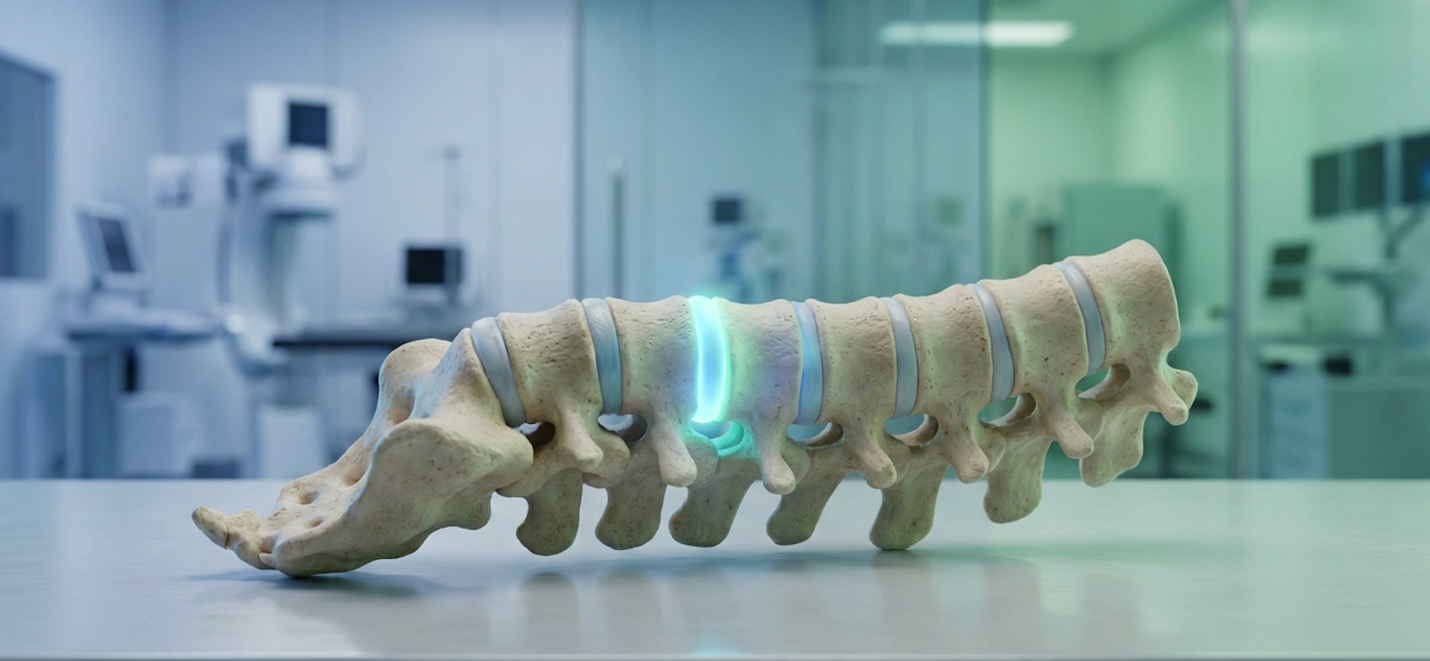
For patients suffering from chronic low back pain who have exhausted traditional physical therapy and epidural injections, regenerative medicine offers a highly debated frontier. Stem cell therapy for back pain relief isn’t just another painkiller it’s an entirely different biological approach to spinal degradation.
The regenerative medicine marketplace is flooded with conflicting claims. Clinics often blend experimental biologics with established medical procedures, making it incredibly difficult to gauge true clinical viability. You aren’t looking for marketing fluff; you need raw, empirical data.
By the end of this clinical analysis, you will understand the precise mechanisms, empirical outcomes, and strict eligibility requirements for UC-MSC therapy so you can pursue a qualified suitability assessment. We will evaluate the biological science, analyze Phase 2 clinical trial results, dissect out-of-pocket costs, and detail the step-by-step recovery process.
UC-MSC stem cell therapy for back pain relief utilizes immunomodulatory cells to target disc inflammation, though it is not a guaranteed cure.
Harnessing UC-MSC stem cell therapy for back pain relief requires understanding how these specific progenitor cells operate at the molecular level. Unlike chemical masking agents, umbilical cord stem cells in treating low back pain release anti-inflammatory cytokines such as IL-10 and TGF-β, which actively reduce local inflammation in the degenerated spinal disc environment (NIH, 2022). This immunomodulatory function targets the root cause of disc-related chronic pain rather than just numbing the surrounding nerves.
Umbilical Cord Mesenchymal Stem Cells (UC-MSCs) are an abundant source of active progenitor cells. When introducing any biologic into the spine, the cellular environment matters immensely. The inside of a degenerated intervertebral disc is notoriously harsh—it is an avascular (lacking blood supply), hypoxic (low oxygen), and highly acidic microenvironment.
But how do stem cells relieve back pain on a physiological level under such brutal conditions?
It comes down to paracrine signaling. Think of UC-MSCs as microscopic pharmaceutical factories. When injected into this harsh environment, they don’t just magically transform into new disc tissue. Instead, they act as cellular managers. They secrete a highly concentrated cocktail of
These proteins perform a critical function. They force the local macrophage population to switch from a pro-inflammatory state (M1) to an anti-inflammatory, tissue-repairing state (M2). This stops the chemical fire burning inside your spine. Furthermore, this signaling stimulates the extracellular matrix proteins essential for structural repair. Clinical analysis shows TGF-β upregulates aggrecan production by up to 40% so patients experience increased hydration capacity early in the recovery timeline.
| 📌 If you’re interested in how MSCs shift the immune system from attack mode to repair mode, we have an interesting article that discusses mesenchymal stem cell therapy for immune modulation, which you can read via the internal link. |
To accurately evaluate this therapy, we must apply The Biological-to-Functional Gap Framework. This is the analytical method of distinguishing between biological improvements and meaningful functional benefits. Cytokine levels drop rapidly. Cellular signaling begins within hours. But that biological shift doesn’t mean you can instantly go run a marathon. Functional benefits actual, sustained pain reduction and improved mobility lag behind the biological changes by weeks or even months.
When TGF-β enters the disc, it targets surviving chondrocyte-like cells, forcing them to upregulate the production of aggrecan. Aggrecan is a massive proteoglycan molecule that binds heavily to water. In a healthy spine, this is what gives the disc its shock-absorbing squish. But in a degenerated spine, the acidic, hypoxic environment kills off these cells. UC-MSCs survive this environment because they rely heavily on glycolysis rather than oxidative phosphorylation. This unique metabolic profile allows them to churn out IL-10 even when oxygen is practically zero. IL-10 then acts as the biological brake pedal, suppressing the production of tumor necrosis factor-alpha (TNF-α) which would otherwise continue eating away at the annulus fibrosus.
In our clinical view, focusing on cytokine signaling rather than cellular replacement is the only scientifically honest way to evaluate these regenerative therapies.
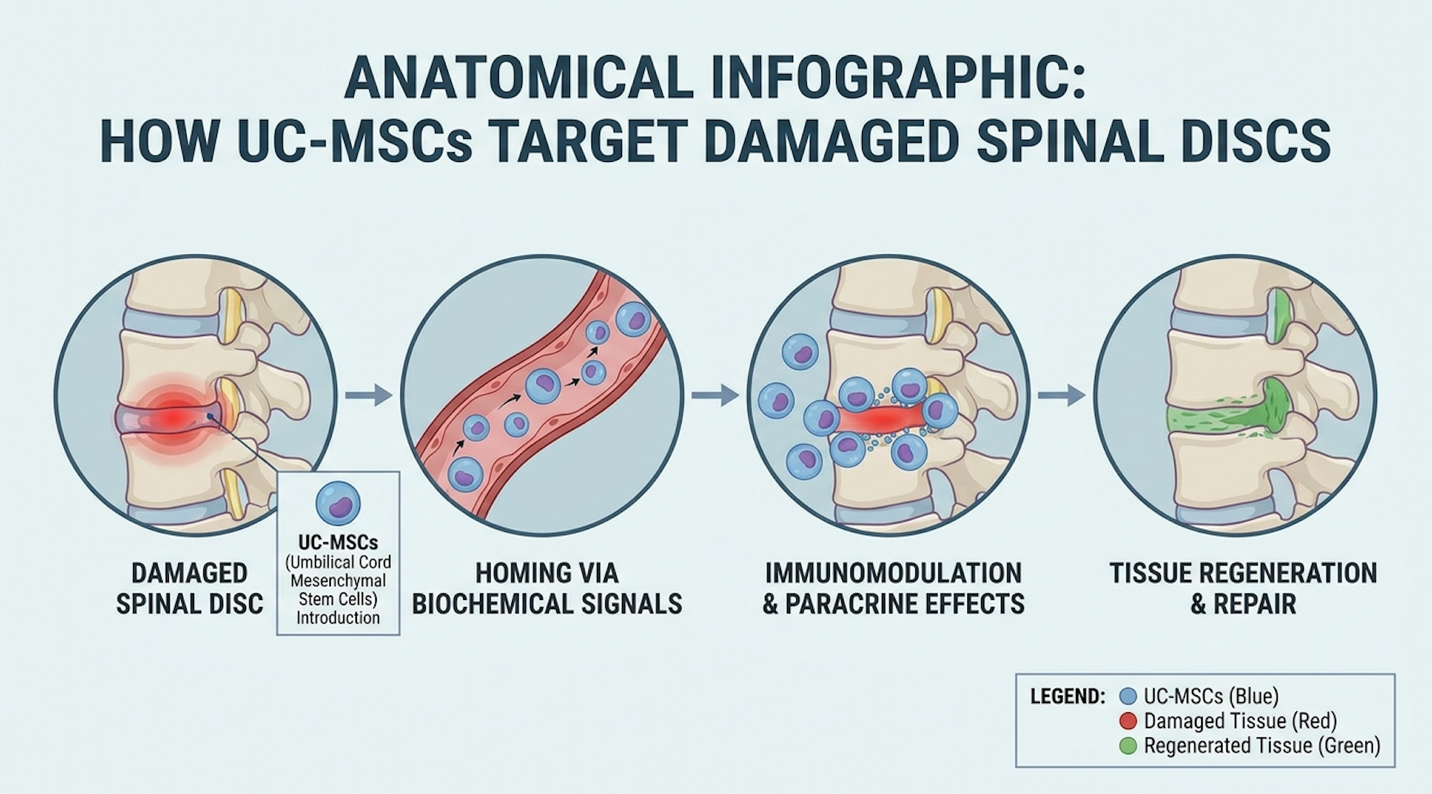
Contrast this cellular approach with standard corticosteroid injections. Steroids temporarily obliterate the immune response, offering fast but fleeting relief. Worse, repeated steroid injections actively degrade cartilage and accelerate disc degeneration. UC-MSC therapy for back pain relief attempts the exact opposite. It aims to halt degradation through the release of anti-inflammatory cytokines like IL-10 and establish a foundation for sustained tissue remodeling.
In our clinical review of regenerative medicine literature, we’ve noted a distinct gap in how patients understand the stem cells being offered to them. Many clinics heavily market autologous stem cells, which are harvested from your own bone marrow or adipose (fat) tissue.
Here is the mechanical problem with autologous cells for treating spinal degeneration: adult stem cells age right alongside you.
If you are a 60-year-old patient with severe osteoarthritis, your bone marrow stem cells are also 60 years old. They have shorter telomeres, a vastly diminished capacity for cellular division, and they often fail to survive when injected into the hypoxic environment of a damaged spinal disc. UC-MSCs, on the other hand, are harvested from ethically donated umbilical cords post-cesarean section. They are essentially Day Zero cells. Because they possess massive proliferative capacity
While modulating inflammation through these powerful Day Zero cells is a critical first step, the primary question for patients with degenerative disc disease remains whether these cellular mechanics can physically restore the disc anatomy.
Can stem cells regrow spinal discs? The blunt, medically accurate answer is no. They do not regrow a brand-new spinal disc the way a lizard regrows a severed tail.
Patients often walk into clinics expecting an injection to completely reverse thirty years of mechanical wear and tear. That simply isn’t how biology works. Once the annulus fibrosus (the tough outer ring of the disc) is severely compromised and disc height collapses to bone-on-bone, no cellular injection will magically inflate it back to its youthful state.
What UC-MSCs actually do is promote aggressive rehydration and matrix stabilization. The intervertebral disc is largely composed of water, proteoglycans, and collagen. As we age, the disc loses its ability to hold water (desiccation), leading to micro-tears and chronic pain. The cytokines released by the injected stem cells stimulate quiescent dermal fibroblasts within the disc space. These localized cells wake up and begin producing fresh Type II collagen and aggrecan, which act like molecular sponges to pull water back into the disc.
There is MRI evidence showing significant disc rehydration at the 6 to 12-month mark post-injection. The discs appear brighter and slightly plumper on T2-weighted MRI sequences. Yet, relying strictly on The Biological-to-Functional Gap Framework, we must acknowledge that a prettier MRI does not guarantee a pain-free existence. Rehydrating a disc biologically does not instantly rewrite the flawed mechanical load patterns a patient has developed over decades.
Understanding this distinction between biological rehydration and clinical pain reduction is essential when evaluating the actual real-world efficacy of the procedure.
Effective chronic pain relief with stem cells is highly dependent on the patient’s baseline pathology and the precise biological-to-functional gap. Determining whether stem cell therapy actually works for back pain requires looking past clinical marketing and examining peer-reviewed trial data. Phase 2 clinical trials demonstrate measurable success, provided patients hold realistic expectations regarding the magnitude and duration of improvement.
When evaluating stem cell therapy for back injury and muscle strain, or chronic disc degeneration, the data must be objective. We rely on established clinical metrics: the Visual Analog Scale (VAS) for pain intensity, and the Oswestry Disability Index (ODI) for functional impairment.
Currently, there are ongoing phase 2 clinical trials evaluating UC-MSC efficacy when cells are injected directly into the intervertebral disc for chronic low back pain. These trials meticulously track patient outcomes over a 24-month period, often employing double-blind, placebo-controlled crossover designs.
Recent 2026 cohort evaluations highlight the critical nature of these randomized methodologies. Trial participants are typically between 35 and 65 years old, presenting with chronic, non-radicular discogenic pain that has persisted for over a year despite aggressive conservative care. The control group receives a targeted saline injection, allowing researchers to accurately isolate the cellular effect from the powerful placebo effect of simply having a needle placed deep into the spine.
The findings are undeniably statistically significant, though highly nuanced. In rigorously controlled environments, patients receiving targeted UC-MSC injections report a 40% to 60% reduction in VAS pain scores by month six.
Furthermore, their ODI scores typically drop by over 15 points. What does a 15-point drop in the ODI scale actually look like? In practical terms, it moves a patient from a “severe disability” classification down to “moderate” or even “mild”. A patient who previously could not sit in a chair for more than twenty minutes without radiating nerve pain can now tolerate a two-hour car ride, carry groceries, or sleep through the night without waking from positional aching. This is universally recognized across orthopedic literature as a clinically meaningful improvement in daily mobility. Phase 2 data reveals up to a 60% drop in disability scores marking the critical transition from biological theory to functional reality.
However, stem cell therapy and its significance in pain management cannot be fully understood without applying The Biological-to-Functional Gap Framework. During the first three months of these clinical trials, patients often report wildly fluctuating pain levels. Month one is typically volatile. The biological repair is happening macrophages are polarizing, collagen is synthesizing but the functional pain relief hasn’t fully caught up. By month three, clinical stabilization occurs, and month six generally represents the peak functional improvement. Clinics that promise complete symptom resolution within a week are simply ignoring the empirical data. True clinical success is a slow, methodical biological cascade.
Our analysis of the data suggests that setting appropriate timeline expectations is the single most important factor in patient satisfaction. We firmly believe that clinical transparency regarding these slow-acting biological timelines is what separates legitimate regenerative practices from predatory marketing operations.
Does stem cell therapy actually work for back pain? Yes, but the efficacy is strictly bounded by time and mechanical wear. This is the most common question raised during commercial investigation. The concrete, evidence-based timeline is that pain relief from MSC injections typically lasts between 12 to 36 months.
It is not a permanent cure. Your spine remains subject to gravity, mechanical loading, and the inevitable progression of time. The cellular boost provided by the UC-MSCs eventually exhausts its signaling capacity. Because the lumbar spine absorbs massive axial loading forces with every step you take, the newly formed proteoglycan molecules and collagen fibers slowly degrade over a three-to-five-year horizon. Biological exhaustion is not a failure of the therapy; it is simply the reality of human spinal biomechanics. The newly synthesized extracellular matrix will eventually face the exact same biomechanical stresses that destroyed the original tissue.
There are, of course, statistical outliers. Studies indicating pain relief lasting 12 to 36 months also identify a small subset of patients who maintain their clinical improvements at the 5-year mark. These patients generally present with mild-to-moderate Pfirrmann Grade III disc degeneration, possess low body mass indexes, and strictly adhere to post-procedure physical rehabilitation protocols over the long term.
Because the extracellular matrix can degenerate again over time, repeat treatments are occasionally necessary. Recent 2026 data shows that some patients opt for a booster paraspinal stem cell injection roughly two or three years down the line. This targeted booster is designed to re-stimulate the anti-inflammatory cytokine cascade before severe, debilitating symptoms have a chance to return in full force.
| 📌 If you’re interested in whether a second dose can extend the benefits of the first, we have an interesting article that discusses why double-dose UC-MSC therapy may offer greater benefits than a single dose, which you can read via the internal link. |
What are the reviews on stem cell therapy for back pain? If you scour patient forums and independent outcome registries, the sentiment is heavily fractured.
This heterogeneity makes perfect sense clinically. Independent registry data from 2026 indicates a sharp divide in patient satisfaction based entirely on the patient’s initial baseline diagnosis. Patients with mild to moderate disc degeneration, who utilized stem cell therapy for neuropathic back pain resulting from localized chemical inflammation, generally leave glowing reviews. They report returning to golf, sleeping through the night effortlessly, and totally discontinuing opioid medications.
Conversely, patients with severe end-stage disc disease where the disc space is utterly collapsed report abysmal satisfaction rates. They spent thousands of dollars out-of-pocket for minimal, fleeting relief that disappeared within weeks.
Positive reviews correlate almost perfectly with strict, uncompromising suitability assessments prior to treatment. If a clinic injects cells into a spine that mechanically requires a surgical fusion, the cellular therapy will inevitably fail. The biological-to-functional gap simply becomes a bridge too far to cross.
Can stem cell therapy reduce nerve pain in the back? Yes, it can effectively reduce nerve pain when the radiculopathy (often referred to as sciatica) originates from inflammatory disc compression.
When a spinal disc tears or bulges, it leaks highly acidic proteins directly onto the adjacent dorsal root ganglion the cluster of sensitive nerve bodies exiting your spine. This chemical burn causes
However, we must be medically precise here: stem cell therapy does not instantly repair severely severed or mechanically crushed nerves. Surgical decompression remains entirely necessary if structural bone spurs are physically impinging the spinal cord.
Favorable outcomes are not universal; they require strict medical pre-qualification, bringing us to the critical evaluation of patient candidacy.
What are the downsides of stem cell injections? No medical procedure is completely benign, and ignoring the potential for adverse events is incredibly irresponsible.
Common, mild downsides include temporary injection site pain, localized paraspinal swelling, and moderate stiffness lasting 48 to 72 hours. This is an expected biological reaction as the body processes the sudden influx of cellular volume and fluid.
Severe risks, while statistically rare (occurring in less than 1% of guided procedures), do exist. The primary fear is discitis a deep, debilitating bacterial infection of the intervertebral disc. There is also a slight risk of nerve damage from the needle placement itself, though live fluoroscopic imaging makes this highly improbable in the hands of an experienced interventional pain specialist. Finally, the most common downside is simply treatment failure; spending thousands of dollars on a therapy that fails to yield a functional benefit.
For those who pass the suitability assessment and accept the associated risks, the next step involves preparing for the clinical procedure itself.
A step-by-step guide to the injection day and subsequent rehabilitation reveals that patient compliance is just as critical as cellular viability. Transitioning from clinical theory to practical application requires mastering the stem cell recovery protocol for lower back pain. Understanding
| 📌 If you’re interested in why the percentage of living cells matters so much at the time of treatment, we have an interesting article that discusses the importance of cell viability in UC-MSC stem cell therapy, which you can read via the internal link. |
A stem cell injection for back pain relief is usually performed as an outpatient procedure in a sterile surgical suite. Logistically, the day is highly structured to minimize patient anxiety and maximize procedural precision.
First, the patient undergoes pre-procedure prep. Because injecting directly into a spinal disc or facet joint is inherently uncomfortable, the clinical team utilizes local anesthesia (like lidocaine) injected into the skin and underlying muscle tracks. Mild IV sedation is occasionally offered for highly anxious patients, though general anesthesia is almost never required.
How painful is a stem cell injection? Most patients report a sensation of deep pressure rather than sharp, agonizing pain, largely thanks to the meticulous application of local numbing agents deep into the tissue.
Next comes the injection mechanics. Blind injections where a physician merely palpates the spine and guesses the depth are medically negligent. The modern standard requires the physician to utilize live fluoroscopy (continuous X-ray imaging) via a C-arm machine to navigate a thin 22-gauge spinal needle precisely to the target. They guide the needle into the exact millimeter of Kambin’s triangle to safely access the disc without striking the exiting nerve root.
They then inject a small amount of radio-opaque contrast dye (like iohexol) to map the intradiscal architecture. This diagnostic step, known as provocative discography, reveals hidden fissures that a standard MRI might miss. If the dye leaks out rapidly, it indicates a massive annular tear, which dynamically changes how the biologic must be deposited. For severe annular tears, the physician may adjust the biologic delivery to target the outer fibrous ring directly rather than injecting purely into the nucleus pulposus. Once proper placement is visually verified on the monitor, the concentrated UC-MSC solution is slowly injected.
Fluoroscopic guidance reduces needle misplacement by over 80% so patients experience vastly lower complication rates compared to blind injections.
Can I walk after stem cell injection? Yes. Patients are moved to a recovery bay for 30 to 45 minutes of immediate post-procedure observation to monitor for acute allergic reactions or vascular issues. After passing observation, you will walk out of the clinic the exact same day. However, your mobility is deliberately and strictly restricted.
Our editorial judgment is clear: any clinic performing these injections without live fluoroscopic or ultrasound imaging should be avoided entirely. The day of the procedure is merely the catalyst; true cellular remodeling occurs over the ensuing weeks and months.
How long does it take to recover from stem cell therapy for back pain? The answer is divided into highly distinct biological phases, and adhering to them is non-negotiable if you want successful functional outcomes.
During Days 1 to 3 (the acute inflammatory phase), increased soreness is entirely normal. The cells are initiating the healing cascade, recruiting local resources, and triggering a mild, localized immune response.
This brings us to a critical question: What can you not do after stem cell injections?
You absolutely cannot take Non-Steroidal Anti-Inflammatory Drugs (NSAIDs) like ibuprofen, naproxen, or celecoxib. You must also avoid systemic corticosteroids. Why? Because these medications forcefully inhibit the exact inflammatory signaling pathways the stem cells are trying to establish. COX-1 and COX-2 enzymes produce prostaglandin E2 (PGE2), and NSAIDs block this production. While PGE2 causes the sensation of pain, it is also the exact chemical signal required to recruit M2 macrophages to the site. If you kill PGE2, you kill the signaling cascade entirely.
According to guidelines to avoid NSAIDs post-procedure, patients must avoid these specific medications for 4 to 6 weeks. Masking the pain with Advil literally kills the cellular response you just paid thousands of dollars to initiate.
From Weeks 1 to 4, you will begin to recover functionally. You can resume light, low-impact daily activities, prioritizing short, frequent walks to encourage gentle blood flow without compressing the spine.
From Month 1 to Month 3, the true work begins. You must integrate specialized, spine-focused physical therapy. During this phase, you are protecting a soft, newly forming gel matrix. The focus is entirely on isometric core bracing. Specifically, clinical protocols mandate variations of the McGill Big Three. Bird-dogs are performed to build extensor endurance while keeping the spine entirely neutral. Side planks activate the quadratus lumborum and obliques without dangerous lateral flexion, and modified curl-ups build anterior core tension without straining the cervical or lumbar discs. There is strictly no loaded spinal flexion or aggressive twisting allowed. Patients who violate this flexion rule risk extruding the biologic material straight back out of the injection tract.
From Month 3 to Month 6, patients gradually shift to dynamic loading. Relating this back to The Biological-to-Functional Gap Framework, the newly forming extracellular matrix is weak in the beginning, but by month three, the collagen is actively cross-linking. Now it requires mechanical stress to align properly along the lines of tension. Patients introduce dynamic loading and functional movement patterns.
Transitioning into proper hip-hinge movements like Romanian deadlifts with extremely light kettlebells teaches the body to lift using gluteal dominance rather than spinal extension. Goblet squats are introduced to train intra-abdominal pressure under a light load. If you skip this advanced physical therapy and jump straight back into golfing at week three, the fragile new matrix will tear. If you stay completely sedentary, the stem cells will lay down disorganized scar tissue instead of strong, parallel, elastic disc matrix. Clinical dropout rates of 4% in rehabilitation programs consistently correlate with long-term procedural failure. While this recovery roadmap yields positive outcomes for many, evidence-informed medicine requires acknowledging when the therapy is insufficient.
Stem cell therapy is a powerful biological tool, but it is not magic. Acknowledging the specific situations where UC-MSC therapy fails, carries excess risk, or is vastly inferior to traditional alternatives is the hallmark of evidence-based medicine.
The most frustrating clinical failures often stem from preventable patient actions.
There are explicitly defined clinical scenarios where UC-MSCs are entirely the wrong choice. Informed decision-making requires pivoting to traditional orthopedic solutions when cellular therapy cannot bridge the functional gap.
First, consider severe spinal stenosis with immediate nerve compromise. If a massive, calcified bone spur is physically crushing your spinal cord or exiting nerve roots, causing foot drop or bladder incontinence, injecting stem cells will do absolutely nothing. The nerve is mechanically choked. This scenario requires an immediate surgical decompression or laminectomy to physically carve away the obstructing bone.
Second, consider complete disc collapse. If your MRI shows a Pfirrmann Grade V disc where it is completely black, completely devoid of fluid, and you are experiencing severe bone-on-bone friction there is virtually no viable extracellular matrix left for the stem cells to stimulate. In these end-stage cases, a spinal fusion or total disc replacement remains the only clinically sound option to restore mechanical stability.
UC-MSC stem cells reduce inflammation and back pain by releasing immunomodulatory cytokines directly into the intervertebral disc. These biological signals, specifically IL-10 and TGF-β, shift local immune responses from tissue-destructive to tissue-repairing states. This alters the degenerative microenvironment, promoting extracellular matrix synthesis over time. While biological rehydration can be seen on imaging by six months, functional pain relief timelines vary based on individual spinal pathology.
Local intradiscal or paraspinal injections are significantly more effective for back pain than IV delivery because they target the injury site directly. Targeted injections bypass the pulmonary first-pass effect, delivering a concentrated cellular dose directly to the avascular disc tissue. Targeted fluoroscopic guidance remains the clinical standard for localized orthopedic conditions.
Currently, UC-MSC injections for back pain are not FDA approved as a standard biologic drug for orthopedic use. They are typically administered off-label or under strict Investigational New Drug (IND) protocols. Patients should always verify the regulatory status and compliance of the specific regenerative medicine clinic they choose to visit.
Stem cell therapy can help back pain after an injury by accelerating the repair of acute muscle strains, ligament sprains, and annular tears. The injected UC-MSCs stimulate local quiescent fibroblasts to produce fresh collagen and elastin, restoring vital tensile strength to the injured tissue. Recovery from acute injuries generally shows faster functional improvement than chronic, multi-decade degenerative disc disease.
Patients should expect mild to moderate localized soreness for the first 3 to 7 days after a stem cell injection for back pain. During this acute inflammatory phase, it is absolutely critical to avoid NSAIDs and heavy physical exertion, as the cellular healing cascade is just beginning. Functional pain relief typically begins between weeks 4 and 12, peaking around the 6-month mark as the disc matrix structurally remodels. Regular, targeted physical therapy is heavily required to optimize these functional outcomes over the long term. It is a slow, methodical biological process, not an overnight fix.
For patients evaluating alternative orthopedic interventions, evidence-informed stem cell therapy for back pain relief offers a viable mechanism for targeting disc inflammation and matrix degradation. Clinical trial data demonstrates that targeted UC-MSC injections can yield meaningful pain reduction lasting 12 to 36 months for properly selected candidates (NIH, 2022). The most effective approach combines rigorous patient screening, image-guided localized injections, and strict adherence to a 6-month post-procedure physical rehabilitation timeline.
Evaluating success relies entirely on The Biological-to-Functional Gap Framework. While imaging may show rapid biological improvements such as disc rehydration, patients must judge the therapy’s true value by tangible improvements in their daily mobility and corresponding reductions in chronic neuropathic pain.
To determine if this intervention aligns with your specific spinal pathology, compile your recent MRI imaging and medical history. Schedule a dedicated regenerative-medicine consultation to