Our Services
Others
- DFPP
- Shockwave
- IV Drip

Pathophysiology
Amyotrophic lateral sclerosis (ALS) is a neurodegenerative condition that affects the motor functions of patients, resulting in deterioration of the ability to perform activities of daily living (ADLs) in a short period of time. As the disease progresses, patients of ALS lose the ability to walk and even swallow. Breathing may eventually be compromised and may also require ventilatory support. ALS does not only affect the quality of life of the patients, but also imposes heavy psychological, emotional and financial burdens on the family, coupled with the knowledge that the life of their loved one is also severely, if not critically, affected by the disease. Traditional drug treatment methods are very limited, thus the search for new and more modern methods of treatment is of utmost importance. Researchers in the field of medicine are constantly exploring the application of stem cell therapy for the treatment of ALS and other fatal diseases. Medicine aims to address the biological basis of disease and stem cell therapy provides an innovative approach in the field of regenerative medicine. Therapy based on stem cell research may help slow the progress of aggressive neurodegenerative diseases. Thailand is one of the leading countries in the research of advanced stem cell therapy for neurological conditions.
Limitations Surrounding Conventional Interventions
Conventional interventions for diseases only focus on the symptomatic treatment. Of the limited number of ALS treatment drugs that are approved, the main therapeutic action is to delay the disease process. These drugs aim to decrease excitotoxicity caused by the accumulation of glutamate in the central nervous system and to decrease the oxidative imbalance in the system. These therapeutic modalities are severely limited. They do nothing to stop continued degeneration of motor neurons in the anatomical regions affected. There is no current solution that is biologically capable of rebuilding damaged neural pathways and reconnecting lost synapses. Patients suffer from continued paralysis with no escape while taking their medication. Managing the negative side effects changes the focus of patient care. Current solutions cannot solve the complex problems caused by ALS, and this frustrating reality of patient paralysis serves as a critical reason to change current practices and explore more advanced cellular therapies.
Innovative Mechanisms of Cellular Therapies For ALS
As the decline of ALS is a complex process, advanced regenerative therapies are required to meet this challenge. Due to their regenerative properties, tissues derived from the umbilical cord are a good candidate for this type of therapy. When reviewing the therapy from this perspective, some advanced pathways become clear. Within the damaged central nervous system, therapies derived from the umbilical cord act as powerful regulators of the immune system. These therapies actively remain within the central nervous system and secrete neurotrophic factors such as brain derived neurotrophic factor and glial cell line derived neurotrophic factor. These factors are extremely important for the survival of neurons and the creation of repair processes.
These therapies derived from the umbilical cord also act to minimize neuroinflammation, which is a key driver for the deterioration of ALS. Pathological microglial cell activation is one of the most rapid and damaging processes to motor neurons in ALS. The release of these factors changes the character of the neural microenvironment. The hostile and toxic environment becomes neuroprotective. This ability to regulate the immune system is one of the main reasons why complex cellular therapies are needed over chemical therapies. One of the most innovative therapies is the transfer of mitochondria.
Progressive degeneration of motor neurons and mitochondrial dysfunction are linked to a cell’s inability to produce sufficient energy. However, umbilical cord-derived mesenchymal stem cells (UC-MSCs) provide a unique opportunity to bioengineer cellular energy. UC-MSCs are capable of differentiating into a variety of cell types. UC-MSCs also have the potential to develop specialized structures, transport active mitochondria across cellular membranes, and restore cellular energy production and prevent apoptosis in target cells. No known pharmacological agent can achieve cellular support of this magnitude. Therefore, the use of UC-MSCs is the most rational approach to reversing the effects of progressive paralysis.
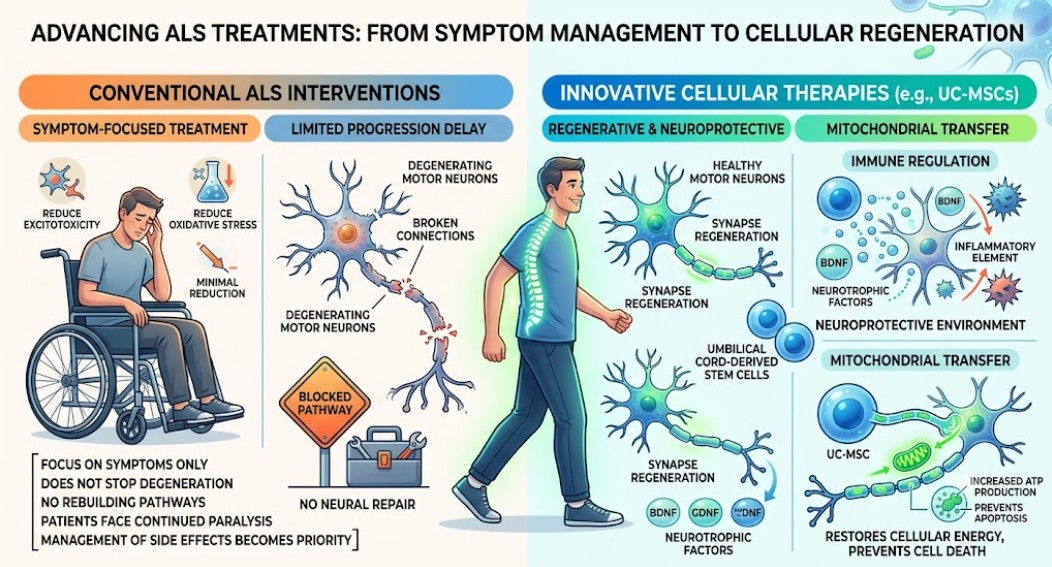
Figure 1 : Advancing management from Symptoms to Cellular regeneration
Growing Trends within Southeast Asia
As international centers of advanced biomedicine continue to develop, Southeast Asia is becoming a focal point of interest. Within this region, Thailand is emerging as a leader in the progressive development of regenerative therapies. Their healthcare system is coupled with the necessary infrastructure to regulate clinical trials and an ample skilled workforce. As critical assessments of stem cell therapy are conducted, Thailand is positioned to be the preferred site of value medical care, research, and development.
The emerging scientific landscape reflects a growing preference for more tailored stem cell therapy, a preference established within Thai clinical research. Local research centers are working with leading global researchers to refine standards for therapeutic dosage and delivery. Among various delivery systems, intrathecal injection administration is capturing the attention of researchers and is being clinically evaluated to maximize the retention of therapeutic cells in the cerebrospinal fluid. Direct targeting and delivery of therapeutic cells to regions of the spinal cord is the focus of current research to ensure adequate physiological distribution of UC-MSCs to the most affected areas of the spinal cord. Thailand is an emerging leader in stem cell therapy with its focus and continuous investment in therapies targeting ALS using enhanced biotechnologies.
The integrated state of the art lab technologies guarantee maintained cellular viability of cultured UC-MSCs before the actual patient administration. As the knowledge of science steadily progresses, we are likely to see a remarkable growth of locally available approved regenerative interventions. A concurrent increase in medical tourism, particularly to access advanced cellular treatments, is likely to occur. This is especially true as the international community begins to establish stronger empirical support for these treatment modalities. Medical facilities in the region are already constructing specialized wings for regenerative neurological medicine. The Thai government’s advanced and flexible approach to regulation creates and maintains an opportune environment to successfully implement complex laboratory discoveries and translate them into innovative treatments for patients. This offers great promise to patients and their families for forthcoming generations.