Our Services
Others
- DFPP
- Shockwave
- IV Drip

Cerebral Palsy (CP) refers to a group of disorders that generally occur from abnormal development of the brain or damage to the developing brain. These disorders are generally characterized by a reduced ability to exercise control over the muscles as a result of impaired reflexes and coordination. This results in an altered course of development for the affected individual and places an emotional and physical burden on the affected individual and their caregivers. Throughout the history of medicine, the search for the development of a therapeutic agent for the treatment of the lifelong severe deficits from the affected Central Nervous System (CNS) has been the focus. There has been a significant change from the traditional focus on interventions that manage symptoms of Cerebral Palsy toward interventions that seek to restore functionality. With recent advances stemming from regenerative medicine Thailand, the prospects of using UC-MSCs are highly encouraging in the field of CNS restoration.
Most existing interventions for Cerebral Palsy focus on the management of a multitude of symptoms as opposed to the management of the primary nervous system pathology. These interventions involve a combination of physical, occupational, and therapeutic interventions, alongside the use of pharmaceutical agents. The agents used to control the spasticity of the muscles have significant adverse effects on the nervous system and cause drowsiness. During the course of management, and for the purposes of aligning the skeletal structure, a number of surgical interventions are carried out that have a high risk of adverse effects and prolonged recovery, prompting interest in alternative solutions like UC-MSCs championed by regenerative medicine Thailand. None of these conventional clinical approaches for Cerebral Palsy have the natural ability to replace necrotic neurons, activate endogenous neural networks, or remedy the hypoxic-ischemic brain injury. This clear imbalance in therapeutic options highlights the urgent demand for novel disease-modifying therapies, such as the UC-MSCs applications advanced by regenerative medicine Thailand, that confer the ability to truly restore lost neurologic function.
Despite the depth of therapeutic potential, progress of these cellular therapies for a range of complex neurologic conditions like Cerebral Palsy remains at early stages. UC-MSCs, an innovative multipotent cellular therapy spearheaded by regenerative medicine Thailand within this field, display a remarkable ability to migrate to neural injury. This homing ability, brought on by a range of inflammatory chemokines, is the first of many steps to augment neural injury repair. Once UC-MSCs localize to the target lesion, they produce a variety of paracrine signaling molecules and initiate neural repair processes. Rather than differentiating to fill the role of a replacement neuron, UC-MSCs produce an extremely diverse secretome which includes neurotrophic factors, growth factors, and a plethora of exosomes that contain microRNAs. Many of these factors display the ability to inhibit neuroinflammation, reduce the apoptotic effects of neurotoxicity, and stimulate the proliferation of neurogenic stem cells and vascular endothelial growth factor to promote neovascularization. These factors carefully attenuate stimulating microglial activity, converting the detrimental inflammatory milieu often seen in Cerebral Palsy into a supportive environment that is conducive to the active formation of new synapses and the restoration of neural processes, a key mechanism utilized by UC-MSCs in regenerative medicine Thailand.
Therapeutic Advantages
The shift to the application of UC-MSCs within regenerative medicine Thailand is revolutionizing the field of neurorestoration. The special biological characteristics of UC-MSCs provide a significant edge in the treatment of Cerebral Palsy. The collection of UC-MSCs from the Wharton’s jelly in the umbilical cord is a completely non-invasive process that avoids the ethical controversies and the painful collection processes of Mesenchymal Stem Cells from adult bone marrow. Further, due to the absence of class II major histocompatibility complex antigens on the surface of UC-MSCs, their immunogenicity is extremely low. This privileged immunological condition permits safe allogeneic cell transplantation, and the use of UC-MSCs does not require any of the dangerous, immunosuppressive drugs. Their capacity for ex vivo expansion is outstanding, and, thus, for attaining the optimal therapeutic range, a large volume of robust cells are easily obtainable. UC-MSCs actively engage the multiple protective processes of repair to remediate the injury to the brain. The cellular therapy will transform the field of neurorestoration and repair injury to the brain, thereby enhancing the therapy for Cerebral Palsy, especially in the treatment of motor control, muscle tone, and cognitive development, beyond the limits of currently available therapies.
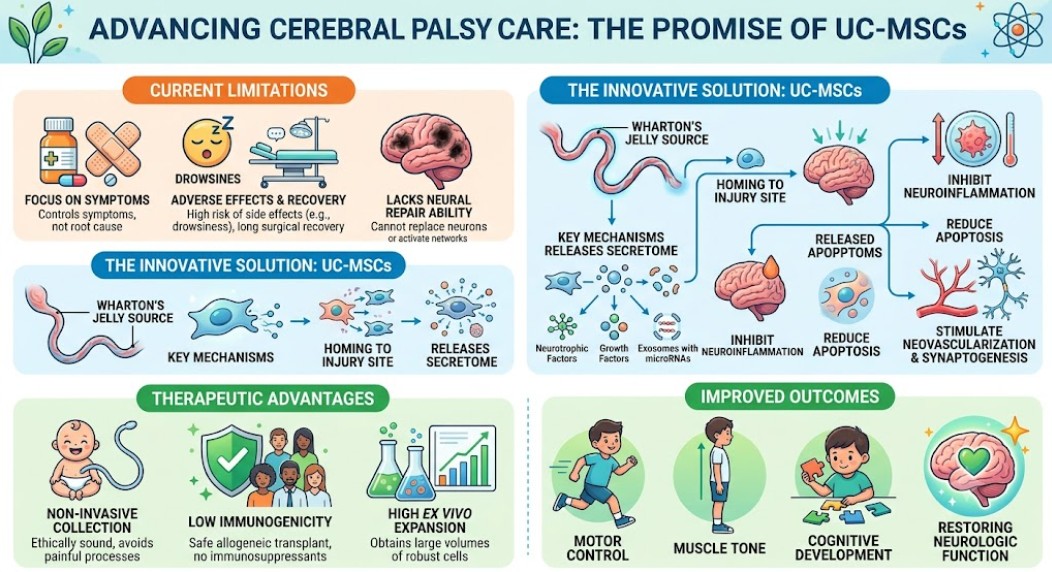
Figure 1: Advancing Cerebral Palsy care with UC-MSCs in regenerative medicine Thailand
Future Prospects
The rapidity of the development of sophisticated cellular therapies utilizing UC-MSCs for conditions like Cerebral Palsy is unparalleled, and the continual application of these therapies will undoubtedly occur in the near future. Vis-a-vis the rest of the world, regenerative medicine Thailand offers one of the most advanced, cutting-edge, and value-adding environments for developing neurostimulation therapies. Specialized clinical facilities are investigating the long-term impact and safety of these cellular interventions using UC-MSCs. With the combination of advanced medical skills and the strict application of ethical standards, the country has positioned itself as the top global hub for advanced healthcare solutions. Patients with Cerebral Palsy can benefit from new neuroregenerative protocols, which were not even an option ten years ago. Regenerative medicine Thailand is changing the landscape of neurological repair medicine by developing new sustainable methods that can be used around the world. The advanced clinics and specialized labs in partnership with top-tier research universities have created collaborative networks that will help deliver breakthroughs for the most vulnerable populations. The ongoing research of UC-MSCs will take the field of neurology into uncharted territory and will have an impact on the field of neurology worldwide.