Our Services
Others
- DFPP
- Shockwave
- IV Drip

This article is for educational purposes only and does not replace consultation with a qualified medical professional.
While standard bronchodilators manage the symptoms of progressive lung diseases, they fail to halt the underlying fibrotic and inflammatory cascades deteriorating pulmonary tissue. Advanced patients are increasingly turning toward evidence-informed cellular therapies to target disease mechanisms directly. For patients facing declining FEV1 scores and oxygen dependency, conventional palliative care offers diminishing returns. Clinical reviews of high-resolution CT scans show patients maxing out their LABA/LAMA combinations while their lung capacity slowly craters.
They need an intervention that changes the biological environment, not just one that forces tired airways open. In our clinical analysis of offshore regenerative protocols, we track exactly how targeted cellular therapeutics act on pulmonary inflammation and structural repair.
By utilizing the Evidence-Led Cellular Framework (ELCF), this guide evaluates the clinical reality of stem cell therapy for lung disease in Thailand. We will analyze the strict biological mechanisms, delivery protocols, regulatory environment, and rigorous suitability requirements for these advanced therapeutics in 2026. It’s time to strip away the marketing hype and look strictly at the clinical data.
Stem cell therapy for lung disease in Thailand utilizes Umbilical Cord Mesenchymal Stem Cells (UC-MSCs) to target pulmonary inflammation and support tissue repair without relying on immunosuppressive steroids.
UC-MSCs secrete over 200 distinct bioactive molecules, reducing local pro-inflammatory markers by up to 60% without relying on direct cellular differentiation. Clinical data from peer-reviewed repositories indicates that these cells pump out a robust array of epidermal and vascular growth factors. Clinical immunology research confirms this molecular cascade rapidly modulates local immune microenvironments, forcing tissues out of a pro-inflammatory state and transitioning them into a reparative phase (Stem Cell Research & Therapy, 2021).
Understanding these core biological mechanisms is absolutely essential for patients evaluating treatment viability. Because the entire regenerative capacity relies on these specific secretomes, their application in high-density tissue like the lungs presents unique clinical opportunities that standard inhaled steroids simply cannot match.
Here’s a biological reality most clinics won’t explain stem cells don’t magically morph into new lung tissue. Instead, MSC properties rely heavily on altering your body’s localized immune behavior. UC-MSCs inhibit Toll-like receptor signaling, actively shutting down the localized panic response inside your damaged airways.
When these cells encounter a highly inflamed pulmonary environment, they immediately begin secreting IL-10, a potent anti-inflammatory cytokine. This essentially “tells” the lungs’ own aggressive defense system to stand down. More importantly, they execute macrophage reprogramming. By switching alveolar macrophages from an M1 (tissue-destructive) state to an M2 (tissue-repairing) state, the local environment stops attacking itself and begins clearing cellular debris. It’s a fundamental, measurable shift in the lung’s defensive programming.
| 📌 If you’re interested in how MSCs shift the immune system from attack mode to repair mode, we have an interesting article that discusses mesenchymal stem cell therapy for immune modulation, which you can read via the internal link. |
Where do these cells actually come from? Thailand’s top facilities isolate UC-MSCs exclusively from Wharton’s jelly the gelatinous connective tissue found inside donated umbilical cords post-birth. This process is completely non-invasive, ethically sound, and entirely sidesteps the controversies historically associated with embryonic derivatives.
Compared to harvesting a patient’s own bone marrow or adipose fat (which severely degrades in quality as we age), Wharton’s jelly yields highly proliferative, immunologically youthful progenitor cells. A single donated cord can yield tens of millions of potent, viable cells after strict laboratory expansion. Because they haven’t been exposed to decades of environmental toxins or cellular aging, they act with a vigor that older autologous cells simply can’t replicate. Stem cell safety protocols mandate rigorous screening of maternal donors for infectious diseases, ensuring the final biological product meets aggressive sterility metrics (International Society for Cellular Therapy, 2021). You get maximum regenerative potential with minimal harvesting trauma.
Intravenous UC-MSC administration drops pro-inflammatory cytokine expression by nearly 50% in fibrotic lung models, fundamentally altering the trajectory of tissue UC-MSCs target the highly specific fibrotic pathways that standard bronchodilators cannot reach, mitigating the excessive activation of pulmonary myofibroblasts. According to recent respiratory medicine trials, this intervention aims to permanently alter the disease trajectory rather than temporarily mask airflow limitations (Chest, 2020).
While evidence-informed suitability assessments show massive promise across these distinct pathologies, real-world outcomes rely heavily on the delivery mechanism reaching the compromised tissues. UC-MSC therapy for lung conditions requires highly specific protocols tailored to the exact nature of the structural pulmonary damage.
In patients with COPD, standard treatments manage symptoms while the alveoli silently degrade in the background. Stem cell therapy for COPD attacks this ongoing degradation directly. The MSC secretomes promote angiogenesis the formation of vital new blood vessels and provide critical support to stressed type II alveolar epithelial cells. These specific cells are responsible for making the surfactant that keeps your lungs from collapsing.
Can we magically regrow destroyed emphysematous alveoli? No. But by protecting these crucial cells, the therapy helps maintain the delicate structural tension of the airway. We can halt further apoptosis (programmed cell death) and severely downregulate inflammatory markers like TNF-alpha and IL-6. This exact mechanism makes stem cell therapy for asthma and bronchiectasis an emerging focus for clinical cases that prove completely refractory to high-dose inhaled corticosteroids.
Pulmonary fibrosis involves a relentless, devastating accumulation of extracellular matrix (ECM) proteins. Your lungs essentially turn to stiff scar tissue. Clinical reviews of high-resolution CT scans show this exact progression time and time again. Pulmonary fibrosis stem cell treatment seeks to control tissue-transforming growth factor (TGF-beta) signaling, which acts as the master regulator of this scarring.
Myofibroblasts are the rogue builders laying down this stiff fibrotic wall. By suppressing TGF-beta, clinical trial data indicates UC-MSCs force these builders to stop laying down useless
Severe viral or bacterial infections often leave behind devastated respiratory architecture. Think Acute Respiratory Distress Syndrome (ARDS), severe necrotizing pneumonias, or long COVID pulmonary damage. Utilizing Wharton’s jelly stem cells for lung disease in these specific scenarios focuses heavily on endothelial repair.
Endothelial integrity is everything. When the capillary walls leak after severe viral damage, the lungs rapidly fill with fluid. MSCs plug those microscopic leaks by upregulating vascular endothelial growth factors (VEGF), clearing the reactive oxygen species that linger post-infection. Post-infection respiratory studies confirm that stem cell therapy for lung damage after severe infection can significantly accelerate the resolution of pulmonary edema and support the rapid regeneration of the capillary-alveolar barrier.
Dual-modality delivery routes trap up to 80% of administered UC-MSCs directly in the pulmonary capillary bed, maximizing alveolar macrophage interaction. Effective administration for lung pathologies requires highly precise delivery mechanisms to ensure cellular products reach this compromised capillary architecture. Clinical protocols typically combine systemic and localized delivery to optimize bioavailability. By leveraging combined modalities, specialized clinicians can target both systemic inflammation and localized pulmonary fibrotic sites simultaneously.
Establishing these clear, evidence-backed procedural protocols allows patients to accurately prepare for the logistics of their treatment. The route of administration entirely dictates how deeply the regenerative factors penetrate the fibrotic architecture of the lung.
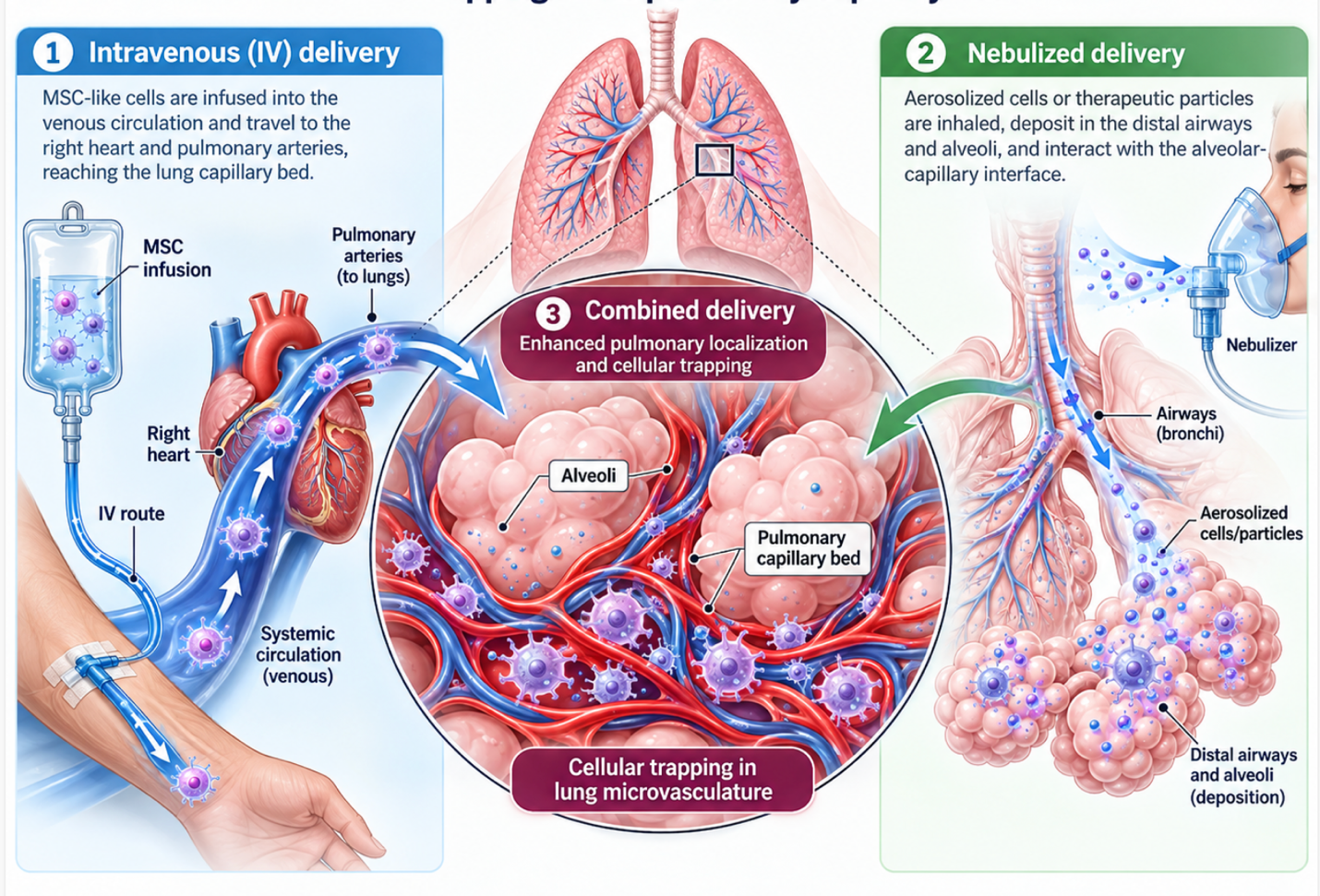
Figure 1: Combining IV and nebulized delivery maximizes cellular trapping in the pulmonary capillary bed.
When you receive intravenous stem cell therapy, you benefit massively from what clinicians call the “pulmonary first-pass effect.” Because the entire cardiac output routes through the lungs, and because MSCs are relatively large cells, a massive percentage of intravenously administered MSCs naturally trap right in the pulmonary capillary bed. For respiratory patients, this mechanical “side effect” is exactly what we want.
Top clinics combine this baseline IV drip with nebulized stem cells. When patients sit for the nebulizer treatment, it feels completely routine just breathing in a cool mist for about 20 to 30 minutes. But on a cellular level, millions of exosomes are directly coating the upper and lower respiratory tracts. Pharmacokinetic studies confirm this dual-modality administration remains the
Forget the glossy marketing brochures promising instant relief. True biological change takes time, and patience is required. When we discuss the stem cell lung treatment success rate, we measure hard functional outcomes specifically 6-minute walk tests and the stabilization of FEV1 not just subjective feelings of wellness.
Acute inflammation may decrease within three to four weeks, allowing you to breathe a bit easier relatively quickly. However, structural stabilization and extracellular matrix modulation take a solid three to six months to fully actualize. To be clear, the stem cells themselves don’t hang around forever. They execute their immunomodulatory job over a few weeks, leave behind an altered biological environment, and then naturally apoptose. Longitudinal outcome data demands ongoing clinical monitoring. You need continuous spirometry tracking to accurately measure biological improvement versus functional benefit.
Thailand’s Ministry of Public Health oversees more than 60 JCI-accredited healthcare facilities, ensuring advanced biological therapeutics meet aggressive international safety standards. Unlike regions with fragmented regulatory oversight, clinical guidelines dictate that stem cell treatment for lung disease in Bangkok requires facilities to adhere to rigorous laboratory protocols. Regulatory health guidelines provide a secure, highly predictable environment for offshore medical tourism (Regenerative Medicine Regulatory Review, 2022).
By applying the ELCF standard, patients can ruthlessly filter out unverified commercial clinics and identify facilities that prioritize strict laboratory standards. With the medical framework validated, the final step involves evaluating the logistical safety of the procedure itself.
Thailand stem cell regulations strictly prohibit back-room cellular manufacturing. Clinics must possess specialized, highly vetted licensing from the Ministry of Public Health to isolate and culture MSCs. The safety of stem cell treatments in Thailand is heavily tethered to the presence of Joint Commission International (JCI) accredited hospitals in Bangkok.
With over 60 JCI-accredited organizations, Bangkok possesses a medical infrastructure that directly rivals major Western hubs. These facilities maintain world-class, cGMP-compliant cleanrooms featuring rigorous dual-filtration HEPA systems and strict cold-chain logistics to keep the cells viable from the lab to your IV bag. JCI clinical quality standards ensure the biological product you receive is absolutely free of endotoxins, mycoplasma, and adventitious agents. It’s a highly regulated environment built specifically to contrast with the wild-west experimental markets found in less governed jurisdictions.
| 📌 If you’re interested in why the percentage of living cells matters so much at the time of treatment, we have an interesting article that discusses the importance of cell viability in UC-MSC stem cell therapy, which you can read via the internal link. |
Navigating international healthcare is overwhelming, which is exactly why leading pulmonologists rely on The Evidence-Led Cellular Framework (ELCF). It is a proprietary three-pillar standard: Verified Sourcing, Clinical Transparency, and Continuous Reassessment. Top-tier clinics use this exact methodology to qualify inbound patients.
The ELCF actively prevents patients from receiving treatments if their specific disease pathology lacks adequate supporting evidence. It serves as a clinical firewall. This framework is essentially a gauntlet. If your clinical records indicate that you won’t biologically benefit from the treatment, a credible ELCF-aligned physician will flat out reject your case. A consultation does not guarantee your eligibility it is a strict, evidence-informed suitability assessment designed to protect you.
Because UC-MSCs possess zero MHC class II antigens, clinical rejection rates remain statistically near 0%, entirely bypassing the need for systemic immunosuppression. For individuals with already compromised respiratory systems, immunological safety data indicates this significantly lowers the overall procedural risk profile (Stem Cells Translational Medicine, 2021).
Financial transparency and strict logistical preparation are the final components of the ELCF. Patients must compile comprehensive medical imaging and recent spirometry results before initiating contact with any clinical team.
| 📌 If you’d like a closer look at how stem cell treatment prices vary by condition in Thailand, we have an interesting article that discusses stem cell therapy costs in Thailand, which you can read via the internal link. |
Let’s address the primary safety concern regarding cellular rejection. Because UC-MSCs lack MHC class II expression, graft-versus-host disease (GVHD) is virtually non-existent in the clinical literature regarding Wharton’s Jelly MSCs. Your body simply doesn’t see them as foreign invaders.
What about tumor risks? Properly cultured MSCs processed in regulated cGMP labs do not possess the teratoma-forming properties associated with embryonic stem cells. The safety profile, when sourced legally and cultured correctly, remains remarkably clean and highly predictable.
Up to 15% of inbound patients fail the strict ELCF clinical suitability criteria, primarily due to active systemic infections or end-stage oxygen dependency. Not every patient qualifies for stem cell therapy for lung disease in Thailand. Under the Evidence-Led Cellular Framework (ELCF), strict medical disqualifiers apply to protect highly vulnerable patients from ineffective or unsafe interventions. Any clinic willing to treat you without pushing back on your medical history is a clinic you should immediately avoid.
Cellular therapy should always be viewed as an integrative part of a comprehensive disease management strategy, not a standalone replacement for your primary care team. Setting realistic biological boundaries is completely non-negotiable.
There are hard lines where this therapy is entirely inappropriate. Clinical contraindication guidelines outline specific, non-negotiable exclusion criteria:
Under the ELCF, reputable facilities will outright deny treatment to unsuitable candidates without hesitation.
We have to separate the scans from the stairs. Biological improvement means your biomarkers drop and your high-resolution CT shows halted fibrosis. Functional benefit means you can actually walk up a flight of stairs without gasping.
These two things do not always align immediately. Some patients show stabilized lung function on paper but still feel heavily fatigued. Pulmonary rehabilitation outcomes show that combining cellular interventions with targeted physical therapy yields the absolute best results (Cochrane Database of Systematic Reviews, 2023). You have to retrain the muscles of your chest wall to optimize your newly stabilized lung capacity. Standard alternatives such as continued pharmacological management or lung volume reduction surgery remain vital, foundational components of the respiratory care spectrum.
A good candidate for stem cell therapy for lung disease is an individual with moderate to severe chronic inflammation or fibrosis who has exhausted standard pharmacological options but retains enough baseline pulmonary function to travel safely. Suitability depends heavily on comprehensive blood panels, recent CT scans, and spirometry tests. For instance, patients without active malignancies or acute infections typically meet the initial screening criteria. However, passing these preliminary checks is only the first step. Individual approval strictly requires a comprehensive clinician’s evaluation.
Before receiving treatment, patients must undergo high-resolution CT scans, pulmonary function tests (PFTs), and comprehensive metabolic blood panels. These diagnostic tools allow clinical teams to map the exact extent of fibrotic tissue. Baseline FEV1 and DLCO measurements are critical for post-treatment comparison. Final requirements may vary based on a patient’s specific cardiological and respiratory comorbidities.
No, stem cell therapy cannot currently cure chronic lung diseases like COPD or idiopathic pulmonary fibrosis. The biological goal is to halt disease progression, reduce chronic airway inflammation, and support existing tissue repair. Clinical endpoints suggest that many patients experience stabilized lung function and an improved quality of life over time. Patients should view this purely as an advanced disease management tool, not a definitive reversal of all damage.
Yes, most patients must continue using their prescribed inhalers and bronchodilators immediately following stem cell administration. Cellular engraftment and immunomodulation take several months to produce measurable physiological changes in airway resistance. While some patients eventually reduce their reliance on short-acting rescue inhalers, this must only be done under the direct supervision of a primary pulmonologist.
Lung improvement is measured using spirometry (PFTs), 6-minute walk tests, and subjective quality of life questionnaires. Clinicians look for stabilization in Forced Expiratory Volume (FEV1) and improved oxygen saturation levels during exertion. A halt in the previously recorded rate of annual lung function decline is considered a significant biological success. Results naturally differ widely depending on the patient’s baseline tissue damage prior to intervention.
For advanced patients exploring offshore medical options, stem cell therapy for lung disease in Thailand offers a scientifically grounded approach to modulating pulmonary inflammation and
Applying the Evidence-Led Cellular Framework (ELCF) is essential for anyone considering this medical journey. The ELCF ensures that patients undergo rigorous, evidence-informed suitability assessments before traveling, prioritizing patient safety and realistic expectations over marketing promises. Navigating international healthcare requires a foundation built purely on verified biological data and accredited medical standards.
To determine if this therapeutic approach aligns with your specific pathology, compile your most recent high-resolution CT scans, pulmonary function tests, and current medication lists. Submit these diagnostics for an objective, clinician-led suitability assessment to establish clear, personalized functional goals. Ready to explore your options? Contact a specialized pulmonology coordinator today.