Our Services
Others
- DFPP
- Shockwave
- IV Drip

Alopecia is a severe dermatological disorder that adversely affects the individuality, self-esteem and overall social well-being of individuals. Nearly 100 million people suffer from profound emotional distress due to significant hair loss that, at the present time, dermatology cannot ameliorate. Alopecia is highly challenging to treat at the clinical level, and is particularly resistant to simple topical treatments. However, hair loss patients in the chronic phase of their condition may find some solace with the advent of regenerative cellular therapy. The aim of this review is to present and analyze the advanced and innovative approaches that strive not to mask, but to fully restore, the hair follicles. UC-MSCs, or umbilical cord-derived mesenchymal Stem Cells, have the potential to restore hair follicles to their complete and original state. Use of the term ‘paradigm shift’ in the literature to describe the use of Stem Cells for Hair Regrowth is a strong indication of the transformative nature of this therapy on contemporary dermatology. Our aim is to describe the dynamics of how a single Stem Cell may trigger a cascade of cellular processes that may be the key to hair regrowth and restoration of dormant follicles.
Currently, pharmaceutical treatments and surgical methods such as hair transplants, are the principal hair loss therapies available. However, many of these methods have their own adverse side effects. Finasteride works by inhibiting the formation of dihydrotestosterone from testosterone in the follicular region, while Minoxidil acts by increasing the microcirculation at the dermal layer of the scalp. Such methods may prolong the resting phase of hair follicles but fail, in the long term, to provide a permanent biological answer to hair loss, unlike a targeted Stem Cell approach. In the long term, the adverse side effects of these treatments often lead patients to abandon the therapies and seek alternatives like UC-MSCs and Stem Cells for Hair Regrowth. Varying efficacy across patient demographics continues to frustrate researchers and clinicians alike as severe cases often respond to none of the standard chemical dosages. Topical applications do nothing to alleviate the causes of cellular senescence. Transplantation only moves healthy hair follicles from one site to another, and does nothing to produce new follicles. Given the limitations of most traditional and contemporary medical approaches, it is of great importance to consider new biological alternative approaches to hair follicle regeneration. Stem Cells offer researchers a promising biological alternative to traditional medical approaches. Specifically, using UC-MSCs as Stem Cells for Hair Regrowth offers researchers the unique opportunity to provide a clean slate to a biological approach to the healing and remodeling of tissue down to a single Stem Cell.
The deepest healing occurs at the most advanced biological and cellular level. The cellular communication of the hair follicle dictates the transition from the telogen to anagen phase of the hair growth cycle. Exosomes derived from umbilical cord mesenchymal Stem Cells (UC-MSCs) carry morphogen proteins directly to the dermal papilla (DP) of the hair follicle. The Stem Cell Wnt/β-catenin pathway is the signaling cascade that is initiated in the hair follicle papilla to signal the onset of hair growth. The slow and steady accumulation of β-catenin in the DP signaling stem of hair follicles occurs as the kinase is inhibited at the hair follicle, highlighting the biological mechanism of Stem Cells for Hair Regrowth. Inside the nucleus, the Stem Cell acts as a primary transcription factor driving the expression of several growth-related genes. At the same time, the cell division cycle protein 42 is activated, resulting in an accelerated rate of cellular multiplication. In addition, conditioned media obtained from UC-MSCs enhances the expression of several survival genes, such as Versican, Lef-1, and Ptc1. This powerful signaling cascade reduces the concentration of localized inflammatory cytokines, such as tumor necrosis factor alpha. As a result, the cellular environment becomes less inflammatory. The levels of interleukin-1α and interleukin-1β also decrease, which helps defend the fragile follicular unit from immune attacks. The cellular microenvironment becomes a rich and beneficial biological niche. The extensive and profound changes at the molecular level demonstrate the unparalleled positive clinical effects of Stem Cells for Hair Regrowth. The regenerative capabilities of isolated Stem Cells at the hair follicle level are comparable to an efficient biological factory. They have the ability to repair and regenerate complex tissues.
The complex molecular theories related to Stem Cell therapy are validated by the results of numerous clinical studies focusing on Stem Cells for Hair Regrowth. The latest medical review reported extensive positive clinical outcomes resulting from the use of minimally manipulated UC-MSCs. One remarkable clinical case described the positive effects of the use of minimally manipulated UC-MSCs in a young female patient with extensive, treatment-resistant alopecia areata. She received multiple localized microinjections of percutaneous therapeutic UC-MSCs over several months. The therapeutic UC-MSCs stimulated extensive and rapid regeneration of hair follicles and positive restoration of hair without adverse immunological side effects. One fascinating clinical case reported the positive outcomes of UC-MSC implantation on a female patient with alopecia universalis, a systemic and chronic autoimmune condition known to be refractory to most treatments. This patient also demonstrated extensive activation and the restoration of hair follicles and hair coverage throughout the body. These certain biological cells, particularly UC-MSCs, retain their capacity for regeneration. Recent clinical milestones justify the use of Stem Cells for Hair Regrowth in clinical practice. Clinical observation of the cases reinforces the healing potential of every individual Stem Cell.
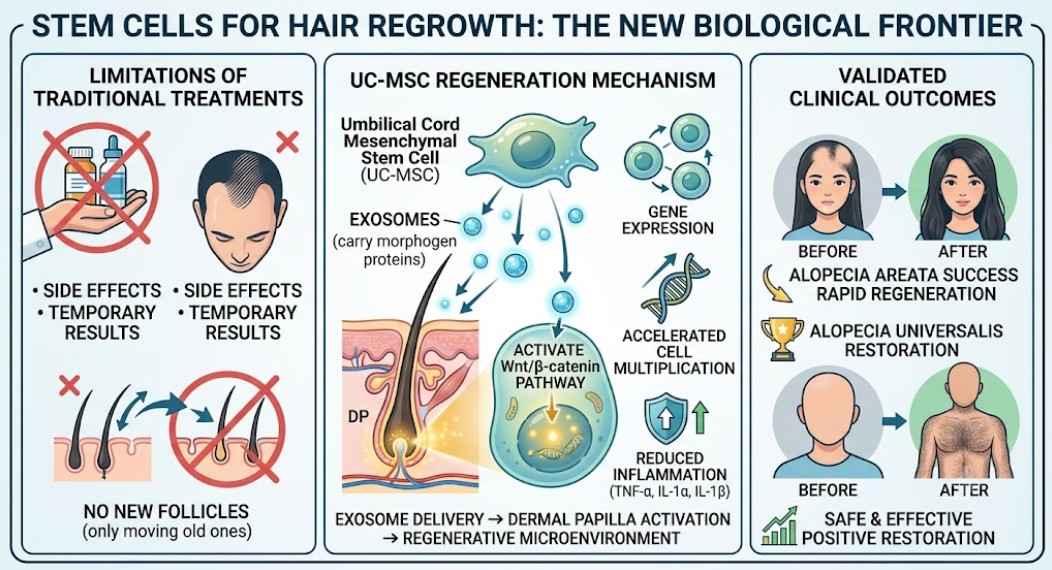
Figure 1: Stem Cells for Hair Regrowth is a new biological frontier
The designated use of new therapies in Thailand will likely change the industry. Thailand has a strong foundation for medical tourism, biotechnology, and advanced therapeutic research. Thai medical regulations are beginning to allow for more progressive therapeutic research in regenerative medicine. This will likely lead to custom UC-MSCs clinics in all major cities within Thailand like Bangkok and Pathum Thani. Local researchers are working on systems of delivery that use local Southeast Asian Genetic systems on the Asian continent. Thailand will likely be the leading country in advanced hair restoration techniques in Southeast Asia. Stem Cell therapy clinics offering Stem Cells for Hair Regrowth will become widely available in several localities in Asia. The use of advanced Stem Cell therapy for hair restoration will set new standards for dermatological practices in all of Thailand.