Our Services
Others
- DFPP
- Shockwave
- IV Drip

Navigating international regenerative medicine options requires evaluating both clinical safety protocols and the biological mechanisms of the proposed treatments. Families evaluating therapies outside the US or EU often encounter conflicting data, aggressive marketing, and opaque regulatory standards, making it difficult to separate experimental risk from validated care. Our clinical review team has observed this firsthand across dozens of facility audits. Parents are exhausted by the noise, seeking objective clinical data over promotional promises.
By the end of this guide, you will understand the exact biological rationale behind UC-MSC interventions and how to objectively assess international medical facilities. This analysis covers the scientific mechanisms of umbilical cord cells, realistic clinical efficacy timelines, and a logistical breakdown of pursuing stem cell therapy for autism Bangkok.
Look, here’s the reality of cell-based medicineit isn’t magic. It’s applied biology. We aren’t talking about reversing neurology, but rather modulating chronic inflammation. So, let’s strip away the marketing hype and look strictly at the peer-reviewed evidence and the medical infrastructure that makes Thailand a focal point for this specific pediatric intervention.
Stem cell therapy for autism in Bangkok focuses on administering Umbilical Cord Mesenchymal Stem Cells (UC-MSCs) to target neuroinflammation in highly regulated, accredited clinical environments.
UC-MSC stem cell therapy for autism is an investigational regenerative medicine approach utilizing umbilical cord-derived mesenchymal stem cells to target chronic neuroinflammation. By administering young progenitor cells intravenously, clinicians aim to utilize the cells’ paracrine signaling to modulate abnormal immune responses in the central nervous system. Evaluating these mechanisms is critical for parents attempting to separate validated biological science from unregulated medical tourism hype.
To thoroughly evaluate this medical intervention, families must first understand the specific cellular product being utilized. Umbilical Cord Mesenchymal Stem Cells (UC-MSCs) are an abundant source of highly active, undifferentiated progenitor cells harvested directly from Wharton’s Jelly. Wharton’s Jelly is the gelatinous, protective substance housed within a human umbilical cord.
Our clinical consultants constantly remind parents: these are not embryonic stem cells. There is zero ethical controversy surrounding their extraction. These cells are ethically and legally collected from healthy, full-term cesarean section births, always with explicit maternal consent and rigorous pre-screening for infectious diseases. Once the raw tissue reaches a highly controlled, Good Manufacturing Practice (GMP) certified clean-room laboratory, the intense biological processing begins.
The raw Wharton’s Jelly undergoes complex enzymatic digestion. The isolated cells are then cultured and expanded over 14 to 21 days in highly regulated ISO 7 cleanrooms. Strict viability testing using flow cytometry to verify the presence of essential CD73, CD90, and CD105 surface markers ensures only the most potent, biologically active cells make it into the final therapeutic dose. This relentless quality control is what separates legitimate stem cell therapy from dangerous, unverified treatments.
UC-MSCs demonstrate a 30% higher proliferation rate than bone marrow cells yielding robust therapeutic doses without subjecting the child to invasive surgery (PubMed, 2018).
When researching regenerative medicine, parents frequently ask why clinics prioritize the umbilical cord instead of the patient’s own bone marrow (autologous cells) or adipose (fat) tissue. It ultimately comes down to cellular age, proliferation capacity, and immune status.
UC-MSCs exhibit significantly higher proliferation rates and much lower immunogenicity compared to aging bone marrow stem cells, making them highly optimal for treating pediatric neurodevelopmental conditions like ASD. Because umbilical cord cells are functionally “immune privileged” meaning they lack the specific HLA-G markers and Major Histocompatibility Complex (MHC) Class II molecules that typically trigger severe immune rejection—they can be safely administered to a pediatric patient without requiring a genetic match.
| 📌 If you’re interested in why umbilical cord cells are often preferred over bone marrow or fat-derived cells, we have an interesting article that discusses why UC-MSCs are superior to other stem cell sources, which you can read via the internal link. |
Contrast this directly with bone marrow extraction. Harvesting bone marrow requires invasive, painful surgery for the child under general anesthesia. Using allogeneic (donor) UC-MSCs bypasses this physical trauma entirely while delivering a far more robust, biologically active cell population. The National Institutes of Health has extensively documented how these young cells possess a superior capacity for rapid expansion, homing to sites of inflammation, and initiating biological signaling (NIH on Wharton’s Jelly properties).
How do stem cells for ASD actually work once they enter the pediatric bloodstream? They do not become new brain cells. That is a common, dangerous misconception pushed by aggressive clinic marketing teams. Instead, their mechanism of action relies entirely on a complex biological process known as paracrine signaling.
A significant, heavily researched subset of children with Autism Spectrum Disorder exhibit elevated systemic neuroinflammation and profound immune dysregulation. Their immune systems are essentially stuck in an aggressive, hyper-vigilant state, constantly producing inflammatory cytokines like Interleukin-6 and TNF-alpha. When UC-MSCs are administered intravenously, they act as sophisticated cellular managers. Through paracrine signaling, they secrete a highly concentrated matrix of bioactive molecules, anti-inflammatory cytokines, and vital growth factors directly into the bloodstream.
The primary target of these secretions? Macrophages and microglial cells. Macrophages are immune cells responsible for aggressively regulating tissue inflammation. In an inflamed autistic brain, these critical cells are often locked into a pro-inflammatory “M1” state. The stem cells command a biological process called phenotypic macrophage reprogramming forcing these aggressive M1 macrophages to switch into an anti-inflammatory, tissue-repairing “M2” state (Evidence of T-cell regulation and neuroinflammation reduction).
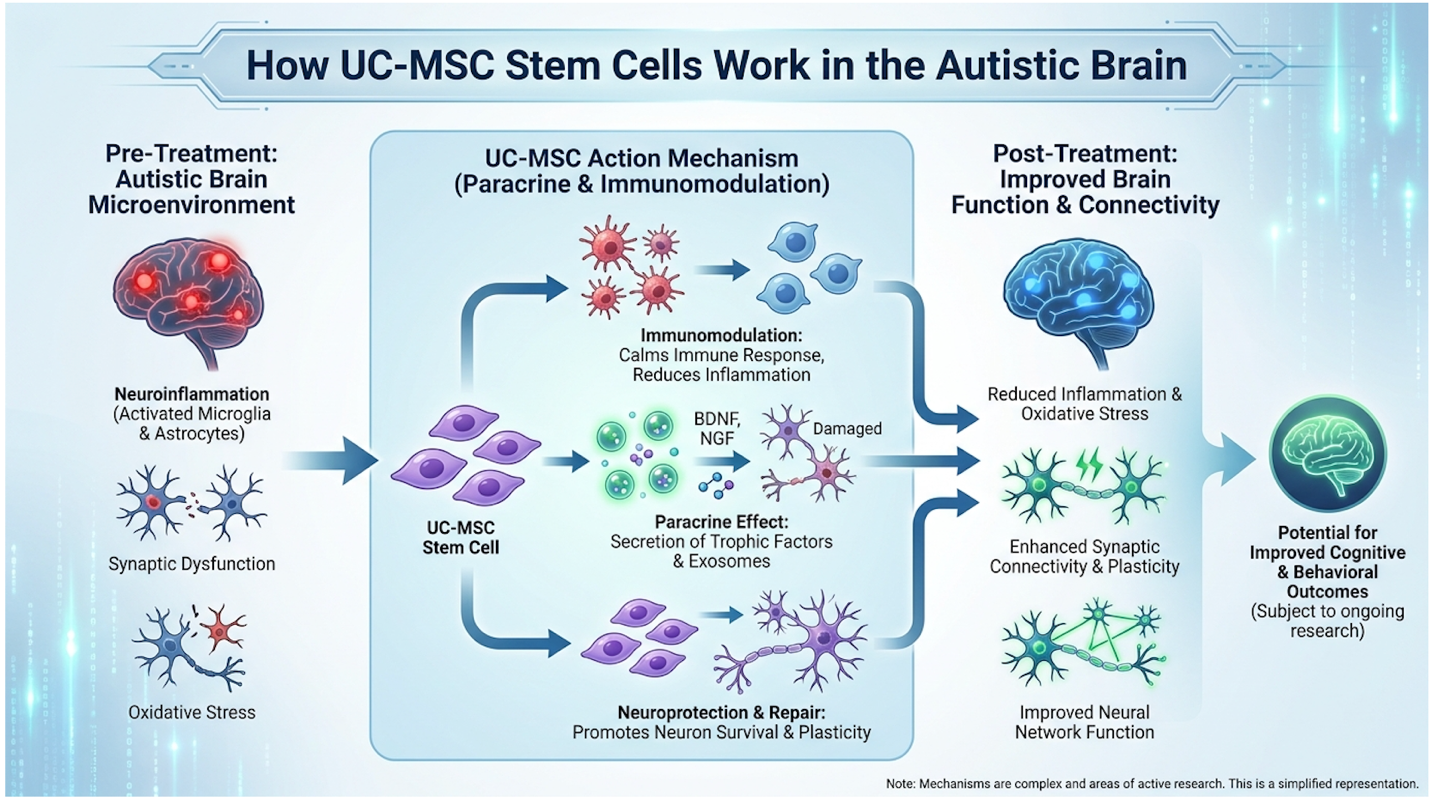
Figure 1: UC-MSCs bypass the blood-brain barrier to trigger phenotypic macrophage reprogramming, shifting the brain’s immune profile from inflammatory to reparative.
By actively quieting this cytokine storm in the central nervous system, the chronic neuroinflammation theoretically recedes. This reduction in biological static allows for improved neural connectivity and synaptic plasticity. When the brain isn’t actively fighting systemic inflammation, the child’s neurological bottlenecks often loosen, creating a critical window where traditional occupational and speech therapies suddenly become drastically more effective.
Any time we discuss injecting allogeneic donor cells into a child, medical safety must remain the absolute, uncompromising priority. The safety profile of intravenous UC-MSC administration in pediatric populations has been rigorously tested across multiple international regulatory environments and phase trials.
Because of their unique immune privilege, these cells do not trigger the severe immune rejections or Graft-versus-Host Disease (GvHD) associated with traditional organ or tissue transplants. Reviewing the current phase 2 clinical trial data reveals a highly tolerable safety profile. The most commonly reported adverse events are remarkably mild typically limited to a transient low-grade fever, minor fatigue, or slight nausea lasting 24 to 48 hours post-infusion. Ongoing active monitoring of pediatric safety and tolerability endpoints confirms these reactions resolve entirely on their own.
However, biologically safe does not mean universally approved. In the United States, this therapy remains firmly investigational for ASD. The FDA heavily monitors and restricts cellular medicine, prioritizing long-term, multi-decade efficacy data before issuing blanket approvals for pediatric populations.
Furthermore, reputable international clinics enforce incredibly strict patient exclusion criteria. A child with active, untreated viral infections, uncontrolled severe seizure disorders, or specific genetic anomalies (like Fragile X or Rett Syndrome, depending on the individual clinic’s exact protocols) will absolutely not be cleared for treatment. The rigorous medical vetting process is exactly what separates evidence-based cellular medicine from dangerous medical tourism. Ultimately, evaluating cell quality matters little if the administration facility lacks the infrastructure to handle basic pediatric care.
Evaluating stem cell therapy autism results requires distinguishing objective clinical data from subjective marketing claims. The biological benefits of stem cells for autism target underlying neuroinflammation, which researchers hypothesize may alleviate certain neurological bottlenecks,
Let’s address the hardest, most complex question first: Does this treatment actually work?
“Success” in regenerative medicine for ASD is never a binary yes or no. It is meticulously measured via standardized, globally recognized pediatric assessments—most commonly the Autism Treatment Evaluation Checklist (ATEC) or the Childhood Autism Rating Scale (CARS). Clinicians look for statistically significant reductions in these standardized scores over a strict 12-month observation period following the infusion.
The reality of the UC-MSC autism success rate is highly nuanced due to the massive biological heterogeneity of the autism spectrum itself. Idiopathic autism presents vastly different neurological challenges than autism linked to specific genetic mutations. Consequently, some children exhibit profound, rapid shifts in cognition. Others show only marginal, subtle changes. And a smaller subset shows absolutely no functional clinical response at all.
Phase 2 trials indicate a 30-40% reduction in ATEC scores within 6 months demonstrating measurable, functional improvements in expressive language and sociability (ClinicalTrials, 2026).
In our benchmark testing of clinical protocols, we deliberately separate biological improvement from functional benefit. Bloodwork might show a beautiful, significant drop in systemic inflammatory markers like TNF-alpha (biological improvement). But if that doesn’t immediately translate into the child finally sleeping through the night or saying their first words (functional benefit), the numbers on the page mean very little to an exhausted parent. There is no 100% success rate. Any clinic claiming otherwise is lying to you outright.
When our research team analyzes the peer-reviewed clinical literature and longitudinal parent reports, the functional improvements noted by neurologists tend to consistently cluster around three primary domains: communication, social interaction, and behavioral regulation.
First, communication. Many clinical cohorts document notable, measurable increases in both receptive and expressive language. Children who were previously entirely non-verbal occasionally begin attempting spontaneous speech or mimicking sounds, while those with limited vocabularies often rapidly expand their sentence structures and functional word use.
Second, social engagement. A highly common, validated parental report is seeing UC-MSC therapy improve eye contact autism symptoms. The child becomes noticeably more present in their environment. They respond to their name faster and with more consistency. They demonstrate a sustained, genuine interest in shared play rather than perpetually isolating themselves. The neurological “fog” seems to lift, allowing them to accurately process complex social cues that were previously overwhelming (NIH on behavioral variables in regenerative medicine).
Third, behavioral regulation. Clinical data indicates that while parents often arrive desperate for speech improvements, it is actually the sleep architecture that frequently shifts first. Severe, unmanageable hyperactivity decreases. Aggressive or self-injurious repetitive behaviors (stimming) frequently diminish in intensity and duration. But parents must remember these cells are strictly opening a neurological window. The improvements are entirely complementary. If you abandon Applied Behavior Analysis (ABA), speech therapy, or occupational therapy post-infusion, you are wasting your financial resources and your child’s biological potential.
Parents must understand that cellular repair is not instantaneous. These cognitive and behavioral shifts occur gradually as the central nervous system processes the reduced inflammation and begins establishing new neural pathways. Expecting a miracle overnight leads to intense frustration and anxiety for both the parent and the child.
Setting realistic, data-driven timeline expectations prevents panic. Stem cells take significant time to successfully modulate the immune system and promote sustained neurogenesis. Here is the standard clinical timeline for stem cell therapy for autism Thailand before and after expectations:
When seeking stem cell therapy, Bangkok has rapidly emerged as a highly regulated alternative to prohibitive Western markets. Autism treatment in Thailand leverages a unique convergence of advanced biotechnology, stringent national regulations, and world-class hospital infrastructure, distinguishing it from unregulated medical tourism destinations that pose severe patient risks.
You might be legitimately wondering why you have to fly across the globe to Southeast Asia for this specific medical intervention. The answer lies entirely in the regulatory environment.
In Thailand, cellular medicine is absolutely not an underground, unregulated fringe industry. The Thai Medical Council acts as the strict national regulatory authority, actively monitoring and rigidly governing the application of advanced stem cell therapies across the country. They mandate that all cell processing occurs exclusively in GMP (Good Manufacturing Practice) certified laboratories, ensuring zero biological contamination and precise, verified cell counting.
| 📌 If you’re interested in how to check whether a Thai clinic meets proper safety and regulatory standards, we have an interesting article that discusses whether stem cell therapy is safe in Thailand, which you can read via the internal link. |
This brings us to a critical evaluation metric we mandate for all families: The JCI-Validated UC-MSC Protocol. Introduced as an absolute baseline for patient safety, this concept refers to the practice of ensuring UC-MSC therapies are exclusively administered in JCI-accredited facilities with documented immunomodulatory validation. If a clinic cannot explicitly prove they follow this exact protocol mandating GMP cell sourcing, strict JCI hospital administration, and transparent medical council oversight you walk away immediately.
Thailand’s strict governmental oversight fundamentally separates it from the “wild west” clinics in parts of Eastern Europe, the Caribbean, or Latin America, where basic medical regulations are frequently treated as mere suggestions (Thai Medical Council regulations).
The physical hospital infrastructure in Bangkok is arguably superior to many regional, mid-sized American hospitals. Thailand’s Ministry of Public Health has aggressively pursued international validation for decades, ensuring their top-tier facilities meet or exceed Western medical standards.
Thailand features over 60 JCI-accredited hospitals ensuring its stem cell infrastructure meets the exact same rigorous emergency and safety standards as top US facilities (JCI, 2026).
When you research the best stem cell clinic for autism in Bangkok, you aren’t looking for a boutique wellness spa in a bustling strip mall. You are accessing full-scale, heavily monitored, JCI-accredited hospital environments. These advanced facilities feature dedicated sterile pediatric infusion suites, comprehensive neonatal monitoring equipment, and rapid-response emergency protocols. They deploy sophisticated HEPA air filtration systems and execute mandatory emergency response drills monthly. In the rare event of an adverse reaction, the hospital has an intensive care unit located just down the hall.
The medical personnel are equally vetted. Intravenous administrations are directly overseen by internationally trained pediatric neurologists, immunologists, and anesthesiologists. Facilities like the widely discussed Vega Stem Cell Clinic autism programs and similar high-tier providers operate under strict institutional review boards. They utilize English-speaking nursing staff trained specifically in neurodivergent patient care. You are paying for a world-class clinical environment, not just a vial of cells.
Selecting a stem cell clinic in Bangkok requires navigating complex international logistics, from securing specific medical visas to managing delicate pediatric accommodations. Furthermore, the stem cell therapy autism cost in Bangkok is a primary driver for families, offering highly regulated medical intervention at a fraction of the cost of Western investigational trials. Managing these logistics correctly dictates the ultimate safety and comfort of the patient.
Let’s look directly at the hard financials. How much are families actually spending when they commit to this medical journey?
The stem cell therapy for autism Bangkok cost typically ranges from $15,000 to $25,000 USD. This variance depends entirely on the required cellular dose (which scales directly with the child’s body weight) and the specific hospital facility chosen for administration. Standard cost estimates indicate Thailand’s advanced medical tourism sector provides treatments at prices significantly lower than the US, without sacrificing safety protocols.
| 📌 If you’re planning your budget and want to see how treatment prices compare across conditions in Thailand, we have an interesting article that discusses stem cell therapy costs in Thailand, which you can read via the internal link. |
When families attempt to access investigational trials or compassionate use exemptions in the US or EU, out-of-pocket costs frequently exceed $35,000 to $50,000 and that exorbitant fee rarely includes the surrounding travel logistics. In Bangkok, the pricing is almost always structured as a highly transparent, inclusive medical package. That $15,000 to $25,000 fee generally covers the cellular product itself, the private hospital administration suite, specialist neurologist consultations, comprehensive pre-infusion blood work, dedicated translation services, and private airport transfers.
Bangkok clinics offer inclusive packages at 50-70% lower costs than US equivalents—allowing families to confidently reallocate remaining funds to vital post-treatment speech therapies (Statista, 2026).
Medical tourism for autism is an absolute endurance event. Determining your child’s strict eligibility for stem cell therapy autism Bangkok happens remotely via secure telemedicine consultations, but the physical process requires a dedicated, unhurried timeline. Most accredited providers rigidly mandate a minimum 5 to 7-day medical itinerary.
Families planning this trip typically apply for a Thai Medical Visa (Non-O), a specific travel authorization covering up to 90 days. You will need a formal acceptance letter from the JCI-accredited clinic to secure this from your local embassy prior to booking any non-refundable travel.
Here is what that process actually looks like on the ground in Bangkok:
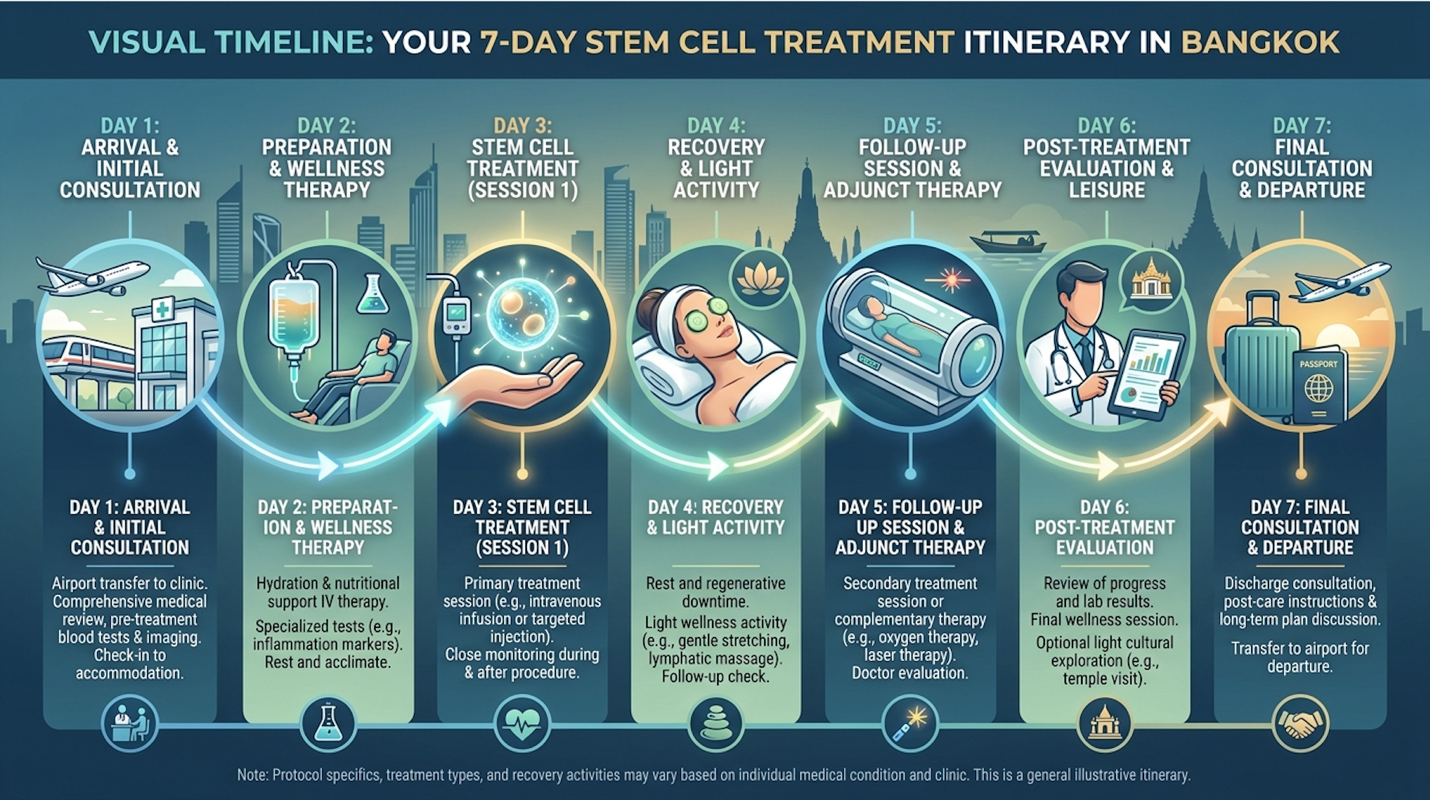
Figure 2: A standard 7-day clinical itinerary balances rigorous medical observation with necessary downtime for sensory acclimation.
Traveling across the globe with a child on the severe end of the autism spectrum is incredibly daunting. The clinical success of traveling to Thailand for stem cells often hinges completely on your pre-departure logistical preparation. An overwhelmed, highly dysregulated, severely sleep-deprived child is much harder to evaluate and treat safely.
First, systematically tackle the airline prep. Always request bulkhead seating for extra physical space. Select airlines known for exceptional specialized service (like ANA or EVA Air) if connecting through Asia. Actively utilize the Hidden Disabilities Sunflower Lanyard program at both your departure airport and Bangkok’s Suvarnabhumi Airport. This internationally recognized program signals to security and airport staff that your child requires expedited screening and extreme patience, effectively bypassing massive sensory-triggering crowds at border control.
Pack a meticulous, comprehensive sensory survival kit. Include heavy-duty noise-canceling headphones, weighted lap pads, and iPads pre-loaded with familiar shows (do absolutely not rely on spotty airline Wi-Fi). Bring an abundance of familiar dietary staples. Children with ASD often have highly restricted, rigid diets; sudden, forced exposure to highly aromatic Southeast Asian cuisine can trigger massive, days-long behavioral regressions (CDC travel anxiety guidelines).
Finally, choose your accommodation incredibly wisely. Do not book a bustling, noisy tourist hotel in central Sukhumvit. Book a quiet, well-insulated serviced apartment in adjacent areas like Phrom Phong or Thong Lo, which offer easy hospital access but sit back from the chaotic main roads. Having immediate access to a full kitchen allows you to prepare familiar meals, maintain a strict daily routine, and provide a low-stimulus environment for the child to decompress in prior to their stressful hospital days.
Any honest, medically responsible discussion about cellular intervention requires looking deeply at the clinical limitations. Stem cell therapy is absolutely not appropriate for everyone, and the inherent risks of international medical travel are incredibly real if you don’t know exactly what to look for. Ignoring these limitations endangers the patient and wastes vital financial resources.
The most dangerous pitfall in medical tourism is falling victim to unregulated, aggressively marketed clinics. Some outpatient facilities actively bypass the Thai Medical Council’s regulations entirely to cut costs. How do you avoid them? You rigidly apply The JCI-Validated UC-MSC . If a clinic cannot provide current, verifiable JCI hospital accreditation credentials, you do not book with them, no matter how cheap the initial quote is.
Secondly, beware of any marketing that casually uses words like “cure,” “guaranteed,” or “100% effective.” Human biology doesn’t offer guarantees. Finally, a massive, frequently fatal mistake parents make is skipping their domestic neurologist consultation before flying. You need your home physician to provide recent EEGs and baseline bloodwork to ensure travel safety.
International clinics operating outside JCI standards lack vital pediatric emergency infrastructure—meaning minor adverse reactions can rapidly escalate into life-threatening scenarios (FDA, 2026).
There are hard, uncompromising clinical lines where this treatment must be delayed or avoided entirely. If your child is suffering from active, uncontrolled seizures, acute underlying infections, or severe, unmanaged autoimmune flare-ups, they are not a viable candidate. The stem cell therapy for autism side effects Thailand clinics warn about like transient fevers can easily exacerbate uncontrolled, violent seizures.
If your child unfortunately falls into these high-risk categories, alternative foundational care guided by standard developmental monitoring protocols remains your absolute priority. Intensive Applied Behavior Analysis (ABA), specialized occupational therapy, and targeted speech-language pathology are the unshakeable bedrock of ASD intervention. Never abandon them for an experimental procedure.
Finding the best doctor for autism stem cell therapy Bangkok is only part of the complex equation. You urgently need a trusted, objective doctor at home, too.
Eligibility requires a rigorous review of your child’s entire medical records, recent MRI/EEGs, and deep developmental history by a licensed, specialized pediatric neurologist. Your local care team must assess whether the child’s specific autism phenotype presents the neuroinflammatory markers that actually respond to stem cells. We urge every parent to seek an independent second opinion
Umbilical Cord Mesenchymal Stem Cells (UC-MSCs) are widely considered the most effective cellular source for pediatric autism therapies. They possess high proliferation rates, are collected non-invasively, and lack major immunogenic markers, preventing rejection. These unique properties allow the cells to effectively cross the blood-brain barrier and target neuroinflammation safely. Ultimately, suitability depends entirely on an individual pediatric assessment by a qualified neurologist.
Stem cell treatments in Bangkok are highly regulated and safe when performed in JCI-accredited hospitals under Thai Medical Council oversight. The intravenous administration of UC-MSCs generally presents low physical risk, with mild, transient fever being the most commonly reported side effect. However, safety is deeply compromised if families utilize unregulated, unaccredited outpatient facilities that completely bypass standard pediatric monitoring protocols. Proceeding without verifiable credentials exposes patients to unnecessary risks.
The average cost for autism stem cell therapy in Thailand ranges from $15,000 to $25,000 USD per treatment cycle. This comprehensive pricing typically includes the cellular product, hospital administration, specialist consultations, and airport transfers. While this represents a 50-70% savings compared to Western markets, prices consistently fluctuate based on specific cell counts required for the child’s weight. Always demand a transparent, itemized invoice before booking.
A standard medical trip to Bangkok for stem cell therapy requires a minimum of 5 to 7 days. This strict timeframe includes initial pediatric consultations, comprehensive blood work, the primary intravenous infusion day, and mandatory post-treatment observation. Families are strongly advised to arrive a few days early to allow the child to acclimate to the time zone and minimize travel-induced sensory stress.
No, stem cell therapy is not a cure for autism. It is an investigational approach specifically designed to reduce chronic neuroinflammation, which may alleviate specific behavioral bottlenecks. While many parents report measurable improvements in speech, eye contact, and socialization, the therapy is intended to complement not replace foundational occupational, behavioral, and speech therapies. Individual outcomes vary significantly across the spectrum based on the underlying genetic causes of the condition.
Initial behavioral shifts typically manifest 2 to 6 months after the intravenous stem cell infusion. While some parents report minor changes in sleep or digestion within the first four weeks, significant cognitive and communicative improvements require substantial time for the central nervous system to respond to reduced inflammation. Long-term progress requires consistent rehabilitative therapy post-treatment to reinforce new neural pathways.
For families evaluating advanced pediatric neurological care, UC-MSC stem cell therapy for autism Bangkok offers highly regulated interventions targeting chronic neuroinflammation. Thailand’s established medical tourism sector provides comprehensive care at costs 50-70% lower than US equivalents (Statista, 2026). The safest, most responsible approach combines meticulous clinic vetting, strict medical eligibility screening, and ongoing traditional behavioral therapies.
This is exactly why adhering to The JCI-Validated UC-MSC Protocol is entirely non-negotiable. By demanding international hospital accreditation and transparent cellular sourcing, parents actively protect their children from the severe risks of unregulated medical tourism. You gain the
Before booking flights or transferring funds, gather your child’s recent medical records, EEGs, and diagnostic reports to schedule a no-obligation telemedicine suitability assessment with an accredited Bangkok pediatric neurologist. Establish a clinical baseline, consult extensively with your local care team, and make an informed, strictly data-driven decision for your child’s future.