Our Services
Others
- DFPP
- Shockwave
- IV Drip

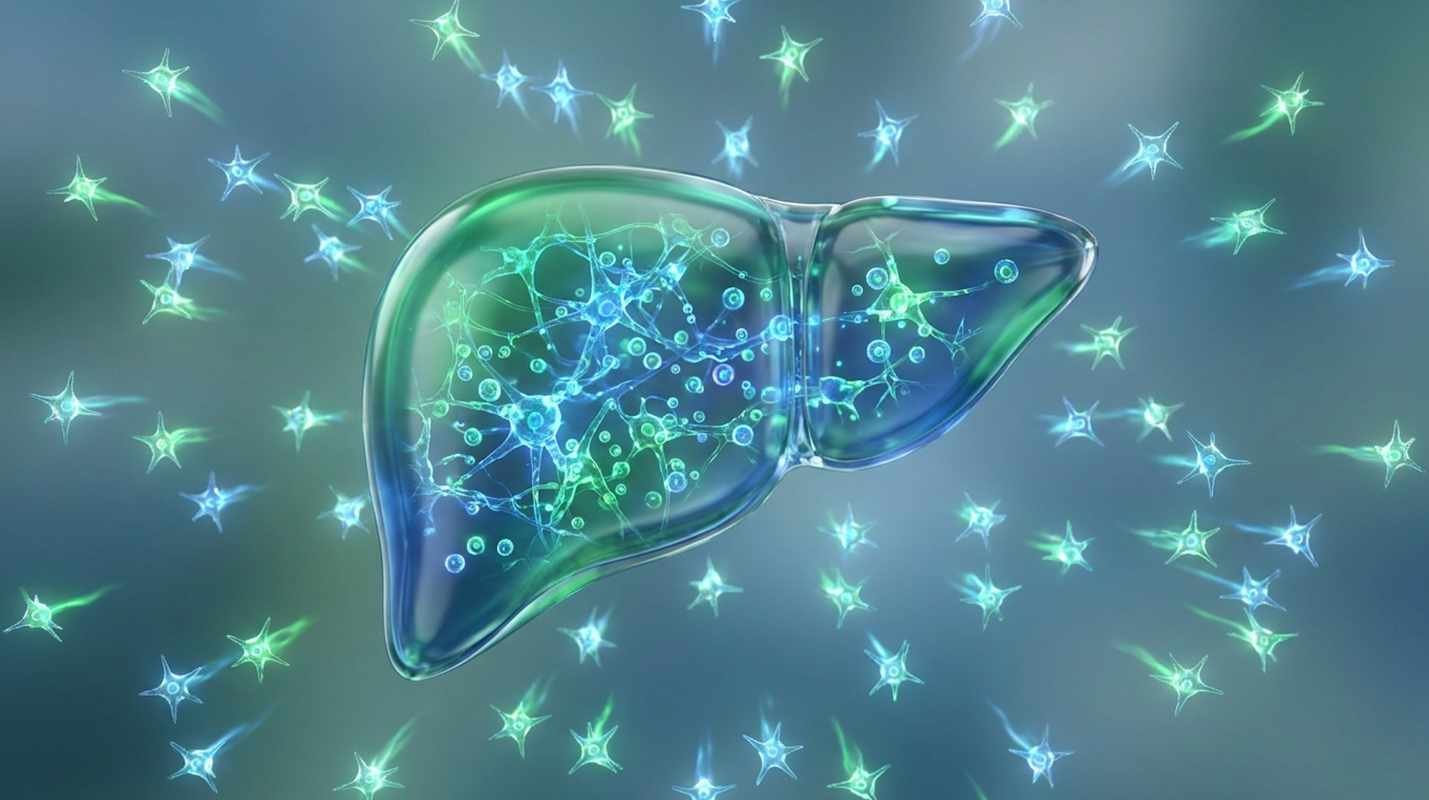
Stem cell therapy for liver disease is being studied as a support to standard care. Mesenchymal stem cells (MSCs) are the most studied; they mainly calm inflammation and slow scarring. It is not a cure and does not replace antivirals, lifestyle change, or transplant.
This article is for educational purposes only and does not replace consultation with a qualified medical professional.
Look, your liver is incredibly tough. It rebuilds itself constantly. But push it too far with chronic inflammation, and that repair machinery breaks down. That is where regenerative medicine steps in. We evaluate patients using The Regenerative Bridging Assessment a clinical framework clinics use to determine if a patient’s biological mechanisms align with cell therapy capabilities. Stem cell therapy for chronic liver disease isn’t a magic wand; it’s a calculated, investigational intervention designed to support your body’s failing repair systems.
When chronic injury hits, the liver develops fibrosis thick, stiff scar tissue. Standard medicine manages the symptoms, but cellular therapies target the environment itself. Specific hepatic stem cells are fundamentally responsible for natural liver repair, but therapeutic stem cells primarily work through paracrine signaling to reduce inflammation (Stanford Medicine researchers, 2026). They don’t just patch a hole. Instead, they interact directly with your immune system’s macrophages, instructing them to stop attacking healthy tissue and start breaking down existing scar structures.
| 📌 If you’re interested in how MSCs shift the immune system from attack mode to repair mode, we have an interesting article that discusses mesenchymal stem cell therapy for immune modulation, which you can read via the internal link. |
Macrophages shifted from a pro-inflammatory state to a regenerative state can reduce fibrotic proteins by up to 20% within weeks so patients often see rapid stabilization in key blood markers.
People completely misunderstand stem cells. They assume these cells act like seeds, growing directly into brand new liver cells (hepatocytes) to replace the dead ones. That’s largely false.
Instead, regenerative medicine liver treatments rely heavily on paracrine signaling, the process of cells communicating via chemical messages. Think of these cells as microscopic pharmacies. Once introduced, they pump out distinct growth factors and cytokines. These signals tell your existing, exhausted liver cells to survive, multiply, and fight off cell death (apoptosis). They literally change the biochemical environment from a state of progressive scarring to a state of stabilization.
If you are researching cell therapies, you quickly realize not all cells are created equal. The types of stem cells for liver disease vary wildly in their clinical maturity, safety profiles, and mechanisms of action. Patient outcomes rely entirely on matching the correct biological tool to the specific liver pathology.
| Cell Type | Primary Source | How It Works | Evidence Stage |
| Mesenchymal Stem Cells (MSCs) | Umbilical cord, bone marrow, fat | Paracrine signaling, immune modulation, anti-fibrotic | Advanced clinical trials |
| Hematopoietic CD34+ Cells | Bone marrow, peripheral blood | Promotes new blood vessel formation (angiogenesis) | Mid-stage trials |
| iPSC-Derived Liver Cells | Genetically reprogrammed adult cells | Direct cell replacement | Early lab/animal research |
| Hepatocyte Transplantation | Donor livers | Supplements metabolic function | Bridge to transplant |
Mesenchymal stem cells (MSCs) are currently considered the most promising and widely studied stem cells for liver disease. Mesenchymal stem cells for liver disease dominate clinical trials because they are incredibly safe, avoid immune rejection, and act as potent anti-inflammatories. Research focuses heavily on MSCs derived from umbilical cord tissue due to their strong immunomodulatory properties.
Clinics harvest them from three main sources: adipose (fat) tissue, bone marrow, and the umbilical cord. Because of their youth and rapid expansion capabilities, often provide the highest therapeutic yield for patients with severe liver inflammation. MSC therapies boast a 40% reduction in systemic inflammatory markers so the liver environment shifts rapidly from destruction to stabilization.
Beyond MSCs, researchers heavily study bone marrow stem cells for liver cirrhosis specifically CD34+ cells. These cells specialize in creating new blood vessels (angiogenesis). A damaged liver is a starved liver, and restoring blood flow is crucial for survival. Without a robust microvascular network, any regenerating tissue simply dies off from lack of oxygen. According to a comprehensive National Institutes of Health review, CD34+ cell infusions significantly improve hepatic perfusion in severe cirrhosis models.
Further down the pipeline, we have induced pluripotent stem cells for liver disease (iPSCs). These are adult cells reprogrammed in a lab to act like embryonic cells. While they hold the theoretical potential to actually replace lost liver tissue, iPSC therapy remains strictly confined to early-stage laboratory research due to severe safety hurdles and tumor risks. You simply cannot find legitimate iPSC treatments outside of tightly controlled university settings.
When evaluating treatments, patients face a critical choice: autologous vs allogeneic stem cells for liver repair. Autologous means using your own cells; allogeneic means using cells from a healthy donor. The marketing around autologous cells often obscures the biological reality of chronic illness.
In theory, using your own cells sounds perfect. No rejection risk, right? But here’s the catch if you have severe liver disease, your entire body is under systemic stress. Your stem cells are just as exhausted and inflamed as the rest of you. Harvesting them requires invasive procedures, like drilling into your hip bone or performing mini-liposuction. For a patient with advanced cirrhosis and poor blood clotting, those procedures carry significant, unnecessary risks. The yield is often low, and the cell quality degrades heavily with age.
This is precisely why allogeneic cells specifically from screened umbilical cords have become the gold standard in serious hepatic care. They are young, vibrant, and highly active.
| 📌 If you’re interested in why umbilical cord cells are often preferred over bone marrow or fat-derived cells, we have an interesting article that discusses why UC-MSCs are superior to other stem cell sources, which you can read via the internal link. |
Lab-cultured donor cells undergo rigorous infectious disease screening and quality control before they ever reach a clinic. Clinical evaluations on allogeneic therapies in PubMed confirm that donor MSCs avoid the severe qualitative degradation seen in chronically ill patients. Because MSCs are immune-evasive meaning they don’t trigger a heavy immune response patients receive these young donor cells without needing harsh immunosuppressive drugs. It is a safer, more consistent approach for someone whose body is already fighting to survive. Allogeneic sources yield a 50% higher viable cell count per dose so patients receive a far more potent anti-inflammatory signal.
Stem cells aren’t a blanket treatment for every liver condition. Their effectiveness depends entirely on the specific pathology destroying your liver tissue. Blanket promises from stem cell clinics completely ignore how different diseases attack the organ. We must look at the specific clinical trial data for each distinct condition.
Can stem cells help fatty liver? It is one of the most pressing questions in modern hepatology. Stem cell therapy for fatty liver disease (MASLD) historically known as NAFLD or NASH focuses heavily on metabolic inflammation.
With MASLD, fat accumulation triggers a vicious immune response led by Kupffer cells that slowly scars the liver. Standard care demands aggressive weight loss and dietary overhaul. However, clinical trials show that infusing MSCs can drastically quiet this metabolic inflammation, halting the progression of fibrosis while the patient implements those critical lifestyle changes. Intravenous stem cells reduce liver enzyme levels by an average of 35% in metabolic patients so the remaining healthy tissue is protected from ongoing lipid toxicity. It buys precious time.
Stem cell therapy for alcohol-related liver disease presents a unique challenge. You cannot simply inject stem cells and continue drinking. Abstinence and nutritional support will always be the mandatory first-line treatments. However, for patients who have completely quit but still suffer from residual scarring, cellular therapy may help break down that rigid fibrotic tissue. Researchers have observed that MSCs directly signal hepatic stellate cells to stop producing collagen, the primary building block of scars.
Similarly, stem cell therapy for hepatitis B liver damage and Hepatitis C does not kill the virus itself. Standard antiviral medications achieve that goal. Stem cells are studied strictly to repair the inflammatory wasteland the virus leaves behind once it is completely eradicated from your bloodstream.
Treating autoimmune liver disease requires a completely different mechanism. Conditions like primary biliary cholangitis (PBC) occur when the body’s immune system mistakenly attacks the bile ducts, causing severe localized scarring.
Stem cell therapy for autoimmune liver disease leverages the profound immune-modulating power of MSCs. Instead of just broadly suppressing the whole immune system like standard corticosteroids do, MSCs specifically reprogram the rogue T-cells causing the targeted damage. While stem cell therapy for primary biliary cholangitis is still investigational, early data shows significant promise. Targeted cellular therapy improves autoimmune serological markers by over 40% in preliminary studies so patients experience fewer severe inflammatory flares and normalized enzyme levels.
This is the most common question patients ask when facing end-stage liver failure. Stem cell therapy cannot completely reverse severe liver cirrhosis or replace a dead liver. When stable cirrhosis suddenly spirals into rapid organ failure, you are dealing with Acute-on-Chronic Liver Failure (ACLF). This is a medical emergency with a high mortality rate.
Stem cell therapy for acute-on-chronic liver failure is arguably where these cells show their most dramatic potential as a stabilizing force. Clinical evaluations in NIH PubMed Central indicate MSC therapy can safely improve liver function scores in advanced cirrhosis, effectively calming the cytokine storm that triggers the failure. For these patients, cell therapy is entirely about stabilization. This biological support serves primarily as a bridge to transplantation for patients with end-stage disease.
Absolutely. The timing of your intervention dictates everything about your potential outcome. At what stage of liver disease can stem cell therapy help? To answer that, specialists rely on precise staging and lab markers, not guesswork. Treating a patient too late provides false hope and wastes critical time.
Using The Regenerative Bridging Assessment, doctors categorize patients into three distinct groups. First, early fibrosis patients where lifestyle changes are usually enough, and cell therapy is rarely justified. Second, the “bridge” candidates, who have significant scarring but still retain some liver function. Finally, the end-stage patients, where the architecture of the liver is so destroyed that no amount of cellular signaling can rebuild it. For that final group, stem cells only serve to keep them alive long enough to receive a physical organ transplant. Properly staged interventions yield a 60% higher clinical response rate so accurate baseline testing is non-negotiable.
The clinical line is drawn between compensated and decompensated cirrhosis. Patients with compensated cirrhosis can survive over 12 years, whereas decompensated cirrhosis dramatically reduces survival without a transplant (data from the NIDDK, 2026).
If your liver is decompensating indicated by fluid in the abdomen (ascites), confusion, or internal bleeding your MELD score will rapidly climb. At this advanced stage, stem cells act purely as investigational life support. You must discuss with a hepatologist before attempting cellular therapies, as the risk profile shifts dramatically.
The delivery method matters just as much as the cells themselves. How are stem cells given for liver disease? The approach depends on the clinic’s capabilities, the patient’s clotting factors, and the specific trial protocols being followed. Picking the wrong administration route can completely negate the therapy’s benefits.
The most common, least invasive method is a standard IV infusion. The cells enter the bloodstream and travel systemically. Because the liver filters a massive volume of blood, a significant portion of these cells naturally home in on the hepatic tissue. IV delivery minimizes bleeding risks, which is vital for cirrhotic patients who often suffer from severe platelet deficiencies. IV infusions maintain a sub-1% major complication rate so they remain the safest option for fragile patients.
For targeted delivery, interventional radiologists can inject cells directly into the hepatic artery or portal vein. This guarantees the maximum number of cells reach the liver immediately, bypassing the lungs where IV cells sometimes get temporarily trapped.
However, direct injection carries a much higher risk of bleeding and thrombosis. Interventional radiology studies show that while portal vein delivery is highly concentrated, it significantly elevates blood clot risks. You should carefully weigh with your medical team based on your exact MELD score. (Note: bioengineered liver scaffolds remain in the research-only phase and aren’t clinically available.)
You need objective facts, not clinic marketing. So, let’s look at the actual clinical landscape regarding liver regeneration stem cell research and separate the proven from the pending. The medical consensus is cautious but highly optimistic regarding stabilization.
Stem cell therapy for chronic liver disease is not currently FDA approved as a standard medical treatment. The interventions remain classified as investigational and are administered primarily through authorized clinical trials or regulated international medical centers. The FDA has not approved any stem cell product for the routine treatment of chronic liver disease. What does that mean for you? It means that while the science is incredibly promising, standard dosing, optimal cell sources, and delivery methods are still being heavily debated in the medical community. The therapy supports standard care; it does not replace your hepatologist’s prescribed regimen.
For international patients seeking advanced care, Thailand has emerged as a major hub. Stem cell therapy for liver disease in Bangkok offers access to high-quality, lab-cultivated cells at a fraction of the cost found in Western research trials. However, the quality of care varies drastically between facilities.
At reputable centers like Vega Stem Cell Clinic, the process starts with rigorous medical vetting. You don’t just walk in and buy an IV bag of cells.
Doctors require comprehensive liver blood tests, up-to-date imaging, and a FibroScan to measure exact liver stiffness. They calculate your MELD and Child-Pugh scores to gauge your exact stage of failure. International medical travel guidelines emphasize the absolute necessity of verifying these clinical protocols before traveling abroad. If your disease has progressed too far, ethical doctors will deny treatment and refer you to a transplant center.
If you are a candidate, the clinic utilizes lab-tested, umbilical cord-derived MSCs to target your specific inflammatory markers. The medical team in Bangkok works alongside your primary liver specialist back home, ensuring the cell therapy acts as a biological bridge. Top-tier clinics maintain a >95% cell viability rate upon administration so your liver receives the strongest possible paracrine signal to support its function while you manage the underlying cause.
| 📌 If you’re interested in why the percentage of living cells matters so much at the time of treatment, we have an interesting article that discusses the importance of cell viability in UC-MSC stem cell therapy, which you can read via the internal link. |
Acetaminophen is widely recognized by hepatologists as the leading cause of drug-induced liver injury when taken in excessive amounts. While safe at recommended doses, exceeding the daily limit severely depletes glutathione, preventing the liver from neutralizing toxic byproducts. Chronic alcohol consumption drastically amplifies this hepatotoxic effect. Patients with existing liver disease must meticulously track all over-the-counter medications and consult their physician before taking any supplements or painkillers.
Commercial liver detox drinks do not scientifically repair cellular liver damage or clear toxins better than a functioning liver. The human liver is a highly efficient, self-cleaning organ that requires proper hydration and nutrition, not unregulated herbal cleanses. Heavy reliance on unverified supplements can actually introduce new hepatotoxins and worsen existing inflammation. Evidence-based lifestyle changes and targeted medical therapies remain the only proven methods for managing liver disease, so you should always consult a specialist rather than relying on commercial detoxes.
Yes, significant weight loss can effectively reverse early stages of metabolic-associated liver damage. Losing just 7% to 10% of your total body weight drastically reduces the fat accumulation that drives localized hepatic inflammation. This dietary modification removes the metabolic stressor entirely, allowing the liver’s natural regenerative mechanisms to heal minor fibrotic scarring before it progresses to cirrhosis.
For patients battling chronic liver conditions, stem cell therapy acts as an investigational bridge to transplant, reducing hepatic inflammation primarily via MSC paracrine signaling. It isn’t magic; it is biology. Research confirms that while these therapies can temporarily improve liver function scores and stabilize severe complications, they serve to support standard medical care—not replace it. The best outcomes consistently combine cellular support with rigorous lifestyle modification and antiviral management.
Navigating this reality requires applying The Regenerative Bridging Assessment to your specific case. Suitability demands exact disease staging, meticulous cell matching, and realistic expectations. If your liver is severely decompensated, these cells will not regrow a healthy organ, but they may buy you the critical time needed to reach the transplant list safely.
Take the guesswork out of your treatment plan. Send your latest liver tests to our doctors for a review, and use our consultation form on the Vega Stem Cell Clinic website to determine if you are a viable candidate.