Our Services
Others
- DFPP
- Shockwave
- IV Drip

While stem cell therapy for type 1 diabetes advances rapidly, there is no approved cure. To answer the pressing question can stem cells cure type 1 diabetes patients must understand that researchers are actively pursuing two distinct, investigational routes: replacing lost beta cells and protecting remaining cells with immune modulation.
The biological reality is brutal. Generating insulin in a lab is only half the battle. Stopping your body’s immune system from shredding those new insulin factories is the real war. In our evaluation of T1D literature, we frequently see patients hyper-fixate on the promise of beta cell regeneration while entirely ignoring the autoimmune crossfire that caused the disease in the first place.
If you are evaluating clinical trials or considering international treatments, you need facts. We have to cut through the clinical noise surrounding UC-MSCs, look closely at encapsulation technologies, and figure out if you’re actually a viable candidate based on your C-peptide trajectory.
Type 1 diabetes is not merely an insulin deficiency; it is an active autoimmune destruction of pancreatic tissue. Effective type 1 diabetes cell therapies must operate on The Beta-Immune Axis Strategy addressing both the restoration of beta cells and the suppression of the immune response that destroyed them.
You cannot rebuild a house while it is still on fire. The Beta-Immune Axis Strategy a framework prioritizing both cellular regeneration and specific immune suppression is the absolute baseline for modern clinical trials. The axis dictates that any attempt to replace lost insulin-producing cells will fail unless the specific, localized autoimmune attack is simultaneously disabled. They are inseparable requirements. Fixing one without the other is medically pointless.
Early medical attempts at pancreatic restoration heavily favored the regeneration side of the axis, largely ignoring the immune environment. The results were predictably disastrous. Type 1 diabetes requires dual-intervention because replacing beta cells without stopping the underlying autoimmune attack results in the destruction of the new cells (PubMed, 2023). When surgeons introduced naked islet cells into a patient, the body’s native autoantibodies immediately recognized the foreign tissue and systematically destroyed it. This harsh biological truth forced researchers to split their focus. We now have distinct scientific teams working on rebuilding the beta cells, while entirely different teams attempt to hack the immune system.
Rebuilding the pancreas involves reprogramming adult cells into functional, insulin-producing units, but protecting those lab-grown cells from autoimmune rejection remains the ultimate clinical hurdle.
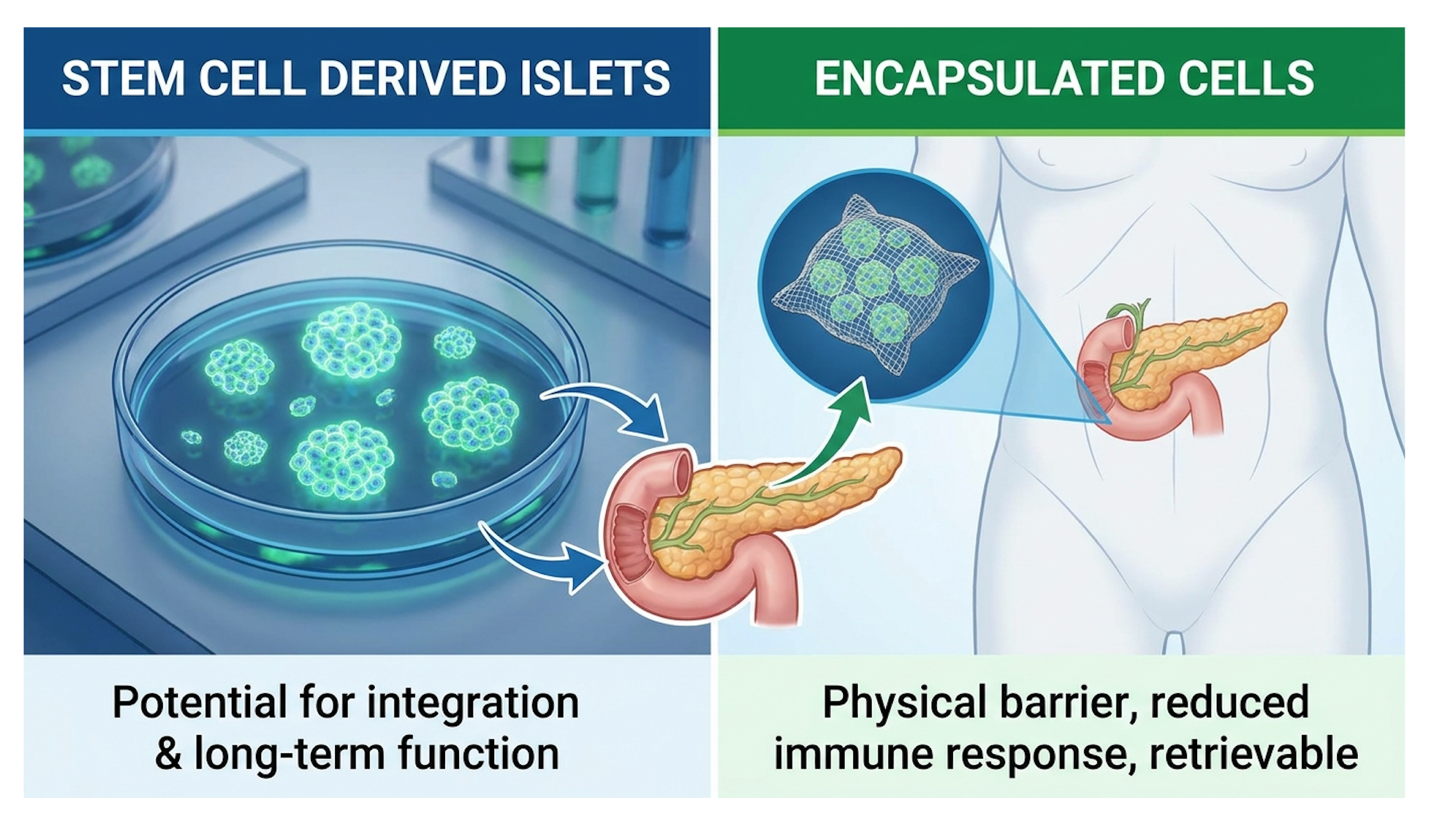
Figure 1: Physical encapsulation devices aim to block autoantibodies while allowing insulin to exit into the bloodstream.
To understand modern regeneration, you have to look at exactly what stem cell derived islet cells actually are. This isn’t science fiction; it is directed cellular engineering. According to Stanford Medicine’s research on cellular reprogramming, scientists are taking adult somatic cells often just a simple skin biopsy or a routine blood draw and genetically reprogramming them back into an embryonic-like pluripotent state. From that blank slate, they are strictly guided through developmental stages to mature into insulin-producing beta cells.
When evaluating the VX-880 clinical trial, the data is undeniably compelling. The vertex stem cell type 1 diabetes trial results published in the New England Journal of Medicine showed multiple patients achieving functional insulin independence. They simply stopped needing external injections, with some maintaining target blood glucose levels entirely on their own for over a year.
However, there is a massive catch. These patients survived and thrived solely because they were subjected to intense systemic immunosuppressants. The immune system never forgot its original target; it was just pharmacologically blindfolded.
Because anti-rejection drugs are inherently toxic and carry severe long-term risks like kidney damage and opportunistic infections, researchers rapidly pivoted to physical armor. If we can’t turn off the immune system safely, we must physically shield the beta cells. Enter macro-encapsulation devices.
Evaluated in the VX-264 trial, these devices house lab-grown islet cells behind a specialized semi-permeable membrane. According to the Harvard Stem Cell Institute, the porous material is meticulously engineered to let tiny oxygen and insulin molecules pass through freely, while physically blocking large, destructive immune autoantibodies from breaching the chamber.
If perfected, encapsulated beta cells for type 1 diabetes would completely remove the need for dangerous anti-rejection drugs. This mechanical barrier is exactly what would open these advanced therapies up to children and newly diagnosed patients, transforming a highly restricted procedure into a broadly accessible treatment.
Umbilical cord mesenchymal stem cells do not make insulin; they act as biological peacekeepers to suppress the local autoimmune response, explicitly targeting the protection of surviving pancreatic function.
| 📌 If you’re interested in why umbilical cord cells are often preferred over bone marrow or fat-derived cells, we have an interesting article that discusses why UC-MSCs are superior to other stem cell sources, which you can read via the internal link. |
There is massive confusion about what mesenchymal stem cells for type 1 diabetes actually do. Let’s be clear. They do not become beta cells. If a clinic tells you otherwise, run. Sourced from Wharton’s jelly in umbilical cords, UC-MSCs are utilized strictly for their paracrine signaling abilities. Patients often ask, how do stem cells stop the immune attack in type 1 diabetes? The answer is biological reprogramming. When infused, UC-MSCs secrete bioactive molecules that promote a shift in macrophage populations pushing them from a pro-inflammatory state to an anti-inflammatory, tissue-repairing state. They act to calm the local microenvironment, addressing the immune-suppression half of The Beta-Immune Axis Strategy.
This immune-calming effect only matters if you have something left to save. The “honeymoon phase” is a brief window immediately following diagnosis where the pancreas still produces a small amount of its own insulin. During this critical window, administering umbilical cord stem cells for type 1 diabetes is an attempt to halt the autoimmune assault before total cellular destruction occurs. So, can uc-msc therapy preserve beta cells in newly diagnosed type 1 diabetes? Early phase trials suggest it might delay the total loss of endogenous insulin, extending the honeymoon phase. But this is preservation not regeneration.
Stop looking at HbA1c as your only metric. Blood sugar averages are easily manipulated by simply injecting more synthetic insulin. True clinical progress is measured entirely differently. The ultimate biomarker is C-peptide. Because C-peptide is a direct biological byproduct of endogenous insulin production, maintaining or increasing your stem cell therapy type 1 diabetes c-peptide levels is the only definitive proof that therapies are working. If your C-peptide is zero, immune modulation alone will not help you. Knowing your exact C-peptide trajectory is the absolute prerequisite before ever considering a regenerative consultation.
Comparing T1D treatments requires looking past marketing claims to evaluate strict clinical evidence, functional primary mechanisms, and the absolute necessity of systemic immunosuppression.
Yes, if you are attempting to replace cells without encapsulation. Unprotected stem cell-derived islet transplants currently require systemic immunosuppression to prevent the body from recognizing the new beta cells as foreign invaders and destroying them. No, if you are strictly using UC-MSCs for immune modulation, which relies on natural paracrine signaling and does not typically require anti-rejection medications.
| 📌 If you’re interested in how MSCs calm overactive immune cells throughout the body, we have an interesting article that discusses mesenchymal stem cell therapy for immune modulation, which you can read via the internal link. |
While cellular therapies dominate the media, pharmacological advances provide another legitimate avenue for intervention. Teplizumab vs stem cell therapy for type 1 diabetes is a frequent comparison. Teplizumab is an FDA-approved immunotherapy drug specifically designed to delay the onset of clinical stage 3 T1D. Unlike UC-MSCs which use living cells to secrete calming signals, Teplizumab is a targeted biologic drug that explicitly binds to and deactivates the specific T-cells responsible for attacking the pancreas. It is highly effective, but limited to a very specific pre-clinical window.
The ideal candidate for early intervention is a newly diagnosed patient with measurable C-peptide, though specific trial parameters heavily dictate who qualifies for advanced beta cell replacement.
Timing is literally everything. For UC-MSC interventions, the ideal candidate is seeking a newly diagnosed type 1 diabetes treatment. They are still in the honeymoon phase and have measurable C-peptide left to protect. When discussing stem cell therapy for type 1 diabetes in children, the conversation abruptly shifts. Because unencapsulated islet replacement requires harsh systemic immunosuppressants which carry severe risks of infection and organ damage these trials routinely exclude pediatric patients. For children, the clinical focus remains entirely on encapsulation technology and non-immunosuppressive UC-MSC safety profiles.
Broad availability of functional T1D cures depends entirely on perfecting biological encapsulation technologies to successfully bypass the need for lifetime immunosuppressive therapies.
Patients constantly ask: how close are we to a cure for type 1 diabetes? The honest answer is mixed. Functional insulin independence is happening in clinical trials. But a universal, risk-free cure that you can get at your local endocrinologist? That is likely years away. The entire timeline hinges on the perfection of encapsulation devices like VX-264. Until we can physically shield lab-grown beta cells from the immune system without relying on toxic drugs, these therapies will remain restricted to the most severe cases.
The most scientifically sound pathway forward relies on mastering The Beta-Immune Axis Strategy. The intersection of brilliant cellular engineering (creating infinite supplies of beta cells) and precise immune modulation (using encapsulation or UC-MSCs to protect them) is where the real hope lies. We are no longer guessing if beta cells can be replaced. We are simply engineering the armor they need to survive.
Currently, there is no approved stem cell cure for type 1 diabetes. While advanced trials show functional insulin independence is possible, maintaining these results requires heavy immunosuppressive drugs. Researchers are actively working to perfect encapsulation technologies to solve this precise limitation in the future.
Investigational UC-MSC therapies specifically target patients in the honeymoon phase. During this brief window, the pancreas still produces a small amount of its own insulin. The primary biological goal is to suppress the active autoimmune attack before total cellular destruction occurs. By calming the local immune microenvironment, these stem cells attempt to preserve whatever beta cells still remain. Success in this phase is exclusively measured by a stabilization or increase in the patient’s C-peptide levels over time.
Current islet replacement therapies are rarely recommended for children. Because they require incredibly harsh immunosuppressants, the risks of long-term organ damage and infection far outweigh the potential benefits for pediatric patients. However, newer trials involving mechanical encapsulation and non-immunosuppressive UC-MSCs are exploring much safer applications. Standard insulin management remains the undisputed gold standard for children today, ensuring immediate safety while research continues.
Patients seeking stem cell therapy in Thailand must prioritize clinics requiring extensive medical records. A legitimate facility will demand recent C-peptide and autoantibody tests before ever discussing treatment logistics with you.
| 📌 If you’re planning treatment in Thailand and want a practical checklist for choosing a safe clinic, we have an interesting article that discusses whether stem cell therapy is safe in Thailand, which you can read via the internal link. |
For patients with Type 1 Diabetes, stem cell therapy for type 1 diabetes focuses on restoring insulin production and halting autoimmune attacks. Trial data shows multiple patients achieving sustained insulin independence, though dangerous immunosuppression remains a significant clinical hurdle. The most promising scientific approach utilizes The Beta-Immune Axis Strategy to address both cellular loss and fundamental immune dysfunction simultaneously.
Treating only half the problem by replacing the insulin deficit without addressing the root cause of autoimmunity drastically limits long-term success. The Beta-Immune Axis Strategy proves that cellular replacement must be paired with biological or mechanical protection.
Diagnosed with type 1 diabetes in the last year? Send us your latest C-peptide result for an evidence-informed clinical review of your options.