Our Services
Others
- DFPP
- Shockwave
- IV Drip


Look, we need to talk about why your skin is actually aging. It isn’t just dryness. Fine lines develop primarily due to the accelerated degradation of dermal extracellular matrix proteins and decreased localized microcirculation. I’ve seen this firsthand. That’s exactly why umbilical cord stem cells for wrinkles are gaining serious traction in clinical dermatology. They offer a biological, minimally invasive structural approach to tissue repair. But how do they actually target those stubborn areas around your eyes, lips, and neck? Let’s break it down.
We often blame our birth year for skin changes. But the reality? Cellular senescence and UV radiation literally chew through your fibronectin and elastin over decades.
When those critical proteins degrade, your skin’s structural scaffolding essentially collapses. It’s a biological failure, not just a superficial surface flaw. You’re losing the deep dermal architecture that keeps everything taut and resilient.
To set realistic clinical expectations, we always rely on the UC-MSC Fine-Line Stratification Matrix. This specific framework assesses whether a line is dynamic, static, or dehydration-based before we even consider biological intervention. It changes everything about how we approach aesthetic medicine.
Not all lines are created equal. When evaluating dynamic vs static wrinkles, the biological root is entirely different. The UC-MSC Fine-Line Stratification Matrix dictates exactly what treatments will and won’t actually work for your face.
| Line Type | Etiology | UC-MSC Efficacy |
| Dynamic | Repetitive muscle contraction | Low (requires neurotoxin) |
| Static | Extracellular matrix loss | High (structural repair) |
| Dehydration | Epidermal water loss | Moderate (hydration helps first) |
I see this confusion daily in consultations. Dehydration lines vs wrinkles what’s the actual difference? Dehydration lines resolve quickly with topical hyaluronic acid or a good moisturizer. True fine lines? They demand deep biological structural repair via paracrine signaling.
Yes. In fact, it’s often preferred by advanced injectors. Can stem cell treatment be combined with Botox? Absolutely. UC-MSCs don’t fix dynamic wrinkles caused by heavy muscle movement. For those active areas, clinicians combine UC-MSCs (for the tissue repair) with neurotoxins (for the muscle modulation) to get optimal results.
Let’s clear up a massive misconception right now. Stem cells don’t magically turn into new skin cells on your face. That’s pure marketing fiction.
Instead, they work entirely through paracrine signaling. Clinicians inject the cells via minimally invasive micro-techniques directly into targeted dermal layers. Once situated, they secrete heavy doses of bioactive molecules and growth factors. This essentially wakes up your own lazy fibroblasts, stimulating them to synthesize fresh extracellular matrix proteins naturally.
So, stem cell wrinkle treatment without liposuction how is that biologically possible? We use Wharton’s jelly. This donated umbilical cord tissue provides a highly concentrated source of active progenitor cells without the surgical risks, bruising, or downtime of invasive autologous fat harvesting. It’s cleaner, and it’s decidedly faster.
| 📌 If you’re interested in why umbilical cord cells are often preferred over bone marrow or fat-derived cells, we have an interesting article that discusses why UC-MSCs are superior to other stem cell sources, which you can read via the internal link. |
Where we place these cells matters just as much as how they biologically function.
The periorbital dermis is notoriously thin and delicate. For under eye wrinkles treatment, UC-MSCs improve localized microcirculation and tissue density brilliantly. And the best part? You carry zero risk of the bluish “Tyndall effect” you often get with synthetic hyaluronic fillers placed too superficially.
Repetitive motion completely destroys the perioral region over time. Effective vertical lip lines treatment focuses heavily on restoring that lost structural integrity. We’re rebuilding the scaffolding that smoking, drinking through straws, or simply talking has worn away.
Forget the outdated term “turkey neck” we’re talking about superficial banding here. Horizontal neck lines treatment using UC-MSCs focuses entirely on reviving deep tissue hydration and elasticity. You are essentially re-densifying the skin from the inside out.
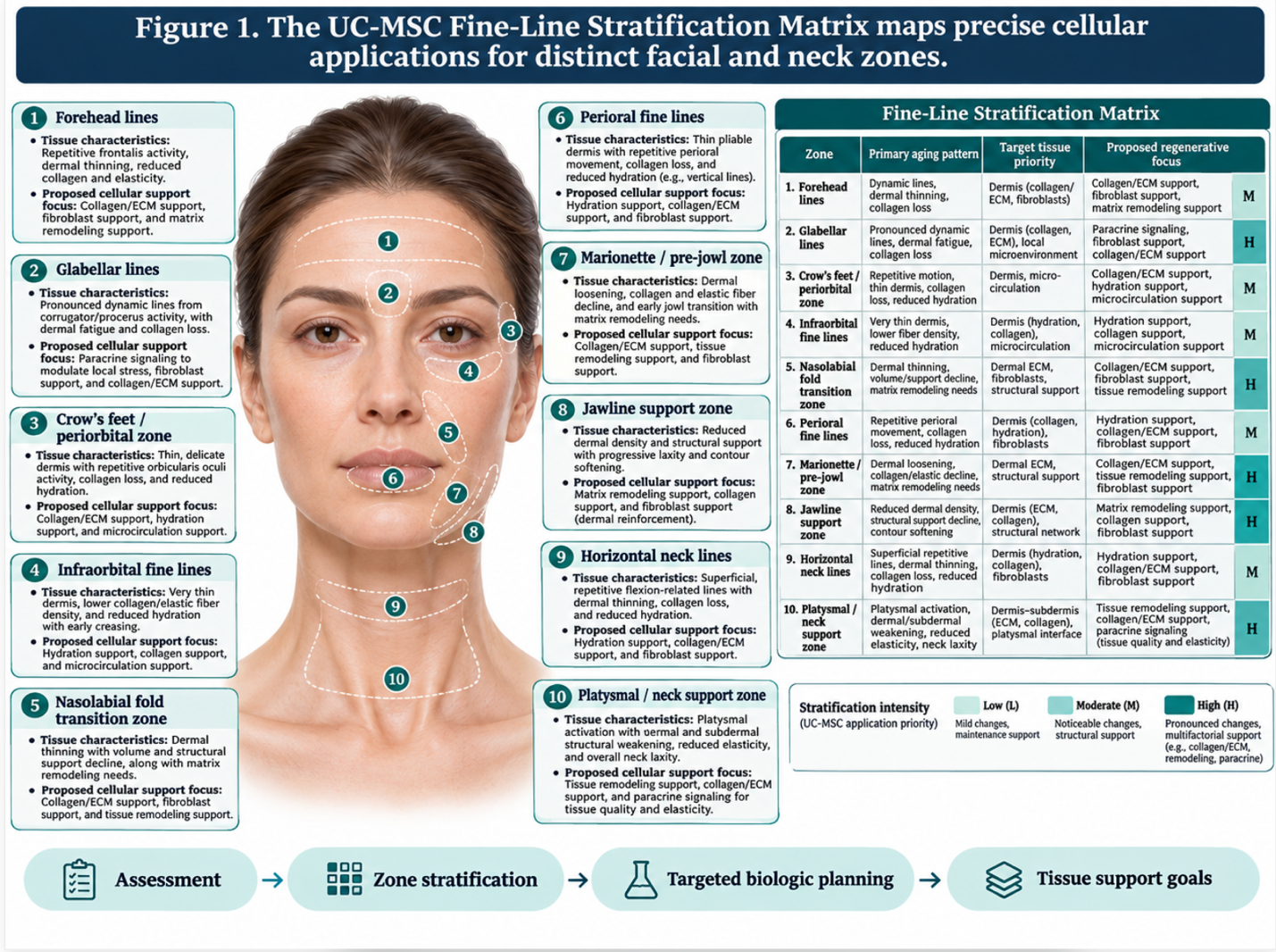
Figure 1: The UC-MSC Fine-Line Stratification Matrix maps precise cellular applications for distinct facial and neck zones.
I don’t deal in empty cosmetic promises. I deal in hard data. And the regenerative medicine research here is highly specific.
Long before human trials began, pre-clinical animal studies demonstrated enhanced angiogenesis and fibroblast proliferation strictly via paracrine mechanisms. The biological precedent is well-established and heavily documented.
| 📌 If you’re interested in how MSCs shift the immune system from attack mode to repair mode, we have an interesting article that discusses mesenchymal stem cell therapy for immune modulation, which you can read via the internal link. |
Who actually benefits from this intervention? Adults aged 35 to 60 with static fine lines seeking genuine structural repair.
Let’s be blunt. Who should not get umbilical cord stem cell injections for wrinkles? If you have deep surgical sagging, this isn’t for you. Expecting immediate paralysis of muscle-driven dynamic wrinkles? You’ll be highly disappointed. This isn’t a quick cosmetic mask.
For those exploring UC-MSC wrinkle treatment in Thailand, the approach at Vega is rigorous. We run strict suitability assessments based entirely on the UC-MSC Fine-Line Stratification Matrix. We demand uncompromising laboratory standards for Wharton’s jelly extraction. It’s a clinician-led, evidence-informed protocol designed specifically for patient safety, not hype.
| 📌 If you’re planning treatment in Thailand and want a practical checklist for choosing a safe clinic, we have an interesting article that discusses whether stem cell therapy is safe in Thailand, which you can read via the internal link. |
They result from ultraviolet exposure, cellular senescence, and the progressive breakdown of dermal collagen and elastin matrices.
Clinicians use minimally invasive micro-injections to deliver cells directly into targeted superficial dermal layers.
Yes. Ethically sourced umbilical cord Wharton’s jelly makes invasive autologous fat harvesting entirely unnecessary.
Yes, registered trials (NCT02698813, NCT06217627) actively evaluate the safety and structural efficacy of these cellular applications.
They may help restore tissue density in vertical perioral lines, though severe cases require integrative therapies.
Individuals with deep surgical sagging or expecting immediate paralysis of muscle-driven dynamic wrinkles aren’t suitable candidates.
For patients assessing umbilical cord stem cells for wrinkles, differentiating between dynamic and static lines is absolutely critical for clinical success.
Remember the UC-MSC Fine-Line Stratification Matrix. Minimally invasive Wharton’s jelly applications focus strictly on structural paracrine repair they don’t offer instant cosmetic masking. It’s a biological marathon, not a sprint.
Discuss your exact suitability with a qualified clinician at Vega in Thailand prior to proceeding with biological therapies to ensure realistic functional outcomes. Book a consultation to accurately map your lines today.