Our Services
Others
- DFPP
- Shockwave
- IV Drip

Not all wounds are the same problem wearing different clothes. A burn behaves differently than a surgical incision, which behaves differently again from a chronic diabetic ulcer. What they share is a biological process that can stall, and stem cell therapy for wound healing has become one of the more interesting attempts to intervene in that process directly not by covering the wound, but by working with the cells actually responsible for closing it. This piece goes wound type by wound type: what’s actually been studied, what the data shows, and where the field genuinely stands right now.
Stem cells do two things that matter here: they self-renew, and they can turn into other specialized cell types. In a wound, that translates into a few concrete mechanisms worth understanding before getting into specific wound types.
Stem cells can become keratinocytes (which rebuild the outer skin layer), fibroblasts (which produce collagen and the extracellular matrix), and endothelial cells (which form new blood vessels). Each one covers a different piece of what a healing wound actually needs.
Rather than only replacing cells directly, stem cells secrete growth factors and cytokines VEGF, TGF-β, EGF among them that push surrounding cells to migrate, proliferate, and get involved in repair. This signaling role turns out to matter more, in a lot of research, than direct cell replacement does.
Wounds need some inflammation to heal it’s part of the process but too much, for too long, becomes the problem itself. Stem cells help dial that down, shifting the local environment away from chronic inflammation and toward actual repair.
New blood vessel growth means more oxygen and nutrients reaching the wound. Stem cells drive this by releasing VEGF and related signals, which matters enormously in any wound where blood supply is already compromised.
Burns are arguably the wound type with the most direct human clinical trial evidence right now, and it’s worth being specific about what’s actually been shown.
A phase 1 dose-escalation trial applied bone marrow-derived mesenchymal stem cells (BM-MSCs) to deep second-degree burn wounds in ten patients. Every single patient achieved complete wound closure, with minimal clinical evidence of fibrosis and no adverse reactions or signs of rejection at either dose level. That’s a small trial ten patients isn’t a large enough sample to draw sweeping conclusions but it’s a genuinely strong early safety and efficacy signal, not just preclinical promise.
Follow-up and related research has reinforced that picture. Improvements on standardized scar assessment scores, along with better pigmentation and even hair follicle regeneration, have been reported alongside MSC-based burn treatment. A separate case study combining local MSC therapy with split-thickness skin grafting reported reduced scar formation and improved sensation to touch at the treated site. Systematic reviews across both animal and human burn studies consistently describe a positive effect on scarring, with a noticeable decrease in wound contracture.
There’s also newer research comparing cell types directly: epithelial stem cells (EpSCs) tend to drive faster re-epithelialization and less scarring, while MSCs contribute more to dermal reconstruction and immune regulation suggesting the two may work best as complementary approaches rather than either one alone.
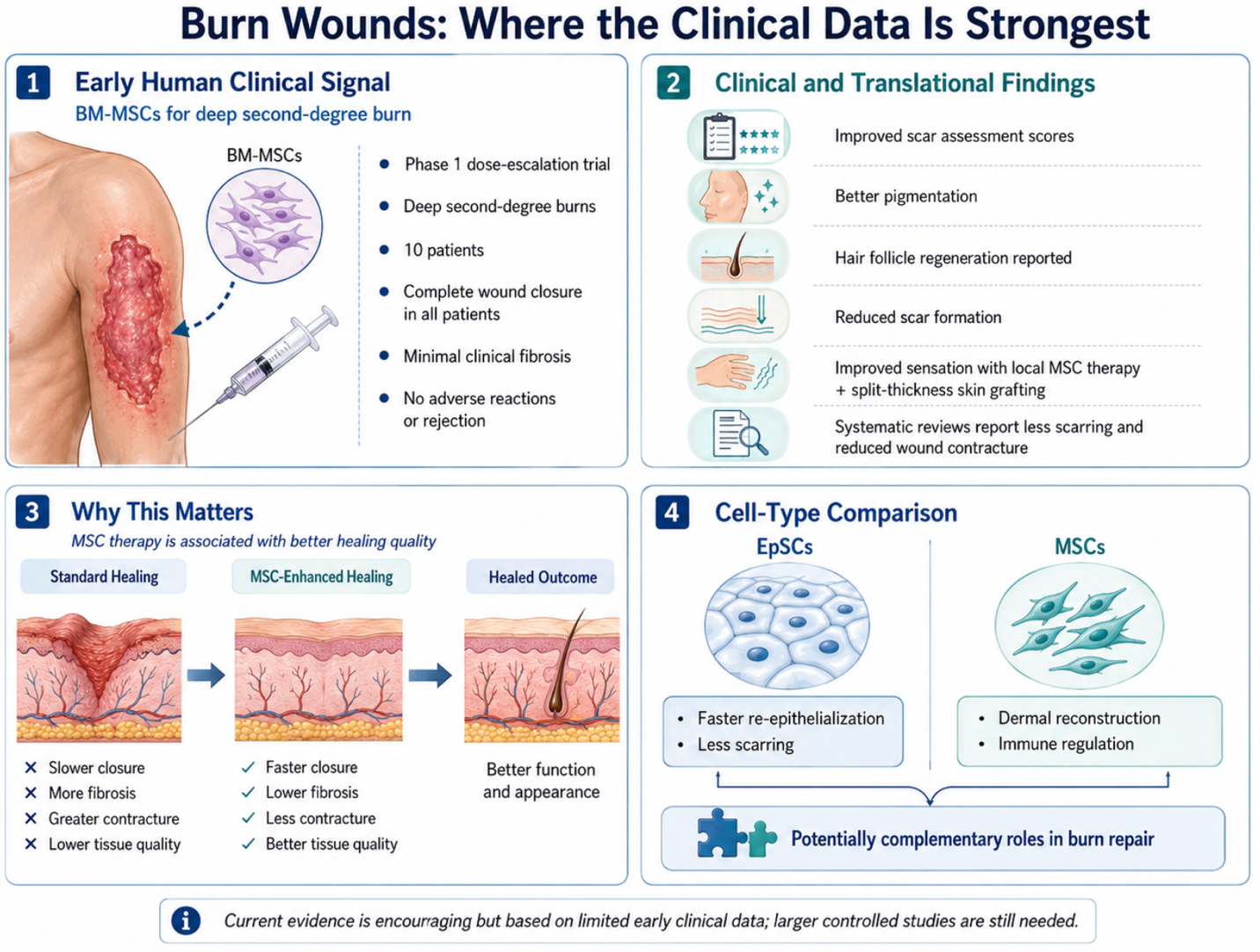
Figure 1: Clinical and Translational Evidence for Mesenchymal and Epithelial Stem Cell–Based Approaches in Burn Wound Healing
After surgery, the priority isn’t usually “the wound won’t close” it’s avoiding complications like infection or wound dehiscence (a surgical wound reopening) while getting the patient back on their feet faster. Stem cell-based approaches here are aimed less at rescuing a stalled wound and more at optimizing an already-functioning healing process: reducing recovery time and improving eventual scar quality through more balanced, organized tissue regeneration.
This is an earlier-stage clinical application compared to burns, and much of the research draws on the same underlying mechanisms angiogenesis, inflammation control, collagen organization applied to a surgical context rather than a fresh set of evidence specific to post-op recovery.
Diabetic foot ulcers, venous leg ulcers, and pressure injuries share a common feature: they get stuck, usually somewhere in the inflammatory phase, and conventional treatment alone often can’t restart the process. Stem cells appear to work here by reducing the local inflammation that’s keeping the wound stuck, stimulating tissue remodeling, and improving vascularization to a wound bed that’s typically starved of blood flow. This is one of the more actively researched applications of stem cell therapy precisely because standard care so often plateaus with these wounds.
Scarring isn’t just a cosmetic afterthought for a lot of patients visible scars, especially from burns or major surgery, carry a real psychological weight. The mechanism behind scar reduction comes down to collagen organization. Disorganized, excessive collagen deposition produces thick, raised scar tissue; more controlled, organized deposition produces tissue closer to the skin’s natural structure. Stem cells appear to nudge that process toward the more organized outcome, which is part of why scar assessment scores show up as a specific, measurable endpoint in several of the burn trials referenced above.
Biodegradable scaffolds infused with stem cells mimic the extracellular matrix and can be applied directly to a wound, improving cell adherence and integration into the surrounding tissue. Recent systematic review work combining MSCs, their secretomes, and scaffolds together has reported synergistic effects specifically in burn wound healing across preclinical studies.
Exosomes nano-sized vesicles released by stem cells carrying proteins, RNA, and growth factors offer a cell-free alternative to direct transplantation. A completed phase 1 safety trial delivered MSC-derived extracellular vesicles directly to deep second-degree burn wounds, testing this exact approach in humans rather than only in preclinical models. Because there’s no living cell being transplanted, this route may simplify both delivery and regulatory considerations going forward.
Hydrogels create a moist wound environment and, when loaded with stem cells, function as a controlled-release system supporting sustained cell activity over time. One burn-specific trial confirmed the safety of adipose-derived MSCs combined with hydrogel sheets in deep second-degree burns, with no significant adverse events reported.
It’s worth being direct about the honest limitations here, since burn and wound patients deserve accurate expectations, not just enthusiasm. Researchers consistently point to a few recurring obstacles: variability in animal models, burn severity, MSC type, dosage, and scaffold materials used across studies makes direct comparison difficult, and there’s a genuine scarcity of studies using cells and scaffolds produced to full Good Manufacturing Practice (GMP) standards. Most human clinical trials remain small often single-digit or low double-digit patient counts which is a meaningfully different evidence base than the large randomized trials that establish standard-of-care treatments.
None of that erases the genuinely promising signal in the data. It does mean stem cell therapy for wound healing is best understood right now as an advancing, evidence-generating field not yet a fully standardized, universally proven treatment for every wound type.
Stem cell-based wound treatment is typically considered for patients dealing with:
As always, this comes down to an individual medical evaluation wound type, depth, and overall health all shape whether stem cell therapy is appropriate. You can review the conditions we treat on our stem cell therapy page, or see real outcomes on our results page.
Which wound type has the strongest clinical evidence for stem cell therapy? Right now, burn wounds have some of the most direct human clinical trial data, including a completed phase 1 trial showing complete wound closure with minimal fibrosis.
Is exosome therapy safer than whole stem cell transplantation? Exosome-based therapy avoids transplanting living cells, which may reduce certain immune-related risks and simplify regulatory pathways though both approaches have reported favorable safety profiles in early human trials.
Can stem cell therapy prevent scarring from surgery entirely? No treatment eliminates scarring completely. Current research supports reduced scar thickness and more organized healing, not scar-free outcomes.
Is this treatment available for burn patients in Thailand? Yes. Thailand’s regenerative medicine sector, regulated under Thai FDA and Ministry of Public Health oversight, includes clinics working with MSC-based therapies for burns and other complex wounds.