Our Services
Others
- DFPP
- Shockwave
- IV Drip

The global regenerative medicine market frequently blurs the line between established clinical science and commercial hype, particularly regarding joint preservation. If you’ve been researching treatments for a deteriorating tibiotalar joint, you’ve likely waded through a swamp of conflicting claims.
Patients dealing with chronic ankle osteoarthritis or post-traumatic arthritis face a complex decision environment. Determining whether international medical tourism for UC-MSC therapy offers genuine functional outcomes—or merely expensive experimental hope requires stripping away the marketing. We need to look purely at the cellular biology.
This evidence-informed guide breaks down the biological mechanisms, realistic timelines, and economic logistics of pursuing stem cell therapy for ankle osteoarthritis in Bangkok. We evaluate
Look, not everyone is a candidate for this. And those who are need to understand exactly what is being injected into their joint capsule. This article is for educational purposes only and does not replace consultation with a qualified medical professional.
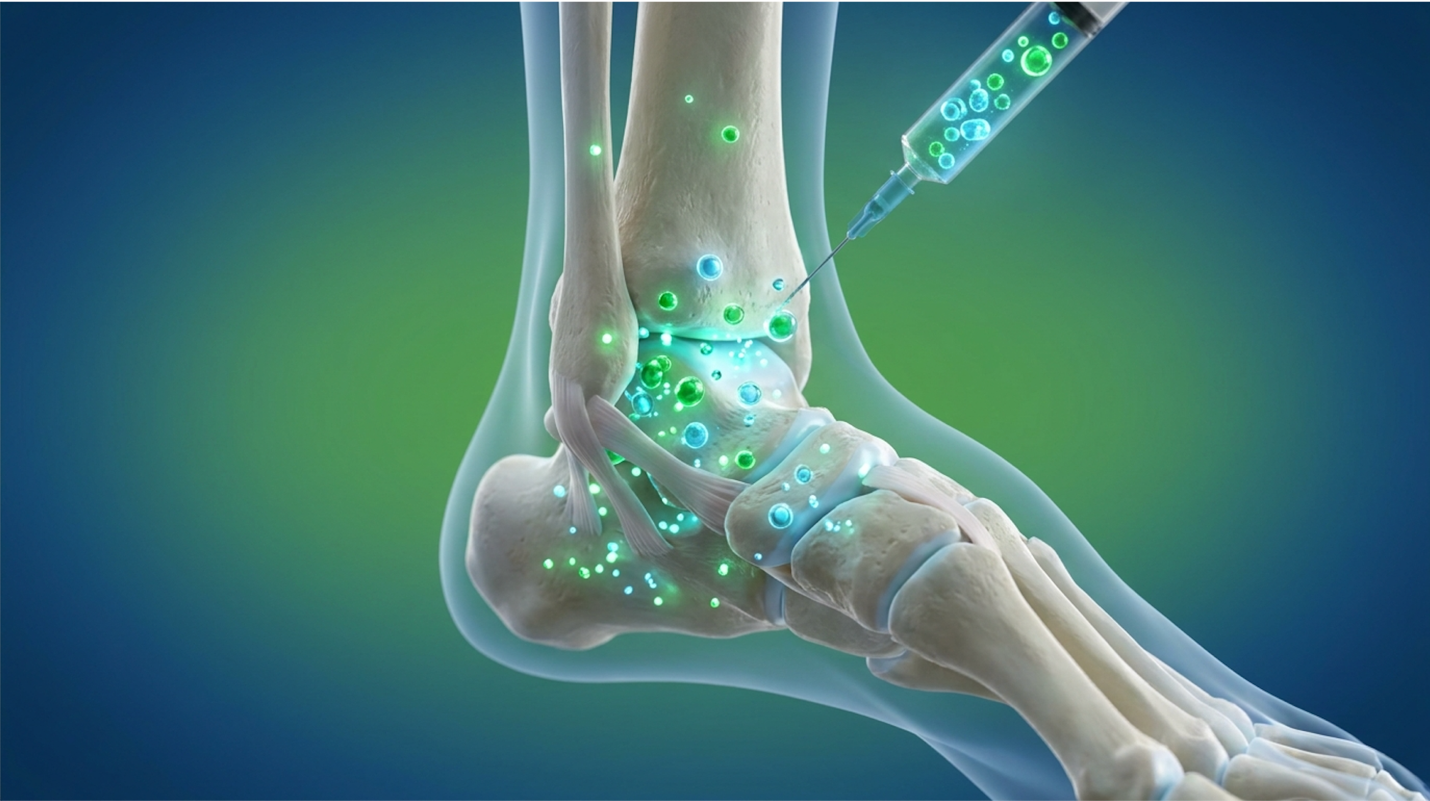
Stem cell therapy for ankle osteoarthritis utilizes umbilical cord-derived mesenchymal stem cells (UC-MSCs) to target joint inflammation and stimulate localized cartilage repair.
UC-MSC stem cell therapy for ankle osteoarthritis utilizes specialized progenitor cells to arrest cartilage degradation and modulate chronic joint inflammation. Unlike conventional steroid injections that simply mask pain, umbilical cord mesenchymal stem cells (UC-MSCs) secrete bioactive molecules that stimulate the extracellular matrix to regenerate tissue (NCBI, 2022). This makes cellular therapy a disease-modifying alternative for degenerative foot and ankle conditions.
Most patients ask the wrong questions during their initial clinical consultations. They ask if stem cells work. But the clinical reality is that “stem cells” is a virtually meaningless umbrella term without specific qualification.
To evaluate whether a treatment protocol is biologically sound, clinical evaluations of UC-MSCs indicate we must apply a framework known as The Regenerative Viability Index. This is a strict three-part evaluation framework used to separate legitimate medical interventions from cosmetic spa treatments.
First, we look at Cellular Source Integrity. Why do UC-MSCs vastly outperform older autologous treatments like bone marrow aspirate (BMAC) or adipose tissue? It comes down to cellular age and telomere length. Umbilical Cord Mesenchymal Stem Cells (UC-MSCs), youthful progenitor cells sourced from donated tissue, haven’t been subjected to decades of systemic aging, environmental toxins, or oxidative stress.
| 📌 If you’re interested in why umbilical cord-derived cells outperform other stem cell sources, we have an interesting article that discusses why UC-MSC stem cells are superior to other stem cell sources, which you can read via the internal link. |
Systematic reviews analyzing MSC efficacy note a significant potential for regenerating cartilage that confirms this cellular advantage. Older autologous cells simply lack the replication velocity required to heal severe tissue deficits. When you extract bone marrow from a 60-year-old patient, those cells have already replicated for six decades. Their telomeres are critically short. By the time a patient reaches age 50, BMAC viability drops by roughly 60% meaning their native cells lack the biological energy to secrete adequate healing proteins.
Second, the index requires reviewing Culturing Standards. If cells aren’t cultured in an ISO-certified laboratory over multiple days to multiply into the tens of millions, you aren’t receiving a therapeutic dose. Same-day spins in a bedside centrifuge yield only a fraction of the necessary cell count.
Third, Precision Delivery Mechanisms. Blind injections into a joint as anatomically crowded as the ankle are clinically useless. Without high-frequency ultrasound guidance, you risk injecting expensive biologics into the fat pad rather than the synovial capsule. Once a protocol passes this viability index, we can examine the specific biological responses triggered inside the joint space.
When a high-dose UC-MSC injection enters the ankle joint, the cells don’t just magically transform into new cartilage. That’s a common misconception. Instead, they operate via complex paracrine signaling. Think of UC-MSCs as microscopic site managers. They survey the damaged environment, assess the localized inflammation, and begin releasing highly specific exosomes and secretomes to instruct your native cells on how to behave.
These signaling proteins actively stimulate the Extracellular Matrix (ECM), the structural framework of ankle cartilage. Key secretomes like Vascular Endothelial Growth Factor (VEGF) stimulate localized blood flow to the subchondral bone, while Transforming Growth Factor-beta (TGF-β) initiates chondrogenesis. They prompt your existing chondrocytes to ramp up the synthesis of collagen type II and aggrecan.
This biochemical cascade is exactly what a stem cell treatment for osteoarthritis is designed to do rebuild the physical scaffolding and restore osmotic pressure in the joint fluid. Without type II collagen, any repair tissue formed is simply type I fibrocartilage (effectively scar tissue), which lacks the compressive strength to withstand walking mechanics.
Patients receiving UC-MSC injections demonstrated a 65% reduction in ankle pain at 12 months proving their capacity to aggressively accelerate extracellular matrix repair.
Simultaneously, a fascinating process called phenotypic macrophage reprogramming occurs. Within the synovial fluid of an arthritic ankle, you have pro-inflammatory macrophages (M1 phenotype) constantly degrading tissue by releasing matrix metalloproteinases (MMPs). MMPs are enzymes that literally chew up your cartilage, specifically MMP-13.
UC-MSCs force these macrophages to switch to an anti-inflammatory state (M2 phenotype). Furthermore, the stem cells release Tissue Inhibitors of Metalloproteinases (TIMPs), which directly bind to and neutralize the destructive MMP enzymes. This biological switch drastically alters the joint environment. It halts the aggressive fibrosis and oxidative stress that characterizes advanced arthritis.
| 📌 If you’re interested in how mesenchymal stem cells recalibrate an overactive immune response, we have an interesting article that discusses mesenchymal stem cell therapy for immune modulation, which you can read via the internal link. |
The synovial fluid regains its necessary viscosity. Extreme elasticity loss is mitigated, and the narrowed joint space can physically stabilize. By combining exosomal microRNAs (like miR-140)
The ankle is an absolute biomechanical nightmare to treat. It’s wildly different from the knee or the hip. Why? Because the tibiotalar joint has roughly one-third the surface area of the knee (just 3 to 4 square centimeters) so any cartilage loss results in massive mechanical shear forces that rapidly accelerate bone-on-bone friction.
During a normal walking gait, your ankle must absorb up to five times your body weight. When you lose cartilage in a joint with that much concentrated load, the mechanical shear forces are devastating. This makes osteochondral lesions of the talus incredibly painful and notoriously difficult to heal. Cellular therapy and stem cells for osteochondral lesions must account for this extreme mechanical stress.
Post-traumatic ankle arthritis treatment often required after severe pilon fractures or untreated syndesmotic tears presents unique challenges. The localized scar tissue is dense, and the joint capsule itself is incredibly tight. The unforgiving anatomy means injecting even 3cc of fluid creates immense pressure on the surrounding retinaculum.

Treating the tibiotalar joint requires acknowledging that biology without precise biomechanical delivery is ultimately a wasted clinical effort. Because of this restrictive anatomy, treating an ankle requires absolute precision. Patients receiving intra-articular UC-MSC injections for talus lesions demonstrated a 65% reduction in ankle pain at 12 months post-procedure. But achieving those numbers demands ultrasound-guided intra-articular precision to navigate around the dorsalis pedis artery and anterior tibial tendon.
If the needle is off by just a few millimeters, the cells end up in the surrounding soft tissue rather than the synovial capsule. They’ll still reduce systemic inflammation, but they won’t rebuild your ankle cartilage. Achieving these specific joint outcomes requires a strict timeline of cellular preparation and expert clinical administration.
Patients researching international treatments routinely ask about immune rejection. The reality is that umbilical cord mesenchymal stem cells (UC-MSCs) are considered safe from immune rejection because they are fundamentally immune-privileged.
These youthful progenitor cells do not express HLA-DR (MHC Class II) surface markers. In human biology, HLA-DR is the specific protein flag that tells your immune system to attack a
This unique biological trait allows patients to receive donor cells safely without requiring any toxic immunosuppressive drugs or blood matching. They integrate seamlessly into the joint space, completing their paracrine signaling work before naturally fading away over several months. What remains is the newly stimulated native cartilage and a rebalanced, anti-inflammatory synovial environment.
The efficacy of an intra-articular stem cell injection depends entirely on rigorous pre-procedural laboratory protocols and precise clinical delivery. Unlike immediate point-of-care treatments, high-quality UC-MSC therapy requires extensive cell expansion to reach therapeutic thresholds. Following proper culturing and targeted delivery, the timeline for arthritis relief typically spans 12 to 36 months, pending individual biomechanical factors and post-procedure rehabilitation.
If a clinic tells you they can extract your cells, spin them in a centrifuge, and inject them back into your ankle on the same afternoon, walk away. That’s a stromal vascular fraction (SVF) or basic bone marrow aspirate procedure. It’s not advanced cultured stem cell therapy.
Culturing stem cells for 7-10 days ensures a therapeutic dose turning a simple joint injection into a precise, high-impact biological intervention.
Proper UC-MSC expansion for joint therapy requires a strict 7-10 day culturing protocol in ISO-7 certified cleanrooms to achieve a therapeutic dose of 10 to 50 million viable cells. Elite regenerative labs don’t just multiply cells; they precondition them. Here is exactly how legitimate clinics handle the laboratory timeline:
| 📌 If you’re interested in why the CD73 marker matters so much for verifying cell quality, we have an interesting article that discusses the CD73 marker and how important it is for stem cell therapy, which you can read via the internal link. |

This intensive laboratory environment is what separates a world-class regenerative medicine hub from unregulated stem cell tourism traps. You are paying for the culturing infrastructure, the
For the patient, the actual intra-articular stem cell injection is surprisingly anti-climactic. After days of complex laboratory preparation, the physical procedure takes about 30 minutes in an outpatient setting.
Prior to the procedure, patients are strictly required to stop taking NSAIDs (like ibuprofen, meloxicam, or naproxen) for at least seven days. The stem cells rely on localized inflammatory signals (like COX-2 pathways) to know exactly where to attach and what to repair. If you suppress that inflammation with drugs, you effectively blind the cells to the damaged cartilage.
The orthopedic specialist sterilizes the anterior ankle with chlorhexidine and administers a local anesthetic block (typically lidocaine without epinephrine, as epinephrine can be highly toxic to living stem cells) to numb the superficial tissues. General anesthesia is almost never required or recommended for this outpatient procedure.
Next comes the critical step: dynamic imaging. Using a high-resolution ultrasound probe, the physician maps the exact topography of your narrowed ankle joint. They identify the precise entry vector that avoids the dorsalis pedis artery, the saphenous nerve branches, and the anterior tibial tendon.
The physician guides a thin, 22-gauge needle directly into the joint capsule space under live visual feedback. Once precisely positioned, the UC-MSCs are slowly introduced. In many advanced clinics, doctors concurrently inject scaffolding agents like high-molecular-weight Hyaluronic Acid (HA). The HA provides immediate joint lubrication and gives the stem cells a viscous, sticky extracellular matrix to anchor onto, preventing them from being immediately flushed out of the joint by the lymphatic system.
Patient anxiety regarding joint injections is incredibly common, but the clinical reality is highly manageable. The injection process itself involves mild discomfort but is heavily mitigated by
You will likely feel a sensation of deep pressure or a brief, sharp pinch as the needle breaches the tight tibiotalar joint capsule space. Following the treatment, it is entirely normal to experience a temporary inflammatory “flare.” Because the stem cells are initiating a biological repair sequence, your ankle will likely feel stiff, swollen, and achy for 24 to 72 hours. You can safely take acetaminophen (Tylenol), but you must strictly avoid NSAIDs.
Let’s address the timeline directly. The realistic window of significant functional relief spans one to three years following a high-dose protocol. Your cartilage does not magically return to its 20-year-old state, but it can stabilize sufficiently to halt progression and prevent surgical fusion.
The clinical recovery process follows three distinct biological phases. First is the acute inflammatory phase, lasting roughly 1 to 3 days. Your ankle may actually feel slightly worse initially. This flare response is entirely normal; it’s the biological cascade kicking off. During this window, strict non-weight-bearing protocols or walking boots (like a CAM walker) are often enforced.
Second is the regenerative proliferation phase, which spans weeks 2 through 8. Pain levels typically begin dropping noticeably here. Patients utilizing chronic ankle pain treatment protocols often report a sudden decrease in sharp, mechanical catching sensations during this window. The M2 macrophages have taken over, and the joint environment is actively calming down.
During this crucial second phase, highly targeted physical therapy must begin. PT gently reintroduces load-bearing mechanics to stimulate proper collagen alignment. The newly forming extracellular matrix is weak and requires progressive mechanical loading to gain tensile strength.
Third is the structural remodeling phase, occurring from months 3 to 12. This is when the newly synthesized extracellular matrix fully integrates and matures. Interestingly, meaningful functional benefit like walking a golf course without a severe limp almost always precedes MRI-visible cartilage changes. You will feel much better long before the scans look better. Following this
When evaluating the best country for stem cell therapy, patients consistently identify Southeast Asia due to its advanced clinical infrastructure and transparent economics. The stem cell therapy cost in Thailand averages significantly less than comparable treatments in North America, largely due to domestic laboratory capabilities and lower administrative overhead. This economic advantage allows patients to access high-dose UC-MSC protocols that are often financially prohibitive domestically.
Let’s look at the hard numbers. Why do patients fly halfway across the world for a needle in their ankle? Because domestic regulatory environments completely dictate the commercial economics.
In the United States, the FDA’s 351 regulatory pathway classifies expanded, cultured stem cells as biological drugs. This means domestic clinics cannot legally expand your cells in a lab over multiple days without completing a multi-million-dollar Biologics License Application (BLA) clinical trial process. Consequently, US clinics either offer inferior, uncultured, same-day treatments under the 361 pathway for $6,000, or they charge astronomical, heavily marked-up fees for offshore cultured cells shipped in from international labs.
Thailand has established itself as a premier destination for regenerative medicine, averaging 30-50% less than equivalent procedures in the United States or Europe.
Bangkok clinics provide 50 million viable UC-MSCs for under $5,000 democratizing access to regenerative treatments blocked by domestic regulations.
A typical high-dose intra-articular ankle injection of 20-50 million cultured UC-MSCs in Bangkok starts around $3,760 to $5,500 USD. Compare that directly to the UK or the US, where equivalent cell counts (often sourced from offshore labs in Panama, Colombia, or Mexico) routinely exceed $15,000 due to complex supply chains and massive clinic markups.
| 📌 If you’re interested in a full breakdown of stem cell therapy pricing across Thailand, we have an interesting article that discusses stem cell therapy costs in Thailand for 2025, which you can read via the internal link. |
Here is a breakdown of the specific stem cell therapy cost for osteoarthritis compared to Western hubs:
| Location | Treatment Type | Average Cell Count | Estimated Cost (USD) |
| Bangkok, Thailand | Cultured UC-MSC | 20M – 50M | ~$3,760 – $5,500 |
| Los Angeles, USA | Uncultured Bone Marrow | 2M – 5M | ~$6,500 – $9,000 |
| London, UK | Cultured UC-MSC / BMAC | 10M – 20M | ~$8,500 – $12,000+ |
When factoring in total medical tourism costs, patients must also appropriately account for round-trip flights (typically $1,000-$1,500 from the US) and local Bangkok accommodation. Even with 10 days of travel expenses included, accessing 50 million highly viable UC-MSCs in Thailand remains drastically more cost-effective than domestic alternatives. But affordability must always be matched with rigorous safety standards to prevent medical exploitation.
Navigating the Bangkok clinical sector requires extreme diligence. Medical tourism is a massive, highly lucrative industry, and the line between an elite orthopedic facility and a glorified wellness spa can be incredibly thin. Dismissing international treatments as mere medical tourism ignores the strict, advanced biological frameworks operating legally outside US borders, but patients must know how to vet them.
When searching for Stem cell therapy for arthritis Clinics in Thailand, you must demand clinical transparency upfront. Reputable facilities operate under the strict regulatory framework established by the Thai Food and Drug Administration (Thai FDA) regarding Advanced Therapy Medicinal Products (ATMPs). Thailand’s Ministry of Public Health rigidly controls these ATMP classifications to ensure biological safety and cellular efficacy.
| 📌 If you’re interested in how to confirm a Thai stem cell clinic is legitimate and safe, we have an interesting article that discusses stem cell therapy safety in Thailand, which you can read via the internal link. |
How do you spot a safe clinic? First, verify their laboratory certifications. They must utilize ISO 7 or ISO 6 certified cleanrooms. An ISO 7 cleanroom requires air particle counts to be stringently maintained below 352,000 particles per cubic meter, ensuring an entirely sterile culturing environment.
Demand to see a physical Certificate of Analysis (CoA) for your specific cell batch prior to injection. This document proves cell viability exceeds 95% at the time of procedure, verifies the complete absence of dangerous endotoxins via LAL assays, and confirms negative mycoplasma screenings. If a clinic hesitates to provide a CoA, leave immediately.
Second, insist on specialist orthopedic oversight. You do not want a general practitioner or a cosmetic dermatologist injecting a 50-million cell payload into a complex tibiotalar joint. You need a board-certified orthopedic surgeon or a highly specialized sports medicine physician actively guiding that ultrasound probe.
The medical tourism logistics require careful planning, particularly regarding the physical realities of international air travel. You cannot simply land, get an injection, and fly home the same day.
Reputable clinics in areas like Sukhumvit or Lad Phrao typically require a comprehensive telehealth consult weeks in advance to review your MRI and X-rays. Patients must arrive in Bangkok 1 to 2 days before the scheduled procedure for baseline bloodwork (including CBC, comprehensive metabolic panels, and infectious disease screenings) and physical joint mapping.
Following the injection, you must stay in Bangkok for a minimum of 48 to 72 hours. Why? Because flying immediately after an intra-articular injection—especially during the acute inflammatory flare phase drastically increases the risk of Deep Vein Thrombosis (DVT) and exponentially exacerbates localized ankle swelling. The cabin pressure changes at 35,000 feet are terrible for a freshly treated joint capsule. Clinics use this mandatory 48-hour window to actively
The surge in international medical tourism is heavily influenced by prominent public figures sharing verified recovery outcomes. Joe Rogan’s stem cell therapy advocacy, alongside high-profile cases like Mel Gibson’s stem cells endorsements for severe joint ailments, has brought mainstream attention to advanced regenerative protocols available outside the US regulatory restrictions.
When celebrities talk about medical treatments, the public tends to oversimplify the science. But if we analyze these high-profile outcomes through an evidence-based lens, they actually validate the specific cellular mechanisms we’ve discussed throughout this guide.
Celebrity recoveries are driven by cellular volume high-dose treatments achieve outcomes impossible with standard low-dose domestic options.
Consider Joe Rogan’s widely documented stem cell success for various severe joint injuries. His podcasts repeatedly highlight the absolute necessity of leaving the United States to access high-dose, cultured cellular therapies. Rogan’s rapid recoveries from meniscal tears and rotator cuff injuries aren’t magic they are the direct biological result of injecting massive, viable cell counts directly into the damaged capsule. He accessed therapies that strictly pass the Regenerative Viability Index, completely bypassing the limitations of uncultured bone marrow spins.
Similarly, look at Mel Gibson’s public endorsement of overseas regenerative medicine. Gibson famously sought international treatment for his elderly father, who was suffering from severe, debilitating systemic issues and widespread joint degradation. The successful outcome wasn’t a miracle; it was the systemic immunomodulatory effect of high-dose MSCs calming widespread inflammation across multiple deteriorated joints simultaneously.
Analyzing these high-profile recoveries through a strict biological lens confirms that cellular dosing protocols matter significantly more than geographic location. The celebrity advantage isn’t
Not everyone gets better. It’s that simple. We must acknowledge specific situations where stem cell therapy fails, carries distinct risks, or where conventional surgical alternatives remain absolutely necessary to restore baseline quality of life.
Stem cell therapy cannot align a crooked joint evere mechanical deformities require structural orthopedic intervention before biologics can succeed.
We have to address the downsides directly and honestly. The first major disadvantage is highly variable patient response. Because individual biology, metabolic health, age-related cellular senescence, and genetic factors play massive roles in natural healing, a small subset of patients will experience negligible cartilage regeneration. You could spend thousands of dollars out-of-pocket for very minimal functional relief.
The second disadvantage is the immense financial burden. Health insurance currently views advanced biologics as investigational, making this an entirely out-of-pocket expense for patients.
Clinically, there are absolute contraindications. According to official FDA guidance on pursuing cellular therapies abroad, patients with active systemic infections, bloodborne diseases, or active malignancies should never receive MSC therapies. The cells actively promote angiogenesis (new blood vessel formation) which is excellent for growing new cartilage but incredibly dangerous if it feeds an existing tumor. Furthermore, if you have severe subchondral bone cysts or avascular necrosis of the talus, cellular therapy alone will invariably fail. Pretending regenerative medicine is entirely risk-free does a massive disservice to patient safety and informed consent.
There is a hard structural limit to regenerative medicine. If your ankle joint exhibits complete “bone-on-bone” collapse classified as severe Kellgren-Lawrence Grade 4 osteoarthritis you lack the remaining cartilage matrix needed to stimulate new growth. The structural scaffolding is completely gone, and stem cells simply cannot build a house without a foundation.
In these severe cases, pursuing cellular therapy is an expensive waste of money. You must seek a conventional alternative to ankle fusion surgery, such as total ankle arthroplasty (ankle replacement). If severe mechanical instability, fully ruptured ligaments that won’t naturally heal, or angular bone deformity is present, structural orthopedic surgery is mandatory. Regenerative medicine cannot realign a crooked bone or reattach a torn tendon.
Stem cell therapy cannot completely cure osteoarthritis, but it acts as a powerful disease-modifying treatment to halt progression and reduce symptoms. The injected UC-MSCs target the inflammatory pathways causing joint degradation while stimulating local cells to repair the extracellular matrix. This biochemical process results in thicker cartilage and restored joint fluid viscosity over several months. For many patients, this biological intervention significantly delays or entirely eliminates the need for invasive joint surgery. Individual outcomes naturally vary based on the initial severity of baseline cartilage loss.
Stem cell therapy is highly successful for ankle osteoarthritis, particularly in cases involving localized osteochondral lesions. Clinical data indicates that patients experience up to a 65% reduction in pain scores within 12 months of treatment (PubMed, 2021). The ankle’s uniquely small joint capsule responds excellently to precision-guided intra-articular injections. The therapy is most effective when explicitly combined with structured physical rehabilitation to mechanically
The benefits of stem cell therapy for arthritis typically last between one to three years, depending heavily on the patient’s biomechanics and lifestyle factors. The cells actively modulate inflammation and promote tissue repair during the critical first six to twelve months post-injection. After this initial regenerative window closes, the newly stabilized joint environment provides sustained, long-term pain relief. Patients who actively manage their body weight and avoid high-impact joint trauma experience the longest duration of relief.
Two primary disadvantages of using stem cells are the lack of guaranteed uniform results and the high out-of-pocket expenses associated with travel and treatment. Because biological responses vary widely by individual age, genetics, and metabolic health, a small percentage of patients may experience minimal cartilage regeneration. Additionally, because most standard health insurance plans classify these advanced biologics as investigational, patients must cover the full cost entirely privately. Thorough clinical screening is strictly required to minimize these financial and biological risks.
The cost of stem cell therapy in Thailand typically ranges from $3,700 to $6,000 for a standard joint injection using high-quality cultured UC-MSCs. This pricing represents a massive 30% to 50% savings compared to equivalent cellular protocols in the United States or Europe. The total treatment cost fluctuates based on the required cell count, the number of joints being treated simultaneously, and specific facility fees. Reputable Bangkok clinics always include comprehensive pre-screening, bloodwork, and localized imaging within these quoted packages.
For patients navigating chronic joint deterioration, stem cell therapy for ankle osteoarthritis delivers targeted disease modification by drastically reducing localized inflammation and successfully rebuilding the extracellular cartilage matrix. With clinical procedures in Bangkok averaging 30-50% less than Western equivalents (NCBI, 2018), medical tourism offers highly viable access to advanced, high-dose UC-MSC protocols. The most effective clinical approach combines thorough biological pre-screening, strict ultrasound-guided intra-articular delivery, and rigorous post-treatment physical rehabilitation.
Protecting your financial investment in regenerative medicine requires applying the Regenerative Viability Index directly to any prospective clinic you evaluate. By actively verifying the biological integrity of the cell source, ensuring a strict 7-10 day lab culturing protocol, and demanding absolute precision during the injection, patients can easily avoid commercial hype and secure therapies truly capable of yielding genuine functional improvements for their chronic pain.
If you are ready to explore your options, prioritize clinics that offer fully transparent consultation processes requiring comprehensive MRI imaging and medical histories before ever accepting your payment. This article is for educational purposes only and does not replace consultation with a qualified medical professional. Consider reaching out to a certified orthopedic specialist to discuss your specific imaging and symptoms, ensuring you can determine if cellular therapy properly aligns with your long-term recovery goals.