Our Services
Others
- DFPP
- Shockwave
- IV Drip

Osteoarthritis is one of the most common reasons people experience long-term joint pain, stiffness, reduced mobility, and difficulty staying active. Many patients first describe osteoarthritis as “cartilage wear,” but the condition is more complex than cartilage damage alone. Osteoarthritis affects the entire joint environment, including cartilage, synovium, subchondral bone, meniscus, ligaments, muscles, inflammation pathways, and movement mechanics.
For patients searching for stem cell therapy Bangkok Thailand, osteoarthritis is one of the most frequently discussed orthopedic concerns. Some patients are looking for knee pain support. Others have hip osteoarthritis, ankle osteoarthritis, shoulder degeneration, or spine-related joint pain. In many cases, patients are not ready for joint replacement surgery and want to explore regenerative medicine as part of a joint preservation plan.
Stem cell therapy Bangkok Thailand should not be presented as a guaranteed cure for osteoarthritis. A more medically responsible explanation is that stem cell-based regenerative care may support selected patients by helping regulate inflammation, improve joint microenvironment balance, support tissue repair signaling, and improve rehabilitation tolerance. The goal is not to promise instant cartilage regrowth. The goal is to support the biology of an osteoarthritis-affected joint in a careful, physician-guided way.
Osteoarthritis Is a Whole-Joint Condition
Osteoarthritis is not simply a disease of aging. It is a progressive joint disorder influenced by mechanical load, inflammation, previous injury, genetics, body weight, muscle strength, metabolic health, and tissue repair capacity. In a healthy joint, cartilage provides a smooth gliding surface, synovial fluid supports lubrication, muscles control movement, and ligaments help maintain stability. When these systems become disrupted, the joint may begin to lose balance between tissue breakdown and repair.
In osteoarthritis, cartilage may thin, soften, or develop surface irregularity. The synovium may become inflamed. Subchondral bone may become denser or painful. The meniscus may degenerate or tear. Muscles around the joint may weaken because the patient avoids movement due to pain. Over time, the joint may become stiff, swollen, unstable, or less able to tolerate daily activity.
This is why osteoarthritis pain does not always match the X-ray report. Some patients with advanced imaging changes may still walk reasonably well, while others with early osteoarthritis may have significant pain due to inflammation, bone marrow stress, meniscus injury, or poor biomechanics. A good regenerative treatment plan should therefore begin with diagnosis, not only with the patient’s pain score.
Why Patients Search for Stem Cell Therapy Bangkok Thailand
Many patients search for stem cell therapy Bangkok Thailand because they want a treatment option that may support the joint before surgery becomes necessary. Bangkok has become a destination for international patients seeking physician consultation, regenerative medicine planning, laboratory-supported UC-MSC stem cell therapy Bangkok Thailand, and personalized orthopedic support in one location.
However, location alone should not determine treatment choice. The most important question is whether the patient is medically suitable. A patient with mild-to-moderate knee osteoarthritis may have a different goal from a patient with severe bone-on-bone osteoarthritis. A patient with inflammatory swelling may need a different approach from a patient whose pain is mainly caused by severe deformity or mechanical instability.
Stem cell therapy Bangkok Thailand may be considered when osteoarthritis pain is associated with inflammation, early cartilage degeneration, joint stiffness, synovial irritation, or incomplete response to conservative care. In advanced osteoarthritis, especially when there is severe joint-space loss, major deformity, or loss of function, joint replacement may still be the most appropriate option.
What Type of Stem Cells Are Discussed for Osteoarthritis?
In regenerative orthopedics, mesenchymal stem or stromal cells, often called MSCs, are commonly studied for osteoarthritis. MSCs may come from different sources, including bone marrow, adipose tissue, or umbilical cord tissue. At Vega Clinic, stem cell therapy Bangkok Thailand is commonly discussed around umbilical cord-derived mesenchymal stem cells, or UC-MSCs, depending on physician evaluation and patient suitability.
UC-MSC stem cell therapy Bangkok Thailand are studied because they may release biologically active signals such as cytokines, growth factors, microRNAs, extracellular vesicles, and immunomodulatory molecules. These signals may communicate with synovial cells, cartilage cells, immune cells, endothelial cells, and other tissues involved in the osteoarthritis joint environment.
In modern regenerative medicine, MSC stem cell therapy Bangkok Thailand are not mainly understood as simple replacement cells. Their potential value is more strongly linked with paracrine signaling, inflammation modulation, and tissue microenvironment support. This distinction is important because patients should not be told that UC-MSC stem cell therapy Bangkok Thailand simply “creates new cartilage.” A more accurate statement is that UC-MSC stem cell therapy Bangkok Thailand may support joint biology in selected osteoarthritis cases.
How Stem Cell Therapy May Support Osteoarthritis
1. Inflammation Modulation
Osteoarthritis is not classified the same way as rheumatoid arthritis, but inflammation still plays an important role in symptoms. Low-grade synovial inflammation may contribute to swelling, stiffness, warmth, pain, and cartilage breakdown. This is one reason some osteoarthritis patients feel worse after overuse, injury, weight gain, or prolonged standing.
Stem cell therapy Bangkok Thailand may be discussed because MSCs are being studied for their ability to influence inflammatory cytokines and immune-cell behavior. The goal is not to eliminate inflammation completely. Inflammation is part of normal repair. The goal is to reduce excessive inflammatory signaling that keeps the osteoarthritis joint irritated.
2. Cartilage Stress Support
Cartilage cells, known as chondrocytes, help maintain the cartilage matrix. In osteoarthritis, these cells may become stressed and begin producing more inflammatory and matrix-degrading signals. UC-MSC-derived signals may help support a more balanced environment around cartilage cells.
This does not mean guaranteed cartilage regrowth. Cartilage regeneration remains difficult, especially in advanced osteoarthritis. However, reducing cartilage stress and supporting remaining joint tissue may be meaningful for selected patients with preserved joint space.
3. Joint Microenvironment Balance
Osteoarthritis affects the entire joint microenvironment. Synovial fluid, cartilage surface, subchondral bone, meniscus, inflammatory mediators, and mechanical loading all interact. A joint may remain painful if one part of this system stays inflamed or overloaded.
Stem cell therapy Bangkok Thailand may be considered when the treatment goal is to support joint homeostasis rather than simply block pain. This approach is especially relevant for patients who still have enough joint structure to respond to biological support.
4. Support for Rehabilitation
Pain often prevents osteoarthritis patients from exercising properly. When patients move less, muscles weaken, stiffness increases, and the joint becomes less stable. If regenerative care helps reduce pain and swelling in selected patients, the patient may participate more effectively in physiotherapy, strengthening, and mobility training.
This is one of the most practical goals of stem cell therapy Bangkok Thailand for osteoarthritis. The treatment should not be viewed as a standalone injection. It should be part of a larger plan that includes rehabilitation, movement correction, weight control, and long-term joint protection.
Knee Osteoarthritis and Stem Cell Therapy Bangkok Thailand
Knee osteoarthritis is one of the most common reasons patients ask about regenerative medicine. The knee carries body weight, absorbs impact, and depends on cartilage, meniscus integrity, ligament stability, and muscle strength. When knee osteoarthritis develops, patients may feel pain during walking, stair climbing, squatting, kneeling, or standing for long periods.
For knee osteoarthritis, the physician should review X-rays, MRI findings when needed, swelling pattern, range of motion, walking tolerance, joint alignment, previous injections, medication history, body weight, and activity goals. Mild-to-moderate osteoarthritis may be more suitable for joint preservation strategies than severe bone-on-bone osteoarthritis.
Current research on MSC stem cell therapy Bangkok Thailand for knee osteoarthritis is developing. A 2025 systematic review and meta-analysis of randomized controlled trials reported that intra-articular MSC injections may improve pain and dysfunction in unoperated knee osteoarthritis, but the field still requires better standardization and clinical refinement.
This is why the most balanced position is not “stem cells cure osteoarthritis” or “stem cells do nothing.” The more accurate position is that MSC therapy is an evolving regenerative medicine field with encouraging evidence, but patient selection, protocol quality, cell preparation, disease stage, and follow-up still matter.
Who May Be a Suitable Candidate?
Stem cell therapy Bangkok Thailand may be considered for selected osteoarthritis patients who have persistent pain, stiffness, swelling, or reduced function despite conservative care. It may be discussed for patients with mild-to-moderate osteoarthritis, early cartilage degeneration, synovial inflammation, or a joint preservation goal.
A patient may be more suitable when the joint still has preserved structure, the pain is partly inflammatory, and the patient is willing to continue rehabilitation. A patient may be less suitable when osteoarthritis is advanced, the joint is severely deformed, or there is major bone-on-bone arthritis.
Patients with active infection, inflammatory arthritis flare, unstable ligament injury, severe malalignment, advanced joint-space loss, or urgent surgical indication may need a different treatment pathway. In some advanced osteoarthritis cases, surgery or joint replacement remains the most appropriate option.
Medical Review and Patient Selection Matter
Osteoarthritis is not the same in every patient. Some patients mainly have cartilage thinning. Others have meniscus degeneration, ligament instability, synovial inflammation, bone marrow lesions, or altered walking mechanics. Because of this, stem cell therapy Bangkok Thailand should be planned only after proper medical review.
A responsible regenerative medicine program should evaluate:
Osteoarthritis severity
X-ray or MRI findings
Pain pattern and swelling
Range of motion
Walking tolerance
Previous injections or surgery
Body weight and metabolic health
Diabetes, autoimmune disease, or infection risk
Rehabilitation history
Realistic goals for pain, mobility, and function
This kind of evaluation helps separate patients who may be reasonable candidates for regenerative support from those who need orthopedic surgery, medication adjustment, or a different diagnosis.
Why Cell Quality Matters
For stem cell therapy Bangkok Thailand, cell quality is central. A high number of cells alone does not guarantee a better outcome. Important quality factors include donor screening, infectious disease testing, sterility testing, endotoxin testing, cell identity markers, viability, culture conditions, transport timing, and physician-led administration.
Patients should ask where the cells come from, how they are tested, whether viability is documented, whether sterility and endotoxin testing are performed, and how the injection is planned. These details matter because osteoarthritis treatment depends not only on the idea of stem cells, but on the quality and safety of the cell product.
AAOS patient information notes that stem cell treatments in orthopedics remain promising, but strong supporting evidence is still limited. This is why clinics should avoid exaggerated claims and provide transparent, evidence-aware explanations.
Why Accurate Injection Technique Matters
For osteoarthritis, local joint injection is often discussed because it allows the biological product to be placed directly into the affected joint. Depending on the joint, ultrasound or fluoroscopic guidance may help improve injection accuracy.
For knee osteoarthritis, the target is usually the intra-articular joint space. For hip osteoarthritis, imaging guidance is especially important because the hip joint is deeper. For ankle osteoarthritis or shoulder osteoarthritis, target selection depends on the exact diagnosis. “Joint pain” is not enough. The physician must identify whether the pain comes from cartilage degeneration, synovitis, tendon irritation, ligament injury, or another structure.
Accurate injection does not guarantee success, but it improves the logic of the treatment plan. The right product must reach the right target in the right patient.
What Patients Should Realistically Expect
Stem cell therapy Bangkok Thailand for osteoarthritis should not be described as instant joint regeneration. Osteoarthritis usually develops over years, and structural joint changes cannot be assumed to reverse quickly. More realistic goals may include reduced pain, less stiffness, improved walking tolerance, better range of motion, reduced swelling frequency, improved rehabilitation participation, and better daily function.
Progress should be measured with practical outcomes. These may include pain score, walking distance, stair ability, range of motion, swelling frequency, medication use, sleep quality, and ability to return to normal activities. For knee osteoarthritis, clinical tools such as WOMAC or functional scoring may help track changes over time.
Some patients may respond well. Others may have limited results because of advanced osteoarthritis, severe mechanical overload, obesity, malalignment, poor rehabilitation, uncontrolled inflammation, or other medical conditions. Honest follow-up is better than exaggerated promises.
Why Stem Cell Therapy Should Work With Standard Osteoarthritis Care
Regenerative care should not replace the foundations of osteoarthritis management. Patients still need appropriate exercise, strengthening, weight control, gait correction, supportive footwear, activity modification, and physician follow-up. In fact, stem cell therapy Bangkok Thailand may be most useful when it helps patients tolerate a broader joint preservation plan.
For example, a patient with knee osteoarthritis may receive local UC-MSC stem cell therapy Bangkok Thailand but still needs quadriceps strengthening, hip stability work, walking modification, and weight management. A patient with hip osteoarthritis may need mobility training and load control. A patient with ankle osteoarthritis may need bracing, footwear correction, and balance training.
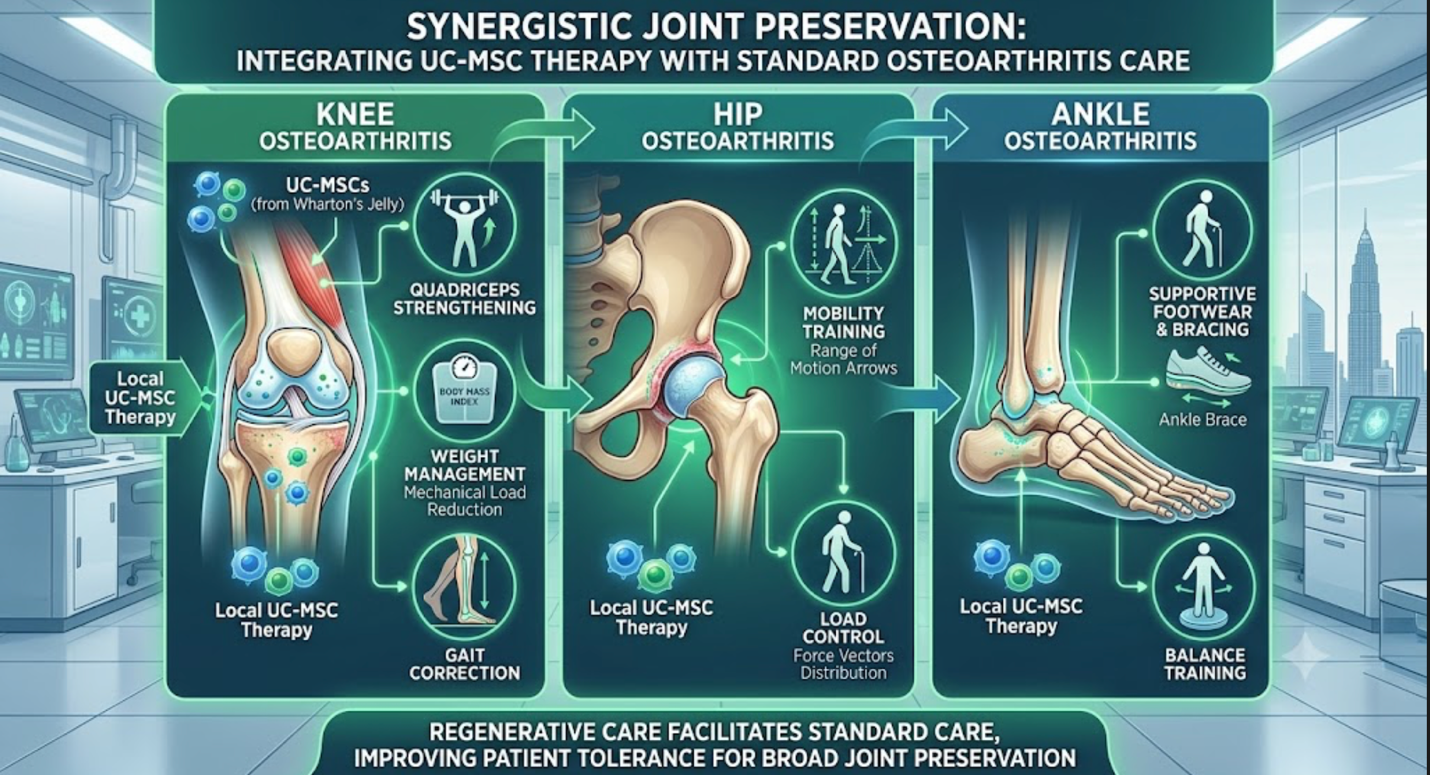
Figure 1: Synergistic Model of Joint Preservation: Integrating UC-MSC Therapy with Standard Osteoarthritis Care
The strongest medical approach is integrated care: regenerative support, rehabilitation, imaging review, orthopedic planning, and realistic long-term monitoring.
Evidence and Clinical Caution
Osteoarthritis guidelines remain cautious about biologic injections. OARSI’s 2019 guideline strongly recommended against intra-articular stem cell therapy at that time because the evidence quality was considered extremely low and formulations were not standardized.
This does not mean research has stopped. It means claims must be careful. Newer studies are encouraging, especially in knee osteoarthritis, but standardization, long-term outcomes, structural cartilage evidence, and regulatory clarity remain important.
A responsible article on stem cell therapy Bangkok Thailand should therefore avoid words such as “cure,” “reverse,” “guaranteed,” or “regrow cartilage.” Better wording includes “may support,” “selected patients,” “physician-guided,” “joint preservation,” “inflammation modulation,” and “realistic expectations.”
Conclusion
Osteoarthritis is a whole-joint condition involving cartilage, synovium, subchondral bone, ligaments, muscles, inflammation, and movement mechanics. For patients searching for stem cell therapy Bangkok Thailand, the most important point is to understand that regenerative medicine should be personalized, evidence-aware, and medically supervised.
Stem cell therapy Bangkok Thailand may support selected osteoarthritis patients by helping regulate inflammation, support cartilage-cell stress responses, improve the joint microenvironment, and improve tolerance for rehabilitation. However, it should not be promoted as a guaranteed cure or a replacement for joint replacement surgery when surgery is clearly needed.
For patients considering stem cell therapy Bangkok Thailand for osteoarthritis, the best pathway begins with proper diagnosis, imaging review, physician consultation, high-quality UC-MSC stem cell therapy Bangkok Thailand, accurate injection technique, realistic expectations, and a structured rehabilitation plan.
Responsible regenerative medicine is not about promising a brand-new joint. It is about supporting the biology of an osteoarthritis-affected joint while helping patients protect mobility, reduce pain, and maintain quality of life for as long as possible.
FAQ
Is stem cell therapy Bangkok Thailand suitable for osteoarthritis?
Stem cell therapy Bangkok Thailand may be considered for selected osteoarthritis patients after physician evaluation. Suitability depends on osteoarthritis severity, joint-space condition, inflammation, alignment, imaging findings, and overall medical health.
Can stem cell therapy cure osteoarthritis?
No. Stem cell therapy should not be described as a guaranteed cure for osteoarthritis. It may support inflammation regulation, joint microenvironment balance, and tissue repair signaling in selected patients, but outcomes vary.
Which osteoarthritis patients may benefit most?
Patients with mild-to-moderate osteoarthritis, persistent joint pain, stiffness, swelling, or reduced function despite conservative care may be considered. Patients with severe bone-on-bone osteoarthritis may need orthopedic surgery or joint replacement instead.
Can stem cell therapy regrow cartilage in osteoarthritis?
Stem cell therapy may support cartilage-related biological signaling, but guaranteed cartilage regrowth should not be claimed. Cartilage regeneration remains difficult, especially in advanced osteoarthritis.
Why choose stem cell therapy Bangkok Thailand?
Patients may consider stem cell therapy Bangkok Thailand because Bangkok offers access to medical consultation, regenerative medicine planning, UC-MSC treatment options, and supportive care in a clinical setting. However, the decision should be based on medical suitability, imaging review, cell quality, and realistic expectations.
Do patients still need physiotherapy after stem cell therapy?
Yes. Physiotherapy, strengthening, weight control, mobility training, and lifestyle changes remain important. Stem cell therapy Bangkok Thailand works best when combined with a complete osteoarthritis management plan.