Our Services
Others
- DFPP
- Shockwave
- IV Drip

This article is for educational purposes only and does not replace consultation with a qualified medical professional.
For advanced stroke survivors facing a persistent recovery plateau, standard physical therapy often yields diminishing returns. You hit a wall. Progress stalls, frustration mounts, and the search for alternatives inevitably leads to the complex world of regenerative medicine. But we need to be clear about something up front stem cell therapy for stroke rehabilitation isn’t a standalone miracle cure. It’s a biological catalyst.
This clinical case review evaluates how integrating regenerative cellular therapy with intensive physical rehabilitation creates a measurable pathway for renewed functional recovery. We call this The Dual-Phase Stroke Recovery Protocol. By breaking down the hard science, expected baseline metrics, the realities of this two-part protocol, and the logistics of accessing internationally accredited treatment in Thailand, you can finally make an evidence-informed decision about your next steps.
Integrating stem cell therapy for stroke rehabilitation provides a biological catalyst for neuroplasticity that traditional physical therapy alone cannot achieve.
Brain stem cell treatment works by altering the hostile biological environment inside a post-stroke brain, not by magically replacing dead brain tissue overnight. Mesenchymal stem cells facilitate brain repair primarily through paracrine signaling, modulating the local immune environment rather than directly replacing dead neurons (Stem Cell Research & Therapy, 2021). When you shift the brain from chronic inflammation to active repair, you reopen the window for neuroplasticity. But how exactly does this biological shift happen? The answer lies in the specific cellular pathways that govern human tissue repair.
To truly grasp how stem cells regenerate brain cells, we have to look past the marketing brochures and dig into the actual neurobiology. Stroke triggers immediate cell death in the ischemic core, but it’s the surrounding area the penumbra that we are trying to save and rewire. This compromised penumbra tissue remains viable but functionally silent due to severe ischemia and cellular stress.
Neurogenesis and angiogenesis are the twin pillars of this biological repair process. When mesenchymal stem cells (MSCs) are introduced via intravenous or intrathecal infusion, they actively secrete vascular endothelial growth factor (VEGF) alongside a complex matrix of neurotrophins. This specific protein combination stimulates the formation of new blood vessels (angiogenesis). More blood vessels mean higher volumes of oxygen and critical nutrients reaching those oxygen-starved penumbra tissues.
In clinical reviews utilizing advanced neuroimaging methodologies, data demonstrates that without this localized vascular repair, measurable functional recovery simply cannot happen. Furthermore, Umbilical Cord Mesenchymal Stem Cells (UC-MSCs) are particularly valuable because they promote the synthesis of the extracellular matrix without triggering severe adverse immune responses. Your body doesn’t reject them because they maintain a highly immunoprivileged state.
Here is the reality most people misunderstand: MSCs don’t magically transform into new brain cells and physically wire themselves into your central nervous system. Their regenerative ability is a direct result of paracrine signaling. They operate as biological directors, releasing extracellular
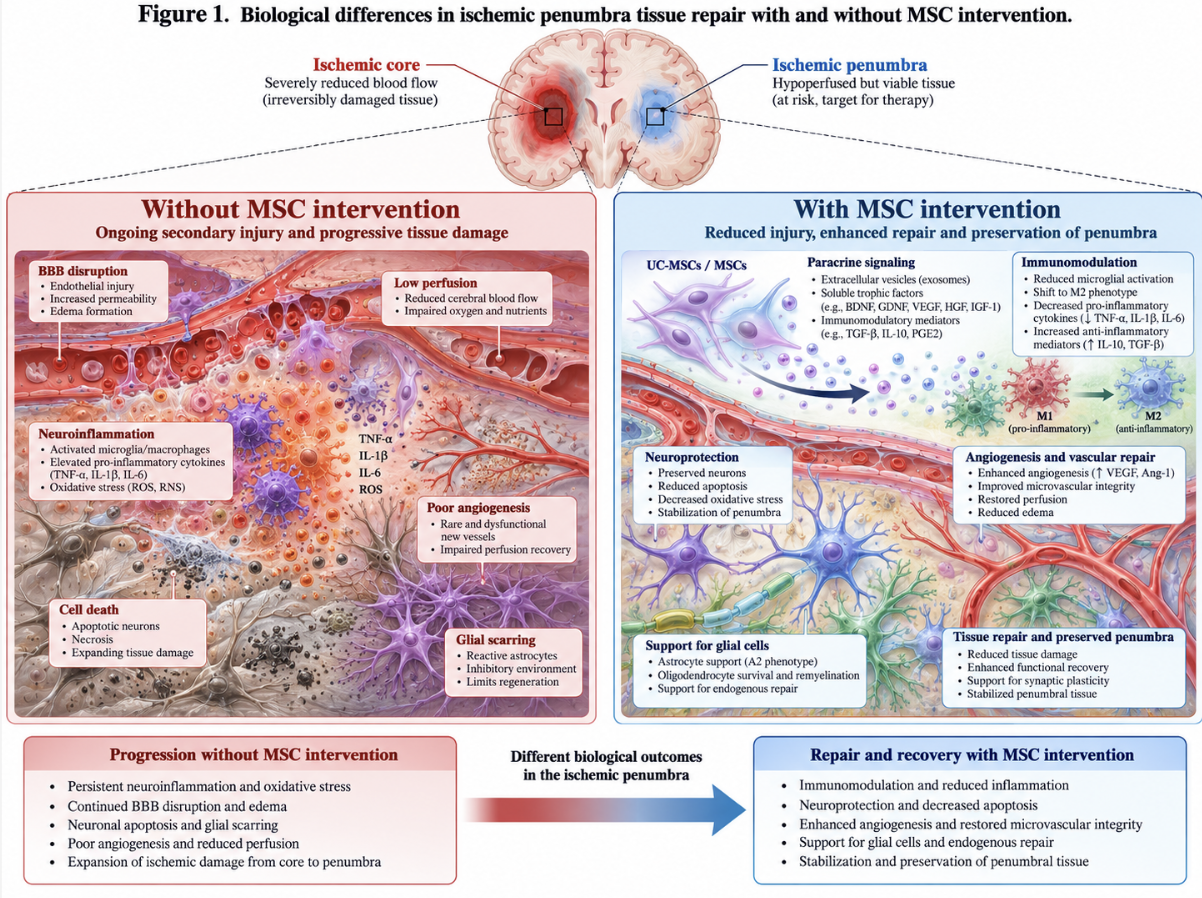
Figure 1: The biological differences in ischemic penumbra tissue repair with and without MSC intervention.
You cannot repair damaged brain tissue while the cellular environment is essentially on fire. In the immediate aftermath of a stroke, the immune system reacts aggressively. Microglia, the brain’s resident immune cells, become chronically activated and release a storm of toxic cytokines. This chronic neuroinflammation creates a hostile environment that actively blocks neuroplasticity and actively inhibits natural healing attempts.
Stem cell therapy targets this precise neurological bottleneck through a process called phenotypic macrophage reprogramming. The introduced MSCs release specific cytokines that force the local microglial macrophages to switch from a pro-inflammatory, tissue-destroying state (M1 phenotype) to an anti-inflammatory, tissue-repairing state (M2 phenotype).
| 📌 If you’re interested in how MSCs shift the immune system from attack mode to repair mode, we have an interesting article that discusses mesenchymal stem cell therapy for immune modulation, which you can read via the internal link. |
We also see a distinct inhibition of Toll-like receptor signaling, which protects the surviving neurons against continued oxidative stress. According to verified immunomodulation studies published in Stroke (2019), this specific macrophage reprogramming is the foundational prerequisite for any long-term functional recovery.
Think of it like clearing toxic debris and extinguishing the fire after a house burns down. You cannot start rebuilding the internal walls until the biological site is entirely secure. By arresting this inflammatory cascade, stem cell therapy prepares the structural site. However, while optimizing the cellular environment is a strict medical necessity, clinical success is ultimately measured by tangible, physical improvements.
Post-stroke stem cell therapy results shouldn’t be measured by how a patient subjectively “feels” on any given day. They must be measured by validated, objective clinical scales. Clinical trials utilizing MSCs for stroke survivors demonstrate the most statistically significant improvements in motor function within the first six months post-administration (Lancet Neurology, 2021). Clinicians track these specific changes using standardized baseline metrics, primarily the Modified Rankin Scale (mRS) and the National Institutes of Health Stroke Scale (NIHSS).
When evaluating how stem cell treatment for stroke survivors actually impacts daily life, the clinical data heavily supports motor recovery over complex cognitive restoration. Patients and families frequently ask if memory, executive function, or fluent speech will instantly return following an infusion. The clinical reality is entirely different. The most pronounced, statistically valid improvements consistently occur in descending motor pathways.
Specialists look for specific physiological markers: targeted reductions in lower-limb spasticity, measurable improvements in gait mechanics, and the gradual return of fine motor control in the
Consider a stroke patient presenting with a baseline NIHSS score of 12, indicating moderate to severe neurological impairment. Following MSC administration and months of rigorous physical therapy, clinical trials frequently document a drop to an NIHSS score of 7 or 8. That numerical drop is profound it directly translates to moving from requiring constant daily nursing care to achieving independent household mobility with a walker.
The cognitive benefits, while certainly documented in the literature, are often secondary and distinctly more subtle. Mild improvements in daily brain fog, sustained attention, or processing speed usually stem from the systemic reduction in chronic neuroinflammation rather than the direct, structural rewiring of highly complex language centers.
Patience during this process is absolutely non-negotiable. If an international clinic promises you will be walking unassisted a week after a cellular infusion, walk away immediately. Biological improvements require many weeks to manifest as tangible functional changes, and this trajectory is heavily dependent on the patient’s specific baseline tissue damage.
So, how exactly does stroke recovery progress month by month under this protocol?
During Month 1, the focus is entirely cellular and invisible to the naked eye. You generally will not see massive physical shifts. The MSCs are currently modulating the aggressive immune response and laying down new vascular networks in the penumbra. By Months 2 and 3, patients typically begin noticing slight decreases in muscle spasticity and slightly better daily fatigue management.
Months 4 through 6 represent the critical therapeutic window. This is exactly when the newly formed neural pathways begin to structurally solidify, allowing for measurable gains in muscular strength and physical coordination. This delayed timeline highlights exactly why continuous, objective monitoring and reassessment by a qualified clinician is required. The recovery trajectory
Stem cell therapy provides the biological scaffolding for repair, but intensive physical rehabilitation is required to program new neural pathways through neuroplasticity (Neurorehabilitation and Neural Repair, 2020). This foundational concept forms the basis of The Dual-Phase Stroke Recovery Protocol.
Phase One is the cellular administration the biological installation of the hardware. Phase Two is the intensive neuro-rehabilitation the physical programming of the software. If you choose to skip Phase Two, you are effectively wasting your financial resources on Phase One.
Can stem cells completely replace physiotherapy after a major stroke? Absolutely not. That remains the most dangerous, pervasive myth in the unregulated medical tourism industry.
True neuroplasticity after stroke requires relentless physical demand. Your brain is a highly efficient, naturally conservative organ. It will simply not expending the massive biological energy required to wire new neurons together unless it is explicitly forced to do so by mechanical and cognitive demand. When MSCs create a highly permissive environment by lowering inflammation and boosting growth factors, they are simply opening a temporary biological window of opportunity.
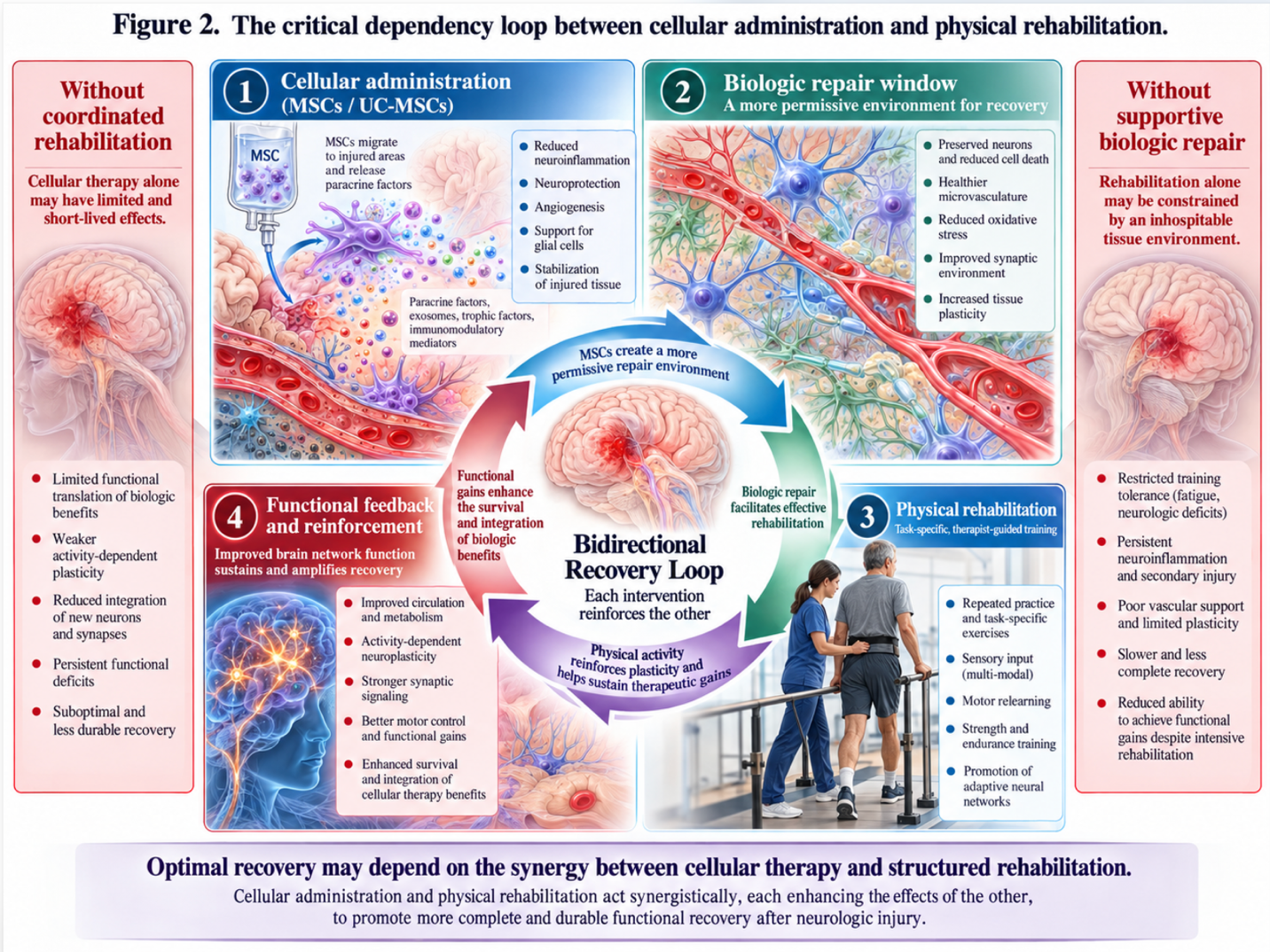
Figure 2: The critical dependency loop between cellular administration and physical rehabilitation.
If you sit idle in a hospital bed waiting for the stem cells to miraculously fix your paralyzed arm, that window permanently closes. The new microscopic vascular networks will regress and collapse if they aren’t utilized. This is precisely why rehabilitation still matters so much. You have to physically force the nervous system to recognize the damaged pathways and actively route vital signals around the ischemic core. The stem cell therapy for stroke rehabilitation just makes that complex signal routing physically possible again.
Phase Two requires highly specific clinical modalities to achieve true post-stroke therapy synergy. We aren’t talking about light, passive stretching twice a week. We are talking about high-repetition, task-specific neural training.
Constraint-induced movement therapy (CIMT) serves as a perfect example of this synergy. By physically restraining the functional limb and aggressively forcing the use of the impaired limb immediately following a stem cell infusion, we force the brain to utilize the newly optimized cellular environment. The brain has no choice but to rewire. Intensive gait training utilizing unweighted treadmills serves the exact same neurological purpose for lower extremity paralysis.
When should you start rehab after a stem cell infusion for stroke? Immediately. As soon as you are formally medically cleared from the infusion procedure itself (usually within 24 to 48 hours), the physical demand must begin. But accessing top-tier cellular expansion labs directly alongside world-class, integrated rehabilitation facilities is incredibly difficult in Western healthcare models, which drives many informed patients to international medical hubs.
Medical tourism stroke rehabilitation isn’t just about significant cost savings. It’s fundamentally about gaining access to integrated, simultaneous care. Thailand—and Bangkok specifically—has positioned itself as a premier destination not by offering cheap treatments, but by intentionally combining advanced regenerative laboratories with inpatient rehabilitation facilities directly under a single roof.
For stroke survivors, piecing together a neurologist, a separate cellular lab, and a disconnected outpatient physical therapist in three different geographical locations is a logistical nightmare that breaks the neuroplasticity window. Thailand solves this problem through highly centralized clinical models.
You cannot ever take cellular quality for granted. When critically evaluating stem cell therapy for stroke in Thailand, objective laboratory standards are your primary concern.
You must strictly differentiate between clinics offering authentic, lab-expanded UC-MSCs with rigorous quality control versus unregulated providers selling unverified cellular products. Look exclusively for Joint Commission International (JCI) accreditation. Verify their cleanroom facility ratings (ISO Class 7 or better is mandatory).
| 📌 If you’re interested in why the percentage of living cells matters so much at the time of treatment, we have an interesting article that discusses the importance of cell viability in UC-MSC stem cell therapy, which you can read via the internal link. |
Before you wire any medical funds, you need to fully understand exactly what you are purchasing. Ask for the cell viability and characterization reports. You should consult comprehensive guides on the safety and regulations of stem cell therapy to understand the exact post-infusion monitoring schedules required.
Executing the Dual-Phase Protocol abroad is a massive logistical undertaking for families. You need to plan for an extended international stay typically three to six weeks minimum.
Stem cell therapy in Bangkok is rarely a quick outpatient visit if you are doing it according to clinical guidelines. Because Phase Two requires immediate, rigorous physical therapy, you must select a destination facility that houses both the regenerative medical clinic and the intensive physical therapy center in the exact same building.
Traveling back to your home country immediately after a cellular infusion disrupts the neuroplasticity window. The severe physical fatigue from long-haul international flights combined with a lapse in daily physical therapy can severely blunt the biological efficacy of the stem cells. You need to stay where the rehab is fully integrated.
Yes, you unequivocally still need rehabilitation after stem cell therapy for stroke. Stem cells provide the necessary biological repair mechanisms, but physical therapy is required to program new neural pathways through neuroplasticity. Patients who undergo rigorous physical and occupational therapy post-infusion demonstrate significantly higher rates of motor function return. A combined protocol is the absolute clinical standard for maximizing post-stroke recovery. Functional outcomes are heavily dependent on the sheer intensity of this post-treatment rehabilitation.
Clinical data indicates that stem cells can help improve walking and balance for many qualified stroke survivors. Cellular therapy specifically targets the systemic neuroinflammation that often blocks motor pathway signaling in the brain. When closely paired with intensive gait training, patients frequently report measurable improvements in lower-limb spasticity and physical coordination. However, these profound biological improvements take weeks to manifest as tangible physical stability. Suitability for motor recovery requires a comprehensive individual clinical assessment by a trained neurologist.
The cost of stem cell therapy for stroke in Thailand typically ranges from $15,000 to $30,000 USD, depending entirely on the specific medical protocol required. This overall cost fluctuates based on the precise number of MSC infusions needed, strict laboratory processing standards, and the total duration of integrated inpatient rehabilitation. Accredited clinics in Bangkok generally offer these highly comprehensive packages at 40% to 60% less than equivalent Western medical facilities. Exact medical pricing requires a thorough clinical review of patient diagnostic records.
| 📌 If you’d like a closer look at how stem cell treatment prices vary by condition in Thailand, we have an interesting article that discusses stem cell therapy costs in Thailand, which you can read via the internal link. |
For advanced stroke survivors, integrating stem cell therapy for stroke rehabilitation provides a measurable pathway past devastating recovery plateaus. According to clinical trial data published in recognized neurology journals, patients utilizing combined cellular and physical interventions show statistically significant improvements in functional motor capabilities compared to traditional therapy alone. The most effective approach combines accredited cellular medicine with rigorous physical therapy.
This clinical success hinges entirely on The Dual-Phase Stroke Recovery Protocol. You simply cannot inject biological hardware and blindly expect functional results without immediately writing the functional software through intensive, targeted neuro-rehabilitation.
Your next critical step requires objective medical vetting, not blind hope. Compile your complete medical records including your most recent MRIs and baseline clinical scores—and seek an evidence-informed suitability assessment from a JCI-accredited clinic to determine if this protocol aligns with your specific pathology.