Our Services
Others
- DFPP
- Shockwave
- IV Drip

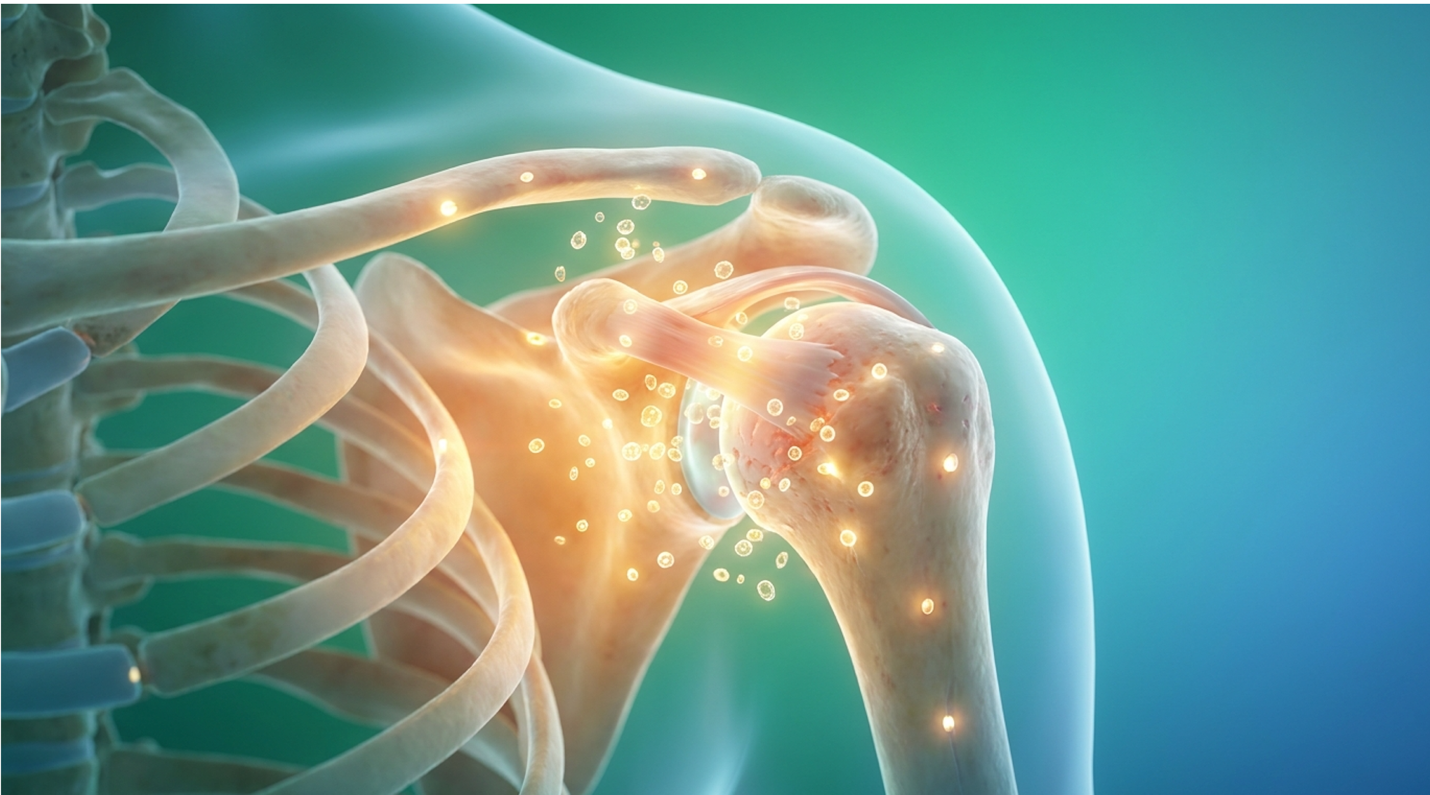
For advanced patients facing chronic shoulder pathologies, the decision to pursue medical tourism requires objective data, not marketing hyperbole. You likely already know that stem cell therapy for shoulder pain Thailand is a heavily promoted alternative to going under the knife. But cutting through the noise to find out what actually works biologically is maddening. I’ve seen this firsthand. Patients constantly agonize over the risk of invasive surgery and the permanent mobility loss it often guarantees versus the financial risk of unverified regenerative treatments abroad.
This article is for educational purposes only and does not replace consultation with a qualified medical professional.
By the end of this guide, you will understand the exact clinical outcomes, costs, and evidence-informed candidate criteria for shoulder stem cell therapy in Bangkok. We’re going to bypass the elementary explanations of what a cell is. Instead, we analyze specific pathologies, contrast
Stem cell therapy for shoulder pain Thailand offers a viable biological intervention for carefully screened candidates requiring Glenohumeral Viscoelastic Restoration.
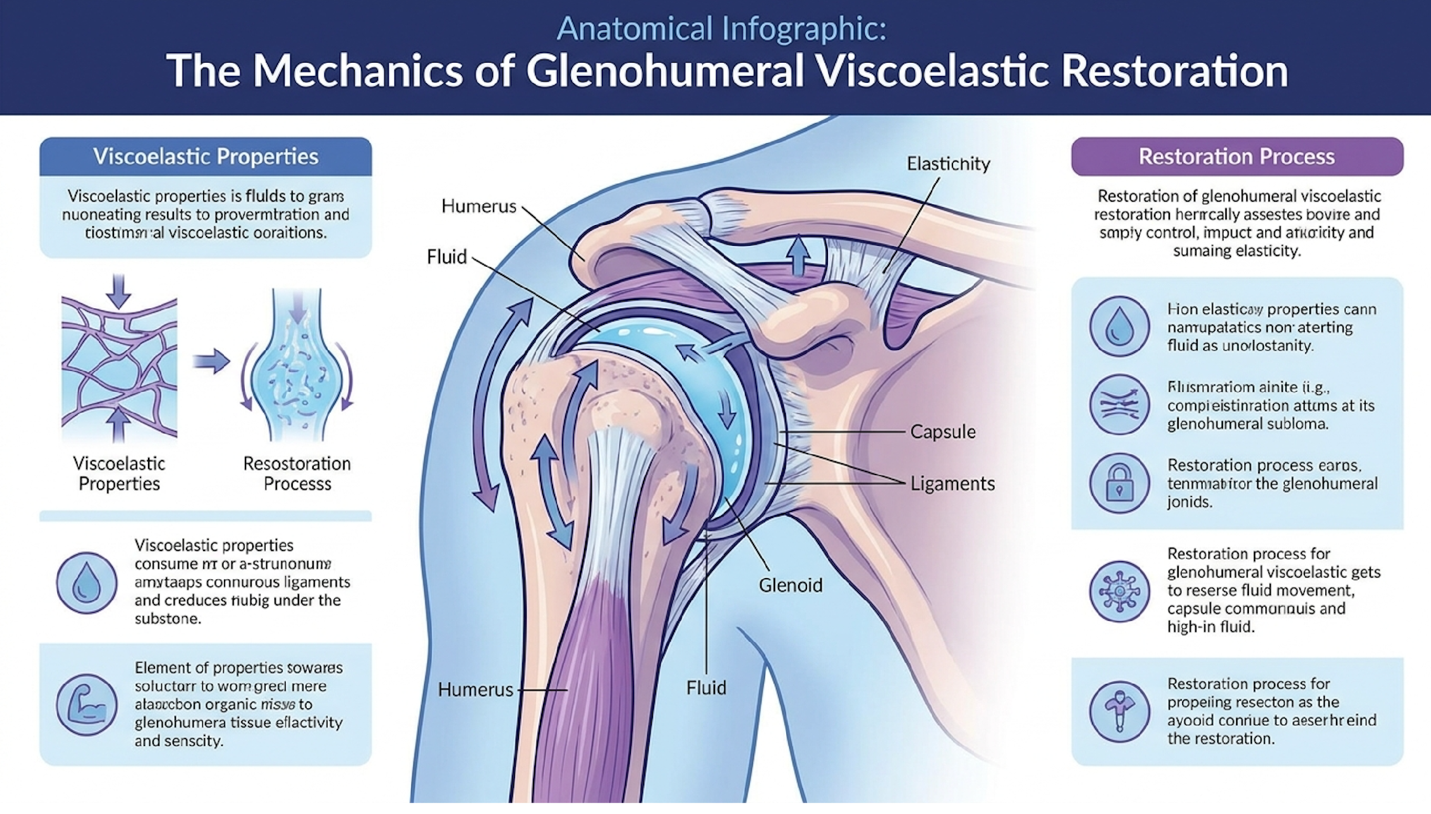
Glenohumeral Viscoelastic Restoration utilizes advanced cellular therapies to restore the natural biomechanical lubrication and structural integrity of the shoulder joint. Rather than simply masking symptoms, stem cell injections for the shoulder initiate a cascade of biological interventions that modulate inflammation and promote extracellular matrix protein synthesis. This regenerative musculoskeletal care focuses on addressing the biological deterioration of the joint directly at the cellular level.
When you inject biologic agents into a degraded shoulder, you aren’t just tossing in replacement parts. It’s vastly more complicated. Umbilical Cord Mesenchymal Stromal Cells (UC-MSCs), an abundant source of progenitor cells, don’t just magically turn into new cartilage. They operate as cellular directors. They secrete bioactive molecules specifically epidermal, vascular, and basic fibroblast growth factors into the harsh, inflamed microenvironment of a damaged glenohumeral joint, the primary ball-and-socket structure of the shoulder.
This process is called paracrine signaling. And it’s the entire biological foundation of regenerative medicine.
Instead of differentiating into local tissue, these secretomes execute phenotypic macrophage reprogramming. They force the local immune system to switch from a pro-inflammatory state (M1 macrophages) to an anti-inflammatory, tissue-repairing state (M2 macrophages). Furthermore, the SIRT1 pathway is activated to protect the remaining native cells against oxidative stress. It’s a profound biological shift. Compare this to standard hyaluronic acid injections, which merely offer temporary mechanical lubrication without altering the underlying disease state.
| 📌 If you’d like the bigger picture of how MSCs regulate immune activity beyond the shoulder specifically, our article, Mesenchymal Stem Cell Therapy for Immune Modulation, covers the underlying mechanisms in more depth. |
According to a recent ShoulderDoc clinical analysis reviewing the biological mechanisms of shoulder stem cells, the true value of UC-MSC therapy shoulder Thailand lies in this immune modulation. The cells dictate a new healing environment. But while understanding this biological potential is crucial, separating mechanical reality from marketing myths requires evaluating the Biological Shoulder Restoration Pathway.
Here’s the harsh truth about regenerative medicine. The industry is plagued by the myth of instant cartilage regrowth. Clinics routinely imply that an injection will instantly resurface a bone-on-bone joint with thick, pristine hyaline cartilage. It doesn’t.
To evaluate these treatments accurately, you must apply The Biological Shoulder Restoration Pathway. This is a structured approach that differentiates between true structural tissue repair and mechanical lubrication enhancement. When UC-MSCs are introduced into an arthritic shoulder, they primarily operate via signaling to halt further degradation and upregulate the production of lubricating synovial fluid. Mesenchymal stromal cells function primarily through paracrine signaling, releasing growth factors that stimulate local dermal fibroblasts and regulate inflammation rather than directly turning into new cartilage (PubMed, 2023).
They do not act like spackle filling a hole in a wall. Biological plausibility does not always equal guaranteed functional return. The downside of regenerative therapy is that if the mechanical structure of your shoulder is too far gone, no amount of biochemical signaling will restore your
Applying this biological pathway to clinical reality requires examining how specific shoulder pathologies respond to treatment.
Not all chronic shoulder pathologies respond equally to cellular interventions. The efficacy of stem cell therapy depends entirely on the exact diagnosis, the integrity of the remaining tissue, and the specific biological environment of the joint. Evaluating treatments for tears versus degenerative diseases requires distinct clinical criteria.
Will stem cells heal a rotator cuff tear? The answer is heavily conditional. The rotator cuff, the group of muscles and their tendons that act to stabilize the shoulder, is notoriously difficult to heal due to poor native blood supply.
If you have a partial thickness tear or micro-tearing from repetitive strain, you are an excellent candidate for stem cell therapy rotator cuff Thailand. The cellular injection mitigates the excessive activation of dermal myofibroblasts, which promotes scarless tissue repair rather than forming stiff, fibrotic scar tissue. The biological signaling accelerates tendon healing.
But look at the other end of the spectrum. If you have a massive, 3-centimeter full-thickness retracted tear where the tendon has literally snapped off the bone like a rubber band—stem cells cannot bridge that physical gap. You need a surgeon to anchor that tissue back down mechanically.
Clinical studies indicate that biological interventions for partial rotator cuff tears can accelerate tendon healing and improve functional scoring by up to 60% at 12-month follow-ups (NCBI, 2015). An extensive NCBI study on rotator cuff healing evaluating MSCs in surgical repair confirmed that cellular augmentation significantly reduces re-tear rates. For partial tears, non-surgical rotator cuff treatment Thailand is a clinically sound option. While tendon tears involve
Adhesive capsulitis, commonly known as frozen shoulder, is a severely debilitating condition characterized by aggressive inflammation and subsequent thickening of the joint capsule. Can stem cells fix frozen shoulder? Yes, and the mechanism is fascinating.
The primary issue in frozen shoulder isn’t a mechanical tear; it’s a runaway immune response. UC-MSCs excel in this exact environment. When injected into the glenohumeral joint, these cells inhibit Toll-like receptor signaling. This effectively shuts down the severe capsular inflammation at the source. They also clear reactive oxygen species and restore mitochondrial membranes within the joint capsule’s cells.
This biological intervention drastically outpaces the standard corticosteroid approach. Cortisone temporarily masks the pain while actively degrading local tissue health over time. Conversely, cellular therapy modulates the immune response while preserving tissue.
Current clinical perspectives on frozen shoulder highlight that patients utilizing frozen shoulder recovery protocols with MSCs frequently report returning to functional ranges of motion months faster than those relying solely on physical therapy and NSAIDs. Beyond acute inflammation and tendon tears, however, the most persistent challenge in orthopedics remains chronic joint degeneration.
When we look at shoulder arthritis treatment Bangkok, the application of The Biological Shoulder Restoration Pathway becomes highly nuanced. Osteoarthritis creates a brutal, degradative microenvironment filled with catabolic enzymes that actively destroy healthy tissue.
Paracrine factors secreted by MSCs actually alter this harsh microenvironment. They downregulate the destructive enzymes and upregulate the production of lubricin and hyaluronic acid by native synoviocytes. This creates profound viscoelastic restoration. For a patient dealing
| 📌 If you’d like to see how this same regenerative approach applies across joint conditions more broadly, our article, Stem Cell Therapy in Orthopedics, covers the chondrogenesis process behind joint degeneration in more depth. |
We have to set realistic expectations here. Reversing a stage 4, bone-on-bone arthritic joint is biologically implausible without a metal prosthesis.
However, significant pain modulation and viscosity improvement are entirely achievable. A recent Stem Cell Thailand clinical review emphasized that while gross cartilage volume rarely increases substantially on a post-treatment MRI, the clinical outcome pain-free sleep and restored daily function often renders the lack of visible new cartilage irrelevant to the patient.
Understanding pathology-specific mechanics naturally leads to the most critical patient question: what are the empirical success rates?
Determining the stem cell therapy success rate requires analyzing empirical data rather than clinical marketing. Efficacy is not absolute; it scales inversely with the severity of the joint degeneration. Consequently, evidence-informed suitability assessments are paramount for establishing realistic functional outcomes and identifying proper stem cell therapy candidates.
Let’s look at the actual clinical data. Efficacy sits on a bell curve. Generally, 60% to 80% of properly screened patients report meaningful, sustained pain reduction and mobility improvement at the 6-month clinical follow-up mark. But that leaves a non-responder rate that nobody in medical marketing wants to discuss.
The source of the cells matters immensely. Autologous MSC therapy harvesting cells from your own bone marrow or adipose fat is highly dependent on your biological age. If you are a 65-year-old with chronic metabolic issues, your native stem cells suffer from age-related senescence. They are exhausted.
This is why many advanced patients seek UC-MSC+ stem cell therapy abroad. Umbilical cord-derived cells are culturally expanded at “day zero” of biological aging. Their secretomes are vastly more potent, and they exhibit massive proliferative capacity compared to aged autologous cells.
| 📌 If you’d like the fuller comparison between cell sources, our article, Why Umbilical Cord-Derived Mesenchymal Stem Cells Are Superior to Other Stem Cell Sources, breaks down the advantages in more depth. |
According to Longevity Institute outcome data, tracking success rates for shoulder injuries shows a clear advantage for younger cell sources in older patients.
But there are explicit downsides. You face variability in biological response. You face high out-of-pocket costs. And for severe pathologies, you face the potential for only transient relief. Because success rates are entirely dependent on joint condition, stringent patient screening is non-negotiable.
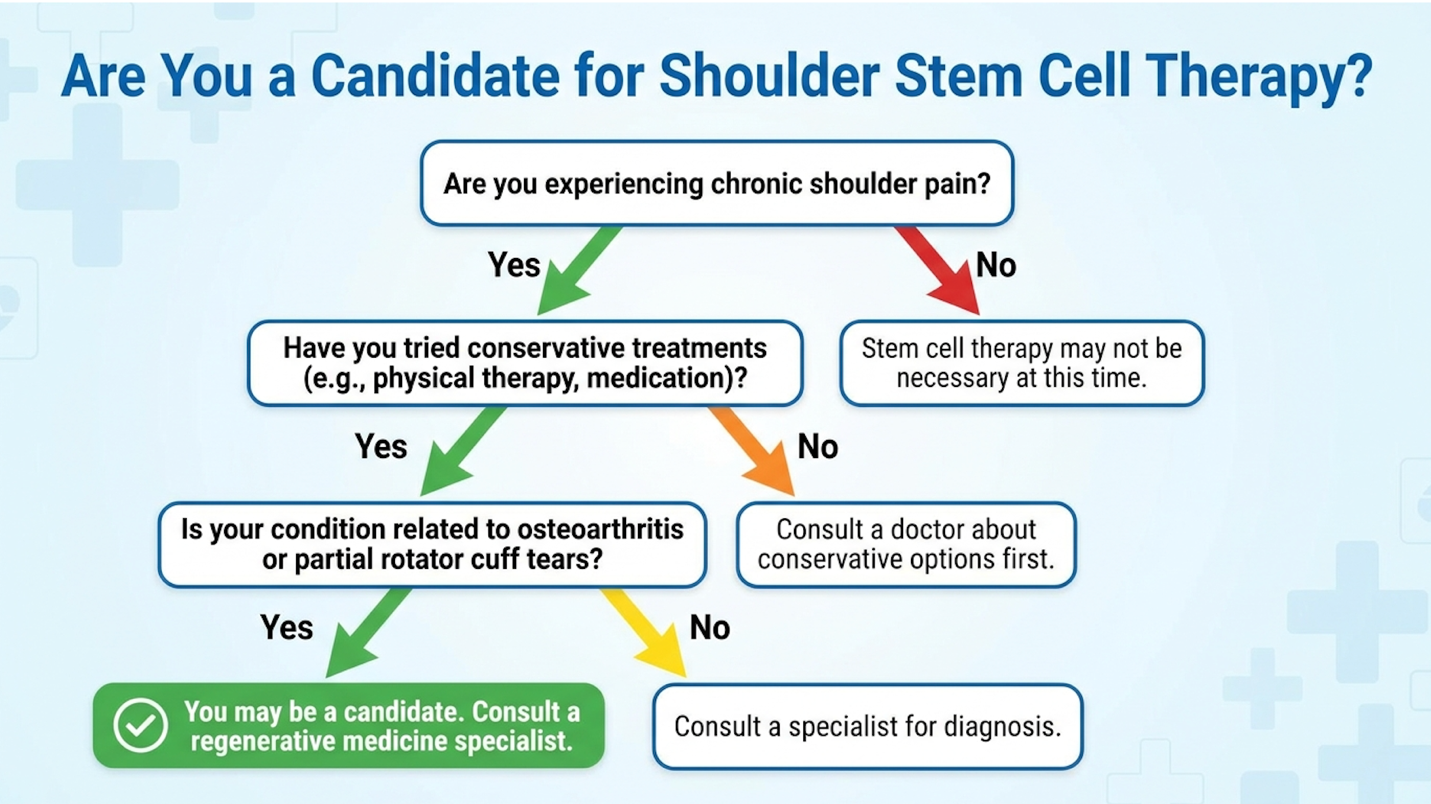
Candidacy for cellular therapy is a strict medical qualification, not a sales funnel. If a clinic approves you for treatment without requesting an MRI, run.
Ideal candidates for autologous MSC therapy present with mild to moderate joint degeneration and retain at least 50% of their native joint space (ClinicalTrials.gov, 2023).
Here is the profile of an ideal candidate:
Now, who is NOT a good candidate?
Current PubMed data on intra-articular injections strictly advises against treating mechanically destroyed joints with biologics. You must submit your medical records, recent MRI imaging, and laboratory findings for a remote review before ever stepping on a plane to Bangkok. For qualified candidates, the decision often hinges on evaluating the physical toll of the procedure against surgical alternatives.
As a minimally invasive alternative to shoulder surgery, cellular therapy radically alters the rehabilitation paradigm. While surgical interventions require severe tissue trauma to enact mechanical repairs, injection-based therapies bypass surgical morbidity entirely. Understanding the exact stem cell therapy recovery time requires a direct comparison against the extensive downtime of traditional orthopedics.
| 📌 If you’d like a fuller checklist for the lead-up to your procedure, our guide, How to Prepare Yourself Before and After a Stem Cell Injection, walks through what to do beforehand and how to recover afterward. |
Patients frequently ask how long recovery takes. The answer surprises people accustomed to orthopedic timelines.
Phase 1: The Inflammatory Phase (Days 1-3). Expect mild localized soreness and a feeling of joint fullness. This acute inflammation is completely intentional and essential for healing. Do not take NSAIDs (like Ibuprofen) during this window, as they will aggressively blunt the biological signaling cascade you just paid thousands of dollars to initiate.
Phase 2: The Proliferative Phase (Weeks 2-6). This is where biological signaling peaks within the glenohumeral joint. The secretomes are actively remodeling the microenvironment. During this time, patients are advised to engage in light, passive range-of-motion exercises. Avoid heavy load-bearing entirely. Do not test the shoulder with heavy bench presses or overhead lifts.
Phase 3: The Remodeling Phase (Months 3-6). Functional outcomes and pain reduction become highly apparent. The newly formed extracellular matrix matures. Clinical monitoring typically assesses improvements in joint viscoelasticity during this window.
While traditional rotator cuff surgery requires 4 to 6 months of intensive rehabilitation, patients undergoing intra-articular stem cell injections typically resume baseline non-load-bearing activities within 7 to 10 days (PubMed, 2022).
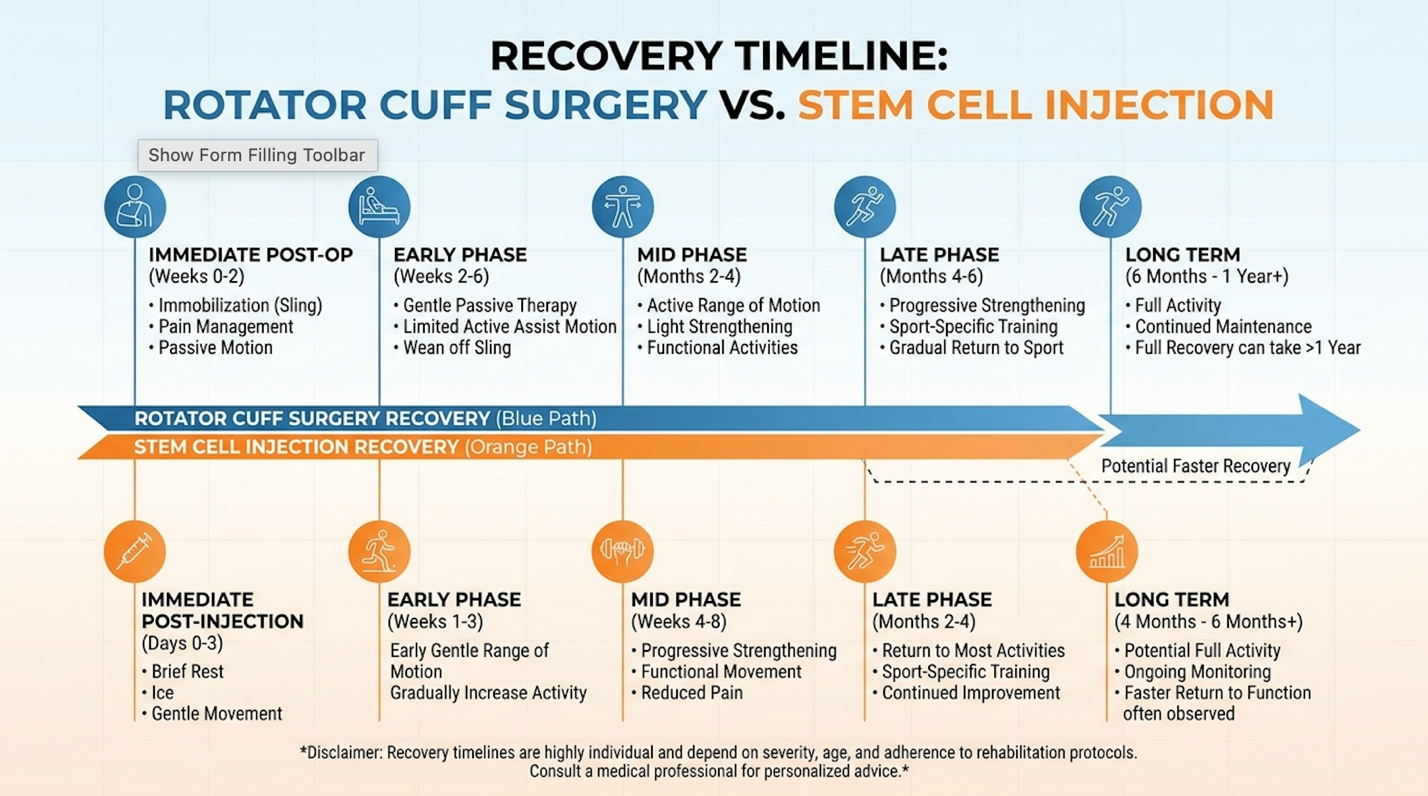
Standard Bangkok Stem Cells recovery protocols emphasize this structured return to activity. This measured biological timeline stands in stark contrast to the trauma induced by operative repairs.
Let’s discuss the brutal physical cost of traditional shoulder surgery. Procedures like total shoulder arthroplasty (joint replacement) or massive rotator cuff repairs involving multiple suture anchors are among the hardest shoulder surgeries to recover from in all of orthopedics.
What can you never do again after rotator cuff surgery? Depending on the repair’s tension, you may face a permanent loss of extreme overhead strength. Altered proprioception your brain’s awareness of your arm in space is incredibly common. You permanently carry the risk of hardware failure, anchor pullout, and devastating post-operative infections inside the joint capsule.
Stem cell therapy vs shoulder surgery isn’t just about avoiding a scalpel. It’s about preserving your native anatomical structure. If a biological therapy fails, you can still get surgery. If a surgery fails, your biomechanics are permanently altered, making future biological interventions vastly less effective.
| Metric | Stem Cell Injection | Traditional Shoulder Surgery |
| Initial Downtime | 24-72 hours | 4-6 weeks (sling immobilization) |
| Tissue Trauma | Minimal (needle gauge trauma) | Severe (incisions, bone drilling) |
| Reversibility | Preserves native anatomy | Irreversible mechanical alteration |
| PT Requirement | Moderate (guided mobility) | Aggressive (6+ months mandatory) |
Extensive PubMed/MEDLINE data on long-term functional deficits following surgical repair highlights high rates of residual stiffness and weakness. Avoiding these surgical limitations drives the global demand for biological alternatives, bringing the logistics and pricing of medical tourism into sharp focus.
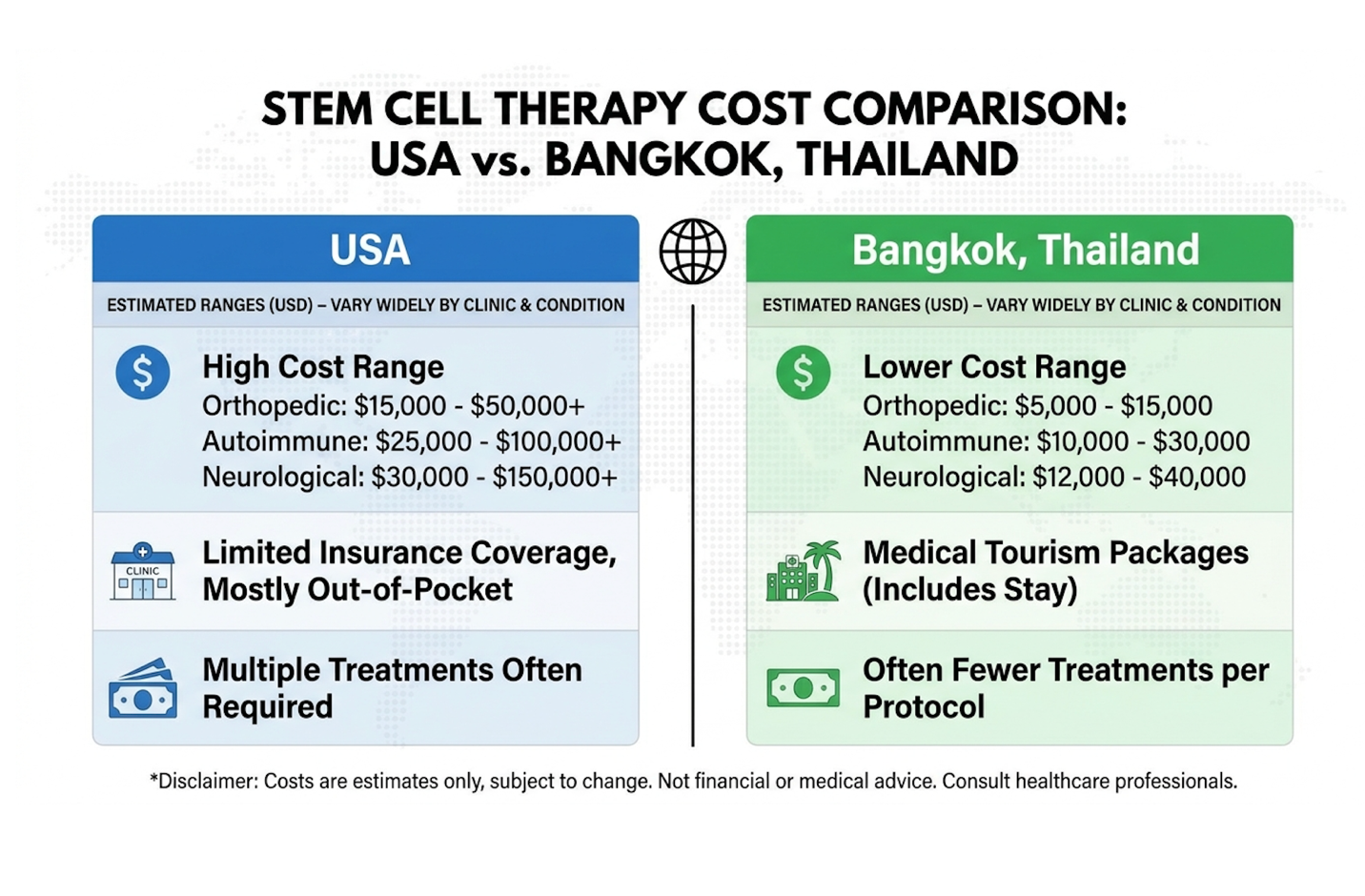
Seeking Stem Cell Therapy in Bangkok, Thailand has shifted from a fringe alternative to a primary healthcare strategy for international patients. By merging rigorous laboratory standards with favorable economics, Thailand offers highly advanced medical protocols at a fraction of Western costs, making medical tourism for shoulder regeneration a pragmatic financial decision.
The economics of medical tourism are compelling, but they require strict financial transparency. How much does stem cell therapy for shoulder cost in Thailand?
The stem cell therapy cost Bangkok generally ranges from $1,500 to $8,500 per joint. This massive variance isn’t arbitrary; it reflects the exact biological protocol you are purchasing.
A basic, single-joint treatment utilizing autologous Platelet-Rich Plasma (PRP) mixed with uncultured bone marrow concentrate will sit at the $1,500 to $2,500 floor. But if you are seeking
Advanced cellular shoulder therapies in Bangkok range from $1,500 to $8,500, offering cost reductions of up to 60% compared to equivalent Western clinical protocols (Bookimed, 2024).
What dictates this stem cell injection shoulder Thailand cost? It’s the cell source, the total cell count, the laboratory processing standards, and the mandatory inclusion of guided imaging (fluoroscopy or high-definition ultrasound) to ensure precise intra-articular delivery.
We also have to acknowledge the cultural momentum driving this demand. High-profile athletes and podcasters think Joe Rogan repeatedly discussing his international stem cell success have validated this pathway for the general public.
According to Bookimed international pricing data, you are accessing Tier-1 laboratory expansion capabilities in Thailand that are either financially prohibitive or legally restricted in North America. However, navigating this market requires identifying clinics that adhere strictly to international laboratory and clinical standards.
Executing The Biological Shoulder Restoration Pathway safely requires clinics to possess premium laboratory processing capabilities. You cannot compromise on sterility or cell viability. The best clinic for shoulder stem cell therapy Bangkok is not the one with the best Instagram marketing; it’s the one with the most transparent lab data.
Reputable providers consistently noted in regional data include Vega Stem Cell, Bangkok Stem Cells. These institutions serve as excellent navigational baselines for your research.
When evaluating these providers, demand specifics. Do they use guided imaging? A blind injection into the shoulder joint misses the target capsule up to 40% of the time. Do they provide a Certificate of Analysis (COA) proving cell viability and confirming negative sterility testing for bacteria, fungi, and endotoxins?
| 📌 If you’d like to understand what actually determines whether cells stay potent and functional, our article, The Importance of Cell Viability in UC-MSC Stem Cell Therapy, breaks down why this quality marker matters so much. |
A thorough review of clinic-level protocols demonstrates that elite Thai facilities operate in strict accordance with international cellular medicine standards. They treat stem cell therapy shoulder concerns with upfront transparency. Even at the highest-tier clinics, biological medicine carries inherent uncertainties that patients must weigh carefully.
The biggest unmentioned risk in regenerative medicine is simple biological non-response. Some patients simply do not experience the expected paracrine signaling cascade. Their immune system clears the cells before meaningful modulation occurs, resulting in a wasted financial investment.
Furthermore, unregulated clinics pose a massive threat. The risk of receiving dead, poorly processed, or contaminated cells skyrockets if patients fail to verify the clinic’s laboratory accreditations.
Finally, improper delivery sabotages outcomes. Failure to use ultrasound or fluoroscopic guidance means the costly biologic agents miss the damaged joint capsule entirely, rendering the treatment useless. PubMed data on unguided intra-articular injections confirms that blind injections frequently result in therapeutic failure.
There are distinct pathologies where the operating room is mandatory. Severe mechanical failures demand mechanical solutions.
If you suffer from full-thickness, retracted rotator cuff tears where the tendon has snapped back into the shoulder belly, you require surgical suturing. Stem cells cannot bridge a massive physical gap; they are biological signalers, not carpenters.
Similarly, advanced osteoarthritis specifically Kellgren-Lawrence Grade 4, where the joint is entirely bone-on-bone with osteophyte formation often necessitates a total shoulder arthroplasty. A consultation with a qualified orthopedic clinician is mandatory to assess your imaging before booking international travel. As noted in a recent PlacidWay medical tourism guide, understanding the limitations of regenerative travel protects both your wallet and your long-term mobility.
Stem cell therapy for shoulder pain in Thailand costs between $1,500 and $8,500. This pricing depends entirely on the cell source, total cell count, and specific clinical protocols utilized. Unilateral PRP combinations sit at the lower end, while high-dose expanded umbilical cord stem cells represent the premium tier. Patients should request itemized quotes to ensure laboratory processing fees are fully included. Prices remain subject to clinic variations.
Stem cell therapy cannot mechanically reconnect a completely retracted, full-thickness rotator cuff tear. While biological interventions modulate inflammation and enhance partial tear recovery, severe mechanical disconnections require surgical suturing. Stem cells are frequently used as a surgical adjunct to speed post-operative healing, but they do not bridge massive physical gaps. Patients must submit current MRI imaging to a clinician to determine exact tear severity before proceeding.
Choosing between stem cell therapy and shoulder surgery is not a strict binary decision. Many patients successfully utilize conservative therapies, including physical therapy, activity modification, and NSAIDs, to manage symptoms for years. Regenerative medicine often serves as an intermediary step for patients who fail conservative treatments but wish to delay invasive surgery. Treatment sequencing should be tailored to individual functional goals and pain tolerance.
The newest treatments for rotator cuff tears focus on orthobiologics and Glenohumeral Viscoelastic Restoration. These advanced protocols utilize concentrated growth factors, platelet-rich plasma, and mesenchymal stromal cells to accelerate the body’s native healing cascades. These cellular therapies aim to modulate localized inflammation and improve tissue remodeling in partial
The functional benefits of a shoulder stem cell shot typically last between 1 to 3 years. Longevity is heavily influenced by patient age, the severity of baseline joint degeneration, and adherence to post-injection physical therapy protocols. While cellular signaling alters the joint microenvironment for months, progressive degenerative conditions may eventually require maintenance injections. Ongoing clinical monitoring is essential to track sustained biological improvement.
For patients evaluating medical tourism, stem cell therapy for shoulder pain Thailand delivers a biologically viable alternative to invasive surgery, provided the patient meets strict clinical criteria. Evidence indicates that appropriately screened candidates can achieve up to a 60% improvement in functional joint scoring by utilizing targeted cellular therapies (NCBI, 2015). The most effective approach combines submitting recent MRI imaging to certified Bangkok clinics, selecting protocols utilizing guided injections, and setting realistic expectations regarding tissue remodeling timelines.
Applying The Biological Shoulder Restoration Pathway is critical for protecting both patient safety and financial investment. By differentiating between mechanical joint lubrication and true tissue regeneration, patients can critically assess clinic claims. Recognizing that cellular therapies function primarily through complex paracrine signaling and immune modulation—rather than instantaneous cartilage regrowth empowers patients to make objective, evidence-informed decisions regarding their musculoskeletal health.
Before booking travel or committing to a procedure, compile your complete medical records, including diagnostic imaging and treatment histories. Request a formal, remote stem cell treatment for chronic shoulder pain suitability assessment from accredited regenerative medicine providers in Bangkok to confirm your clinical candidacy and secure transparent pricing structures.