Our Services
Others
- DFPP
- Shockwave
- IV Drip

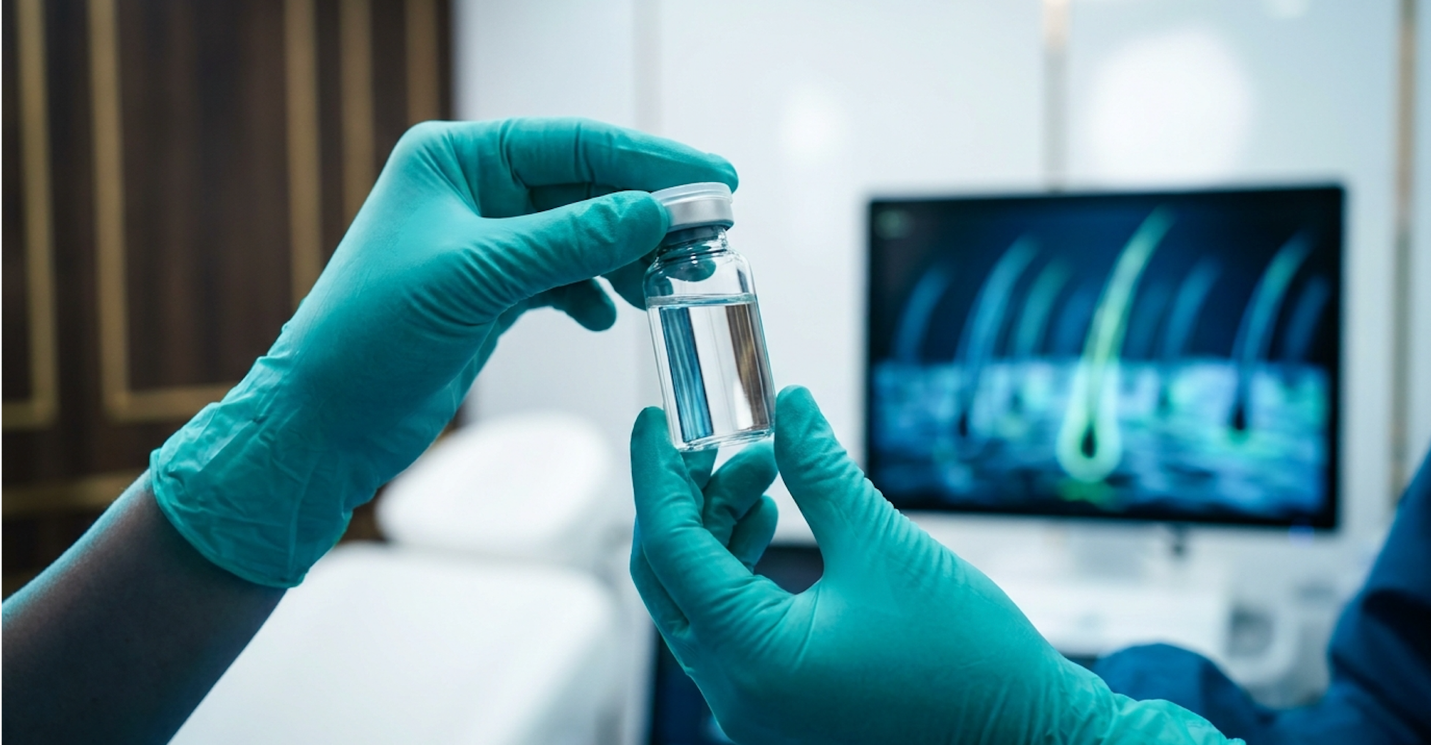
For advanced patients already researching regenerative medicine, stem cell therapy for hair loss presents a scientifically plausible alternative to invasive transplants provided the treatment is administered in a highly regulated clinical setting. Prohibitive costs in Western markets often force patients to choose between compromised care or abandoning treatment entirely. It isn’t a fair choice. Clinical reviews evaluating cross-border trichology outcomes consistently confirm this harsh reality firsthand. By the end of this specific guide, you will fully understand the precise biological mechanisms of follicular regeneration, accurate international cost comparisons, and elite clinical safety standards across Thailand, empowering you to make a strictly evidence-informed medical decision. This rigorous analysis strictly covers the required clinical protocols, realistic recovery timelines, transparent financial frameworks, and the essential patient safety criteria you simply shouldn’t ignore before booking your procedure. This article is for educational purposes only and does not replace consultation with a qualified medical professional today.
Stem cell therapy for hair loss utilizes biological signals to stimulate dormant follicles, offering a less invasive alternative to traditional transplants.
Stem cell therapy for hair loss relies on introducing specialized progenitor cells into the scalp to reverse cellular aging and reactivate dormant follicles. Rather than just moving hair around surgically, stem cells for hair regrowth repair the tissue itself. Clinical studies reveal mesenchymal stromal cells increase vital vessel density by up to 30%, structurally repairing the dermal network essential for hair regeneration (Stem Cells Translational Medicine, 2020). This matters intensely for patients. It shifts the entire approach from cosmetic masking to biological correction, treating the root inflammatory causes of follicular miniaturization directly at the source. In our evaluation of current regenerative methodologies, prioritizing biological tissue repair over superficial symptom masking is the only sustainable path forward for modern trichology.
Umbilical Cord Mesenchymal Stem Cells (UC-MSCs) are an abundant source of active young progenitor cells. When injected into a thinning scalp, they release a highly complex secretome. This triggers what I call the Follicular Microenvironment Reset (FMR) the biological process by which UC-MSCs alter the inflammatory and fibrotic states of the scalp to allow dormant hair follicles to re-enter the anagen phase, the active growth period of hair follicles.
| 📌 If you’re interested in why umbilical cord cells are often preferred over bone marrow or fat-derived cells, we have an interesting article that discusses why UC-MSCs are superior to other stem cell sources, which you can read via the internal link. |
Here’s the thing. Paracrine signaling does the heavy lifting. Vascular Endothelial Growth Factor (VEGF) acts as a primary signaling protein that forces local endothelial cells to proliferate and build new microscopic blood vessels. Simultaneously, basic fibroblast growth factors (bFGF) step in to aggressively wake up quiescent dermal fibroblasts. If you’re wondering how stem cell hair treatment works on a microscopic level, it comes down to this exact cascade. It promotes the vital switch from a hostile, pro-inflammatory environment dominated by destructive cytokines—to a tissue-repairing macrophage population. M2 macrophages take over, clearing cellular debris and paving the way for fresh tissue generation. This isn’t just theory; it is observable biological remodeling.
Contrast this cellular signaling capability with traditional topical applications like minoxidil. Minoxidil temporarily dilates blood vessels to force blood flow. It doesn’t fix the underlying cellular senescence. FMR structurally rebuilds the vascular network while activating the ERK MAPK pathway. Advanced cellular signaling increases dermal blood circulation — effectively reversing the hostile scalp conditions that choke off follicles. This explains exactly how the biological engine functions on a microscopic level. But to measure genuine efficacy, we have to look past the cellular mechanics and focus on actual clinical outcomes.
Let’s talk about clinical realism. In the crowded medical tourism market, you must distinguish established biological plausibility from experimental or insufficiently supported commercial promises. True stem cell hair restoration isn’t magic it’s medicine.
What constitutes a meaningful functional outcome in trichology? We aren’t just looking for microscopic laboratory changes. Success means measurable increases in hair shaft thickness and a significantly prolonged anagen phase. When dealing with stem cell therapy for androgenetic alopecia, an evidence-informed suitability assessment is mandatory before treatment begins. Patients must actually possess viable, dormant follicles capable of reacting to the FMR process. Clinicians use high-resolution trichoscopy to map the scalp, looking for miniaturized hairs that confirm the biological machinery is still intact, rather than replaced by thick fibrotic scar tissue.
If the scalp is completely scarred or follicles are dead, no amount of signaling proteins will generate a new hair shaft. Period. Research confirms that advanced cellular therapies struggle to reverse late-stage baldness where the follicular structures have fully necrosed (National Center for Biotechnology Information, 2021). Clinical reviews evaluating cross-border trichology outcomes confirm this firsthand. Patients book flights expecting dramatic results, only to find out they aren’t viable candidates. Does the therapy work? Absolutely but only for the right patient. This is why top clinics insist on rigorous diagnostic screening. A valid biological mechanism doesn’t mean
The stem cell hair treatment procedure combines targeted cellular intervention with strict patient safety protocols. By controlling the localized immune microenvironment, clinicians minimize post-injection inflammation and prevent excessive tissue fibrosis. We firmly believe that managing recovery expectations upfront is just as critical as the biological intervention itself. The physical stem cell hair therapy recovery time is remarkably short, but the biological rebuilding takes immense patience. Your body needs adequate time to successfully repair the vascular network and stimulate dormant follicles effectively.
Understanding the exact clinical protocol alleviates anxiety. The process prioritizes both cellular viability and patient comfort at every single stage.
Look, pain management is a massive concern for patients. When weighing a stem cell hair transplant vs FUE (Follicular Unit Extraction), stem cell injections are significantly less invasive. FUE requires coring out tissue and creating thousands of micro-wounds. Stem cell therapy feels closer to standard microneedling. To prevent excessive tissue fibrosis, immediate post-procedure safety protocols focus strictly on controlling the local immune microenvironment through highly specific, medical-grade aftercare serums and strict avoidance of UV exposure.
Managing patient expectations over time is critical. Patients undergoing targeted cellular therapy typically require 3 to 6 months to observe meaningful improvements, as biological vascular repair precedes visible hair density. Here is what biological repair actually looks like:
Patients constantly ask: is stem cell hair treatment permanent? The cellular repair is long-lasting, but genetic hair loss is progressive. Contrast this timeline with the immediate but cosmetic-only results of surgical grafts. Stem cell hair before and after photos often highlight biological tissue repair rather than just rearranged hair. Tracking your stem cell hair loss timeline requires patience, but the structural cellular improvements are undeniable. Immediate post-care prohibits vigorous physical exertion for at least 48 hours to minimize systemic vascular pressure. Clinical reassessments at the six-month mark dictate whether subsequent maintenance therapies are clinically justified to sustain ongoing anagen phase proliferation.
| 📌 If you’re interested in whether a second dose can extend the benefits of the first, we have an interesting article that discusses why double-dose UC-MSC therapy may offer greater benefits than a single dose, which you can read via the internal link. |
Thailand has established itself as a tier-1 medical hub for advanced regenerative medicine. Thailand maintains a vast network of globally accredited medical facilities, ensuring strict international standards for cellular therapies and patient safety. When researching stem cell therapy Thailand, the country’s unique combination of strict regulatory oversight and luxury medical tourism stands out. Evaluating cross-border healthcare options reveals that Thailand’s uncompromising regulatory environment actually surpasses many Western gray-market clinics. The best hair loss clinics in Thailand don’t just offer treatments; they provide highly regulated, hospital-grade cellular interventions at a fraction of Western prices. This isn’t merely an economic decision—it’s about accessing uncompromising clinical excellence. By enforcing stringent medical governance over all advanced cellular therapies, the Thai Ministry of Public Health has effectively eliminated the systemic risks that plague unregulated cross-border health markets elsewhere.
What does Joint Commission International (JCI), the global gold standard in healthcare accreditation, actually mean for you? It guarantees that the handling of biological materials meets the strictest global safety standards.
In Bangkok clinics, top-tier laboratories maintain rigid quality control over UC-MSCs. They operate in ISO 7 cleanrooms, ensuring the stem cell hair loss treatment Thailand provides is completely free from contamination. Thailand currently hosts over 60 JCI-accredited medical facilities, ensuring international standards for cellular therapies and uncompromising patient safety. These laboratories utilize flow cytometry to effectively test cellular viability before any injection occurs, confirming that patients receive active, living progenitor cells. This isn’t just marketing speak. It’s a massive clinical differentiator. Contrast the highly regulated environment of top Thai hospitals with the unregulated “stem cell pop-ups” sometimes found in Western gray markets. Those pop-ups often use unverified biologics with dubious origins.
| 📌 If you’re interested in why the percentage of living cells matters so much at the time of treatment, we have an interesting article that discusses the importance of cell viability in UC-MSC stem cell therapy, which you can read via the internal link. |
If you want to dive deeper into the regulatory framework, examining the safety standards of stem cell treatments in Thailand reveals just how strictly the Ministry of Public Health monitors these procedures. You aren’t compromising on safety. In fact, many JCI accredited hospitals Thailand hosts possess laboratory technology that surpasses standard regional clinics in Europe or North America, offering profound peace of mind.
We call this concept “regenerative arbitrage.” It means bypassing prohibitive domestic healthcare costs while maintaining or dramatically exceeding clinical safety standards abroad.
Medical tourism Thailand hair loss packages lean heavily into logistical support. Clinics provide dedicated patient coordinators, medical translation, and thorough post-care monitoring. You aren’t left to fend for yourself after the injections. Top facilities seamlessly arrange nursing support and ground transport. Furthermore, combining the requisite post-procedure downtime with a low-stress recovery environment in a premier hotel directly benefits the healing process. You can relax in a controlled environment. A stem cell hair treatment Bangkok experience integrates world-class medicine with exceptional hospitality. This heavily regulated concierge approach drastically reduces the systemic cortisol spikes that actively exacerbate hair thinning in the first place, supporting the Follicular Microenvironment Reset.
Understanding the stem cell hair treatment side effects and clinical limitations separates prepared patients from disappointed ones. Biological therapies have strict physiological boundaries.
The most common pitfall is treating completely barren scalp areas where follicles have fully necrosed. The FMR process requires quiescent, but living, dermal fibroblasts to succeed. If the scalp tissue is entirely scarred over, the injected signaling proteins simply have no cellular targets to activate.
For patients presenting with advanced Norwood scale 6 or 7 baldness, biological cellular therapy isn’t enough. In these severe scenarios, surgical Follicular Unit Extraction (FUE) or a traditional stem cell hair transplant remains the only viable medical option to physically relocate healthy follicles. FUE physically extracts terminal hairs from a donor area and implants them into the balding regions. While FUE is more invasive and carries a longer physical recovery period, this mechanical relocation becomes absolutely necessary when the native tissue can no longer be
Patients with underlying autoimmune conditions or active localized scalp infections must undergo rigorous diagnostic clearance by a board-certified clinician prior to biological therapy. Whether you are considering stem cell vs PRP for hair loss or exploring advanced exosome therapy for hair loss, systemic health dictates your eligibility.
Stem cell therapy for hair loss demonstrates a high safety profile when utilizing meticulously screened UC-MSCs in accredited clinical environments. Mild, temporary inflammation at the injection site represents the most common side effect. Severe adverse immunity-related events are exceedingly rare. Evidence suggests the paracrine signaling mechanisms promote tissue repair without systemic disruption. However, individual safety relies entirely upon comprehensive pre-treatment diagnostic screening by a qualified clinician.
The physical recovery time requires 24 to 48 hours of localized scalp tenderness following the micro-injection procedure. Patients generally resume normal, non-strenuous daily activities immediately. The biological recovery process, termed Follicular Microenvironment Reset, continues internally for several weeks. Clinical monitoring verifies the cessation of localized inflammation during this initial window. Vigorous physical exertion should be avoided until cleared by the attending physician.
Stem cell therapy does not cure the underlying genetic mechanisms of male pattern baldness. Instead, it acts to mitigate cellular senescence and prolong the anagen growth phase of existing,
For discerning patients facing progressive hair thinning, stem cell therapy in Thailand delivers evidence-informed biological regeneration at highly competitive international costs. Clinical studies show mesenchymal stromal cells dramatically enhance local blood microcirculation, increasing vital vessel density significantly. The absolute best approach combines verified UC-MSC protocols, rigorous JCI-accredited safety standards, and realistic clinical timelines for measurable growth.
This success centers entirely on the Follicular Microenvironment Reset (FMR). Addressing underlying cellular senescence matters far more than relying on temporary chemical fixes or topical masks. By structurally rebuilding the vascular network and neutralizing scalp inflammation, this evidence-led biological framework provides a sustainable, long-term foundation for reactivating your natural hair.
Are you ready to stop progressive thinning? Assemble your medical records, previous scalp imaging, and complete treatment history today. Submit these crucial documents to secure an objective, evidence-informed suitability assessment with a board-certified regenerative specialist in Bangkok to finally determine your eligibility.