Our Services
Others
- DFPP
- Shockwave
- IV Drip

Diabetes mellitus is a chronic autoimmune condition that is on the rise in many populations around the world. diabetes type 1 occurs when the autoimmune system targets β cells in the pancreas, resulting in the loss of the body’s ability to produce insulin. For these patients, the only option for survival becomes the administration of insulin that is produced externally. Although this therapy is lifesaving, it is not curative. The administration of exogenous insulin is suboptimal in an attempt to replicate the insulin secretion of a healthy pancreas, leading to the possible development of insulin autoimmune reactions. These reactions manifest in dangerous acute complications, such as hypoglycemia or ketoacidosis. In addition, chronic complications of unstable glycemic control can lead to diabetic nephropathy. The best glycemic control is due to the transplantation of either a whole pancreas or an islet cell. These are again limited to the factors of major surgery, lack of donor organs, necessity for life long drugs to suppress the immune system and infection risk, prompting a review of alternative options like stem cell Therapy Thailand utilizing UC-MSCs.
Due to the many shortcomings of the current treatments, the focus of many researchers is on regenerative medicine and more specifically, on stem cell Therapy Thailand. The recent systematic reviews of UC-MSCs show promise for the treatment of diabetes type 1. In fact, the preliminary clinical studies state that not only does this cellular therapy decrease the daily insulin requirements of the patients, but also their long-term glycemic control measured by glycosylated hemoglobin levels significantly improves. Also, this therapy increases fasting C-peptide levels.
Elevated C-peptide suggests endogenously elevated β cells regain function in diabetes type 1. Also observed post UC-MSCs infusion in stem cell Therapy Thailand, were large reductions in postprandial blood glucose. This demonstrated their efficacy to combat post-meal blood glucose spikes. Numerous studies reported that if these stem cell interventions are performed early, they produce the best clinical results. This is due to the fact that early interventions protect Residual pancreatic function.
To understand the efficacy of stem cell Therapy Thailand for diabetes type 1, an understanding of the complex actions at a molecular level is needed. There are many different and complex actions of UC-MSCs that are of therapeutic benefit. Firstly, mesenchymal stem cells have exceptional immunomodulatory effects to stop the destruction of pancreatic tissue via the immune system. Once mesenchymal stem cells enter the blood stream, they secrete Transforming Growth Factor β. This factor helps generate more regulatory T cells and in turn helps stop the immune system from attacking the pancreas. The mesenchymal stem cells also secrete indoleamine two three dioxygenase and prostaglandin E2, which stop the proliferation of Autoreactive T lymphocytes. Furthermore, by altering the ratio of T helper 1 and T helper 2 cells they help the immune system achieve homeostasis. Secondly, mesenchymal stem cells secrete Vascular Endothelial Growth Factor to improve the blood supply to damaged pancreatic tissue and help induce more blood vessel growth. Lastly, the mesenchymal stem cells also improve the differentiation of T cells to endocrine cells via Platelet Derived Growth Factor α. At the genetic level they can also be induced to proliferate and express vital transcription factors needed for the differentiation of pancreatic β cells. These transcription factors include PDX-1, NKX6.1 and NGN-3. Out of all the sources utilized in stem cell Therapy Thailand, UC-MSCs show great promise in the treatment of diabetes type 1. These cells derived from the umbilical cords have an excellent proliferative capacity, especially those sourced from Whartons Jelly.
One of the most important advantages of UC-MSCs for diabetes type 1 is their extremely low immunogenicity. They lack major histocompatibility complex class II (MHC II) proteins as well as CD80 and CD86, which are important co-stimulatory molecules. The absence of these components results in minimal immune rejection of transplanted UC-MSCs by the host. Their unique biology makes it possible for patients to receive allogenic transplants without the negative effects of strong and prolonged immunosuppressive therapy. The harvesting of these MSCs is also non-invasive and occurs during the collection of umbilical cords at birth. This harvesting process avoids ethical dilemmas as the cords are considered medical waste. The field of stem cell Therapy Thailand is being actively researched to review and improve, among other things, the routes of therapy such as the pancreatic arterial infusion, to improve the retention of the cells.
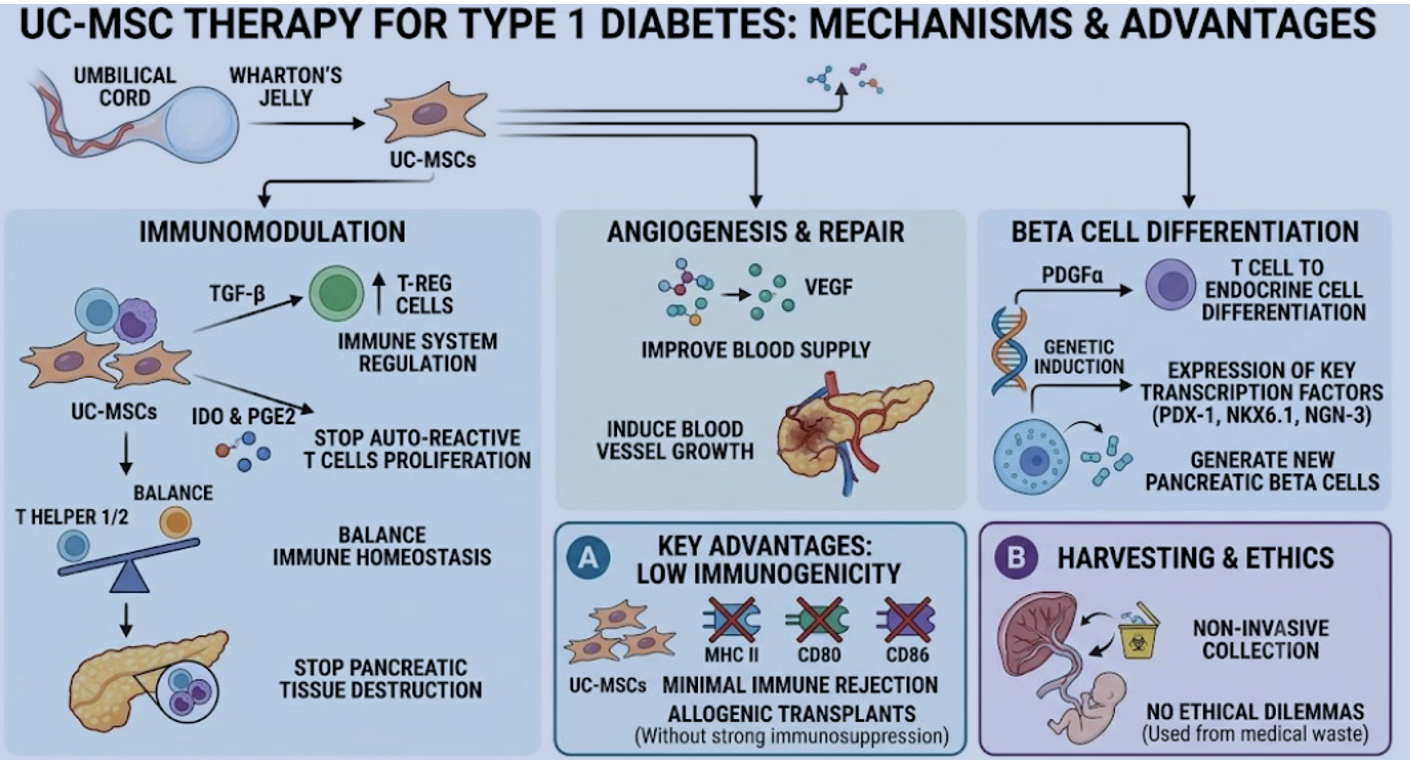
Figure 1: Important advantages of UC-MSCs for diabetes type 1 and their mechanism
The future of advanced treatments, especially stem cell Therapy Thailand, is very promising. Thailand is establishing itself as the leading medical center in Southeast Asia. Coupled with the excellent health care system, highly trained professionals, and a variety of other resources, Thailand can be a leader in the application of UC-MSCs to the treatment of diabetes type 1. By developing a strong research system, Thai medical practitioners will be able to offer this therapy to patients worldwide who are in need of advanced medical treatment. The introduction of this therapy will improve the lifetime and economic burden of type 1 diabetes for many individuals. The constant review of stem cell therapy will also improve safety.
As researchers establish optimal dosages and define the most strategic timing for UC-MSCs infusions in stem cell Therapy Thailand, patients with diabetes type 1 anticipate the elimination of daily injections. This new method exemplifies a breakthrough in the field of modern medicine.