Our Services
Others
- DFPP
- Shockwave
- IV Drip

Neurodegenerative disorders affect millions of people around the world and represent an enormous burden on the modern world. One of the most notable of these is Parkinson’s Disease. PD is a movement disorder that progressively robs people of their independence. There is currently no cure for PD, and it has eluded researchers for decades, with destruction of dopamine neurons in the substantia nigra presenting with tremors, rigidity and severe postural imbalance. There is hope for regeneration. More and more patients are turning to an innovative stem cell Clinic that provides advanced therapy using umbilical cord-derived mesenchymal stromal cells (UC-MSCs). This article will provide a review of the therapeutic methods and mechanisms with the clinical evidence and the exciting potential this therapy has in the future, as well as why there are medical advances occurring in Thailand.
Current pharmacological practices do not focus on halting the progression of Parkinson’s Disease but rather provide symptom relief for the time being. The mainstay of pharmacological therapy is Levodopa. It is a dopamine precursor that crosses the blood brain barrier and increases the level of the neurotransmitter. Although it has rapid symptom control and therapeutic effects, it worsens the prognosis of the disease and motor fluctuations are seen in patients. These fluctuate in severity and are referred to as dyskinesia and present with involuntary movements that are a surgical burden and a costly therapy. This treatment does not halt the progression of the disease, prompting any specialized stem cell Clinic to look to alternative strategies, such as those utilizing UC-MSCs, that provide true neuroprotection.
Conventional therapies for Parkinson’s Disease have many limitations that demonstrate the need for modern restorative UC-MSCs therapies available at a contemporary stem cell Clinic.
A recent review of a considerable amount of research has documented the use of regenerative therapies for Parkinson’s Disease and the use of UC-MSCs in pre-clinical and clinical studies. These studies report improvements in the mobility of research study participants. Even more interesting is the discovery of the gut-brain axis. Following the intravenous delivery of UC-MSCs, the gut microbiome undergoes a shift as a result of the cells modulating the gut microbiome and associated systemic inflammation. This shift in inflammation also protects the brain from the transport of neurotoxins via the gut. Studies of the cellular secretome have shown that the cellular secretome contains a great deal of therapeutic value and that the value is derived from the vesicles. It has been shown that the vesicles contain neuroprotective factors. Given all of the information available, it is easy to see that there is a great need to have a specialized stem cell Clinic.
Therapeutic effects of UC-MSCs utilized at a stem cell Clinic are derived from the complex and integrated molecular systems and not from simple cellular replacement. The UC-MSCs also secrete a large number of neurotrophic factors including BDNF and GDNF. At the molecular level these factors bind to and protect the surviving dopamine neurons from undergoing cell death and/or neurotoxicity associated with Parkinson’s Disease. In addition, the cells exert protective effects on the surrounding neurotissues during the inflammatory response by modulating the inflammatory response and shifting the state of the microglia to anti-inflammatory. In fact, magnesium-transporting proteins including TRPM6 and TRPM7 are also involved, as indicated by recent molecular studies. Maintaining mineral homeostasis is important for neuronal mitochondrial health and is facilitated by the cellular secretome regulating ion channel transport. A renowned stem cell Clinic has adapted their UC-MSCs cultivation techniques to encourage the release of healing factors that may help to slow the progression of Parkinson’s Disease.
The preparation of the cellular therapies is of equal importance. UC-MSCs are found to have a positive safety profile and low immunogenicity as they lack HLA class II proteins. Therefore, the cells will not prompt a strong immune response in an unmatched transplantee. A stem cell Clinic only follows the highest manufacturing standards to cultivate the cells. During the process of cultivation, the cells are continuously monitored for genetic and contaminant alterations. Researchers perform an extensive review on the quality of each batch in terms of their clinical viability, identity, and purity. The harvesting technique of umbilical cord tissue is non-invasive and does not create the ethical dilemmas of alternative stem cell sources. The strong quality control measures in place allow for the treatment of Parkinson’s Disease to be delivered by means of previously unprotected and worsening nervous tissue. Regenerative medicine has been growing rapidly, and Southeast Asia is a top competitor with the advancement of modern UC-MSCs therapies for conditions like Parkinson’s Disease. Thailand, with its cutting-edge research facilities, is an optimal location to create a premier stem cell Clinic.
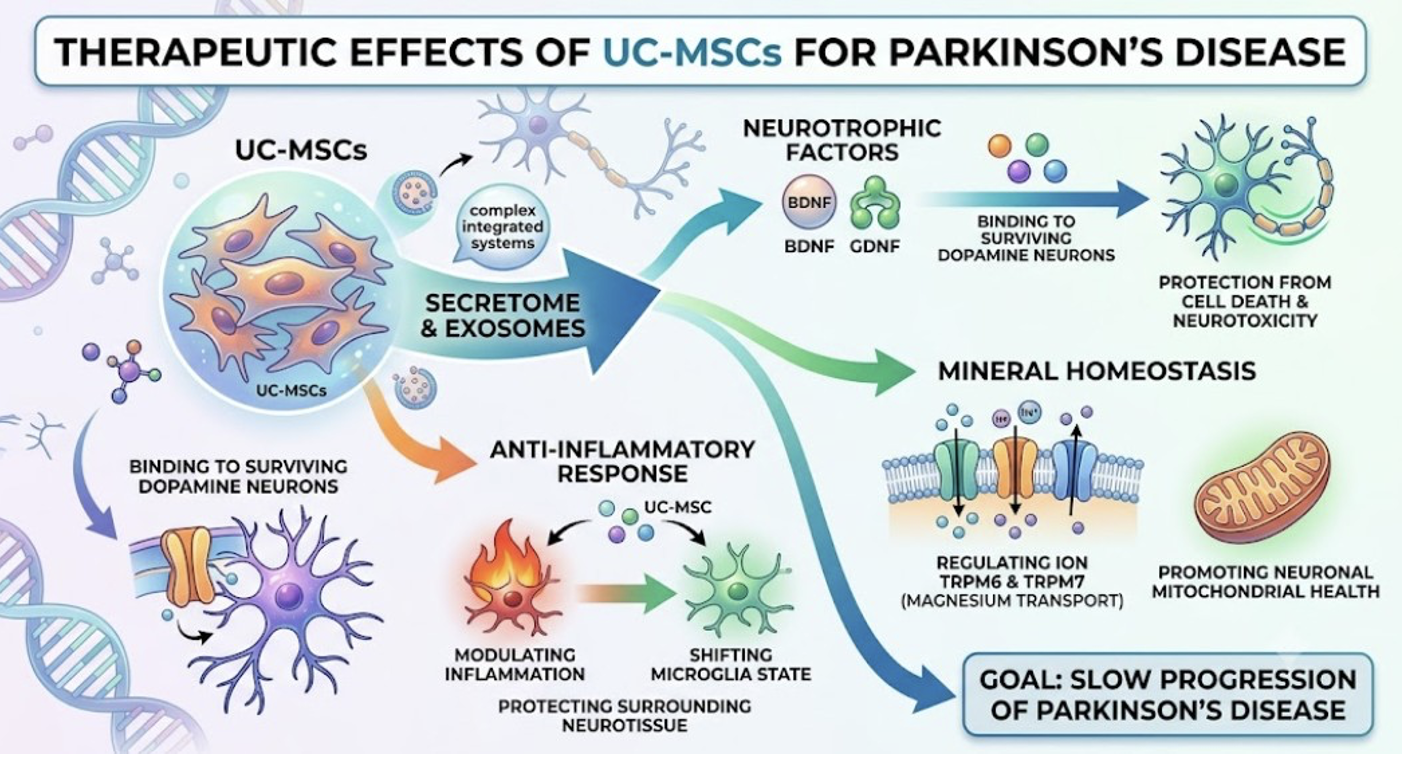
Figure 1: Therapeutic effects of UC-MSCs therapies for Parkinson’s Disease
Thailand has impressive laboratory infrastructure and offers advanced diagnostic technologies such as the Live Cell Fluorescence Imaging Systems and high-resolution Scanning Electron Microscopy. These technologies provide researchers the ability to assess cellular reactions before being used for clinical purposes to guarantee the best results for patients. Also, the strong support of the government for various biotechnological projects generates a medical-related market that is attractive for international experts. Thai research organizations are actively engaged in the study of new biological pathways, ensuring that new clinical applications remain on the leading edge of the global scientific community. Thailand’s combination of highly advanced clinical infrastructure and a focus on scientific integrity provides the country the ability for any leading stem cell Clinic to deliver safe and effective treatments of Parkinson’s Disease utilizing UC-MSCs.