Our Services
Others
- DFPP
- Shockwave
- IV Drip

This article is for educational purposes only and does not replace consultation with a qualified medical professional.
For patients with relapsing-remitting multiple sclerosis (RRMS) who have exhausted standard disease-modifying therapies (DMTs), Autologous Hematopoietic Stem Cell Transplantation (AHSCT) represents a fundamental shift in clinical strategy. Clinicians have watched countless patients cycle through high-efficacy biologics, managing their daily symptoms but failing to halt the underlying neurodegenerative cascade. And that’s the core problem we’re merely suppressing the immune system, not fixing the biological error.
By the end of this clinical guide, you’ll understand the evidence-informed advantages, strict eligibility criteria, and Phase III trial data surrounding MS stem cell therapy. We’ll evaluate the procedure’s precise biological mechanism, its top five clinical benefits compared to standard
MS stem cell therapy, specifically AHSCT, utilizes The Immune Reconsolidation Framework to ablate and completely reset the immune system, effectively halting disease progression in aggressive RRMS cases.
Multiple sclerosis stem cell treatment primarily involves Autologous Hematopoietic Stem Cell Transplantation (AHSCT), a procedure that harvests a patient’s own stem cells, uses chemotherapy to ablate the malfunctioning immune system, and reinfuses the cells to rebuild a healthy response. This aggressive approach aims to halt autoimmune attacks on the central nervous system entirely.
AHSCT isn’t a localized tissue repair mechanism; it’s a systemic hematopoietic reset. You’ve likely seen commercial clinics aggressively marketing unproven injections for MS. Let’s be unequivocally clear MSC therapy for multiple sclerosis lacks the robust Phase III clinical trial data supporting AHSCT protocols. The FDA explicitly warns patients against these offshore clinics. FDA records show a 0% approval rate for unapproved MSC clinics, noting only blood-forming cells hold regulatory clearance (FDA, 2019).
We operate strictly on The Immune Reconsolidation Framework the medical rationale of completely rebooting the immune system rather than continuously suppressing it with standard DMTs. Understanding this stark regulatory and clinical distinction is crucial when examining the biological mechanics of how multiple sclerosis stem cell treatment actually halts disease progression.
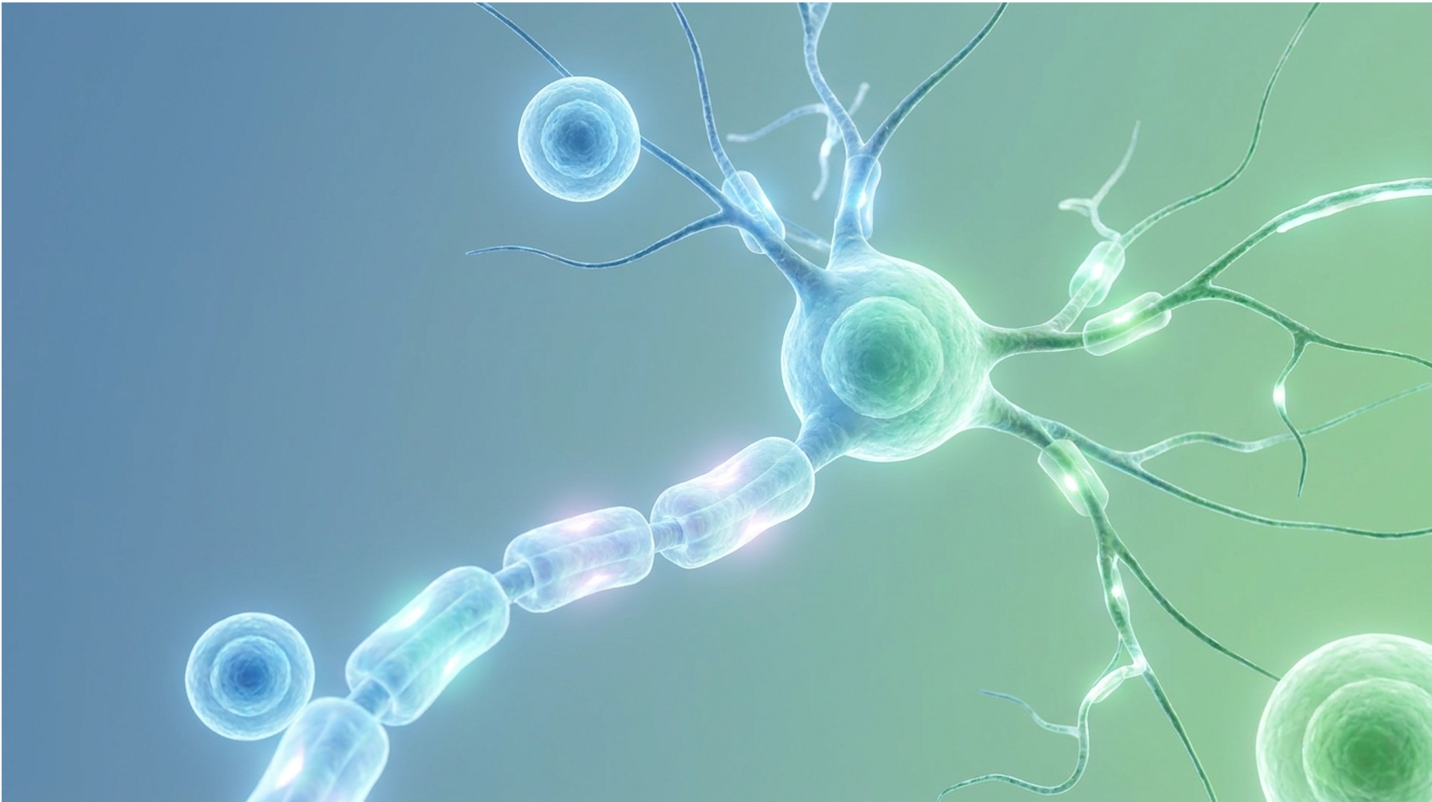
Caption: AHSCT completely ablates autoreactive T-cells before the reinfusion phase rebuilds a naive, healthy immune system.
The intense chemotherapy conditioning phase systematically eliminates the autoreactive T-cells and B-cells directly responsible for attacking your myelin. Think of it as wiping a deeply corrupted hard drive. Following this severe ablation, your cryopreserved hematopoietic stem cells are reinfused. They migrate directly into the bone marrow, engrafting to generate a completely new, naive immune system. This is biological immune reconsolidation in action.
How exactly does HSCT for MS differ from current biological treatments? High-efficacy DMTs require constant, lifelong administration to keep your autoreactive cells suppressed. Stop the infusion, and the disease activity typically rebounds aggressively. AHSCT aims for a permanent reset. The newly minted immune cells simply don’t carry the memory of the previous autoimmune attack, fundamentally stopping new demyelinating lesions from forming across your central nervous system.
The primary advantage of having stem cells injected for MS lies in the procedure’s ability to alter the disease’s natural history fundamentally. Rather than merely managing progressive symptoms, AHSCT offers five distinct clinical advantages documented in peer-reviewed meta-analyses and Phase III clinical trials against high-efficacy biologics. Let’s look closely at the data.
Progression-free survival (PFS) remains the ultimate gold standard metric in MS neurology. When clinical researchers evaluate stem cell therapy benefits for MS, the survival data sharply diverges from traditional continuous treatment paths. A landmark JAMA clinical trial comparing HSCT to standard DMTs provided definitive answers. Disease progression occurred in only 6% of HSCT patients, compared to a massive 60% failure rate for continuous DMTs over five years (JAMA, 2019).
That isn’t just a marginal improvement; it’s a massive statistical chasm. Clinical observers note that patients remaining on standard DMTs inevitably cross the threshold into secondary progression despite perfect medication compliance. This high rate of progression-free survival directly facilitates the second major advantage: halting the neurodegenerative cascade.
Achieving “No Evidence of Disease Activity” (NEDA) meaning zero relapses, no progression, and no new MRI lesions is the highest clinical benchmark. Halting MS progression with stem cells relies directly on executing The Immune Reconsolidation Framework. Because this procedure stops autoreactive immune cells from constantly crossing the blood-brain barrier, the chronic inflammatory state shuts down entirely.
| 📌 If you’re interested in another cellular approach that aims to calm autoimmune inflammation, we have an interesting article that discusses mesenchymal stem cell therapy for immune modulation, which you can read via the internal link. |
When neurologists evaluate post-treatment MRIs, the complete absence of active, gadolinium-enhancing lesions is profound. Methodological reviews show that standard DMTs predictably slow this lesion accumulation, but they rarely stop it indefinitely. While halting structural progression is always the primary medical objective, many patients also experience varying, unexpected degrees of functional restoration over time due to reduced central nervous system swelling.
Let’s set highly realistic expectations immediately. AHSCT does not directly regrow dead neurons. If irreversible axonal loss has already occurred, this procedure won’t magically reverse it. However, stem cell treatment for MS relapses dramatically changes the localized inflammatory environment inside the brain and spine.
By removing the relentless immune attack, your central nervous system’s endogenous remyelination processes can finally function unhindered. Clinical trials frequently document
Consider the sheer physical and psychological burden of perpetual DMT infusions. The relentless scheduling, the systemic side effects, the progressive organ fatigue. AHSCT actively trades that perpetual chronic management for a single, albeit intensely grueling, medical intervention.
Clinical data confirms these outcomes. A comprehensive meta-analysis of AHSCT success rates demonstrated a pooled progression-free survival rate of 73% for multiple sclerosis patients at five years post-transplant (PubMed, 2021). That represents stem cell therapy for MS remission in its purest clinical form. Patients report a drastic shift in functional outcomes simply because they no longer experience daily medication fatigue. Furthermore, eliminating the need for perpetual high-efficacy biologics dramatically shifts the economic burden of the disease over time.
Yes, the initial stem cell therapy for MS cost can induce severe sticker shock. Domestic inpatient procedures easily run well into six figures. But you must compare that intense localized expense to the compounding, continuous cost of biologics like Natalizumab or Ocrelizumab over an entire decade.
Despite staggering initial upfront costs, the cost-effectiveness of AHSCT over a 10-year horizon was proven to be highly advantageous and potentially cost-saving when compared to the ongoing expense of continuous traditional DMT medications (NCBI, 2020).
Achieving these long-term clinical and economic benefits, however, requires navigating a rigorous, dangerous multi-phase treatment protocol.
The HSCT treatment process is an intensive, inpatient medical procedure that unfolds over several weeks, followed by months of severely immunocompromised recovery. It is categorized strictly into three primary phases:
The MS stem cell procedure initiates with the heavy administration of targeted growth factors, specifically G-CSF. This chemical protocol forces your bone marrow into overdrive, stimulating massive stem cell production and pushing them directly into the peripheral bloodstream.
Next comes apheresis. Blood is continuously drawn through a central line, processed by a machine to separate and cryopreserve the crucial CD34+ stem cells, while the remaining blood components are returned to your body. Generally, patients pursuing stem cell therapy for RRMS tolerate this mobilization phase adequately. But expect significant bone pain or profound lethargy your marrow is expanding rapidly. Once a sufficient yield of pristine stem cells is securely cryopreserved, the patient enters the most physically demanding phase of the entire protocol.
Here is exactly where the actual disease modification occurs. You are administered extremely high-dose chemotherapy, typically utilizing agents like Cyclophosphamide combined with ATG (anti-thymocyte globulin). The clinical objective isn’t merely suppression; it’s absolute eradication.
We are actively hunting down and ablating the autoreactive immune cells responsible for carving lesions into your spinal cord. The side effects during this exact window are brutal. Severe, intractable nausea, total alopecia (hair loss), and absolute vulnerability to opportunistic infections characterize this conditioning phase. You will feel remarkably, uncomfortably ill. There is simply
“Day Zero” marks the literal rebirth of your immune system. The thawed, purified stem cells are injected intravenously, navigating naturally back to your empty bone marrow to begin critical engraftment. For the subsequent 10 to 14 days, your white blood cell count hovers precariously near absolute zero. You remain in strict, isolated hospital confinement.
| 📌 If you’re curious why the share of living cells after thawing matters so much for treatment results, we have an interesting article that discusses the importance of cell viability in UC-MSC stem cell therapy, which you can read via the internal link. |
The full stem cell therapy MS recovery time demands 3 to 6 months of strict home isolation for the new immune system to reach 100% functional competency. Full biological maturation takes one to two years. During this prolonged period, you might experience severe fluctuations in fatigue and brain fog as your body redirects massive energy reserves toward creating billions of new cells. Given the intensity of this recovery timeline, stringent patient selection criteria are enforced globally.
Not every patient with multiple sclerosis is a candidate for AHSCT. Understanding exactly HSCT eligibility criteria, geographic cost variations, and specific success rates based on clinical sub-classifications is absolutely critical before pursuing a regenerative-medicine consultation or enrolling in a clinical trial.
When desperate patients ask if they are candidates for stem cell therapy, the clinical answer relies on unforgiving parameters. The ideal profile? Highly active RRMS, a relatively short disease duration (typically under 10 years), and an EDSS score of 6.0 or below (meaning you are still ambulatory).
Conversely, regarding stem cell therapy for progressive MS: does it work? Usually, no. Patients with late-stage Secondary Progressive MS (SPMS) or Primary Progressive MS (PPMS) without active inflammatory lesions are generally excluded due to a distinct lack of efficacy and severely elevated complication risks. The BEAT-MS Phase III clinical trial criteria actively establish these boundaries by comparing the safety and efficacy of AHSCT against high-efficacy biologic therapies (ClinicalTrials, 2023). For those meeting these stringent prerequisites, financial logistics become the next hurdle.
Let’s discuss raw economics, because the MS stem cell therapy cost ultimately dictates clinical accessibility. Average domestic U.S. procedures range violently between $150,000 and $250,000. In stark contrast, accredited international centers in Mexico, Russia, or the UK range from $50,000 to $80,000.
| 📌 If you’re comparing international treatment prices and want to see what stem cell therapy costs in Thailand, we have an interesting article that discusses stem cell therapy costs in Thailand, which you can read via the internal link. |
Insurance coverage remains a fiercely contested battleground. Despite the overwhelming clinical data, AHSCT for MS is still largely considered investigational by rigid U.S. insurers unless the patient secures a coveted spot in an approved clinical trial. The out-of-pocket reality for many forces intense medical crowdfunding or remortgaging assets. Patients must weigh these significant financial burdens directly against the localized success rates for their specific MS presentation.
We know definitively that stem cell therapy for relapsing remitting MS yields the absolute highest clinical success rates. Clinical data demonstrates NEDA in up to 80% of RRMS patients at the 5-year mark, proving proper biological selection drives success. But that robust data drops precipitously for non-active progressive forms, where the neurodegeneration is no longer primarily driven by acute inflammation.
It is constantly reminded in clinical consultations that careful biological selection is the single largest determining factor in treatment success. You cannot force a biological response if the underlying pathology simply doesn’t match the treatment mechanism. Because of the potent
The risks of stem cell transplant for multiple sclerosis are severe and potentially lethal. We must address three specific, uncomfortable realities regarding the procedure’s limitations.
First, treatment-related mortality currently sits between 0.2% and 1% in highly specialized centers statistically low, but far from zero. Second, developing secondary autoimmune diseases, particularly catastrophic thyroid dysfunctions, occurs frequently post-transplant as the new naive immune system struggles to calibrate correctly. Third, the prolonged immunocompromised window exposes you to severe, opportunistic infections. A simple respiratory virus can escalate into fatal, unmanageable pneumonia within 48 hours without an immune system to fight it.
AHSCT is definitively the wrong choice for patients with significant pre-existing organ dysfunction (like heart or liver insufficiencies), advanced age, or non-inflammatory progressive MS where the lethal risks vastly outweigh the nonexistent benefits.
Before pursuing any independent cellular interventions, it is strongly recommended to consult a board-certified neurologist specializing strictly in MS pathology. You must comprehensively evaluate high-efficacy DMTs like Ocrelizumab, Ofatumumab, or Alemtuzumab as safer, medically established alternatives. If your neurologist determines your lesion load is completely stabilizing on standard biologics, deliberately disrupting that hard-won stability for an aggressive, toxic transplant simply doesn’t make clinical sense.
No, stem cell therapy does not cure multiple sclerosis. While Autologous Hematopoietic Stem Cell Transplantation (AHSCT) can successfully induce long-term remission and dramatically halt disease progression in many patients, it is not scientifically classified as a definitive cure. Clinical data shows that some patients may eventually experience breakthrough relapses years down the line, requiring careful ongoing observation. Individual longevity of these results depends heavily on the patient’s MS subtype and total disease duration prior to intervention.
The safety of stem cell therapy for multiple sclerosis depends entirely on the specific medical protocol and the facility‘s clinical accreditation. Legitimate AHSCT carries significant procedural risks, including a documented 0.2% to 1% risk of treatment-related mortality and severe infections due to intense chemotherapy conditioning. Conversely, unapproved commercial clinics offering unproven MSC injections carry completely unknown safety profiles and are explicitly warned against by regulatory bodies (FDA, 2019). It remains an aggressive, high-risk medical intervention reserved strictly for severe, treatment-resistant cases.
When patients ask, how long does stem cell therapy remission last MS, the clinical data is remarkably robust for the medium-to-long term. Peer-reviewed meta-analyses demonstrate that approximately 73% of appropriately selected RRMS patients achieve progression-free survival for at least five years post-transplant (PubMed, 2021). Ongoing longitudinal studies are currently tracking 10-year and 15-year patient outcomes to determine if this induced immune reconsolidation remains permanent. However, it is well-documented that patients with advanced progressive forms generally see much shorter, if any, remission periods.
For highly active, treatment-resistant MS patients, MS stem cell therapy specifically AHSCT offers a documented 73% five-year progression-free survival rate by definitively halting the underlying autoimmune attack (PubMed, 2021). The most effective, responsible clinical
This aggressive approach is entirely dependent on The Immune Reconsolidation Framework, which fundamentally shifts your MS management away from the exhausting cycle of perpetual immune suppression to a one-time, definitive immune reset. We are stopping the flawed biology directly at the source, giving the central nervous system the breathing room it requires to attempt endogenous repair.
Schedule a consultation exclusively with a board-certified neurologist to conduct a rigorous, data-driven suitability assessment immediately. Acquire current gadolinium-enhanced MRI imaging to accurately measure active inflammation, and aggressively explore enrolled clinical trials like BEAT-MS before ever considering independent, out-of-pocket cellular interventions.