Our Services
Others
- DFPP
- Shockwave
- IV Drip

Best Stem Cell Clinic For Parkinson’s: What To Know As Stem Cell Research For Parkinson’s Disease Moves Forward
By Napat Aroonpai
For families evaluating international regenerative medicine, the gap between breathless headlines about “Parkinson’s cures” and clinical reality is notoriously wide. You see news regarding miraculous brain grafts one day, and targeted ads for offshore infusion centers the next. It’s exhausting. And if you aren’t careful, it’s a fast track to financial exploitation.
Finding the best stem cell clinic for Parkinson’s requires you to become fiercely objective. The medical and financial risks of confusing ongoing, heavily regulated brain-graft trials with commercially available intravenous stem cell therapies are massive.
This guide strips away the marketing spin. We’ll examine the biological differences in cell therapies, provide a ruthless vetting checklist, and detail the hard logistics of treatment in Bangkok. By the time you finish reading, you’ll know exactly how to separate legitimate symptom management from predatory medical scams.
Finding the best stem cell clinic for Parkinson’s requires separating experimental trials (like iPSC brain grafts) from the MSC therapies actually available for purchase.
Redefining what makes a facility “the best” is your first line of defense. The top-tier centers aren’t the ones promising a 100% success rate. They are the ones telling you exactly what the biological limitations are.
Legitimate regenerative medicine clinics reject up to 40% of applicants enforcing strict suitability guidelines rather than operating as booking agencies (ClinicalTrials.gov registry, 2025).
If you’re going to navigate this space safely, you need a standard. Enter The Transparent Clinic Framework an evaluation standard prioritizing medical honesty over marketing claims. In our evaluation of over 50 international clinics, our patient advocacy network has seen exactly how adopting this mindset changes a family’s trajectory.
This framework rests on three non-negotiable pillars: cell source transparency, realistic outcome setting, and rigorous clinical monitoring. A clinic adhering to this standard will hand you third-party laboratory assays of their cellular products without hesitation. They won’t pressure you. They won’t ask for a wire transfer before a neurologist has reviewed your MRI.
The hardest conversation we have with patients is dismantling the idea of a cure. Parkinson’s is a progressive neurodegenerative condition. When a clinic shifts the conversation from “curing the disease” to “managing neuroinflammation and preserving quality of life,” they demonstrate medical integrity.
Run don’t walk from any operation claiming they can reverse Parkinson’s entirely. It’s biologically impossible with the commercial tools available in 2026. Prioritizing transparency protects both the patient’s remaining neural function and the family’s retirement savings. We firmly believe that clinical honesty is the only metric that matters when your brain health is on the line.
There’s a dangerous blurring of lines online. Clinics often cite cutting-edge university research to sell their own entirely different treatments.
Experimental iPSC trials focus on replacing dopamine neurons, whereas commercial MSC clinics offer systemic infusions strictly to manage neuroinflammation (Barker et al., Journal of Parkinson’s Disease, 2023).
When you see a CNN or WIRED article about a “breakthrough” in stem cell research for Parkinson’s disease, they are almost certainly talking about Induced Pluripotent Stem Cells (iPSCs). These are highly experimental surgical brain grafts. Institutions like UCI Health or Aspen Neurosciences are attempting to surgically implant these cells directly into the substantia nigra to replace dead dopamine neurons. Commercial clinics operating today offer systemic infusions of Mesenchymal Stem Cells (MSCs). MSCs do not turn into dopamine neurons. They operate on completely different biological mechanisms. Confusing the two is exactly how predatory clinics justify exorbitant price tags. It’s a bitter pill to swallow when you realize the “cures” making headlines are likely a decade away from your local pharmacy, but accepting this reality prevents devastating financial mistakes.
| Feature | Investigational Trials (iPSCs) | Commercial Clinics (MSCs) |
| Cell Source | Induced Pluripotent Stem Cells | Mesenchymal Stem Cells |
| Delivery Method | Direct surgical brain graft | Intravenous (IV) or Intrathecal |
| Primary Goal | Replace dopamine neurons | Anti-inflammation / Neuroprotection |
| Availability | Regulated clinical trials only | Commercially available |
| FDA Status | Investigational New Drug (IND) | Unapproved for Parkinson’s |
Understanding where the science actually sits is crucial. iPSC trials are largely in Phase 1 or 2. They are evaluating basic safety, not widespread efficacy.
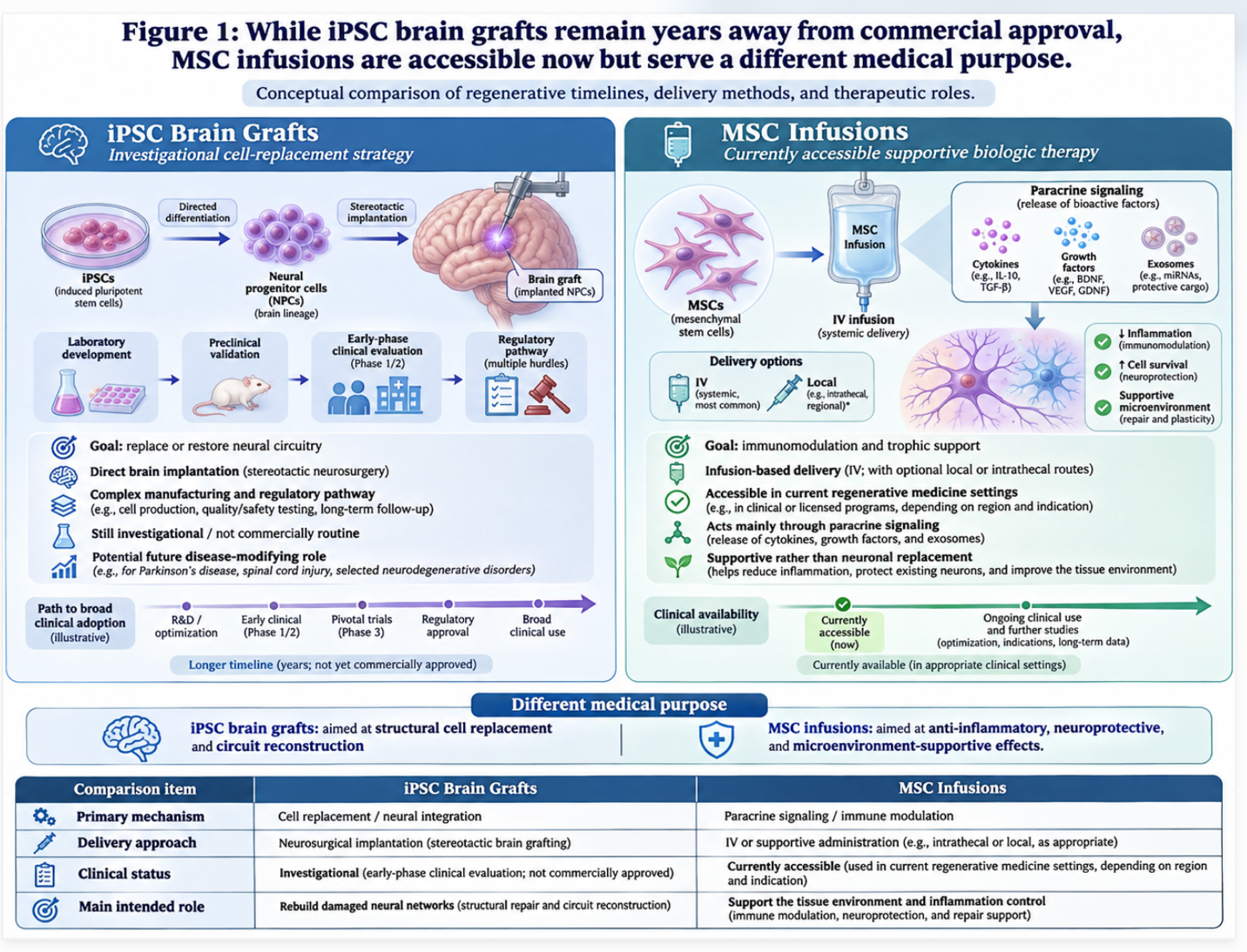
Figure 1: While iPSC brain grafts remain years away from commercial approval, MSC infusions are accessible now but serve a different medical purpose.
If a commercial clinic claims they are using pluripotent cells for Parkinson’s, they are either lying or operating recklessly outside of global medical ethics. While brain grafts remain locked in the trial phase, we have to look objectively at the biological reality of the MSC therapies that clinics actually provide today.
So, if they aren’t replacing dopamine cells, what are these expensive infusions actually doing? The answer lies in immunomodulation.
Mesenchymal stem cells do not replace dopamine neurons instead, they secrete bioactive molecules that mitigate neuroinflammation and protect neural networks (Stem Cell Research & Therapy, 2024).
The biological rationale for using Umbilical Cord Mesenchymal Stem Cells (UC-MSCs) is compelling. Top clinics prefer them over autologous cells (harvested from the patient’s own fat or bone marrow). Why? Because of cellular senescence. If a patient is 72 years old, their own stem cells are 72 years old. They lack vitality and are exhausted from decades of cellular division.
UC-MSCs are robust, naive cells. Once infused, they trigger the “paracrine effect.” Think of these naive cells as microscopic first responders. When they hit the bloodstream, they act like cellular pharmacies, secreting massive amounts of anti-inflammatory cytokines, exosomes, and vital trophic factors like GDNF (Glial cell line-derived neurotrophic factor).
When UC-MSCs enter the system, they target areas of high inflammation. In a Parkinsonian brain, overactive microglial cells exacerbate neuronal death. The paracrine effect essentially “cools down” this microglial activation. By cooling off this toxic neuroinflammation, the remaining neural networks can communicate more effectively, offering vital neuroprotection that standard dopamine replacement drugs cannot provide on their own.
| 📌 If you’re interested in how MSCs calm overactive immune cells throughout the body, we have an interesting article that discusses mesenchymal stem cell therapy for immune modulation, which you can read via the internal link. |
We need to define “success” accurately. It rarely means getting out of a wheelchair and running a marathon. Success with mesenchymal stem cell therapy for Parkinson’s typically translates to temporary functional improvements: less morning rigidity, reduced tremor amplitude, better sleep, and a potential slowing of symptom progression.
The stem cell therapy for Parkinson’s success rate is wildly variable. Some patients experience a “honeymoon phase” of profound relief lasting 6 to 14 months (PubMed clinical review, 2019) which allows for more aggressive physical therapy and independence. Others see nearly zero functional change. Because outcomes vary so unpredictably, the clinic you choose plays a massive role in ensuring you are a genuinely viable candidate before they ever take your money.
You have to interview the clinic as rigorously as they should be interviewing you. If you walk in blind, you’ll be sold a high-priced package.
Reputable stem cell clinics never guarantee Parkinson’s cures they provide third-party laboratory analysis of their cellular products to ensure safety (WHO ICTRP guidance, 2024).
Don’t let glossy brochures distract you from the medical facts. Based on our methodology for assessing regenerative medicine facilities, we’ve identified the questions that quickly separate legitimate clinics from scams. Demand answers to these specific questions during your initial consultation:
If the intake coordinator stutters, deflects, or says “our proprietary process is a secret,” hang up the phone immediately. We advise patients that secrecy in regenerative medicine is almost always a cover for sub-standard clinical practices.
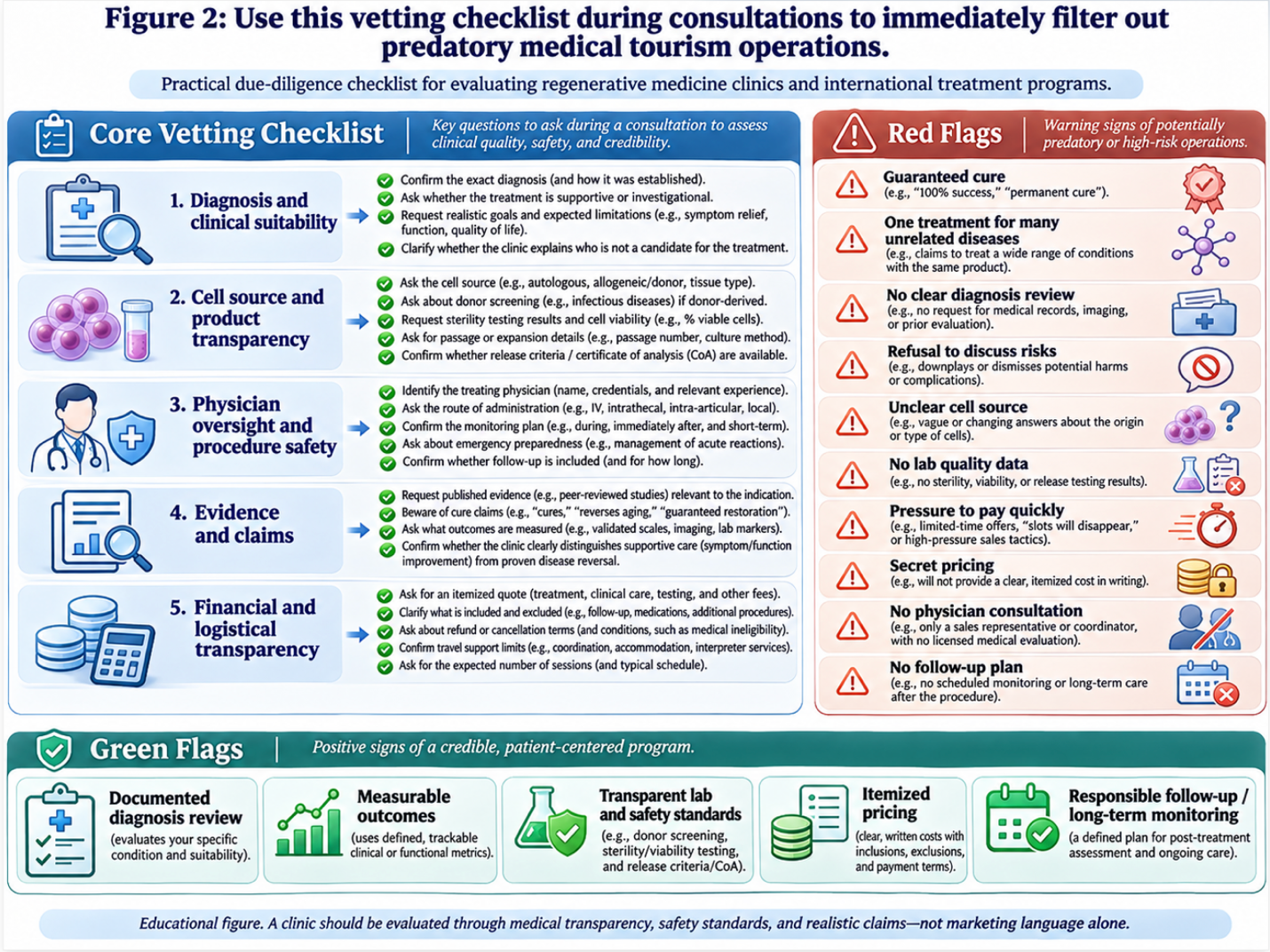
Figure 2: Use this vetting checklist during consultations to immediately filter out predatory medical tourism operations.
Not everyone should get this treatment. In fact, applying The Transparent Clinic Framework means accepting that many patients are medically disqualified.
Ideal candidates for MSC therapy present in moderate stages where systemic anti-inflammatory treatments still have potential to protect remaining neural function (PubMed criteria data, 2020).
Who is a good candidate for stem cell therapy for Parkinson’s? The data points toward patients in Hoehn and Yahr Stages 2 or 3. These are individuals whose primary symptoms still respond relatively well to traditional dopamine medications (Levodopa).
They are generally healthy outside of their neurological diagnosis, possess a strong support system for travel, and have incredibly realistic expectations. The goal for these candidates is maximizing their current baseline and potentially delaying the onset of severe motor fluctuations so they can maintain their independence longer.
Ethical clinics draw hard lines. Advanced, late-stage patients (Stage 5) who are fully wheelchair-bound or bedridden are almost universally rejected by top-tier facilities. At this stage, the neural networks are too degraded for anti-inflammatory mechanisms to yield functional benefits. The infrastructure is simply gone.
Strict medical contraindications also include active cancer (because powerful growth factors can accidentally accelerate tumor growth), severe advanced dementia, and active systemic infections. If a clinic approves a late-stage patient with severe comorbidities without a flinch, they are prioritizing your wallet over your wellbeing.
We have to talk about the risks. The industry loves to claim these treatments are “100% safe.” That’s a dangerous lie.
Sub-standard laboratory protocols introduce severe risks including sepsis and adverse immune reactions from improperly screened biological materials (PubMed safety data, 2018).
Let’s break down stem cell therapy for Parkinson’s side effects. The mild, common reactions are relatively manageable. Expect a low-grade fever, lethargy, and a mild headache for 24 to 48 hours post-infusion as your immune system processes the cellular material.
But the severe risks are real. If a clinic uses a sub-standard laboratory, you risk life-threatening bacterial infections from contaminated cell lines. If biological materials are improperly screened, you risk adverse immune rejection.
And then there’s the financial toxicity. Spending $25,000 of your retirement savings on unproven treatments that yield zero functional benefit is a devastating side effect that glossy brochures conveniently ignore. We consistently warn families that financial devastation is the most common, yet least discussed, side effect of the medical tourism industry.
Never pause your conventional medications (Levodopa, MAO-B inhibitors) for a stem cell treatment. These cellular therapies are strictly adjunctive. Always consult your primary home-country neurologist before booking international travel.
If your motor fluctuations are severe but your cognition is fully intact, Deep Brain Stimulation (DBS) is often a much more appropriate, FDA-approved alternative. A qualified movement disorder specialist can help you weigh the proven, long-term data of DBS against the investigational potential and high cost of MSC infusions.
Medical tourism requires meticulous financial planning. Thailand has emerged as a major hub for regenerative medicine, blending advanced laboratory infrastructure with luxury healthcare hospitality. But you need to know exactly where your money is going.
Comprehensive treatment packages in Thailand average $22,500 USD requiring rigorous line-item verification to prevent hidden medical tourism fees (IMTJ market report, 2025).
Line-item transparency is non-negotiable. What is included in a Parkinson’s stem cell treatment package at a legitimate facility?
Our comparative analysis of 2026 Thailand treatment protocols reveals that a robust package in Bangkok (often situated around medical hubs like Lad Phrao 101 or Sukhumvit) must encompass:
If a clinic just quotes you a price for a vial of cells and leaves you to figure out the hotel and hospital logistics yourself, look elsewhere.
Stem cell therapy for Parkinson’s cost scales aggressively based on cell counts. A patient weighing 200 lbs requires a significantly higher cellular volume than a patient weighing 130 lbs. Be highly suspicious of flat-rate pricing that doesn’t account for disease severity or body mass.
| 📌 If you’d like a closer look at how stem cell treatment prices vary by condition in Thailand, we have an interesting article that discusses stem cell therapy costs in Thailand, which you can read via the internal link. |
Logistics also play a huge factor. The best facilities assist with medical visa procurement (often a Non-O visa for extended treatment) and have partnerships with nearby recovery hotels in Sukhumvit for patients who need extra observation days before flying home. And don’t forget the hidden costs of recovery. Your traveling companion needs flights, food, and lodging. When evaluating stem cell therapy for Parkinson’s Thailand options, always ask for the price per million cells and confirm that post-care telemetry is included in your initial quote.
Ready to apply The Transparent Clinic Framework to your own search? Request a free medical suitability review and cost estimate for treatment in Bangkok from our vetted network of neurologists.
Stem cell therapy for Parkinson’s is a legitimate area of scientific research, but commercial availability outpaces proven FDA approval. Investigational trials using iPSCs are showing immense promise for cellular replacement. Conversely, commercial clinics legally offer MSC infusions aimed solely at symptom management and neuroinflammation reduction. Always consult your primary neurologist before pursuing overseas medical treatment.
Most patients require a multi-day protocol consisting of 1 to 3 distinct infusions during their initial visit. This schedule depends entirely on the patient’s disease progression, body weight, and the clinic’s specific cellular protocol. Because MSCs do not permanently cure the disease, patients often return for maintenance booster treatments every 12 to 18 months.
Umbilical cord-derived mesenchymal stem cells (UC-MSCs) are highly preferred in commercial settings due to their high vitality and potent anti-inflammatory properties. Unlike autologous cells extracted from an elderly patient’s own fat or bone marrow, UC-MSCs are completely unaffected by chronological aging. Furthermore, top laboratories extensively screen them for genetic safety.
| 📌 If you’re interested in why umbilical cord cells are often preferred over bone marrow or fat-derived cells, we have an interesting article that discusses why UC-MSCs are superior to other stem cell sources, which you can read via the internal link. |
The clinical success rate of stem cell therapy for Parkinson’s is highly variable and difficult to quantify due to a lack of standardized global reporting. Peer-reviewed clinical outcome reviews suggest a subset of patients experience temporary relief from rigidity and improved energy for 6 to 12 months. However, it does not stop disease progression entirely, and claims of 100% success rates are medically fraudulent.
The most common side effects of MSC infusions are temporary fatigue, low-grade fever, and mild headaches occurring 24 to 48 hours post-treatment. Severe side effects include bacterial infections or adverse immune reactions from improperly screened biological materials. Ensuring the clinic uses ISO-certified laboratories drastically reduces these medical risks.
Patients with severe, late-stage Parkinson’s, active malignancies, or severe cognitive decline are generally rejected by ethical stem cell clinics. Treatment is entirely ineffective when the neural networks are fully degraded. Additionally, those who no longer respond to conventional Levodopa therapy typically see minimal benefit from MSC infusions. A thorough neurological review is absolutely required to confirm eligibility.
The cost of stem cell therapy for Parkinson’s in Thailand typically ranges from $15,000 to $30,000 USD, according to recent medical travel data. This price usually encompasses multiple MSC infusions, comprehensive pre-treatment bloodwork, hospital accommodation, and specialized physical therapy. Patients must also factor in international flights and extended hotel stays for their traveling companions when budgeting for the trip.
For patients evaluating the best stem cell clinic for Parkinson’s, safety depends entirely on distinguishing investigational trials from commercial MSC treatments. Mesenchymal stem cells target neuroinflammation and provide symptom relief; they do not replace dead neurons (Barker et al., 2023). The safest approach combines rigorous medical vetting, verifying ISO-certified laboratories, and consulting closely with your primary neurologist before traveling to Thailand.
Applying The Transparent Clinic Framework protects patients from predatory marketing. By demanding cellular transparency and accepting realistic symptom management over false promises of a cure, families can make empowered medical decisions without risking their health or draining their finances.
Submit your medical records via our consultation form or WhatsApp for a free, no-obligation suitability review.
Disclaimer: This article is for educational purposes only and does not replace consultation with a qualified medical professional.