Our Services
Others
- DFPP
- Shockwave
- IV Drip

Here is the truth about modern aesthetics. If you are exhausted by exaggerated marketing claims, you aren’t alone. What is actually new in clinics right now? Our team evaluated the latest data, and the reality is striking.
The true breakthroughs aren’t miraculous age-reversing injectables. Cell-free products, like conditioned media and exosomes, alongside polynucleotides, represent the verifiable present. Meanwhile, injecting live stem cells specifically for cosmetic enhancements remains largely in clinical trials.
If you are actively researching new skin rejuvenation treatments, you need an intellectually honest baseline. We wrote this guide to separate genuine Redefining Facial science from aggressive marketing noise.
The Evidence Ladder framework proves that new skin rejuvenation treatments focus on cell-free derivatives like conditioned media and exosomes rather than live cells.
For decades, aesthetic medicine relied almost entirely on masking issues. You had a wrinkle, so a clinician filled it with hyaluronic acid. You had a shadow, so they paralyzed the muscle above it. But that era is ending.
Next-generation skin rejuvenation is a fast-growing area of research that fundamentally alters this approach. Instead of simply pushing tissue outward, these methods target the cellular environment itself. Traditional fillers degrade over time and can permanently stretch delicate facial tissues if overused.
Recent MRI-based clinical data shows traditional hyaluronic acid fillers can migrate or persist unnaturally long after their intended lifespan so aesthetic medicine is rapidly pivoting toward treatments that repair the extracellular matrix natively. You aren’t just hiding the damage; you are actively instructing your biology to repair it.
They introduce biological signals via exosomes, polynucleotides, or growth factors—that communicate directly with your aging cells. Next-generation treatments shift the focus from masking aging to biological signaling (JCAD, 2021). This isn’t about freezing a muscle. It’s about changing how your skin behaves on a cellular level.
In our clinical view, abandoning temporary fillers in favor of true cellular regeneration is the single most important decision a patient can make for their long-term tissue health.
When patients ask what the absolute newest verified interventions are, the answer usually points to polynucleotides and cell-free products. When you introduce compounds like conditioned media and exosomes, you aren’t providing instant structural volume. Instead, these compounds may signal fibroblasts to make more collagen over a period of months.
Conditioned media and exosomes represent the foundation of modern regenerative aesthetics. These cell-free derivatives contain hundreds of distinct growth factors and messenger RNA sequences that instruct senescent (aging) cells to resume youthful metabolic activity.
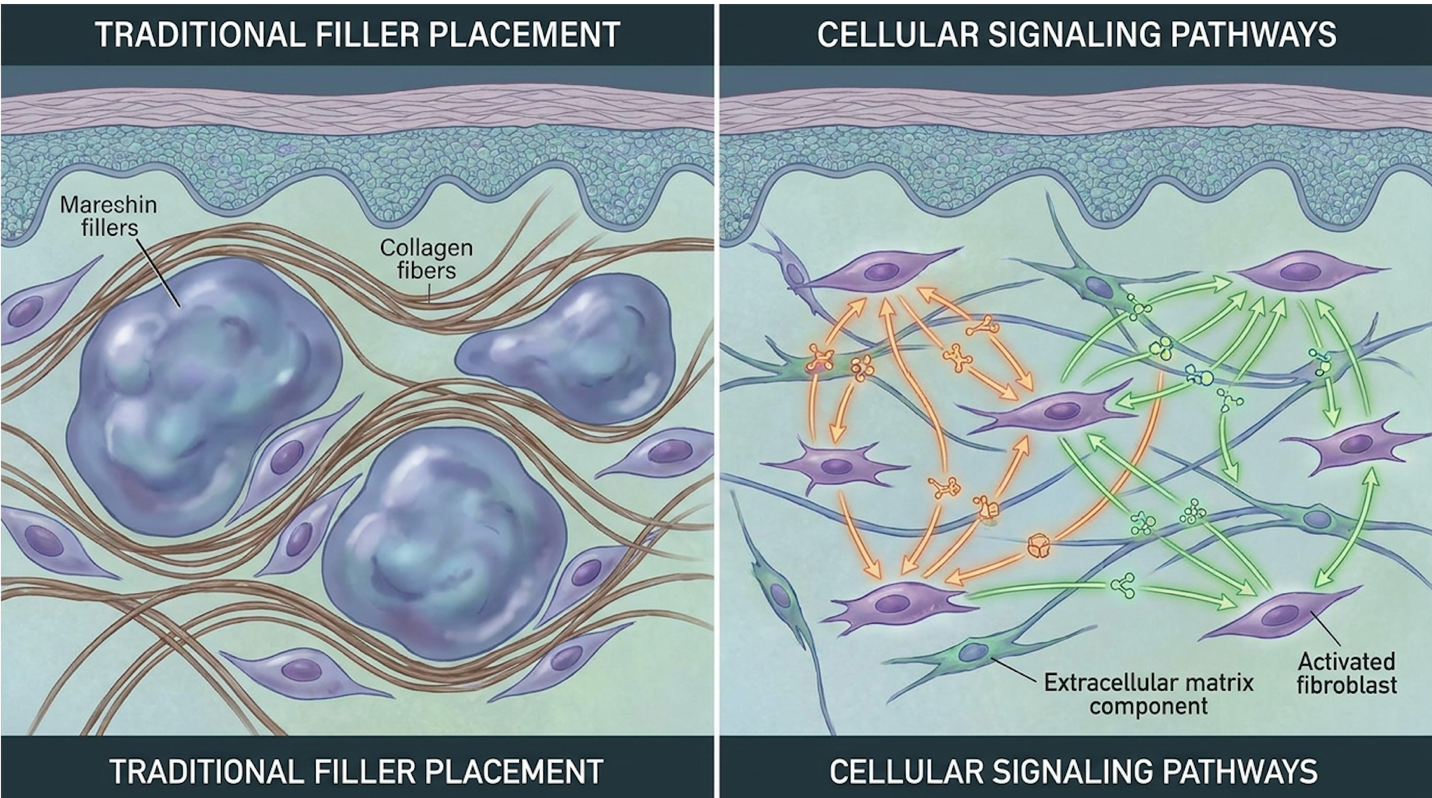
Figure 1: Next-gen regenerative aesthetic treatments work through cellular communication rather than simple volume replacement.
This biological mechanism is exactly why new skin rejuvenation treatments require patience. You are rebuilding the extracellular matrix from the ground up, not just inflating it.
The aesthetic industry has a terrible habit of blurring the lines between what is legally available today and what is currently undergoing safety testing. We use the “Evidence Ladder” to cut through this confusion.
Not all regenerative aesthetic treatments share the same regulatory standing. When clinics promise “stem cell” therapies, they frequently mix up cell-free derivatives (which are widely used) with live autologous cells (which face massive regulatory hurdles). According to current Medical Council guidelines regarding the regulatory status of regenerative procedures, there is a strict dividing line between cosmetics and investigational new drugs.
Autologous live stem cells currently fall under investigational new drug protocols when used for aesthetic rejuvenation, requiring strict regulatory oversight. As of 2026, regulatory bodies have become increasingly strict about how these therapies are marketed and applied. For live cellular therapies, early studies are encouraging, but large trials are limited. You need to know exactly where your chosen procedure sits on this ladder before moving forward.
Only a fraction of heavily marketed ‘stem cell’ facelifts actually contain living, viable cells so patients often pay exorbitant premiums for mislabeled PRP or unverified biological matter. We strongly advise patients to run, not walk, away from clinics promising miraculous, FDA-approved live stem cell facelifts.
| 📌 If you’re interested in why the percentage of living cells matters so much at the time of treatment, we have an interesting article that discusses the importance of cell viability in UC-MSC stem cell therapy, which you can read via the internal link. |
In our clinical experience, failing to distinguish between cell-free signaling media and live-cell therapies is the number one reason patients end up disappointed with their clinical outcomes. Properly categorized treatments align patient expectations with clinical reality so satisfaction rates drastically improve when the Evidence Ladder is respected.
We categorize these interventions purely by their current clinical readiness. This prevents patients from paying premium prices for highly experimental procedures while giving them access to proven biotechnology.
| Category | Treatments Included | Evidence & Regulatory Status |
| Available Now | Polynucleotides, Exosomes, Conditioned Media, PRP | Clinically accessible. Sourced from GMP labs or autologous blood. Strong safety profiles established. |
| In Human Trials | Autologous Live Stem Cells (Adipose-derived) | Investigational. Heavily restricted by FDA/Medical Councils for purely cosmetic use. |
| Still in the Lab | Gene-modified cells, 3D bioprinted tissues | Experimental. Years away from commercial aesthetic deployment. |
If you pursue a clinical regenerative procedure, the actual process looks very different from a standard Botox appointment. The magic doesn’t happen in the treatment chair—it happens in the laboratory. Our team evaluates dozens of protocols annually, and the most successful treatments follow a strictly controlled multi-stage methodology.
The process begins long before you arrive at the clinic. Laboratories must ethically harvest raw biological materials to create the signaling molecules used in your treatment.
Many high-tier exosomes and conditioned media products utilize Umbilical cord cell sources because these perinatal cells are biologically robust and highly active. Unlike adult adipose (fat) cells, which have already experienced decades of environmental aging, perinatal tissues boast exceptionally long telomeres. Alternatively, other protocols might rely on drawing your own blood (autologous sourcing) to isolate platelets, depending on the targeted outcome.
This is the most critical phase of the entire procedure. Raw biological material is useless—and potentially dangerous if it isn’t properly refined. Authentic clinics, like Vega, exclusively use products processed in facilities adhering to strict lab standards (GMP-certified).
During this intensive phase, scientists isolate the signaling vesicles, filter out unwanted immune-triggering cells, and conduct rigorous pathogen screening. GMP-certified processing eliminates up to 99% of cellular debris so your immune system focuses purely on regeneration, not fighting foreign contaminants. If a clinic cannot name their GMP laboratory partner or verify their filtration methods, you should cancel your appointment immediately. In our clinical view, compromising on laboratory processing is the fastest route to an adverse reaction.
| 📌 If you’re planning treatment in Thailand and want a practical checklist for choosing a safe clinic, we have an interesting article that discusses whether stem cell therapy is safe in Thailand, which you can read via the internal link. |
Once the refined product reaches the clinic, your doctor must deliver it past the stratum corneum (the skin’s dead outer layer). Because exosome molecules are relatively large, they cannot simply be rubbed onto intact skin and expected to work.
For structurally robust molecules like polynucleotides, direct needle injection remains the clinical standard. However, for exosomes and conditioned media, doctors typically pair topical application with micro-needling or specialized micro-channeling devices. The needles create thousands of microscopic channels, allowing the signaling molecules to bypass the skin barrier safely and efficiently without violating injectable regulations.
Do not expect to look ten years younger when you walk out of the clinic. The initial glow you see is usually just mild post-procedure inflammation combined with intensive hydration.
Over the next 12 to 24 weeks, the introduced growth factors get to work. The treatment may improve fine lines and texture as your native fibroblasts slowly synthesize fresh collagen and elastin. This is a profound biological remodeling process, meaning patience is absolutely non-negotiable. Real regeneration operates on biological time, not cosmetic time.
Very few elite dermatologists rely on a single modality anymore. The current clinical standard involves aggressively pairing regenerative compounds with controlled tissue trauma.
Clinical evidence indicates that applying conditioned media significantly accelerates healing. Energy devices like CO2 or fractional lasers create deliberate, controlled thermal damage to force tissue regeneration. Historically, this meant enduring weeks of severe redness, crusting, and uncomfortable peeling.
But applying cell-free derivatives immediately after lasering changes the healing trajectory entirely. According to a landmark JDD 2020 study, applying conditioned media post-laser significantly accelerates healing rates and reduces erythema. Patients often see a massive reduction in visible downtime so the combination of tissue ablation and regenerative signaling is now a cornerstone of A Modern Take on Skincare.
Platelet-Rich Plasma (PRP) is already a well-established therapy, but its role is evolving rapidly in advanced clinics. We now view PRP as the ideal biological “scaffold” for other regenerative treatments.
When doctors combine PRP and stem cells (or advanced cell-free derivatives), the platelets provide an immediate burst of localized growth factors. This creates a highly optimized, nutrient-rich environment that helps the more fragile, advanced signaling molecules survive and thrive in the tissue. It essentially preps the biological soil before planting the seed.
Your clinical results will degrade quickly if your home routine is terrible. What you do between appointments matters just as much as the procedure itself.
Applying medical-grade peptides like copper peptides and growth factor serums daily helps maintain the cellular signaling environment your doctor initiated. Think of the clinic visit as planting a seed, and your at-home peptide regimen as watering it consistently.
You cannot simply point to a menu and demand exosomes. Treatment selection depends entirely on a hands-on clinical presentation of your tissue.
The choice depends entirely on a clinical assessment of your specific tissue quality, age, and aesthetic goals. Are we dealing with deep volume loss, or is the issue purely textural? A doctor must physically assess your skin’s elasticity, thickness, and hydration levels before recommending a protocol.
If you want a holistic approach to overall skin health, a Thailand Natural Facial utilizing cell-free media might be ideal. But if you have severe structural tethering, a simple topical serum won’t do anything on its own.
A proper medical assessment maps out exactly how your tissue is aging. This prevents patients from wasting money on hydration boosters when they actually need cellular repair. Proper diagnostic evaluation prevents up to 80% of mismatched treatments so you invest only in protocols that address your exact biological deficit. Our clinicians rely on deep tissue analysis to ensure the selected protocol aligns with what your anatomy can actually metabolize.
| 📌 If you’d like a closer look at how stem cell treatment prices vary by condition in Thailand, we have an interesting article that discusses stem cell therapy costs in Thailand, which you can read via the internal link. |
Different aesthetic issues demand highly specific biological interventions. For patients battling deeply pitted Scars & Acne Scars, aggressive laser resurfacing combined with exosomes is often required to break down fibrotic tissue.
Conversely, treating stubborn pigmentation issues requires modulating melanocyte activity, where polynucleotides often excel. When matched correctly to the diagnosis, these targeted approaches may improve firmness and texture safely and predictably.
The newest verified clinical treatments focus on cellular communication rather than just filling volume. When you look past the marketing hype, polynucleotides and exosome therapies represent the most significant recent breakthroughs available today. Clinicians frequently combine these cell-free derivatives with energy devices like micro-needling to drastically improve dermal absorption. This advanced protocol instructs aging cells to repair themselves over time.
Skin boosters provide immediate hydration and temporary plumping using cross-linked hyaluronic acid, effectively acting as an internal moisturizer. In contrast, stem cell derivatives like exosomes focus entirely on long-term cellular signaling to repair the extracellular matrix over several months. While boosters mask the structural deficit instantly, regenerative therapies aim to slowly rebuild the tissue biology from within. Your choice depends entirely on your timeline and structural needs.
When sourced from GMP-certified laboratories and administered by board-certified physicians, the safety profile is exceptionally high. Because these treatments utilize strictly filtered, cell-free signaling molecules, the risk of serious adverse reactions remains low. However, patients should absolutely expect mild to moderate injection site swelling, redness, and tenderness for 24 to 72 hours as the tissue initiates its healing cascade.
Clinical evidence indicates that applying conditioned media immediately following fractional laser treatments significantly reduces recovery downtime. The laser creates thousands of micro-channels, providing a perfect delivery pathway for regenerative growth factors to enter the deeper dermal layers. Patients routinely experience less erythema (redness) and a much faster resolution of peeling compared to laser treatments performed without these advanced biological signaling serums.
Results can last anywhere from 12 to 24 months, depending entirely on your individual lifestyle and metabolic rate. Because these treatments stimulate your native fibroblasts to produce new collagen and elastin, the improvements become a long-lasting structural foundation within your tissue architecture. However, your skin will still continue to age naturally moving forward, meaning occasional maintenance sessions are usually necessary to sustain peak cellular activity.
Yes, when processed and categorized as topical cosmetics. While injecting live stem cells remains highly restricted and largely investigational across many jurisdictions, cell-free derivatives like exosomes and conditioned media are widely permitted. They are safely used globally when applied topically in conjunction with micro-channeling or laser devices.
The era of simply masking wrinkles with heavy injectables is fading fast. True next-generation aesthetics rely on cell-free derivatives, polynucleotides, and intelligent combination protocols that respect your biology. By understanding the Evidence Ladder, you protect yourself from experimental hype and invest only in treatments supported by rigorous laboratory standards and measurable clinical data.
The biological signaling pathways utilized in these treatments require expert application and a personalized approach. Whether you need the synergistic healing of laser resurfacing combined with conditioned media, or the targeted cellular repair of exosomes, the foundation of success is always a proper medical assessment.