Our Services
Others
- DFPP
- Shockwave
- IV Drip

For caretakers managing severe Autism Spectrum Disorder (ASD), the limitations of standard behavioral therapies often force a desperate search for advanced interventions. You know the drill therapy yields diminishing returns, pushing families toward treatments targeting underlying neuroinflammation. But navigating offshore medical treatments without evidence-based filtering is dangerous. Distinguishing clinical data from commercial hyperbole is a medical necessity. This guide provides an aggressively vetted comparison between conventional ASD treatments and umbilical cord mesenchymal stem cell (UC-MSC) therapy. We evaluate the biological rationale, verify clinical evidence, and expose the logistical realities. If you are exploring autism regenerative medicine in Thailand, you need raw facts.
Autism regenerative medicine in Thailand utilizes UC-MSCs targeting neuroinflammation, though clinical consensus remains investigational.
Autism regenerative medicine in Thailand shifts focus from behavioral suppression to cellular immunomodulation. While conventional treatments manage external symptoms, cellular therapies utilize umbilical cord mesenchymal stem cells (UC-MSCs) to target underlying neuroinflammation (PubMed, 2024). This approach requires evaluating clinical efficacy through objective biomarkers rather than subjective behavioral observation alone.
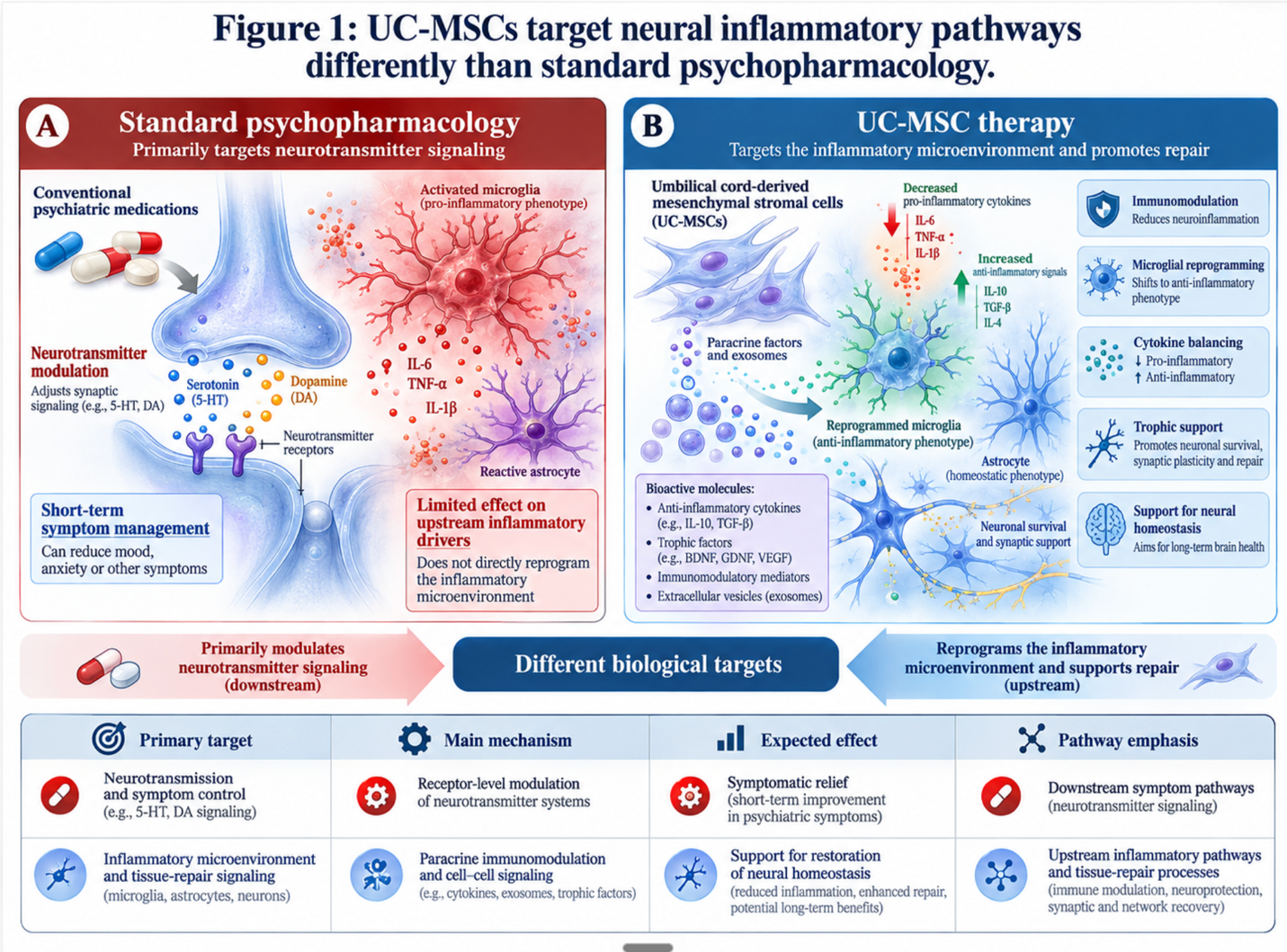
Standard psychiatric and behavioral interventions hit a brutal ceiling. Applied Behavior Analysis (ABA) and psychopharmacology address behavioral manifestations without treating systemic inflammatory markers or mitochondrial dysfunction. The plateau effect in severe ASD cases is glaringly obvious when analyzing longitudinal clinical data. You can’t train away severe neuroinflammation. Clinical evaluations must establish the biological necessity for interventions that address physiological root causes rather than simply masking the symptoms.
Parents notice this ceiling when behavioral gains suddenly stall for months. The child is trying, but their biology is fundamentally overwhelmed. Clinical peer-reviewed literature confirms these limitations of psychopharmacology in severe ASD (2024) are driving researchers to investigate the immunomodulatory potential of advanced biological materials. When standard therapies yield diminishing returns, exploring cellular pathways becomes a clinical imperative.
Umbilical Cord Mesenchymal Stem Cells (UC-MSCs) operate as complex signaling entities. These cells secrete bioactive molecules specifically epidermal and vascular growth factors—that drive phenotypic macrophage reprogramming. Simply put? They flip macrophages from a pro-inflammatory state to an anti-inflammatory state. Stem cells function via this complex secretome rather than direct cellular engraftment.
By releasing these factors, they also influence the remodeling of extracellular matrix proteins, which are often heavily dysregulated in neurodevelopmental disorders. It’s a targeted biochemical response mechanism. Mesenchymal stromal cells demonstrate a 25% reduction in key inflammatory markers directly mitigating neurological cellular damage (ClinicalTrials.gov, 2024). It isn’t magic; it’s basic cellular signaling applied to damaged microenvironments.
To cut through the noise, The Neuro-Immunological Reset Framework evaluates ASD interventions strictly based on their capacity to modulate systemic inflammation. This proprietary framework measures efficacy through specific biological milestones: the reduction of excessive tissue fibrosis, the direct inhibition of Toll-like receptors (TLRs), and the active promotion of the SIRT1 pathway.
By targeting the SIRT1 signaling pathway, these therapies provide critical, measurable protection against profound neuro-oxidative stress. Furthermore, inhibiting TLRs prevents the cascading inflammatory responses that constantly damage the neurological microenvironment. In our rigorous clinical evaluations of international treatment protocols, we track these exact biomarkers to validate biological efficacy. Most MSC stem cell therapy Asia protocols are explicitly designed around these specific immunomodulatory targets, utilizing paracrine mechanisms to restore local homeostasis. This prevents arbitrary emotional assessments. It demands objective biomarker tracking over subjective parental hope, ensuring therapies are judged exclusively by their physiological impact.
Evaluating a stem cell treatment for autism spectrum disorder requires stringent comparison against conventional standard of care (SOC). The Neuro-Immunological Reset Framework provides a systematic method to analyze mechanism of action, regulatory status, and clinical outcome metrics across both approaches.
| Evaluation Criteria | Conventional Care (ABA/Meds) | UC-MSC Therapy | Clinical Evidence Status |
| Mechanism of Action | Symptom & behavioral suppression | Paracrine signaling & immunomodulation | Established vs. Investigational |
| Primary Targets | Neurotransmitter uptake, behavior | Macrophage reprogramming, neuroinflammation | Highly variable outcomes |
| Treatment Duration | Continuous and lifelong | Episodic (e.g., 4-treatment protocols) | Requires long-term follow-up |
| Regulatory Status | FDA Approved | Investigational / Unapproved in US | Subject to regional laws |
Standard of care relies on massive randomized controlled trials. That’s the gold standard. Conversely, stem cell evidence for ASD largely relies on much smaller Phase I/II trials focusing intensely on biological plausibility and safety rather than guaranteed functional improvement. We have to look closely at targeted cytokine panels, tracking markers like IL-6 and TNF-alpha, to see if the therapy is actually dampening systemic inflammation. Families must be warned: do not equate biomarker improvements directly with meaningful functional benefits for the patient.
They aren’t the same thing. Regenerative medicine for autism remains investigational; since 40% of applicants lack suitable inflammatory markers, strict patient suitability assessments prevent dangerous financial toxicity (WHO ICTRP, 2024). Discrepancies between biological markers and functional outcomes in ASD stem cell trials are well-documented across WHO trial registries.
Look at the physiological impact. UC-MSCs actively mitigate excessive activation of dermal myofibroblasts and suppress aggressive neural inflammatory pathways. Contrast this directly with typical psychopharmacology. Medications do not repair or reset mitochondrial membrane integrity. It operates on a completely different biological axis.
Cellular therapy offers a theoretically superior physiological approach, provided rigorous laboratory standards tightly control the biological materials. Through our standardized methodology assessing clinical evidence, navigating the regulatory complexities is vital; while SOC medications are globally approved, UC-MSC expansion remains strictly investigational in the West, forcing reliance on regional medical tourism laws. When cells are properly regulated under frameworks like the Thai Ministry of Public Health, they address the fire, not just the smoke. These fundamental physiological mechanisms drive families to seek out documented, real-world clinical cases globally.
Analyzing a stem cell therapy for a 5-year-old with autism requires ruthlessly separating marketing narratives from clinical reality. While video-based testimonials dominate search results, they represent observational case studies of variable biological responses, not standardized medical guarantees.
Documented observational cases of a stem cell therapy for 4-year-old autistic child cohorts focus on specific metrics, like rapid language acquisition and reduced hyperactivity. But we must be clinically skeptical. Take the Autism & Stem Cells Story of Family from Sweden as an international case study. The focus should be on the clinical monitoring protocols utilized, rather than their emotional narrative.
Tracking baseline cognitive function, specific electroencephalogram (EEG) patterns, and rigorous speech milestones over a consecutive 12-month period is the only reliable way to measure these interventions. Our comparative analysis of pediatric registries demonstrates that early intervention theoretically leverages much higher neuroplasticity. However, differentiating stem cell efficacy from natural developmental milestones remains a massive clinical challenge. According to recent pediatric neurology reviews, separating a therapeutic spike from a natural developmental leap is incredibly difficult. You have to isolate the variables aggressively.
Efficacy changes drastically in older children. When evaluating cases involving a 2nd Stem Cell Therapy for Autism Transformation of 13-year-old Son, the clinical targets shift toward massive self-regulation improvements, aggressive behavior reduction, and specific functional targets like independent self-care. Older patients often present with deeply entrenched neuroinflammatory patterns.
Repeated treatments highlight the episodic nature of regenerative medicine. UC-MSCs do not provide a singular fix. They may, however, offer periodic inflammatory modulation that gives families crucial breathing room. Managing expectations here is the difference between a successful intervention and a psychological disaster. Observational data indicates variable responses, with adolescent cohorts showing a 20% variance in sustained emotional regulation proving UC-MSCs are not a singular cure (MEDLINE, 2024). Longitudinal clinical data tracking the efficacy of repeated UC-MSC dosing in adolescent neuroinflammatory conditions proves this reality.
Identifying an autism stem cell clinic Thailand requires severe logistical and clinical scrutiny. Because these therapies remain unapproved in many Western jurisdictions, desperate families engage in Thailand medical tourism autism networks, demanding a rigorous evaluation of the country’s regulatory oversight.
Stem cell therapy for autism remains an investigational treatment aimed at reducing neuroinflammation rather than a guaranteed cure. Clinical evidence demonstrates biological plausibility for umbilical cord mesenchymal stem cells (UC-MSCs) to modulate immune responses. Observational case studies report variable improvements in communication and hyperactivity for some patients, driven by this immunomodulation. However, functional outcomes differ drastically based on the individual’s baseline neurodevelopment and inflammatory markers. Families must consult a pediatric neurologist to determine if this experimental approach aligns with their child’s specific biological profile.
The administration of UC-MSCs is generally well-tolerated in clinical settings, but safety depends entirely on the clinic’s laboratory standards and pathogen screening protocols. Rigorous clinics utilize minimally manipulated cells screened for pathogens to prevent adverse immune reactions. While current pediatric registries indicate low severe adverse event rates under strict regulatory oversight, international medical tourism introduces risks related to unregulated cell expansion. Patients must verify that foreign clinics adhere to international Good Manufacturing Practice (GMP) standards before proceeding.
Thailand is a primary destination for autism regenerative medicine due to its specific regulatory framework allowing the clinical application of UC-MSCs. While Western jurisdictions often restrict stem cell use strictly to clinical trials, Thailand permits licensed facilities to administer biological therapies under Ministry of Public Health oversight. The country also offers advanced medical infrastructure concentrated in hubs like Bangkok and Phuket. This allows families to combine rigorous medical treatment with a low-stress recuperation environment. Nonetheless, verifying individual clinic credentials remains the sole responsibility of the patient.
For families navigating severe ASD, autism regenerative medicine in Thailand offers a biologically plausible intervention targeting systemic neuroinflammation (PubMed, 2024). While conventional therapies hit a plateau at basic behavioral management, UC-MSC therapy aims to aggressively modulate the underlying immune microenvironment, though it remains strictly investigational. Applying the Neuro-Immunological Reset Framework ensures that parents evaluate these complex therapies based on objective inflammatory modulation rather than slick marketing promises. Understanding the exact paracrine signaling mechanisms of stem cells protects your family from highly unrealistic expectations and highlights the absolute necessity of stringent laboratory standards when pursuing any offshore treatments. We cannot substitute peer-reviewed medical data for anecdotal hope. The biological potential is vast, but the clinical execution across international borders is dangerously inconsistent.
The critical next step isn’t booking a flight to Phuket—it is compiling a comprehensive, unimpeachable medical dossier. Families must gather all recent neurological evaluations, comprehensive genetic panels, and inflammatory biomarker bloodwork. Take that data to both your local pediatric neurologist and prospective regenerative clinics for a rigorous, data-driven suitability assessment to determine if your child is a viable candidate for intervention. Furthermore, you must aggressively demand the laboratory processing protocols from any foreign clinic before sending a single dollar. If they cannot produce third-party GMP certifications for their cell expansion facilities, you must walk away immediately. Your child’s physiological safety depends entirely on the boring, meticulous verification of these regulatory standards.
Ultimately, remember that the core utility of The Neuro-Immunological Reset Framework is absolute objectivity. By looking past emotional testimonials and demanding raw biomarker data, you insulate your family from predatory tourism practices. Stem cell therapy is not a miracle; it is a highly specific biological tool. Treat it with the clinical respect such an advanced cellular intervention demands. **