Our Services
Others
- DFPP
- Shockwave
- IV Drip

You are researching a stem cell therapy package in Thailand because local regulations and inflated domestic costs often exceeding $25,000 for standard infusions have forced you to look abroad. But here’s the thing. Extracting exact, comprehensive pricing from medical tourism aggregators is an exercise in pure frustration. Most platforms enthusiastically list baseline medical fees while completely obscuring the heavy, unavoidable costs of flights, 14-day hotel stays, and mandatory pre-treatment diagnostics.
This isn’t just about finding a cheap clinic. It’s about determining if you can actually afford the entire medical journey.
By the end of this guide, you will understand exactly what a stem cell trip costs in 2026, so you can confidently evaluate clinical quotes against a total, realistic travel budget. We break down 2026 package prices in USD and THB, detail exactly what your quote covers, provide condition-specific cost estimates, and map out the gritty logistics of medical travel in Bangkok, Chiang Mai, and Phuket. No marketing fluff just the financial and clinical realities.
A standard stem cell therapy package in Thailand ranges from $2,400 to $41,500 in 2026, depending heavily on the required cell count and specific medical condition.
In 2026, comprehensive stem cell therapy packages in Thailand range from $2,400 (approx. 86,000 THB) for localized joint treatments to over $41,500 (approx. 1.5 million THB) for multi-day systemic infusions. The final cost is dictated primarily by cell count, the source of the biological material (autologous vs. donor-derived), and clinical facility fees.
When analyzing the 2026 stem cell therapy cost market in Thailand, you immediately notice a staggering price spread. Why does one clinic charge $2,400 while another demands $41,500? It comes down to cellular volume and lab processing.
Umbilical cord-derived mesenchymal stem cells (UC-MSCs), a primary biological tool used in Thai clinics, require specialized laboratory expansion. A localized joint injection might utilize 10 million cells, keeping the price closer to 86,000 THB. A systemic IV infusion for an autoimmune condition might demand 100 million cells administered over three days, pushing the price well over 1.5 million THB.
| 📌 If you’re interested in why umbilical cord cells are often preferred over bone marrow or fat-derived cells, we have an interesting article that discusses why UC-MSCs are superior to other stem cell sources, which you can read via the internal link. |
Sure, budget-friendly stem cell clinics exist. But you have to ask hard questions about their laboratory standards. Are they using expanded cells cultured over weeks, or just bedside Stromal Vascular Fraction (SVF) spun from your fat in forty minutes? The U.S. FDA has publicly warned patients about unproven stem cell products, which is why verified laboratory standards matter wherever you are treated. Furthermore, cell viability drops sharply in sub-par clinical environments. You aren’t just paying for cells; you’re paying for the cold-chain logistics that keep them alive.
An all-inclusive stem cell treatment quote in Thailand should bundle three distinct phases of care. If a clinic quotes you an unbelievably low price, they are likely piecemealing these fees, which can inflate your final bill by 30% once you arrive in Bangkok.
First, the medical diagnostics. Legitimate clinics include comprehensive blood work (viral markers, liver/kidney function) and specialist consultations before touching a needle. Second, the treatment phase itself. This covers the biological product, IV or localized injection administration fees, nursing care, and the clinic room. Third, post-treatment monitoring. This includes follow-up consultations and basic physical therapy sessions if you are undergoing an orthopedic procedure.
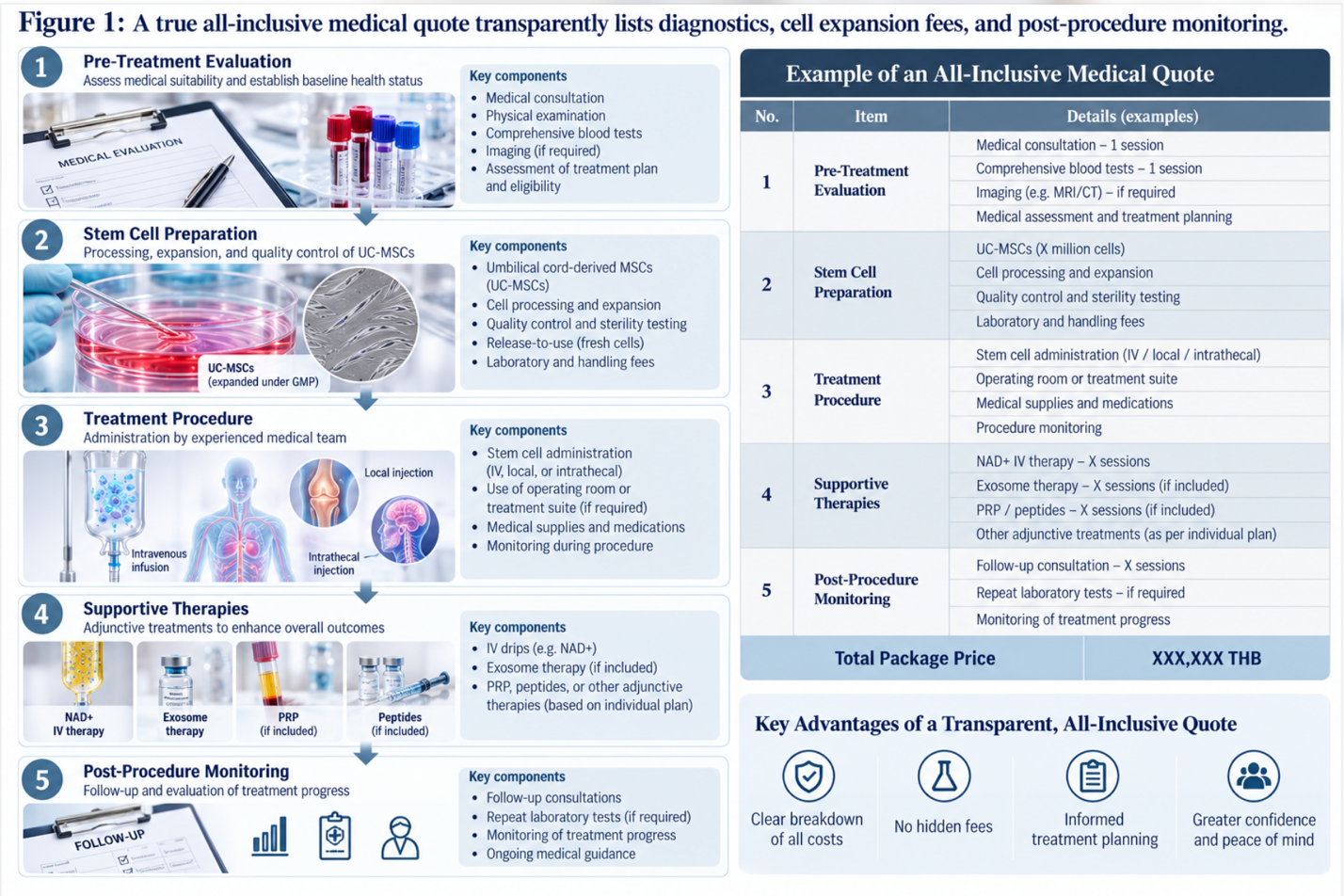
Figure 1: A true all-inclusive medical quote transparently lists diagnostics, cell expansion fees, and post-procedure monitoring.
A true “package” locks these costs in upfront. But remember, these general packages scale significantly in price and complexity once tailored to specific, severe medical diagnoses. The biological reality is that fixing a knee costs a lot less than attempting to repair a nervous system.
The cost of regenerative medicine scales proportionally with the severity of the diagnosis and the required cellular volume. A localized orthopedic injection requires significantly fewer cells than systemic intravenous infusions designed for autoimmune or neurological diseases. Consequently, clinics structure their 2026 pricing strictly by the medical condition and corresponding protocol complexity.
Neurological applications sit at the absolute top tier of pricing. Stem cell protocols for Alzheimer’s disease are investigational, and their price scales with the duration and complexity of the protocol.
This price reflects a harsh biological requirement: bypassing the blood-brain barrier. Intravenous delivery alone is rarely sufficient for neurological repair, meaning clinics often rely on complex, physician-administered intrathecal (spinal) injections. These protocols demand massive cell counts routinely exceeding 50 million UC-MSCs and require rigorous patient suitability assessments.
We need to be clear about biological plausibility versus proven clinical benefit. While preclinical models show incredible promise for neural repair, human efficacy requires rigorous Phase III testing, a reality mirrored by ongoing clinical trials for Alzheimer’s disease. Furthermore, clinical data on neurodegenerative interventions routinely shows that while some patients experience temporary cognitive stabilization, stem cells are not a structural cure for Alzheimer’s. You are paying for investigational symptom management, not a permanent reversal.
Localized pain management offers a much more accessible entry point. Joint injection stem cell cost in Thailand ranges from $2,400 to $13,600, depending largely on whether you are treating a single knee or undergoing full-body joint rehabilitation.
If you’re seeking stem cell therapy for chronic pain in Bangkok, you need to differentiate MSC therapy from standard steroid injections. Corticosteroids mainly suppress inflammation, and repeated injections may contribute to cartilage loss over time. MSCs, conversely, are directed at tissue regeneration. Many clinics now offer a stem cell therapy discount for multiple sessions, bringing the per-joint cost down significantly if you bundle shoulders, knees, and hips into a single trip.
| 📌 If you’re interested in whether a second dose can extend the benefits of the first, we have an interesting article that discusses why double-dose UC-MSC therapy may offer greater benefits than a single dose, which you can read via the internal link. |
The evidence here is considerably stronger than in neurology. Peer-reviewed clinical studies on MSC therapy for knee osteoarthritis report meaningful pain reduction, and some show measurable cartilage improvement. Early sports medicine research is also exploring cell-based treatment for tendon injuries.
Systemic viral and immune conditions require entirely different, highly complex therapeutic protocols. Stem cell therapy for HIV, for example, is heavily investigational, and any quote should be understood as an experimental immune-support protocol rather than a treatment for the virus itself.
Let’s address the reality of this. Rare, high-profile remission cases usually involve bone marrow transplants using donor cells with a specific CCR5-delta32 mutation—a grueling, high-risk procedure meant for cancer patients, not standard commercial medical tourists. Published case reports document long-term remission in these rare cases while highlighting the immense procedural complexity. Standard MSC infusions offered in commercial clinics are intended for immune modulation and general inflammation reduction, not viral eradication. Evaluating these condition-specific costs in isolation is insufficient. To determine if the trip is actually worth your time, they must be contextualized against global pricing averages.
| 📌 If you’re interested in how MSCs calm overactive immune cells throughout the body, we have an interesting article that discusses mesenchymal stem cell therapy for immune modulation, which you can read via the internal link. |
Patients undergoing stem cell therapy in Thailand pay a fraction of the cost found in Western countries, typically saving 50% to 70% compared to equivalent procedures in the United States. When evaluating regional and global competitors, Thailand remains highly competitive against neighboring hubs like Singapore and Malaysia, balancing accredited clinical standards with aggressive affordability.
If you’re mapping out stem cell therapy costs in Thailand vs the USA, the math overwhelmingly favors getting on a plane. But price is only one metric. You have to compare prices and factors that affect cost, primarily laboratory regulations and physician credentialing.
When patients search for the best country for stem cell therapy, they often end up comparing Thailand and Mexico. The Thailand vs Mexico debate usually hinges on infrastructure. While Mexico shares a border with the US, its regulatory environment for biologics is notoriously fragmented. Thailand, conversely, enforces strict Ministry of Public Health oversight on cell culturing facilities.
How does Thailand offer advanced biologics at a fraction of the cost found in Western countries? It isn’t because they cut corners on safety. It’s structural economics.
First, the cost of living and operational overhead is drastically lower. Second, medical education is heavily subsidized, meaning Thai specialists don’t graduate with half a million dollars in student debt that they need to recoup from patients. Third, the Thai government actively incentivizes biotech through Board of Investment (BOI) tax breaks, creating a volume-based economy of scale.
If you compare stem cell treatment costs in Singapore and Malaysia with Thailand, Singapore’s premium pricing reflects its exorbitant real estate and labor markets, not necessarily superior cells. Thailand maintains a massive volume of international patients, allowing them to keep top-tier laboratories running efficiently at lower margins per patient. To dig deeper into how these labs operate, you need to understand the safety and quality standards of clinics in Thailand.
However, the medical invoice is only one half of the financial equation. International patients must also calculate the hidden, logistical costs of medical travel.
The Total Trip True-Cost Framework reveals that international patients should budget an additional $2,000 to $4,000 beyond their clinical quote to cover flights, a 14-day hotel stay, and out-of-pocket consultation fees in Thailand. Evaluating a clinical invoice in isolation leads to severe financial miscalculation. Prospective medical tourists must factor in comprehensive logistics and insurance limitations before committing to international treatment.
Let’s address the most common misconception right now: using US health insurance in Thailand for regenerative medicine. Domestic policies rarely, if ever, cover investigational overseas biological treatments. Medicare and major providers generally exclude unapproved offshore therapies, and Original Medicare rarely covers care received outside the United States.
You are a self-pay patient. While you might occasionally leverage a Health Savings Account (HSA) if a sympathetic US doctor writes a superbill for medical necessity, you must assume 100% out-of-pocket liability for the cells.
Additionally, you have to factor in what foreigners pay to see doctors in Thailand for initial consultations. Before you are approved for stem cell therapy in Thailand for US patients, you will undergo a specialist review. These out-of-pocket consultations typically run $50 to $150 USD. It’s cheap by American standards, but it adds up if you are visiting multiple clinics for second opinions.
To calculate the total cost of a stem cell treatment trip to Thailand, you have to apply The Total Trip True-Cost Framework.
Let’s run a mock budget for a standard orthopedic patient traveling from Los Angeles.
That $5,500 medical quote is actually a $9,000 financial commitment. This is the reality of stem cell medical tourism in Thailand. You have to budget for the hotel just as strictly as the medical procedure.
Your chosen location drastically alters that $1,500 hotel line item. A 14-day medical check-up and hotel stay in central Bangkok will cost roughly 30% more than an equivalent stay in the north.
Stem cell therapy package prices in Bangkok are slightly higher, but you get unparalleled clinical density and immediate access to top-tier international hospitals if complications arise. Pursuing stem cell therapy in Chiang Mai and Phuket offers different advantages. Chiang Mai keeps living costs exceptionally low, perfect for a month-long recovery. Phuket positions itself as a luxury medical destination you pay a premium, but you recover on a beach. Regardless of where you land, always check current travel health advice for Thailand and ensure your routine vaccines are updated.
Even if the budget aligns perfectly, every patient still needs a formal medical suitability assessment before booking flights.
A standard stem cell therapy package in Thailand costs between $2,400 and $41,500 USD in 2026. This broad range depends entirely on the required cell count and the specific medical condition being treated. For example, localized orthopedic joint injections generally range from $2,400 to $13,600, while complex systemic and neurological protocols require massive cellular volumes and sit at the top of the price range. Always verify exactly which diagnostics and infusions are included in your initial clinical quote.
A comprehensive stem cell package in Thailand typically includes pre-treatment diagnostics, the biological cellular product, medical administration fees, and short-term post-procedure monitoring. High-tier packages often bundle airport transfers and localized clinical stays during the infusion period. However, packages rarely cover your international flights, 14-day recovery hotel stays, or specialized long-term physical therapy. Patients must request an itemized breakdown to prevent unexpected out-of-pocket logistical expenses.
Medical tourists should plan to stay in Thailand for 10 to 14 days when undergoing stem cell treatment. This timeframe allows for initial specialist consultations, comprehensive pre-treatment blood work, the actual cellular infusion process, and mandatory post-procedure clinical monitoring. Some localized joint injections may only require a 5-day stay. Complex systemic treatments for autoimmune or neurological conditions may necessitate observation periods extending up to 21 days.
Yes, stem cell therapy in Thailand is significantly cheaper than in the USA, offering savings of 50% to 70% for equivalent treatments. An orthopedic procedure costing $15,000 out-of-pocket in the United States often prices at roughly $5,000 in Bangkok. This pricing discrepancy stems from Thailand’s subsidized medical education, lower cost of living, and economies of scale within its established medical tourism infrastructure. Patients maintain high clinical standards while minimizing debilitating financial debt.
For advanced patients seeking regenerative medicine, a stem cell therapy package in Thailand offers a highly regulated, cost-effective alternative to Western healthcare systems. With clinical costs ranging from $2,400 for joint therapies to over $41,500 for complex neurological protocols, Thailand provides exceptional quality-to-cost value compared to the USA and Mexico. The most effective approach requires securing an itemized clinical quote prior to booking travel.
Applying The Total Trip True-Cost Framework is essential to prevent financial surprises. By factoring in an additional $2,000 to $4,000 for flights, 14-day hotel recovery, and out-of-pocket insurance gaps, you ensure your medical journey is completely capitalized. This framework eliminates the hidden variables of medical tourism, allowing you to focus entirely on biological response and recovery rather than budget anxiety.
Your next step is to initiate a formal suitability assessment with a verified clinic. Request a comprehensive package quote from the medical team at Vega Stem Cell, ensuring you provide your latest medical records, imaging, and functional goals. A transparent clinic will eagerly review your diagnostics before ever discussing financial deposits.