Our Services
Others
- DFPP
- Shockwave
- IV Drip

The clinical evolution of neurodevelopmental therapeutics has experienced a major paradigm shift, transitioning from purely behavioral adaptation frameworks to objective, molecular-level neuro-immunological interventions. Historically, the medical consensus evaluated Autism Spectrum Disorder (ASD) as a permanent, static alteration of neural wiring. Standard care models remain strictly localized to external strategies, including Applied Behavior Analysis (ABA), occupational modifications, and speech therapy, frequently augmented by palliative psychopharmacological agents targeting peripheral symptoms such as acute anxiety or sleep architecture disruptions. While these structural protocols are vital for cognitive development, they leave the underlying biological pathomechanisms entirely unaddressed.
Advanced translational medicine addresses these root system failures through allogeneic Umbilical Cord Mesenchymal Stem Cell (UC-MSC) therapy. By prioritizing the modulation of neuroinflammation and the repair of endothelial boundaries over surface symptom masking, cellular protocols seek to alter the microenvironmental landscape of the central nervous system. This therapeutic evolution has found an elite clinical ecosystem in Thailand. Following a historic regulatory decree formally classifying expanded cell-based therapies as registered medicines, Bangkok has established a strictly monitored, internationally standardized regulatory framework that provides the exact scientific safety required for advanced pediatric neurology.
The Neuro-Inflammatory Landscape: Microglial Overdrive in ASD
To understand the therapeutic mechanics of cellular transplantation, the clinical lens must look past behavioral phenotypes and analyze the localized microenvironment of the brain tissue. Contemporary neurobiology identifies chronic, low-grade central nervous system inflammation as a major driver of ASD pathophysiology.
The baseline homeostasis of neural tissue is regulated by microglia, the resident mononuclear phagocytes of the central nervous system. In a physiological state, microglia maintain a quiescent, ramified morphology, acting as metabolic caretakers that prune redundant synapses, clear debris, and express neurotrophic factors.
In a significant subset of individuals on the autism spectrum, these cells are locked in a persistent, hyper-activated, amoeboid morphology. Triggered by persistent immune dysregulation, activated microglia upregulate a destructive cascade of pro-inflammatory cytokines, including Interleukin-6 (IL-6), Interleukin-1β (IL-1$beta$), and Tumor Necrosis Factor-alpha (TNF-). This chronic cytokine bath creates permanent electrical static within neural pathways, disrupting normal synaptic pruning and gamma-aminobutyric acid (GABA)-ergic signaling networks. The resulting neural desynchronization underpins the sensory hypersensitivity, language processing delays, and emotional dysregulation seen in clinical settings.
Endothelial Permeability and the Blood-Brain-Gut Axis
This internal inflammatory loop does not exist in isolation; it is deeply connected to a parallel breakdown of the body’s protective anatomical filters. The central nervous system relies on the Blood-Brain Barrier (BBB) a highly selective vascular filter composed of brain microvascular endothelial cells (BMVECs), pericytes, and astrocyte endfeet to block circulating systemic toxins and immune cells from entering delicate neural tissue.
In many individuals with ASD, this vascular barrier is pathologically compromised. This increase in permeability is frequently driven by a disrupted systemic axis known as the Gut-Immune-Brain Axis. Chronic intestinal hyperpermeability (“leaky gut”) allows bacterial endotoxins, primarily Lipopolysaccharides (LPS), to escape the gastrointestinal lumen and enter the portal vein circulation.
Upon reaching the cerebral vasculature, circulating LPS binds to Toll-Like Receptor 4 (TLR4) on endothelial borders, triggering the downregulation of vital tight-junction proteins, such as Claudin-5 and Occludin. The resulting breakdown allows systemic inflammatory proteins and activated monocytes to spill across the leaky BBB into the brain parenchyma, creating a continuous feedback loop that keeps resident microglia in a permanent state of inflammatory alarm.
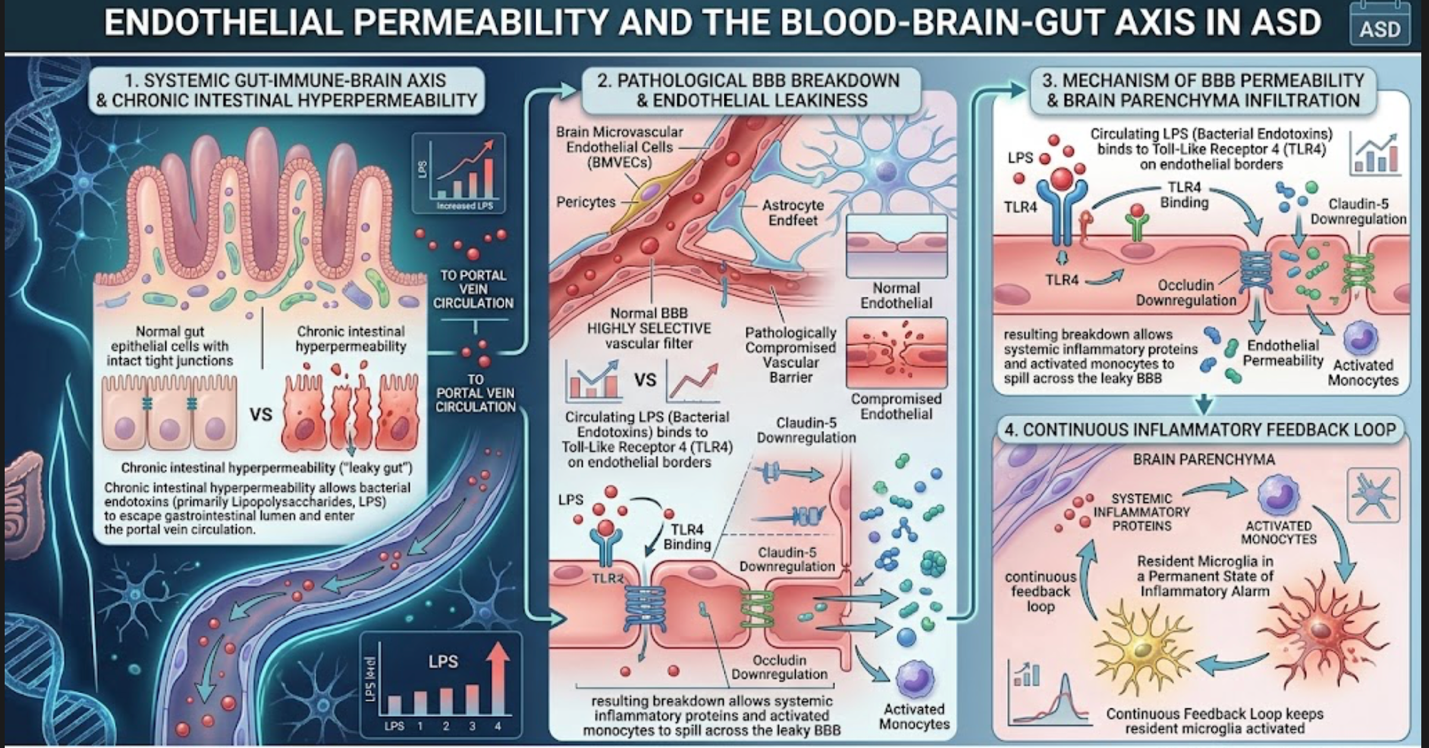
Figure 1: Mechanisms of Intestinal and Blood-Brain Barrier Permeability and Neuroinflammation in Autism Spectrum Disorder (ASD).
Molecular Mechanics of UC-MSC Immunomodulation
Allogeneic UC-MSC stem cell therapy bangkok thailand provide an elegant intervention because they function as responsive mobile signaling bioreactors rather than static physical replacements. Sourced from the Wharton’s Jelly of healthy, full-term neonatal donor tissues, these cells carry exceptional proliferative capacity and are completely immunoprivileged, lacking HLA Class II surface antigen expression.
When delivered through optimized clinical protocols, UC-MSC stem cell therapy bangkok thailand alter the neuro-immune environment through three precise molecular mechanisms:
1. Interruption of the NF-B Cascade via Exosomal Payloads
UC-MSC stem cell therapy bangkok thailand do not rely on direct differentiation to achieve therapeutic milestones; instead, they communicate through paracrine secretion, utilizing specialized extracellular vesicles called exosomes. A key component of this exosomal cargo is MicroRNA-146a (miR-146a). Upon entering the parenchymal space, these vesicles fuse with hyper-reactive microglia, transferring the miR-146a payload directly into the cytoplasm. This microRNA acts as an intracellular brake, degrading target proteins IRAK1 and TRAF6, which completely interrupts the NF-B (Nuclear Factor kappa B) pathway. This molecular shutdown forces the microglia to stop pro-inflammatory cytokine production and return to their resting, protective phenotype.
2. Vascular Endothelial Stabilization
To stop the influx of systemic endotoxins, UC-MSC stem cell therapy bangkok thailand secrete powerful angiopoietin-1 and Transforming Growth Factor-beta (TGF-) profiles. These growth factors target the degraded tight junctions of the BBB, prompting the rapid re-assembly of Claudin-5 strands. Restoring this vascular barrier seals the central nervous system against external immune triggers, stabilizing the neural environment.
3. Reversing Cerebral Hypoperfusion and Driving Neuroplasticity
Chronic neuroinflammation causes microvascular constriction, leading to cerebral hypoperfusion particularly in areas associated with language processing and social interaction, such as the temporal lobes. UC-MSC stem cell therapy bangkok thailand counter this by releasing Vascular Endothelial Growth Factor (VEGF), which drives micro-capillary sprouting (angiogenesis) to restore local oxygen delivery. Simultaneously, the cells secrete Brain-Derived Neurotrophic Factor (BDNF), which supports neuroplasticity, protects struggling neurons, and encourages the formation of healthy new synaptic connections.
Beyond Cryopreservation: How Thailand’s GMP Cleanroom Standards Preserve Day-Zero Potency
The clinical efficacy of allogeneic cellular transplantation is fundamentally governed by the preservation of cellular viability at the immediate point of care. While global logistics networks frequently necessitate cryopreservation subjecting cellular suspensions to deep-freezing protocols utilizing chemical cryoprotectants such as Dimethyl Sulfoxide (DMSO) this methodology introduces profound thermodynamic stress to delicate plasma membranes. Bedside thawing cascades often precipitate accelerated cell lysis and downregulate the homing receptor expression required for targeted transendothelial migration.
To bypass this logistical bottleneck, advanced biomedical facilities in Bangkok leverage a continuous, closed-system cultivation framework operating under stringent international Good Manufacturing Practices (GMP). By executing aseptic processing within Grade A laminar flow cleanrooms supported by positive-pressure HEPA filtration, technicians expand neonatal umbilical cord lineages locally. This immediate proximity to the clinical environment eliminates the requirement for cryoprotective vitrification.
The formulated allogeneic grafts remain suspended in a temperature-regulated, nutrient-dense transport matrix right up to the exact minute of clinical delivery. Automated cytometry and fluorescence-based live/dead assays confirm verified viability scores exceeding 95%. This architectural and logistical integration ensures that the recipient receives an uncompromised secretome payload, maximizing paracrine signaling efficiency and optimizing structural tissue remodeling within highly inflamed microenvironments.
The 2026 Regulatory Landscape: Advanced Therapy Medicinal Products (ATMPs) in Thailand
The clinical legitimacy of pursuing regenerative medicine in Thailand has been reinforced by a historic regulatory transition. Under a watershed ministerial decree signed by the Ministry of Public Health, Thailand formally classified expanded cell-based therapies and mesenchymal stem cells as registered medicinal products under the Drug Act. This legislative framework explicitly distinguishes between minimally manipulated tissue grafts and cells that undergo substantial manipulation, categorizing the latter as Advanced Therapy Medicinal Products (ATMPs).
This regulatory designation requires full compliance with international GMP under the strict PIC/S standard, alongside formal product registration with the Thai Food and Drug Administration (FDA). Far from acting as a clinical barrier, this formalization establishes the necessary evidentiary framework and safety monitoring that sets Thailand apart from unregulated clinical tourism destinations. Every expanded MSC batch delivered within licensed medical facilities must undergo comprehensive preclinical validation, strict batch-release purity testing, and mandatory pharmacovigilance tracking, guaranteeing that pediatric protocols meet international standards for scientific integrity.
Clinical Stratification and Evaluation Framework
To maximize therapeutic outcomes, advanced protocols reject generic, one-size-fits-all cell delivery models. Patient selection and dosing structures are strictly customized based on objective biochemical baselines, inflammatory tracking indices, and gastrointestinal co-morbidities.
| Evaluation Metric | Pathological Baseline Indicator | Specialized UC-MSC Dosing Structure | Clinical Tracking Objective |
| High Inflammatory Load | Elevated hs-CRP, high serum IL-6, and severe microglial overdrive. | Escalated high-density protocol (e.g., 2 million to 3 million cells per kilogram via slow infusion). | Reprogramming the NF-κB cascade and lowering systemic cytokine baselines. |
| Severe Gut-Brain Disruption | High fecal calprotectin, chronic intestinal hyperpermeability, elevated LPS. | Coordinated dual-delivery target model or segmented multi-infusion cycles over set windows. | Sealing intestinal epithelial tight junctions to block upstream systemic endotoxin entry. |
| Cerebral Hypoperfusion Profile | Noted temporal/frontal lobe hypoperfusion via advanced neuroimaging. | High-potency fresh formulation rich in native VEGF and exosomal BDNF profiles. | Revascularizing restricted micro-capillary networks and driving local synaptic plasticity. |
Conclusion: Activating Long-Term Neural Potential
Autism Spectrum Disorder involves complex, multi-system biological processes, but families do not have to remain locked in a purely reactive cycle of managing symptoms from the outside while the underlying cellular environment remains highly inflamed. Continuing to treat a deep biological failure with surface-level suppression masks daily challenges without addressing the true neuroinflammatory crisis.
By choosing advanced, ATMP-registered UC-MSC stem cell therapy bangkok thailand, you give your body the highly potent, youth-derived resources it needs to cool chronic brain inflammation, reinforce protective tissue barriers, and support healthy neural connectivity from the inside out. Embracing the cutting edge of regenerative medicine under Thailand’s strict PIC/S GMP standards represents a powerful, proactive choice to enhance the effectiveness of daily behavioral therapies, protect cognitive health, and build a stronger foundation for an independent future.