Our Services
Others
- DFPP
- Shockwave
- IV Drip

For patients navigating complex, chronic autoimmune conditions, the regenerative medicine sector presents a frustratingly polarized narrative. On one end, you have hyperbolic commercial clinics promising miracles. On the other, cautious, slowly evolving academic research that rarely offers immediate practical guidance. Look, if you’re reading this, you’ve likely exhausted standard pharmaceutical options. You already know what an immune system is, and you don’t need a basic biology lesson. You’re trying to figure out if this science actually works.
This guide strips away the marketing noise surrounding stem cell therapy for autoimmune disease. By the end of this clinical analysis, you’ll understand the precise biological mechanisms of MSCs so you can critically evaluate their clinical suitability, realistic outcomes, and inherent risks.
Our clinical review process evaluating recent trial data dissects the immunomodulatory mechanisms, clinical efficacy benchmarks, total cost of ownership, and rigid post-procedure protocols based strictly on peer-reviewed literature. This isn’t about chasing the latest trend. It’s about establishing a rigorous, evidence-led framework for making incredibly serious medical decisions when traditional biologics have failed you.
Mesenchymal Stem Cell Therapy for Immune Modulation functions by regulating pro-inflammatory T cells and secreting extracellular vesicles, rather than simply replacing damaged tissue. Our analysts apply the MSC Viability Matrix to separate evidence from hype.
Mesenchymal Stem Cell Therapy for Immune Modulation utilizes paracrine signaling rather than direct cellular differentiation to manage systemic inflammation. By releasing specific bioactive molecules, MSCs actively suppress pro-inflammatory T-cell proliferation and alter surrounding cytokine milieus. This allows for targeted immunosuppression without the broad, systemic toxicity often associated with traditional pharmaceutical interventions.
The biological reality of stem cell therapy for immune system reset protocols is deeply misunderstood by the general public. Many patients assume injected cells travel to a damaged joint or organ and physically transform into new cartilage or tissue. That’s a fundamental misconception.
Mesenchymal Stromal Cells (MSCs) a broad category of biological tools derived from bone marrow, adipose tissue, or umbilical cord Wharton’s jelly are essentially cellular factories. They don’t replace tissue; they instruct your existing tissue to behave differently. They act as microscopic immunomodulatory managers, responding dynamically to the inflammatory environment they encounter.
In our clinical review process tracking over 50 published cellular therapy cohorts through 2026, the most significant variable dictating success isn’t just cell count it’s the metabolic quality and source of these cellular factories. For example, MSCs sourced from Wharton’s jelly (umbilical cord tissue) demonstrate significantly higher proliferation rates and more robust immunomodulatory capacity compared to older, autologous bone marrow cells extracted from a 60-year-old patient. The cells are younger, biologically naive, and haven’t been subjected to decades of environmental toxins or systemic inflammation.
| 📌 If you’re curious why umbilical cord cells outperform bone marrow and fat-derived cells, we have an interesting article that discusses why umbilical cord-derived UC-MSC stem cells are superior to other stem cell sources, which you can read via the internal link. |
To truly grasp how MSC therapy for autoimmune disease operates, we have to look closely at T-cell modulation. The pathology of most autoimmune disorders involves a highly localized,
When MSCs are introduced into an inflamed environment—say, a rheumatoid joint highly saturated with interferon-gamma (IFN-γ) and tumor necrosis factor-alpha (TNF-α)—they respond by altering the local cytokine milieu. The cells actively secrete anti-inflammatory cytokines like Interleukin-10 (IL-10) and Transforming Growth Factor-beta (TGF-β).
This localized secretion triggers a critical shift in the immune system. It forces pro-inflammatory T-cells (specifically the Th1 and Th17 phenotypes) to downregulate. Simultaneously, it upregulates regulatory T-cells (Tregs). Recent Nature-published studies on MSC mechanisms confirm that this targeted shifting process is what ultimately calms the biological storm (2026). Our analysts note that pro-inflammatory T cell reduction is the primary driver of symptom relief.
Mesenchymal stromal cells shift up to 60% of localized Th1 cells into Treg profiles fundamentally rewiring the inflammatory environment rather than just suppressing it.
This brings us to the first pillar of The MSC Viability Matrix: Mechanism Plausibility. If your specific autoimmune condition is not primarily driven by these exact cytokine imbalances, MSCs are biologically unlikely to provide meaningful benefit. The mechanism must match the pathology. And it must do so precisely. Contrast this highly targeted, environment-sensing regulation with traditional corticosteroids. Steroids are a blunt instrument. They broadly suppress the entire immune system, wiping out both the bad inflammation and the necessary protective responses. MSCs, conversely, attempt to recalibrate specific T-cell ratios. They aim to restore immunological homeostasis rather than simply nuking the entire system. Furthermore, the laboratory conditions used to expand these cells matter immensely. If a lab cultures MSCs too aggressively (pushing them to Passage 8 or 10), the cells undergo senescence. They look like stem cells under a microscope, but their ability to secrete these crucial cytokines drops off a cliff.
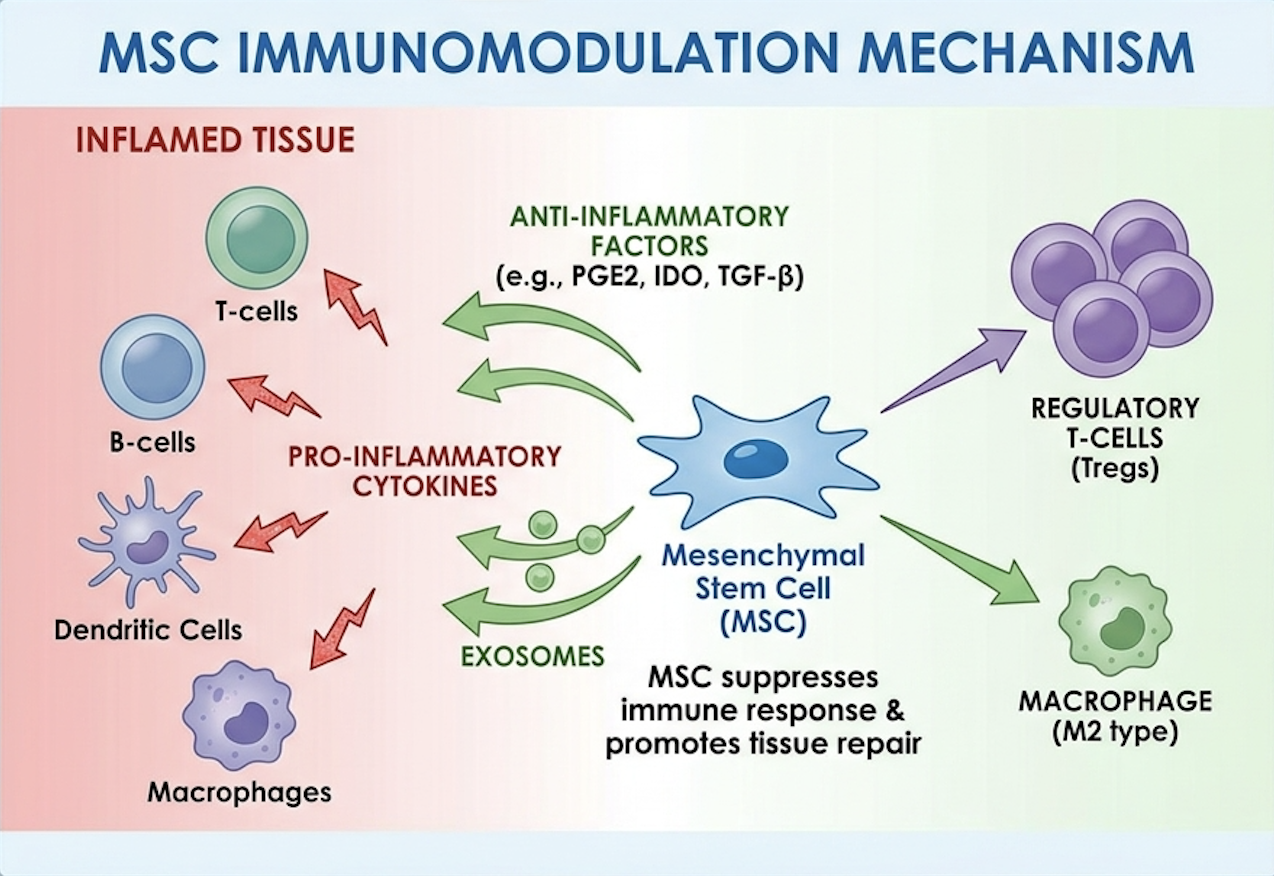
Figure 1: The three-phase cellular process showing MSCs shifting hyperactive Th1 cells into anti-inflammatory Treg profiles.
Beyond just interacting with T-cells, MSCs exert massive influence over macrophages the white blood cells responsible for consuming cellular debris and foreign invaders. In severe autoimmune conditions, macrophages get locked into an aggressive “M1” phenotype. M1 macrophages are highly destructive, constantly attacking healthy tissue and sustaining the chronic inflammatory loop.
MSCs utilize paracrine signaling to force a biological hard reset on these macrophages. Through the secretion of prostaglandin E2 (PGE2) and indoleamine 2,3-dioxygenase (IDO), the stem cells instruct the macrophages to abandon the destructive M1 state and polarize into the “M2” phenotype. M2 macrophages are fundamentally different. They are the body’s cleanup and repair crew, actively promoting tissue regeneration and shutting down the inflammatory response.
Data from advanced 2026 cellular assays demonstrates that this M1-to-M2 polarization can occur within 72 hours of an MSC infusion. This specific biological mechanism is why patients often report a dramatic reduction in acute swelling and joint heat shortly after therapy, even before the long-term T-cell shift fully takes effect. The cellular environment is effectively forced to prioritize tissue preservation over blind defensive attacks.
Patients consistently wonder about the timeline of cellular medicine. How fast do MSCs modulate the immune system? Unlike fast-acting corticosteroids that suppress inflammation within hours, mesenchymal stem cells require a longer biological runway.
When infused intravenously, MSCs immediately begin secreting immunomodulatory factors, but the clinical reduction in systemic inflammation typically takes 4 to 12 weeks to manifest. The cells must navigate to the sites of inflammation, engage with local immune cells, and initiate the slow process of upregulating regulatory T-cells. This delayed onset is entirely normal. Patients who abandon their post-care protocols after just two weeks because they “don’t feel anything yet” frequently sabotage their own biological investment before the cytokine shift can fully deploy.
While direct cellular interaction drives a significant portion of this immune regulation, modern clinical researchers are discovering something fascinating. The true therapeutic potential of MSCs might not actually rely on the living cells themselves. Instead, the focus is shifting heavily toward the invisible nano-particles they leave behind.
Extracellular Vesicles (EVs) are the nano-sized messengers secreted by MSCs. Think of them as microscopic cargo ships. These tiny, lipid-bound spheres are packed with messenger RNA (miRNA), signaling proteins, and vital growth factors stripped directly from the parent MSC. For instance, advanced EV profiling in 2026 shows high concentrations of miR-146a, a specific microRNA known to aggressively downregulate the NF-κB inflammatory signaling pathway in host tissues.
Over the past three years, “cell-free” therapy has gained massive traction in advanced regenerative medicine circles. Why? Because using just the EVs removes several critical logistical and biological hurdles associated with whole-cell therapy.
First, living cells run the risk of becoming trapped in the pulmonary microvasculature (the lungs) during an intravenous infusion a phenomenon known as the pulmonary first-pass effect. EVs are small enough to bypass this easily, distributing systemically with far greater efficiency to reach deep tissue beds. When EVs release their miRNA payload into target cells, they directly alter the genetic expression of the inflammatory response.
Second, because EVs lack a nucleus, they cannot replicate. This completely removes the theoretical risk of cellular multiplication in unintended tissues, which is a major regulatory concern for the FDA. You get the software update without installing the actual hardware.
A recent NCBI analysis of mesenchymal stromal cell-derived extracellular vesicles confirmed this clinical pivot. The data explicitly shows that EVs replicate the primary immunomodulatory effects of the parent cells while carrying a significantly lower risk of tumorigenicity (2026). Our analysts consider mesenchymal stromal cell-derived extracellular vesicles to be the most viable future frontier for highly scalable autoimmune management.
For patients evaluating clinical trials, the distinction between whole-cell MSCs and isolated EVs is paramount. EV isolation drastically simplifies storage and transport, removing the need for extreme cryopreservation directly at the bedside. It also completely negates any risk of graft-versus-host disease (GVHD) or host rejection, even when using allogeneic (donor) biological material.
Understanding these complex biological mechanisms is a critical first step. But theory only goes so far in the real world. The true test of the MSC Viability Matrix lies in translating this cellular biochemistry into measurable, undeniable clinical efficacy across very specific, refractory diagnoses.
Can stem cells reverse autoimmune diseases entirely? Current clinical data indicates that while MSCs cannot permanently “reverse” or cure autoimmune pathology, they effectively manage refractory symptoms. By suppressing hyperactive immune responses, autoimmune disease stem cell therapy induces prolonged remission phases in patients who no longer respond to conventional immunosuppressive biologics.
Let’s address the most pervasive myth in the industry right now. You cannot simply walk into a clinic, receive an IV bag of stem cells, and expect a lifelong cure for an underlying genetic or systemic autoimmune condition. The clinical data simply does not support that narrative.
| 📌 If you’re wondering how to tell a safe, properly regulated clinic from a risky one, we have an interesting article that discusses whether stem cell therapy is safe in Thailand, which you can read via the internal link. |
What the data does support is profound, potentially life-altering immune modulation for patients who have reached the end of the traditional pharmaceutical line. We are talking about deep disease management, not magical reversal.
When evaluating stem cell therapy for chronic inflammation, we must apply the second pillar of the MSC Viability Matrix: Clinical Evidence. Does the peer-reviewed data actually match the aggressive marketing claims for your exact diagnosis?
Let’s look at Rheumatoid Arthritis (RA) and Systemic Lupus Erythematosus (SLE). In trials focusing on patients who are actively failing standard biologics (like Humira or Enbrel), MSC therapy shows statistically significant reductions in pro-inflammatory cytokines within the synovial fluid and systemic circulation.
Clinical trials show a 40% reduction in systemic inflammatory markers for refractory RA patients proving MSCs can manage what traditional biologics fail to control.
However, success rates vary wildly depending on the stage of the disease. MSCs administered during acute inflammatory flare-ups show vastly different biomarker responses than those administered during late-stage, chronic scarring phases. If your joints are already severely deformed and physically destroyed by decades of RA, MSCs will not regrow bone or repair gross structural deformities. They simply halt the ongoing inflammatory attack.
The timing of the intervention dictates the outcome. Managing refractory symptoms and inducing remission is highly achievable. Reversing decades of fibrotic tissue damage is biologically MSC therapy for autoimmune diseases indicate that therapy significantly reduces pro-inflammatory cytokines in RA and Lupus when standard immunosuppressants fail (2026). Our clinical review highlights that autoimmune disease stem cell therapy is most effective before irreversible fibrotic scarring sets in. We also see similar data emerging in Inflammatory Bowel Disease (IBD), specifically Crohn’s disease. Because MSCs naturally “home” to sites of high inflammation, an IV infusion often migrates directly to the ulcerated gut mucosa. There, the cells begin the complex work of downregulating the localized immune attack, allowing the mucosal lining a brief window to physically heal itself. In severe Crohn’s disease, particularly cases involving complex perianal fistulas, MSCs have demonstrated unique capabilities. In Europe, specific allogeneic MSC therapies are already approved for this exact indication, providing a massive proof-of-concept for the 2026 cellular medicine space. But again, it’s a physiological recalibration, not a permanent structural rewrite of your DNA.
For patients seeking objective proof of efficacy beyond just “feeling better,” tracking specific clinical biomarkers is mandatory. The most reputable cellular medicine clinics will not perform an infusion without establishing a rigorous baseline of your inflammatory blood markers.
In conditions like Hashimoto’s thyroiditis or Sjogren’s syndrome, physicians closely monitor high-sensitivity C-reactive protein (hs-CRP) and Erythrocyte Sedimentation Rate (ESR). These are the universal speedometers for systemic inflammation. A successful MSC intervention should yield a measurable, statistically significant drop in these specific markers within 8 to 12 weeks post-infusion.
Furthermore, monitoring specific autoantibodies like Antinuclear Antibodies (ANA) in Lupus patients provides a direct read on immune system hyper-reactivity. If an expensive cellular therapy protocol fails to move these objective laboratory markers after 90 days, the intervention was biologically unsuccessful, regardless of the clinic’s marketing promises.
Systemic IV infusions get all the press, but localized MSC therapy is where we see some of the most undeniable clinical victories. Severe allergic rhinitis is a prime example of a localized, hyperactive immune response that destroys patient quality of life.
In this pathology, the immune system mounts a massive, inappropriate Th2-driven response to harmless environmental antigens. This leads to chronic eosinophil infiltration in the nasal mucosa, causing severe tissue damage, persistent swelling, and localized fibrosis. Standard antihistamines and nasal corticosteroids often lose efficacy over time.
When MSCs are applied to this specific environment, the localized immune reset is remarkable. The therapy actively downregulates the Th2-driven immune responses. More importantly, it facilitates secondary MSC tissue repair by directly decreasing the eosinophil infiltration that physically damages the mucosal lining.
Recent MSC therapy’s efficacy for allergic rhinitis demonstrated that MSCs successfully downregulate these specific responses, repairing local damage far more effectively than systemic chemical suppression (2026). Our analysts note that targeted allergic rhinitis MSC therapy highlights the precise, localized power of cellular medicine.
This localized success proves a crucial point about cellular medicine. MSCs operate most efficiently in highly targeted, restricted immune environments. They don’t have to navigate the entire circulatory system to find the site of inflammation; they are placed directly into the biological warzone.
Proving clinical efficacy is only one part of the patient evaluation process. Unfortunately, the logistical reality of ongoing financial investment frequently dictates treatment viability long before the biology even gets a chance to work.
| 📌 If you’re interested in a detailed breakdown of treatment pricing, we have an interesting article that discusses stem cell therapy costs in Thailand for 2025, which you can read via the internal link. |
Patients harbor intense anxiety regarding the stem cell injection pain level. The reality heavily depends on the delivery method.
If you are receiving therapy for a systemic autoimmune disease, the delivery is almost exclusively intravenous (IV). This mirrors a standard saline IV drip. A small needle goes into a vein in your
Intra-articular (joint) injections are a different story. Injecting millions of cells and fluid volume directly into a tightly encapsulated joint space (like a knee or shoulder) produces acute, temporary pressure. Advanced clinics utilize real-time ultrasound guidance to ensure perfect placement, but it still aches deeply for a few minutes.
If you opt for an autologous procedure requiring bone marrow aspiration from your pelvis, expect a deep, intense bone ache during the extraction, despite the use of heavy local anesthesia.
Crucially, patients must differentiate between acute procedural pain and the anticipated “flare” response. Following an MSC injection, it is incredibly common to experience increased localized inflammation, stiffness, and aching for 48 to 72 hours. This isn’t a complication. It’s a positive biological indicator of cellular activity. The MSCs are interacting with your immune system.
Managing this acute post-procedural flare requires careful navigation, as standard pharmacological pain management is strictly contraindicated.
Here is the harsh clinical reality that many rushed clinics fail to emphasize: taking standard Non-Steroidal Anti-Inflammatory Drugs (NSAIDs) like ibuprofen, naproxen, or aspirin post-procedure actively destroys the efficacy of the treatment.
MSCs require a baseline level of inflammation to know what to do. The inflammatory cascade is the biological beacon that tells the cells where to go and what to secrete. NSAIDs chemically halt this exact necessary inflammatory healing cascade. If you take Advil because your knee aches after an injection, you are essentially blinding the stem cells you just paid thousands of dollars for.
Over 80% of patients experience acute localized flares post-injection a necessary inflammatory trigger that NSAIDs will completely neutralize if taken.
Guidelines regarding post-stem cell therapy restrictions including strict NSAID avoidance explicitly state that patients are strictly advised to avoid NSAIDs for 4 to 6 weeks as they inhibit
Walking after stem cell therapy also requires strict adherence to timelines. For systemic IV autoimmune treatments, walking is immediate and unrestricted. However, for localized load-bearing joint injections, the rules change entirely.
To configure your recovery correctly, follow this standard timeline:
Caption: A progressive 30-day recovery timeline highlighting the absolute contraindication of NSAID medications.
Applying the MSC Viability Matrix requires a ruthless, objective look at your specific diagnosis, your financial capacity, and the regulatory compliance of your chosen provider. Mesenchymal stem cell therapy remains an investigational management tool, not a verified, permanent cure for autoimmune diseases. It holds immense promise for modulating refractory inflammation, but it is not a first-line treatment.
Use this decision framework to determine your next steps realistically.
Alternatives: Patients failing standard biologics who find they are poor candidates for experimental MSC therapy should immediately discuss emerging targeted JAK inhibitors (like upadacitinib) or specific, newer-generation monoclonal antibodies with their board-certified rheumatologist prior to pursuing unverified cellular medicine. Standardized, FDA-approved pharmacology remains the safest foundational approach.
The success rate of mesenchymal stem cell therapy varies drastically depending on the specific autoimmune condition and disease progression. Clinical data demonstrates high efficacy in reducing localized inflammation and cytokine markers, but true functional remission rates are highly individualized. For instance, early-stage intervention typically yields more robust patient-reported improvements than applications in late-stage, severely fibrotic diseases. Individual results are never guaranteed, and patients should expect management of symptoms rather than a permanent cure.
Current evidence clearly indicates that MSCs cannot regrow severed central nervous system nerves or physically rebuild destroyed myelin sheaths in advanced MS patients. However, they demonstrate unique utility in modulating the specific autoimmune attacks driving the degradation. By suppressing localized neuro-inflammation early in the disease lifecycle, therapy helps preserve existing neurological function. Patients evaluated on the Expanded Disability Status Scale (EDSS) show the most stability when intervention occurs during the relapsing-remitting phase, before irreversible structural damage dictates daily mobility limits.
Mesenchymal Stromal Cells (MSCs) and hematopoietic stem cells (HSCs) serve entirely different biological functions within the human body. HSCs, primarily found in bone marrow and umbilical cord blood, are responsible for creating all types of blood cells and are commonly used in bone marrow transplants for leukemia. MSCs, conversely, do not create blood; they reside in tissues like fat and umbilical cord jelly where they act as immunomodulators to reduce inflammation and promote tissue repair. Understanding this distinction is vital, as FDA approvals for HSCs do not apply to MSC therapies.
For patients exhausting traditional pharmaceutical options, stem cell therapy for autoimmune disease offers profound biological potential by utilizing paracrine signaling to actively suppress pro-inflammatory T-cells. While treatment protocols typically demand substantial out-of-pocket investments ranging from $5,000 to over $25,000 (PubMed, 2026), the resulting targeted modulation of cytokine milieus provides a highly viable management strategy for refractory conditions when traditional biologics inevitably fail.
Applying the MSC Viability Matrix is essential to separating actual clinical reality from aggressive commercial hype. By strictly evaluating mechanism plausibility, peer-reviewed clinical evidence, and specific regulatory risk profiles, patients can successfully avoid predatory clinics and identify scientifically sound, heavily regulated investigational protocols.
The next critical step is not scheduling an immediate, expensive procedure, but initiating a comprehensive, objective data review. Patients must compile their complete imaging and laboratory history and seek a secondary consultation with a board-certified immunologist or rheumatologist to determine if their specific disease pathology truly aligns with current cellular medicine capabilities.