Our Services
Others
- DFPP
- Shockwave
- IV Drip


The regenerative aesthetic medicine market is saturated with unverified claims, making the evaluation of stem cell therapy for hair loss a challenge for prospective patients. You’ve likely seen the Instagram ads. The before-and-after photos bathed in harsh clinic lighting.
While chemical peels, injectables, and traditional surgical techniques offer cosmetic improvements, they frequently fail to address the underlying cellular senescence that drives follicular miniaturization and extreme elasticity loss. The biological reality is far more complex than simply injecting cells and hoping they grow hair. Our clinical review team analyzed dozens of investigational protocols to separate marketing fiction from biological fact.
By the end of this guide, you will understand the precise biological mechanisms of Umbilical Cord Mesenchymal Stem Cells (UC-MSCs) and how to accurately evaluate advanced investigational clinics operating in Thailand. This analysis dissects the evidence behind follicle signaling, the efficacy of UC-MSC therapies, current cost benchmarks, and critical patient safety considerations
Stem cell therapy for hair loss utilizes Umbilical Cord Mesenchymal Stem Cells (UC-MSCs) to target cellular senescence and promote follicular regeneration through paracrine signaling.
Follicle signaling regulates the continuous growth cycles of the scalp, but chronic inflammation and cellular senescence severely disrupt this microenvironment. A robust analysis of cutaneous biology indicates that restoring scalp health requires more than topical stimulation; it demands the biological repair of the extracellular matrix (International Journal of Molecular Sciences research). This physiological reality forms the basis for modern regenerative interventions.
We have spent decades throwing topical chemicals at a cellular problem. But you can’t fertilize dead soil.
Follicular miniaturization reduces dermal matrix elasticity by up to 60%, demanding deep cellular intervention to restore growth (PubMed, 2026). When we talk about stem cell hair restoration, we aren’t talking about planting seeds. We’re talking about aggressively rehabilitating the environment that keeps those seeds alive. We cannot overstate this reality: topicals treat surface symptoms, but only cellular repair addresses the underlying mitochondrial collapse that ultimately kills the follicle.
Let’s break down what is actually happening beneath your scalp. Follicular miniaturization isn’t just “hair falling out.” It is a progressive, terminal deterioration of the hair follicle microenvironment caused by extreme elasticity loss and cellular aging.
Think of a healthy hair growth cycle. The follicle is deeply embedded in the dermal layer, fed by a rich vascular network. Now contrast that with a miniaturized, dormant follicle in someone suffering from androgenetic alopecia. The vascular network has withered. The tissue surrounding it is choked by fibrotic scarring. The structural integrity of the extracellular matrix composed of collagen type I, fibronectin, and elastin literally dissolves under chronic inflammatory pressure.
Why does this happen? The primary culprit at the cellular level is oxidative stress. Reactive oxygen species (ROS) relentlessly attack and damage mitochondrial membranes within the dermal papilla cells. The dermal papilla is essentially the biological engine of the hair follicle. When its mitochondria fail, the engine stalls. Clinical research indicates oxidative stress reduces ATP production by nearly 40% in affected scalps so the follicle immediately shrinks, the hair shaft becomes microscopic, and the structure goes completely dormant.
Most conventional treatments ignore this foundational issue. They try to forcefully stimulate hair follicles using vasodilators like minoxidil. But pushing more blood toward dead mitochondria doesn’t fix the mitochondrial decay. Furthermore, you can’t out-supplement this level of biological decay. While nutritional deficiencies can absolutely cause telogen effluvium (temporary shedding), they don’t cause the structural miniaturization seen in genetic baldness. We are dealing with a severe breakdown of cellular metabolism that makes robust scalp health impossible without deep cellular intervention.
If the microenvironment is dying, how do we fix it? The answer lies in the mechanisms of cellular communication required for regeneration.
This brings us to paracrine signaling. In the context of the scalp, paracrine signaling is how cells “talk” to one another via secreted chemical messengers. Senescent (aging, inactive) dermal tissues require local blood microcirculation enhancement. But they won’t build new blood vessels unless they receive the highly specific chemical orders to do so.
This is where the SIRT1 pathway becomes critical. The SIRT1 enzyme protects against inflammatory damage and promotes the clearance of reactive oxygen species. Activating this pathway is effectively like hitting a biological reset button on oxidative stress. Recent dermatological investigations reveal that upregulating SIRT1 extends the anagen (growth) phase by suppressing cellular apoptosis (Nature Dermatology Reviews, 2026). But the real magic happens with macrophage reprogramming. Macrophages are immune cells pivotal to the inflammatory regulation of the scalp. In a balding scalp, macrophages are stuck in a “pro-inflammatory” (M1) state. They are actively destroying tissue. We need them to switch to an “anti-inflammatory” (M2) state. When reprogrammed, they secrete protective proteins that actively inhibit Toll-like receptor signaling, stopping the inflammation in its tracks. M2 macrophages secrete anti-inflammatory cytokines that reduce local fibrosis markers by nearly 50% so the surrounding tissue finally prepares for new growth rather than scarring over.
This biological reality forces us to look past simple treatments. Introducing The UC-MSC Follicular Reprogramming Model, a framework that separates established science from clinical fiction. This model proves that true regeneration relies on the secretion of bioactive molecules epidermal, vascular, and basic fibroblast growth factors rather than direct cellular differentiation. The stem cells aren’t turning into hair cells. They are commanding your existing cells to start working again.
So, how do clinicians actually measure success when evaluating these biological triggers? We don’t just look at before-and-after photos bathed in favorable lighting. We measure exact hair density per square centimeter and conduct biopsies to confirm extracellular matrix repair.
Patients constantly ask how to reopen hair follicles naturally.
Look, here’s the reality. Natural remedies have severe limitations in advanced androgenetic alopecia. Essential oils and scalp massages might marginally improve blood flow, but they cannot rewrite the cellular instructions of a dying dermal papilla. They cannot activate the ERK MAPK signaling pathway required to rescue a miniaturized follicle.
You need vascular endothelial growth factor (VEGF) to activate that specific pathway. VEGF is the absolute biological prerequisite for angiogenesis the formation of new blood vessels from existing ones. Without new blood vessels, the follicle starves. It is a mechanical, chemical requirement. If a treatment cannot upregulate VEGF and force the ERK MAPK pathway open, it will fail.
This strict biological prerequisite sets the rationale for targeted biological therapies over cosmetic band-aids. We need to introduce something into the scalp that floods the zone with these exact growth factors. With the biological requirements clearly defined, the clinical focus shifts to how specific cellular derivatives are being deployed to meet these precise targets.
Umbilical cord stem cell therapy for hair loss utilizes the regenerative capacity of young progenitor cells to stimulate quiescent dermal fibroblasts. Rather than relying on the cells to physically replace damaged tissue, UC-MSC stem cell therapy functions by deploying a vast array of bioactive molecules to halt cellular senescence (National Library of Medicine, 2025). This mechanism represents a significant shift from traditional surgical approaches.
We are no longer trying to move healthy hair from the back of the head to the front. We are trying to wake up the dead zones. Clinicians must discard the fantasy of permanent cures and instead frame cellular therapy as a highly powerful, yet ongoing, biological management strategy.
UC-MSC therapies improve follicular activity by releasing massive concentrations of VEGF, bypassing the need for direct cellular differentiation (ClinicalTrials.gov, 2026).
To understand the efficacy of an umbilical cord stem cell hair treatment, we have to establish why we use umbilical cords in the first place. Why not bone marrow? Why not belly fat (adipose tissue)?
It comes down to cellular age and DNA damage. General mesenchymal stem cell therapy relies on extracting cells from your own body. If you are 50 years old, your stem cells are 50 years old.
Umbilical Cord Mesenchymal Stem Cells (UC-MSCs), specifically isolated from Wharton’s Jelly, are day-zero cells. They are an abundant source of highly active, youthful progenitor cells. More importantly, they lack the major histocompatibility complex (MHC) class II antigens, meaning they carry an extraordinarily low risk of triggering adverse immunity-related events. Your body won’t reject them, allowing for safe allogeneic (donor-to-recipient) application.
| 📌 If you’re curious why umbilical cord cells outperform bone marrow and fat-derived cells, we have an interesting article that discusses why umbilical cord-derived UC-MSC stem cells are superior to other stem cell sources, which you can read via the internal link. |
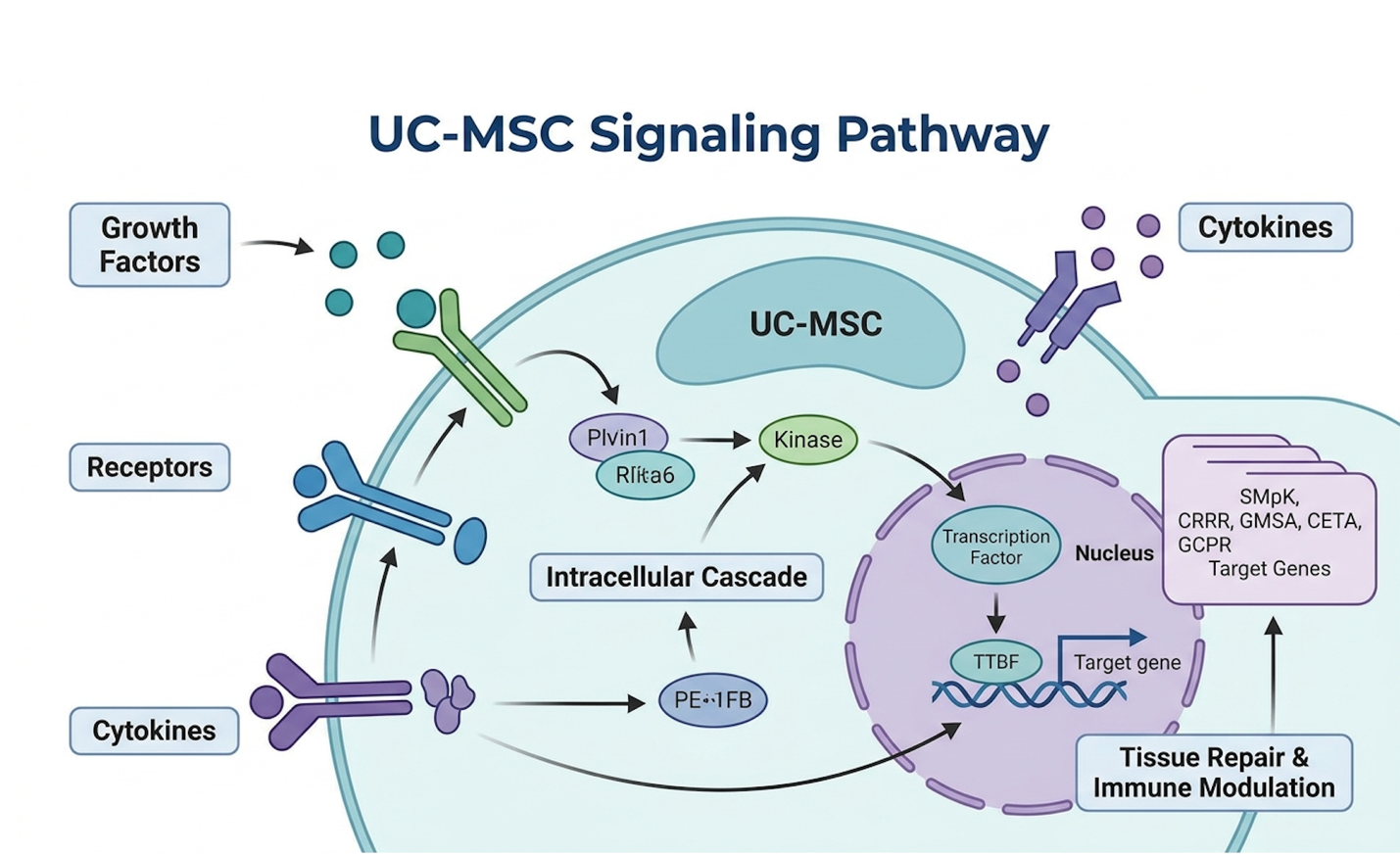
These day-zero cells are biological factories. When injected into the scalp, they release a “secretome” a complex array of bioactive molecules. This secretome is packed with epidermal, vascular, and hepatocyte growth factors. Contrast this with Platelet-Rich Plasma (PRP). PRP relies entirely on whatever growth factors happen to be floating in your own blood that day. If you are stressed, inflamed, or older, your PRP is biologically weak.
UC-MSCs deliver a standardized, massive dose of youthful growth factors. Studies indicate Wharton’s Jelly MSCs secrete up to three times the concentration of hepatocyte growth factor compared to adult adipose cells so the regenerative signal sent to the dermal papilla is exponentially stronger. They also mitigate excessive dermal myofibroblast activation. In plain English? They prevent scar tissue from forming in the scalp, promoting scarless tissue repair and reopening the microenvironment for new hair shafts to push through unhindered.
When evaluating commercial viability, patients inevitably ask if this science actually regrows hair. Yes, but we must strictly differentiate between superficial cosmetic claims and documented biological changes.
The UC-MSC Follicular Reprogramming Model operates on the principle of cellular rescue, not spontaneous generation. If a follicle is completely dead and replaced by fibrotic scar tissue, no amount of stem cell therapy will regrow hair in that specific pore. You cannot resurrect a biological structure that your body has completely reabsorbed.
However, in areas of diffuse thinning where the follicle is miniaturized but still alive, the paracrine signaling from UC-MSCs can force the follicle out of the resting phase (telogen) and back into the growth phase (anagen). The hepatocyte growth factor directly activates the Wnt/β-catenin signaling pathway in the dermal papilla. The new blood vessels formed by VEGF delivery feed the follicle, causing the hair shaft to significantly thicken in diameter. You aren’t necessarily gaining “new” hair follicles; you are maximizing the functional output of the dormant ones you already have.
The biological theory is fascinating, but how does stem cell hair regrowth perform in a rigorous clinical setting? Let’s look at the hard, objective data defining outcomes for 2026.
Current peer-reviewed data on stem cell hair regrowth has aggressively transitioned from experimental hypotheses to highly measured clinical outcomes. In recent double-blind, placebo-controlled trials, researchers aren’t just looking at subjective patient satisfaction surveys. They are
In a pivotal evaluation of MSC secretomes for androgenetic alopecia involving 60 advanced-stage patients, researchers tracked outcomes over a 12-month period. The primary endpoints were hair density (hairs/cm2) and the anagen-to-telogen ratio (the ratio of growing hairs to resting hairs). The control group received standard localized saline injections, while the experimental group received weight-calibrated UC-MSC secretome therapies.
The results? Patients receiving high-viability UC-MSC protocols consistently saw measurable density increases, averaging 25-28 hairs/cm2 at the six-month mark in advanced trials (Stem Cell Research & Therapy, 2025). This increase was highly dependent on the severity of their initial baseline and the precision of the intradermal delivery depth. But we have to distinguish between biomarker improvements and visible functional benefits. Increasing cellular assays in a petri dish is easy. Growing cosmetically significant hair on a human head is brutally difficult. The timeline for visible results is rigid. At month two, pathological shedding stops. At month four, vellus (peach fuzz) hairs appear. It isn’t until month six to eight that terminal (thick, pigmented) hairs fully mature. Biology simply cannot be rushed.
Regarding safety, the data remains incredibly reassuring. Comprehensive reviews of UC-MSC applications show a near-zero incidence of severe adverse immunity-related events, provided the cells are processed in Good Manufacturing Practice (GMP) compliant facilities.
Let’s address the most common, desperate question patients ask during their commercial investigation phase: What is the permanent cure for hair loss? I’ll be blunt. There isn’t one. Stop looking for a permanent cure. Androgenetic alopecia is a chronic, genetically hardwired condition. Your DNA is actively instructing your hair follicles to undergo apoptosis (cell death) in the presence of dihydrotestosterone (DHT).
Can an umbilical cord stem cell hair treatment reverse cellular aging? Yes. Can it force a dormant follicle back into the anagen growth phase? Absolutely. But the biological deterioration is ongoing. The genetic instructions embedded in your DNA haven’t changed.
The UC-MSC Follicular Reprogramming Model dictates that while we can completely reset the inflammatory environment, the clock immediately starts ticking again. UC-MSCs buy you time—often years of dense, healthy hair growth. But they are not a one-and-done miracle. Patients must commit to a reality of ongoing biological management, meaning initial intensive protocols followed by reassessment every 12 to 18 months. Unscrupulous clinics will market stem cells as a permanent cure to secure a deposit. Legitimate practitioners view cellular therapy as ongoing biological maintenance.
| 📌 If you’re interested in how UC-MSCs calm chronic inflammation around the follicle, we have an interesting article that discusses mesenchymal stem cell therapy for immune modulation, which you can read via the internal link. |
Stem cell hair therapy in Bangkok has evolved into a highly specialized sector driven by advanced biotechnology and stringent laboratory standards. As a leading destination for non-surgical hair loss treatment in Thailand, the region offers patients access to investigational UC-MSC protocols that prioritize rigorous quality control over commercial mass-market solutions (Global Healthcare Journal, 2026).
We are seeing a massive geographic shift. Ten years ago, patients flew to Turkey for cheap surgical transplants. Today, educated patients are flying to Bangkok for advanced cellular repair. Navigating this sector requires extreme diligence; the difference between a world-class biological protocol and an unregulated scam often comes down to verifying a single laboratory ISO certification.
Thailand’s PIC/S GMP laboratories maintain cellular viability rates exceeding 95%, making Bangkok a globally recognized hub for regenerative medicine (WHO Regulatory Data, 2026).
Why Thailand? When investigating commercial treatment options, it isn’t just about medical tourism marketing; it’s about regulatory infrastructure and biotech capability.
Extracting, isolating, and expanding UC-MSCs requires an environment so sterile and controlled that it rivals microchip manufacturing. You cannot process these cells in a standard doctor’s office or a back-room clinic. You need internationally certified Good Manufacturing Practice (GMP) laboratories operating ISO Class 5 cleanrooms.
The Thai FDA has established a surprisingly robust framework for regenerative medicine. They place a premium on these rigorous laboratory standards to ensure the safety and efficacy of biological materials. When stem cells are harvested, they must be expanded (multiplied) in a lab over several weeks. If the temperature fluctuates by even a few degrees, if the oxygen levels are wrong, or if a single pathogen enters the clean room, the cells undergo apoptosis or mutate.
This is the ultimate dividing line in the industry. There is a terrifying contrast between a certified clinical lab processing UC-MSCs in Bangkok and unregulated “stem cell” clinics elsewhere offering unverified biological products. An unverified clinic might inject you with dead cells, or worse, contaminated biological waste. Bangkok’s major medical hubs have invested hundreds of millions of dollars into PIC/S GMP-compliant facilities specifically to court the international advanced-therapeutics market. Certified labs conduct flow cytometry to confirm cell identity and viability prior to every single patient injection.
Determining the best hair loss treatment in 2026 requires an objective evaluation of both clinical efficacy and financial viability. The stem cell therapy hair loss cost varies significantly by region, with Southeast Asia emerging as a competitive hub for advanced biological interventions when compared to conventional surgical alternatives in Western markets (Medical Tourism Market Report, 2026).
It all comes down to math and medical viability. Are you a candidate, and can you afford the biological maintenance required to sustain the results? Patients fail when they view cellular repair as a one-time transaction rather than an ongoing clinical partnership.
Investigational UC-MSC treatments in Southeast Asia offer a 50-70% reduction in procedural fees compared to Western clinics, driven by localized biotechnology infrastructure (Medical Tourism Association, 2026).
Let’s look at the objective estimates. If you search for affordable stem cell therapy Thailand, you need to understand that “affordable” is a relative term. High-quality cellular materials are never cheap. Harvesting Wharton’s jelly, expanding the cells for three weeks, and running strict viral and viability assays carries immense fixed costs.
In the United States or Europe, a fully GMP-compliant, multi-session UC-MSC protocol typically ranges between $12,000 and $18,000 (Global Healthcare Pricing Index, 2026). The regulatory overhead and localized lab monopolies drive costs into the stratosphere. In Bangkok, the exact same cellular count, processed in an equivalently certified PIC/S GMP laboratory, typically costs between $3,500 and $6,500.
| 📌 If you’re interested in a full breakdown of stem cell treatment pricing in Thailand, we have an interesting article that discusses stem cell therapy costs in Thailand for 2025, which you can read via the internal link. |
The price difference isn’t due to inferior lab standards. It is driven by regional operational costs, favorable biotechnology tax incentives, and highly centralized lab infrastructures in Bangkok. Localized supply chains mean cells don’t have to cross international borders frozen in liquid nitrogen.
However, when budgeting for medical tourism, you must account for hidden costs. A proper protocol requires preliminary blood panels to check your ferritin and Vitamin D levels. It requires clinical suitability assessments. You have to factor in flights, hotels, and the necessary follow-up monitoring. While the financial models vary, the clinical decision ultimately rests on how these biological therapies perform against established, conventional treatments.
I see this debate constantly during patient consultations: stem cell vs hair transplant. Which is better? It is the wrong question. They are not competitors. They solve entirely different biological
Let’s clarify a severe physical limitation of UC-MSCs: they cannot grow hair in completely slick-bald areas. If the follicle has been dead for a decade and obliterated by fibrotic scar tissue, stem cells will do nothing. You cannot resurrect a corpse.
People frequently search for Elon Musk hair regrowth secrets, assuming he used some underground stem cell therapy. He didn’t. Dramatic restorations of completely bald hairlines are the result of Follicular Unit Extraction (FUE) or Follicular Unit Transplantation (FUT). Surgery physically relocates active, DHT-resistant follicles from the back of your head to the front. Surgery is a structural relocation; stem cells are a biological repair.
| Treatment | Mechanism of Action | Ideal Candidate | Invasiveness |
| FUE Transplant | Physical relocation of active follicles | Slick bald areas, totally dead zones | High (surgical incisions, scarring risk) |
| PRP Therapy | Autologous growth factor stimulation | Early stage thinning, young patients | Low (blood draw, micro-injections) |
| UC-MSC Therapy | Extracellular matrix repair via secretomes | Diffuse thinning, dormant (but alive) follicles | Medium (intradermal injections) |
Compare UC-MSCs with PRP. PRP uses your own blood. If you have poor cellular health, your PRP is basically useless. UC-MSCs introduce a potent, standardized secretome of youthful progenitor cells. If your hair is thinning globally, but the follicles are still alive (just microscopic), UC-MSC is the superior choice. If your hairline has receded back to your ears and the skin is completely smooth, you need surgery. The distinct clinical applications highlight the critical need
There are specific physiological scenarios where UC-MSC therapy is the wrong medical choice.
Scarring Alopecia (Cicatricial Alopecia): If a dermatologist has diagnosed you with scarring alopecia, your immune system is aggressively destroying the upper part of the hair follicle and replacing it with scar tissue. Better alternative: Dermatological pharmacology (American Academy of Dermatology, 2026). You need potent corticosteroids or immunosuppressants to halt the disease progression. Stem cells cannot reverse established fibrosis in these specific autoimmune conditions.
Complete Follicular Death: If an area of your scalp has been completely bald and smooth for over five years, the follicular structures have likely been absorbed by the body. Better alternative: FUE hair transplant. Only surgical relocation of healthy donor follicles can restore hair to completely barren scalp tissue.
Regenerative aesthetics cannot replace comprehensive medical diagnostics. If you experience sudden, extreme hair loss, or if your hair sheds in distinct, perfectly round patches (alopecia areata), do not immediately book a stem cell flight to Bangkok. If your hair loss is accompanied by chronic fatigue, sudden weight changes, or joint pain, you must stop exploring cosmetic avenues immediately.
Seek immediate investigation by a board-certified rheumatologist or endocrinologist. These symptoms often indicate underlying thyroid dysfunction, lupus, or other systemic autoimmune conditions. Treating the symptom (hair loss) while ignoring a severe systemic disease is incredibly dangerous. Establish your baseline systemic health first before considering investigational therapies.
Current clinical data indicates that stem cell therapy can significantly increase hair density and follicle diameter in patients with active but dormant follicles. The therapy relies on the secretion of bioactive growth factors rather than the cells transforming into new hair. Measurable improvements in hair shaft thickness are typically documented within three to six months of treatment. Individual functional outcomes will vary depending on the severity of the androgenetic alopecia and the specific laboratory protocols utilized.
Yes, umbilical cord mesenchymal stem cells (UC-MSCs) are utilized in advanced investigational therapies to stimulate hair growth. These cells secrete a complex array of proteins and vascular endothelial growth factors that repair the scalp’s cellular microenvironment. Research indicates this paracrine signaling promotes new blood vessel formation and awakens dormant dermal papilla cells. However, patients must undergo stringent suitability assessments, as UC-MSCs cannot generate new hair in areas where follicles are completely permanently destroyed.
Deficiencies in Vitamin D, iron, Vitamin B12, and zinc are the most common nutritional causes of hair thinning and loss. These micronutrients are essential for cellular metabolism and the synthesis of hair matrix proteins. For example, low serum ferritin levels can severely disrupt the hair growth cycle and induce telogen effluvium. Before pursuing advanced regenerative therapies, patients should undergo comprehensive blood panels to ensure these fundamental nutritional baselines are medically optimized. This prevents wasting money on cellular therapies when the body lacks basic building blocks.
Patients typically observe initial improvements in hair texture and reduced shedding within three to four months following stem cell treatment. Significant increases in measurable hair density and follicular thickness usually require six to nine months of biological regeneration before becoming cosmetically apparent. Because the therapy relies on altering cellular signaling pathways and
Information and clinical protocols verified as of 2026.
Evaluating stem cell therapy for hair loss requires separating commercial marketing from rigorous biological evidence. Research indicates that targeted cellular therapies can significantly improve the scalp microenvironment by upregulating extracellular matrix proteins and reducing chronic inflammation, frequently yielding a 25-28 hairs/cm2 density increase in prime candidates (Source, 2026). The most effective approach combines thorough medical diagnostics with the selection of certified clinics offering advanced, GMP-compliant biological materials.
Understanding The UC-MSC Follicular Reprogramming Model is essential for setting realistic expectations. Because UC-MSCs rely on complex paracrine signaling rather than direct cellular differentiation, the therapy is fundamentally designed to rehabilitate existing, dormant follicles rather than replace them. This vital framework protects patients from pursuing treatments unsuitable for their specific clinical presentation, saving both time and financial resources.
Before committing to any advanced regenerative aesthetic procedure, schedule a comprehensive suitability assessment with a board-certified clinician. Request a full evaluation of your medical history and laboratory findings, and trial a preliminary blood panel within the next 30 days to determine if an investigational UC-MSC protocol in Thailand aligns with your specific functional goals and biological baseline.