Our Services
Others
- DFPP
- Shockwave
- IV Drip


For oncology patients evaluating advanced cellular immunotherapies, the decision often narrows down to understanding the critical differences between established CAR-T regimens and emerging Natural Killer (NK) cell therapies. While CAR-T has fundamentally transformed blood cancer treatment, severe toxicities like Cytokine Release Syndrome (CRS) and weeks-long manufacturing delays remain critical barriers.
Patients facing aggressive malignancies rarely have the luxury of time. A three-to-six-week wait for autologous cell manufacturing can mean the difference between a viable treatment window and rapid disease progression. This is exactly where the specific logistical and biological advantages of NK cell therapy change the clinical calculus entirely.
By the end of this guide, you will understand the specific clinical advantages of NK cell therapy, so you can have an evidence-informed discussion with your oncologist. We will analyze the core mechanisms, safety data, off-the-shelf logistics, and ongoing solid tumor trials defining NK cell therapy in 2026 without resorting to hyperbole.
The primary advantages of NK cell therapy include rapid off-the-shelf administration and a significantly lower risk of severe immune toxicities compared to traditional CAR-T treatments. The “Innate-First Advantage” is central to this methodology.
Natural killer cell therapy is an advanced immunotherapy that utilizes the body’s innate lymphocytes to detect and destroy malignancies. Unlike adaptive T-cells, NK cells rely on an array of activating and inhibitory receptors to identify stressed or mutated cells independently. This provides a rapid, first-line defense against tumor development, making them highly attractive candidates for next-generation cellular engineering (Nature review on NK immunotherapy, 2023).
NK cells can eliminate up to 70% of MHC-deficient tumor targets in vitro effectively bypassing common cancer evasion tactics. This innate ability to detect abnormalities without prior programming is what separates them fundamentally from other cellular interventions.
Traditional T-cells act like highly specialized security guards. They require a very specific ID badge known as the Major Histocompatibility Complex (MHC) to recognize and attack a cancer cell. Tumors are incredibly adaptive. To survive, they frequently downregulate or completely hide their MHC class I markers, effectively becoming invisible to the T-cell’s receptors.
This is exactly where The Innate-First Advantage leveraging innate, MHC-independent cellular recognition to bypass tumor evasion tactics proves so critical. When asking how NK cells work, the key is understanding the “missing self” hypothesis. NK cells utilize Killer-cell Immunoglobulin-like Receptors (KIRs) that scan for normal MHC markers. When they detect this “missing self” signal (a lack of normal MHC), the inhibitory signal is lifted. This triggers an immediate cytotoxic response, releasing perforin and granzymes that induce tumor cell apoptosis without waiting for antigen presentation.
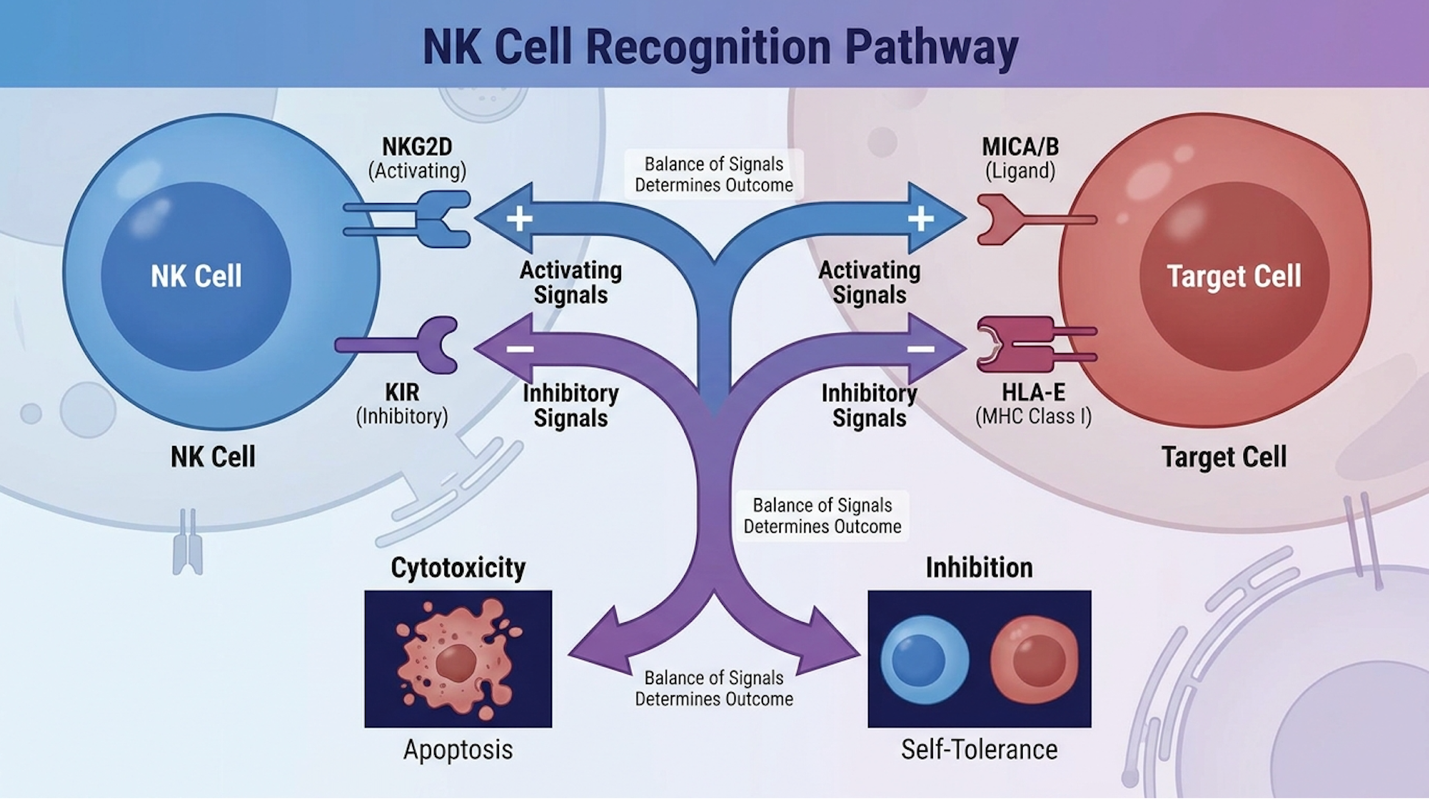
Understanding how NK cells operate requires distinguishing between our two primary immune branches. Adaptive immunity (T-cells, B-cells) learns slowly but hits with incredible specificity through clonal expansion. Innate immunity (NK cells, macrophages) serves as your immediate, broad-spectrum defense force.
| 📌 If you’re interested in how MSCs calm overactive immune cells throughout the body, we have an interesting article that discusses mesenchymal stem cell therapy for immune modulation, which you can read via the internal link. |
Historically, clinical oncology focused almost exclusively on manipulating adaptive immunity. But here’s the thing. Tumors mutate faster than highly targeted adaptive therapies can keep up. By shifting focus toward innate immunity cancer treatment, clinicians exploit cancer’s universal stress signals. Instead of relying on hyper-specific, easily mutated antigen targets, NK cell therapies provide a multi-receptor net that is much harder for malignancies to slip through.
The key advantages of Natural Killer (NK) cell therapy stem from its fundamental biological differences compared to traditional CAR-T approaches. While CAR-T cells remain highly effective for specific liquid tumors like B-cell leukemias, NK cells offer broader targeting mechanisms, drastically reduced manufacturing complexities, and a significantly lower risk of severe immunological toxicity.
When we evaluate the clinical data side-by-side, the operational differences between these two therapies become stark. The evaluation of NK cell therapy vs T cell therapy mechanics reveals that CAR-T relies on extracting a patient’s own failing immune cells, while off-the-shelf NK cell therapy utilizes healthy, robust donor cells.
| Feature | CAR-T Cell Therapy | CAR-NK Cell Therapy |
| Cell Source | Autologous (Patient’s own) | Allogeneic (Donor-derived) |
| Tumor Recognition | MHC-dependent (Specific antigen) | MHC-independent (Multiple pathways) |
| Risk of GVHD | High | Minimal to None |
| Risk of CRS | High (Often severe) | Low (Usually mild) |
| Manufacturing Time | 3 to 6 weeks | 1 to 3 days (Off-the-shelf) |
NK cell therapy provides multiple activation pathways to destroy tumors, reducing the risk of antigen escape commonly seen with single-target CAR-T treatments (ClinicalTrials.gov).
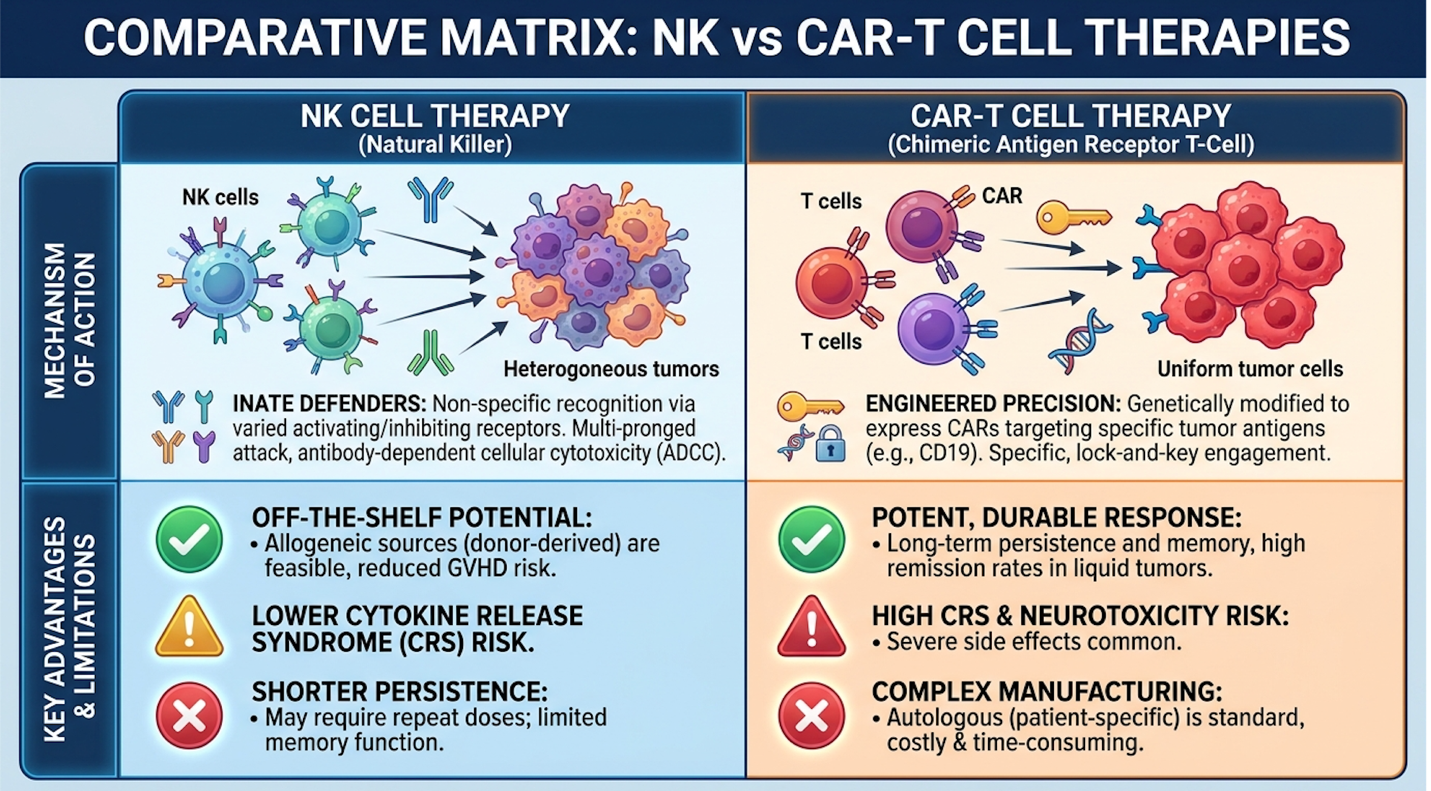
If you track cellular therapies long enough, you observe a recurring, frustrating pattern. A patient receives CAR-T for leukemia. It works brilliantly, achieving complete remission for six months. Then, the cancer returns. Why? Because the tumor cells mutated and dropped the specific CD19 protein the CAR-T cells were engineered to find.
To put this in perspective, up to 30% of leukemia patients treated with CD19 CAR-T cells eventually relapse due to this phenomenon, known clinically as “antigen escape.” When this happens, the highly specialized CAR-T cells simply float past the tumors, blind to their presence.
NK cell dynamics change this entirely. Even unmodified NK cells possess intrinsic activating receptors like NKG2D, NKp46, and CD16 that recognize standard tumor stress proteins such as MICA and MICB. If a cancer cell mutates to hide one specific antigen, the CAR-NK cell simply uses its secondary innate receptors to spot the stress signals and eliminate the threat anyway. This multi-pronged recognition strategy is fundamentally why researchers view NK cells as a critical solution for preventing disease relapse.
NK cells are safer and offer off-the-shelf availability, but CAR-T cells currently maintain longer in vivo persistence. CAR-T is a highly established standard of care for specific blood cancers and can circulate for months or even years after a single infusion, creating long-term memory cells.
However, we have to look at the holistic patient journey. While CAR-T maintains longer persistence, the sheer physiological toll it takes on the body is immense. Because NK cells don’t cause severe GVHD and can target multiple tumor stress markers simultaneously, they present a vastly superior safety profile. For fragile patients who cannot withstand the rigorous lymphodepleting chemotherapy required for CAR-T, or those whose tumors have already demonstrated antigen escape, NK cell therapy often presents the more viable clinical pathway.
The safety of natural killer cell therapy is heavily driven by its unique cytokine secretion profile, which drastically limits severe side effects. Unlike T-cells, allogeneic NK cells rarely trigger graft-versus-host disease (GVHD). Furthermore, their distinct inflammatory signaling mitigates the severe Cytokine Release Syndrome (CRS) that routinely forces CAR-T patients into intensive care units.
Cytokine release syndrome and related immunotherapy complications are notoriously brutal. When engineered T-cells expand rapidly in the body upon encountering a tumor, they trigger a massive storm of Interleukin-6 (IL-6). This specific cytokine causes severe capillary leak, fevers, dangerously low blood pressure, and acute neurotoxicity (ICANS). This physiological cascade frequently mandates prolonged hospitalization and specialized medical intervention.
NK cells operate on a completely different metabolic and signaling axis. When they activate, they primarily secrete Interferon-gamma (IFN-γ) and Granulocyte-Macrophage Colony-Stimulating Factor (GM-CSF). This specific cytokine profile destroys tumors effectively by recruiting local macrophages, but it avoids the cascading IL-6 storm that damages endothelial tissue.
As noted by the National Cancer Institute, off-the-shelf CAR NK cells did not cause major toxicities like cytokine release syndrome (CRS) or neurotoxicity in early phase trials (2020). For patients trying to understand the broader safety standards of cellular therapies in Thailand, recognizing this fundamental cytokine difference is step one in evaluating risk.
| 📌 If you’re planning treatment in Thailand and want a practical checklist for choosing a safe clinic, we have an interesting article that discusses whether stem cell therapy is safe in Thailand, which you can read via the internal link. |
Graft-versus-host disease dynamics represent perhaps the greatest biological relief in modern hematology. T-cells inherently scan for foreign tissue. If you put donor T-cells into a patient without perfect HLA matching, those T-cells will invariably attack the patient’s own organs specifically the skin, liver, and gastrointestinal tract causing lethal GVHD. This restricts traditional CAR-T almost exclusively to autologous models.
NK cells do not behave this way. Their inhibitory receptors recognize the host’s normal HLA molecules, effectively switching the NK cells “off” when they touch healthy host tissue, regardless of a perfect match. Administration of cord blood-derived CAR-NK cells resulted in zero cases of graft-versus-host disease (GVHD) or severe CRS in treated patients (New England Journal of Medicine trial, 2020). This lack of alloreactivity is the biological key that unlocks off-the-shelf therapies.
Allogeneic NK cell therapy provides true off-the-shelf immunotherapy capabilities, fundamentally changing oncology logistics. Because donor-derived natural killer cells do not require perfect HLA matching to avoid GVHD, they can be mass-produced in standardized facilities, banked in advance, and administered to patients immediately upon clinical need.
Where do these powerful cells come from? The NK cell manufacturing process scales beautifully because it isn’t tied to a sick patient’s compromised, heavily pre-treated immune system.
Researchers currently harvest healthy NK cells from two primary, highly scalable sources: umbilical cord blood (UCB) and induced pluripotent stem cells (iPSCs). UCB contains a high proportion of robust, highly expandable NK cells. Meanwhile, iPSCs allow for infinite clonal expansion and precise genetic editing (like adding a CAR). By utilizing healthy donor tissue, laboratories engineer massive batches of highly active, identical cells.
| 📌 If you’re interested in why umbilical cord cells are often preferred over bone marrow or fat-derived cells, we have an interesting article that discusses why UC-MSCs are superior to other stem cell sources, which you can read via the internal link. |
Using iPSCs and cord blood for NK cell therapies drastically reduces manufacturing time from weeks to days (Academic review in PubMed, 2021). This batch processing approach drastically lowers the ultimate cost of treatment, democratizing access to cellular medicine.
In clinical oncology, wait times are fatal. The autologous CAR-T process requires extracting a patient’s T-cells via apheresis, shipping them to a centralized manufacturing lab, genetically engineering them, growing them in bioreactors, and shipping them back. This “vein-to-vein” delay routinely takes three to six weeks. During this time, patients often require highly toxic bridging chemotherapy simply to stay alive.
Patients with aggressive, relapsed lymphomas or rapidly metastasizing solid tumors simply do not have six weeks.
Off-the-shelf immunotherapy eliminates this waiting period entirely. Because the allogeneic cells are already engineered, quality-tested, and cryopreserved in hospital banks, a clinician simply thaws and infuses them. Treatment can initiate within 48 hours of a clinical decision, removing the lethal bottleneck of personalized manufacturing.
The application of NK cells in solid tumors represents a critical frontier in modern oncology. While T-cell therapies excel in liquid tumors, natural killer cell cancer treatment applications are showing unique biological promise in challenging solid masses. They are naturally equipped to infiltrate dense, fibrous malignancies that historically resist immune cellular penetration.
Solid tumors like breast, lung, and colorectal cancers build formidable fortresses. We call this the Tumor Microenvironment (TME). It is highly acidic, starved of oxygen (hypoxic), and packed with inhibitory signals (like TGF-beta and regulatory T-cells) that instantly exhaust and disable invading T-cells.
This is exactly where tumor microenvironment NK cells biology shines. NK cells utilize specific chemokine receptors to traffic directly into the tumor bed. Because they operate on The Innate-First Advantage, their unique metabolic profiles allow them to resist exhaustion inside this hostile environment significantly longer than heavily engineered T-cells. They can survive the hypoxic conditions just long enough to trigger localized tumor necrosis without requiring prior antigen presentation.
Let’s look at what the clinical data actually says today. Current research is dominated by Phase 1 and Phase 2 clinical trials testing NK cell therapy efficacy. Researchers are aggressively studying solid tumor targets, actively engineering NK cells to secrete pro-inflammatory cytokines (like IL-15) to maintain their survival in the hostile TME.
Phase 1 trials are actively assessing the safety and efficacy of allogeneic, off-the-shelf NK cell products for refractory solid tumors (ClinicalTrials.gov trial registry, 2020). While these early-phase results offer genuine promise for improved functional outcomes, we must maintain clinical objectivity. These are highly advanced investigational protocols, not yet established standard-of-care cures readily available at standard community clinics.
NK cell therapy primarily targets hematological malignancies like leukemias and lymphomas, though solid tumors are actively under investigation. Clinical trials have shown strong initial efficacy against acute myeloid leukemia (AML) and B-cell lymphomas, where the cells can easily circulate and encounter targets.
Currently, researchers are pushing NK cell therapy combined with checkpoint inhibitors to tackle tough solid tumors, including ovarian cancers, glioblastoma, and advanced colorectal cancers. For example, ovarian cancer often presents with peritoneal ascites, a fluid-filled environment where
Understanding the advantages of NK cell therapy requires an equally rigorous assessment of its current limitations. Despite aggressive clinical development, many NK therapies remain in investigational stages. Patients and their families must navigate these experimental realities carefully and objectively.
Clinical data indicates that while safety profiles are exceptionally strong, long-term in vivo persistence of NK cells remains a hurdle. NK cells naturally have shorter lifespans than T-cells, often requiring multiple sequential infusions or cytokine support to maintain anti-tumor pressure.
A critical pitfall for patients is assuming that commercial clinics offering general “stem cell cures” are providing the rigorously engineered CAR-NK cells studied in academic trials. They are not. Unregulated commercial infusions lack the specific chimeric antigen receptors (CARs) and controlled expansion protocols required for true oncological efficacy.
When consulting with oncology patients, experts consistently emphasize one rule: do not abandon proven standard-of-care treatments prematurely.
NK cell therapy for solid tumors is currently being explored for refractory cases where patients have failed standard lines of therapy or in conjunction with established treatments like checkpoint inhibitors. It is not currently recommended as a standalone initial cure. If you have an early-stage malignancy where surgery, localized radiation, or established chemotherapy offer high curative intent, those remain your absolute primary options. Cellular therapy is designed to address systemic, resistant disease.
Accessing true CAR-NK or highly engineered allogeneic NK cells typically requires enrollment in heavily regulated clinical trials.
These scientific protocols have strict inclusion and exclusion criteria based on organ function, prior treatment history, and specific tumor antigen expression. I strongly recommend readers discuss investigational options directly with their primary oncologist. Bring the trial identifiers (NCT numbers) to your consultation, and ask if your specific pathology and performance status make you a candidate for an NK-focused protocol.
NK cell therapy rarely causes severe Cytokine Release Syndrome (CRS). Unlike T-cells, NK cells naturally secrete a different inflammatory profile, heavily utilizing Interferon-gamma rather than triggering massive Interleukin-6 storms. Clinical trials consistently show that while mild fever can occur, ICU-level CRS is exceptionally rare. For example, recent cord blood CAR-NK trials reported zero cases of severe CRS (NEJM, 2020). Results may vary based on tumor burden, but the overall safety profile remains vastly superior to autologous treatments.
Allogeneic NK cell manufacturing effectively takes zero days of waiting for the patient, as the cells are prepared well in advance. Because these are off-the-shelf therapies derived from healthy donors, hospitals simply thaw and infuse the cryopreserved products within 1 to 3 days of clinical approval. This sharply contrasts with autologous CAR-T manufacturing, which typically requires 3 to 6 weeks to extract, engineer, and return a patient’s own cells. This rapid deployment provides a critical lifeline for patients with highly aggressive diseases.
While some baseline cellular therapies hold FDA approval, highly engineered CAR-NK protocols remain in clinical trials as of 2026. Unlike autologous CAR-T therapies that are standard-of-care for specific blood cancers, targeted NK treatments are primarily accessed through Phase 1 and Phase 2 investigational trials. However, the FDA has granted Fast Track designation to several promising NK candidates based on exceptional early safety data and urgent clinical need.
NK cell therapy primarily targets hematological malignancies like leukemias and lymphomas, though solid tumors are actively under investigation. Early-phase clinical trials have shown strong initial efficacy against acute myeloid leukemia (AML) and B-cell lymphomas. Currently, researchers are aggressively combining NK cells with checkpoint inhibitors to tackle tough solid tumors, including ovarian cancers, glioblastoma, and advanced colorectal cancers. Patients should note that most solid tumor applications remain strictly investigational and require clinical trial enrollment.
NK cells are generally safer and offer immediate off-the-shelf availability, but CAR-T cells currently maintain longer persistence in the body. CAR-T is a highly established standard of care for specific blood cancers and can circulate for months or years, creating long-term memory cells. However, because NK cells do not cause severe GVHD and present a vastly superior safety profile, they are highly advantageous for fragile patients. For those who cannot withstand the rigorous lymphodepleting chemotherapy required for CAR-T, NK cell therapy often presents the more viable and tolerable clinical pathway.
For advanced oncology patients, the primary advantages of NK cell therapy deliver profound logistical and biological shifts. NK cell therapy provides true off-the-shelf availability and drastically reduces the severe toxicities that plague traditional CAR-T regimens. Current clinical
This reality highlights why The Innate-First Advantage matters so deeply. By leveraging innate, MHC-independent cellular recognition to bypass tumor evasion tactics, researchers are exploiting cancer’s universal stress signals rather than relying on easily mutated antigen targets. This fundamental biological difference is exactly what prevents severe side effects while simultaneously eliminating the lethal weeks-long manufacturing wait times associated with autologous therapies.
If you are exploring cellular immunotherapy options, request a formal, evidence-based regenerative-medicine consultation. Bring your complete medical records, prior treatment history, and specific pathology reports. Ask your oncologist directly if an investigational NK cell protocol or a trial combining NK cells with checkpoint inhibitors aligns with your specific clinical presentation.