Our Services
Others
- DFPP
- Shockwave
- IV Drip

Patient Profile: Adult Client | Osteoarthritis (OA)
1. Clinical Overview & Case Presentation The medical team evaluated an adult patient presenting with chronic discomfort and functional limitation in the left shoulder. The patient’s clinical history is significant for osteoarthritis (OA) of the glenohumeral joint, complicated by a previous surgical rotator cuff repair.
While the prior surgery addressed the acute mechanical tear of the rotator cuff tendons, the underlying degenerative joint disease (osteoarthritis) continues to drive chronic inflammation, cartilage degradation, and localized pain. The patient sought an integrative biological approach to support joint preservation, optimize tissue recovery, and manage the ongoing inflammatory burden without immediate reliance on further invasive orthopedic surgeries.
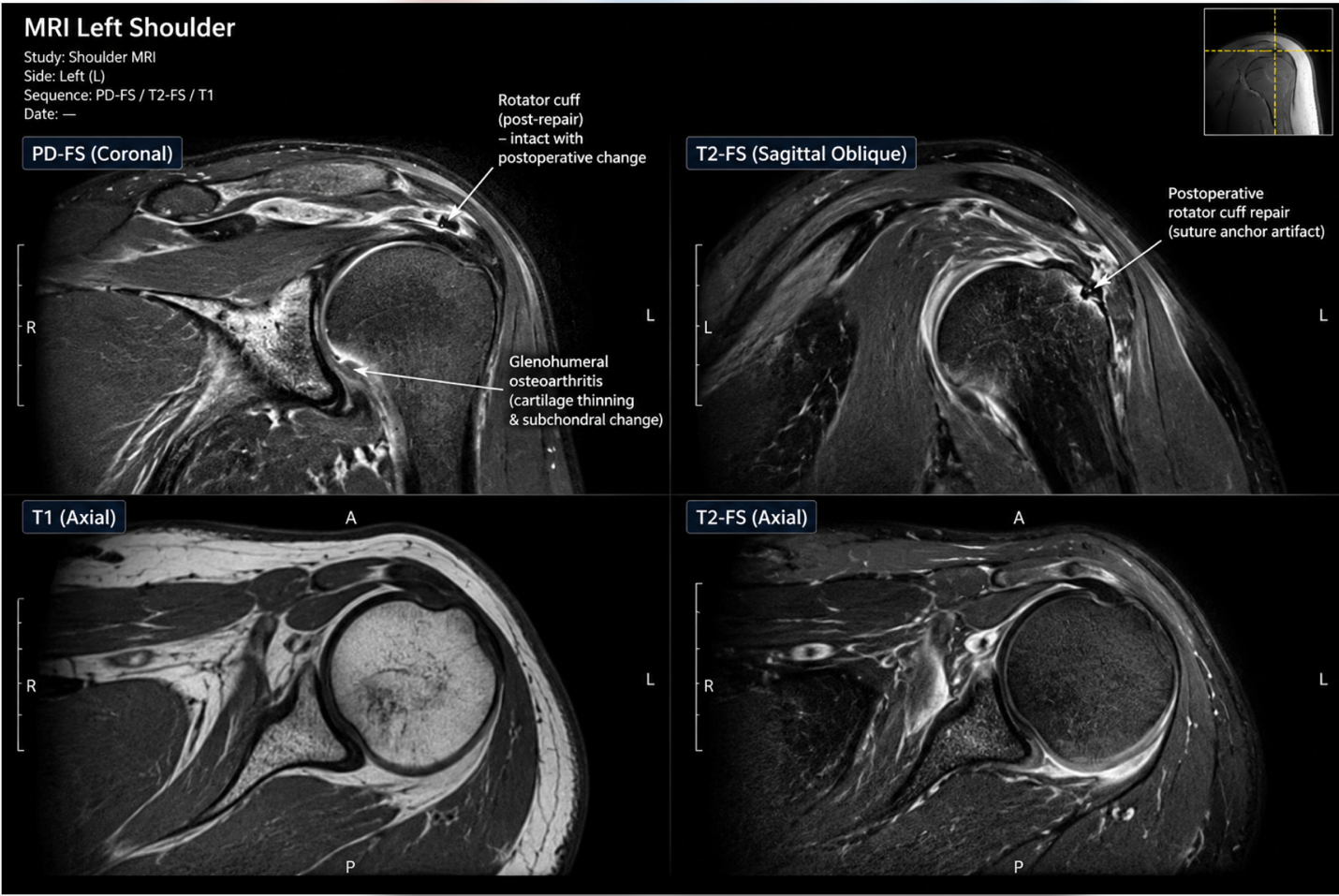
Figure 1: MRI of the Left Shoulder Demonstrating Glenohumeral Osteoarthritis Following Rotator Cuff Repair
2. Proposed Multimodal Supportive Protocol Following a comprehensive musculoskeletal and metabolic assessment,the medical team proposed a highly targeted, multi-tiered supportive protocol designed to address both the localized joint degeneration and systemic tissue recovery:
3. Quality Control & Safety Documentation A critical component of this orthopedic intervention is the rigorous quality assurance verified prior to any biological administration. The medical team ensures complete transparency through a verified Certificate of Analysis (COA) for all cellular materials, confirming:
4. Medical Perspective and Recommendation The medical team emphasizes that addressing post-surgical osteoarthritis requires distinguishing between structural repair and biological healing. While the previous rotator cuff repair successfully restored the mechanical continuity of the tendon, the ongoing biological wear within the joint necessitates ongoing metabolic and cellular support.
Integrative cell therapy and targeted peptide protocols are positioned as advanced adjunctive support mechanisms, rather than definitive cures for osteoarthritis. By modulating the localized inflammatory environment of the shoulder and supporting systemic tissue homeostasis, this multimodal biological approach offers a safe, transparent, and highly structured pathway to enhance joint comfort, support rehabilitation, and optimize the patient’s overall functional mobility.