Our Services
Others
- DFPP
- Shockwave
- IV Drip

Patient Profile: Adult Client | Bilateral Knee Osteoarthritis, Metabolic Syndrome, and Cognitive Health Support
1. Clinical Overview & Case Presentation The medical team evaluated an adult patient presenting with a highly complex combination of orthopedic, metabolic, and neurological concerns. The patient’s chief complaint involved progressive bilateral knee osteoarthritis (OA), which currently limits his walking endurance and daily mobility.
Beyond the localized orthopedic issues, the patient presents with a profound systemic metabolic and cardiovascular burden. His medical history includes obesity, Type 2 Diabetes Mellitus (T2DM), hypertension, dyslipidemia, coronary artery disease (CAD), and benign prostatic hyperplasia (BPH). He also reports a susceptibility to frequent pulmonary infections and is an active smoker. Furthermore, the patient expressed proactive concerns regarding his cognitive health due to a familial history of dementia and the incidental discovery of non-stroke white matter lesions on a recent brain MRI. The patient sought a comprehensive regenerative approach to manage his joint pain, support systemic vitality, and offer neuroprotective support.
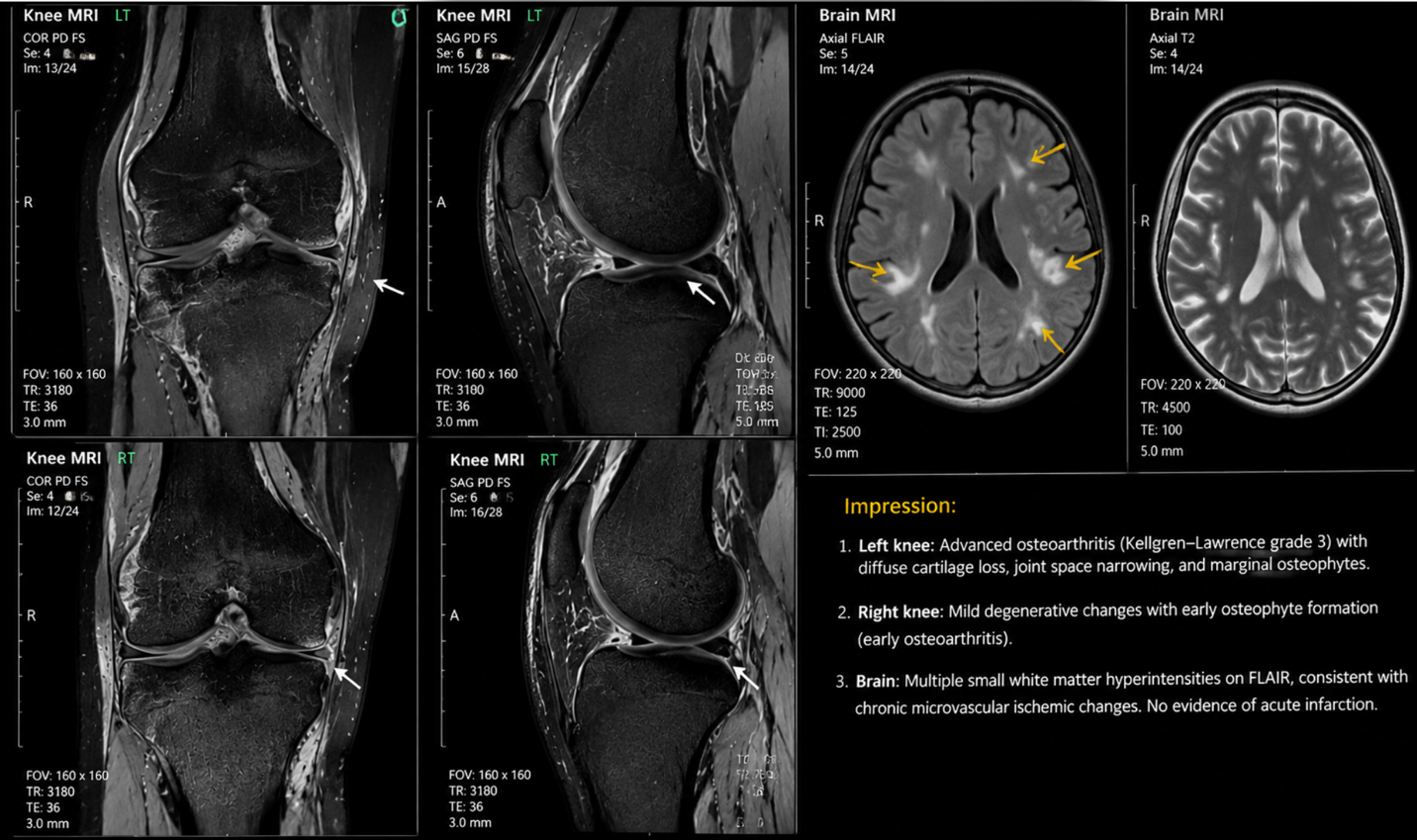
Figure 1: MRI Findings of Bilateral Knee Osteoarthritis and Chronic Cerebral White Matter Changes
2. Diagnostic Imaging Review & Clinical Interpretation To precisely evaluate the mechanical and structural origins of the patient’s joint symptoms, the medical team reviewed his orthopedic diagnostics:
Clinical Interpretation: The patient is experiencing localized cartilage degradation in the knees, heavily exacerbated by severe systemic inflammation and oxidative stress driven by his obesity, T2DM, CAD, and active smoking. The non-stroke lesions on the brain MRI, combined with his cardiovascular risk factors and family history of dementia, indicate a high risk for microvascular cognitive decline. Therefore, a purely orthopedic intervention is insufficient; the patient requires aggressive systemic and neuro-supportive modulation.
3. Proposed Multimodal Supportive Protocol To address this multi-systemic clinical picture, the medical team designed a highly customized, integrative biological support protocol targeting the joints, systemic inflammation, and the central nervous system:
4. Quality Control & Safety Documentation Given the patient’s extensive comorbidities and compromised metabolic state, rigorous quality assurance is paramount. Prior to administration, the medical team provides complete transparency through verified Certificates of Analysis (COA) for all cellular and biological materials, confirming:
5. Medical Perspective and Recommendation The medical team emphasizes that while biological therapies offer advanced support, they cannot mechanically reverse Grade 3 osteoarthritis, nor can they “cure” systemic conditions like Type 2 Diabetes or Coronary Artery Disease. Cell therapy and neuro-peptides serve as powerful adjunctive tools to support tissue repair, modulate severe inflammation, and offer neuroprotection.
Crucial Lifestyle Directive: The medical team strictly advises that active smoking, uncontrolled blood glucose, and obesity will severely blunt the survival and efficacy of any biological or cellular therapy. The systemic oxidative stress introduced by smoking directly damages the microvascular network necessary for tissue healing. Therefore, smoking cessation, rigorous glycemic control, and structured weight management are absolutely mandatory requirements to maximize the therapeutic potential of this integrative protocol and safeguard the patient’s long-term orthopedic and cognitive health.