Clinical Case Reviews on Cell Therapy to Support Chronic Ulcerative Colitis and Gastrointestinal Inflammation

Patient Profile: Adult Patient | History of Long-Standing Ulcerative Colitis & Multi-Organ Considerations

1. Clinical Overview & Case Presentation In managing chronic autoimmune gastrointestinal pathologies like Ulcerative Colitis and Crohn’s disease, the medical team’s primary clinical goal is to address both localized mucosal destruction and broader systemic hyper-inflammation.

When this patient first presented to the clinic, they had been dealing with a multi-year history of severe gastrointestinal distress. The patient’s daily life was heavily disrupted by chronic abdominal cramping, unpredictable bowel habits, persistent nausea, and a marked loss of appetite that severely eroded their nutritional status.

The condition reached a critical point during a recent acute flare-up that required emergency inpatient hospitalization. A colonoscopy performed at that time confirmed widespread, active ulcerative inflammatory changes throughout the intestinal tract. The patient’s complex medical history was further complicated by an intercurrent hospitalization for a renal abscess, which was successfully treated with conventional inpatient medical care.

Despite years of standard pharmaceutical management, the ongoing cycle of pain, mucosal breakdown, and systemic exhaustion severely compromised overall energy and quality of life. Proactive and motivated to regain independence, the patient sought a comprehensive regenerative protocol designed to calm systemic autoimmune reactivity, support mucosal barrier repair, and restore cellular vitality.

2. Diagnostic Imaging Review & Clinical Interpretation To establish a clear structural baseline before initiating further cell therapy, the medical team conducted a thorough review of a recent multiphase whole-abdomen CT scan:
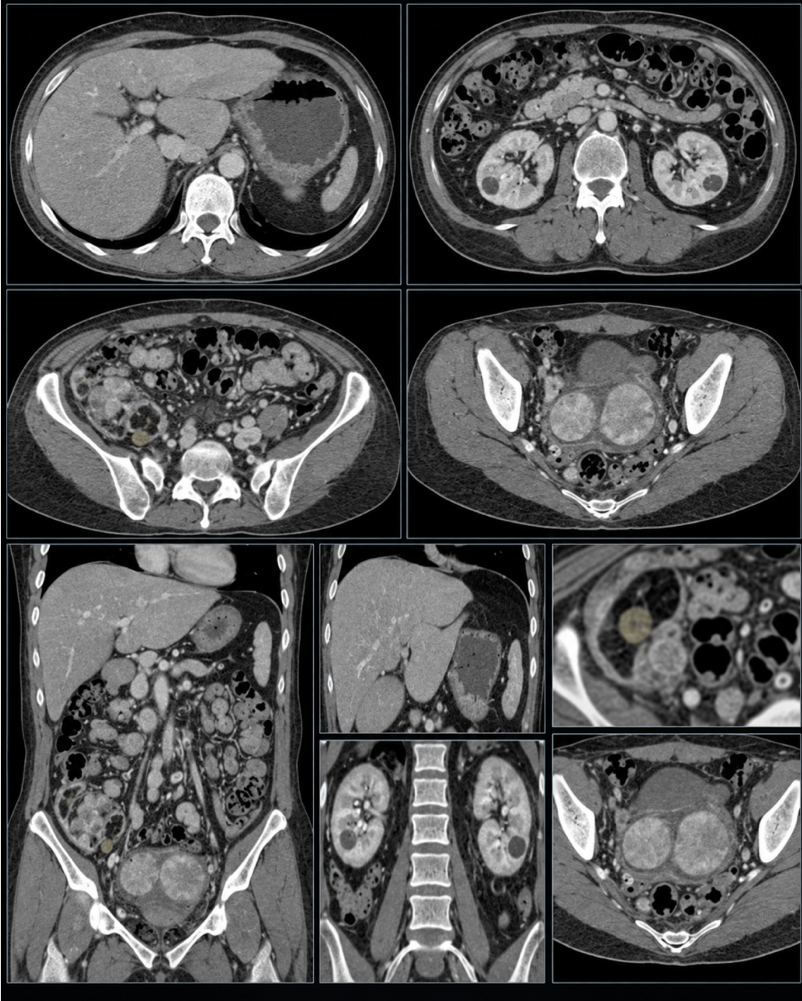
  • Gastrointestinal & Peritoneal Findings: Identified an irregular, mildly enhancing mass lesion measuring 2.5 × 2.6 cm in the right lower quadrant (RLQ) near the cecum, causing mild mechanical compression on adjacent small bowel loops. Additionally, a 1.8 × 1.5 cm intraluminal fatty lesion near the ileocecal valve (suspicious for a benign cecal lipoma) and non-inflamed rectosigmoid diverticula were noted.
  • Hepatobiliary & Splenic Findings: Demonstrated mild caudate and left liver lobe hypertrophy raising suspicion for early cirrhotic remodeling along with mild dilatation of the common bile duct (0.9 cm) and marked splenic atrophy.
  • Renal & Genitourinary Findings: Revealed a 1.0 cm parapelvic cyst, multiple tiny cortical cysts bilaterally, and two pelvic fibroids (2.6 × 2.3 cm and 2.9 × 2.6 cm).
  • Renal Function Chemistry: Blood work confirmed normal kidney filtration markers (BUN 22 mg/dL, Creatinine 0.87 mg/dL), confirming safe contrast clearance capabilities for diagnostic procedures.

Figure 1. Representative CT Images of the Abdomen and Pelvis

Clinical Interpretation In the medical team’s assessment, this patient’s suffering was driven by a multifactorial cascade: chronic autoimmune mucosal destruction, localized mechanical tissue strain, impaired intestinal barrier function, and persistent systemic inflammatory stress. This complex presentation provided a strong clinical rationale for implementing systemic cellular signaling therapy to modulate the immune response and support tissue recovery.

3. Biological Rationale & Mechanisms of Cell Therapy In chronic autoimmune states, targeted cell therapies function as dynamic biological modulators. Rather than acting as a direct drug or surgical tool, these cell therapies exert their therapeutic effects primarily through paracrine signaling releasing an array of anti-inflammatory cytokines, neurotrophic growth factors, and regulatory exosomes into the systemic circulation.

In structuring the protocol, the primary biological objectives were:

  • Downregulating Intestinal Inflammation: Suppressing overactive pro-inflammatory cytokine pathways (such as TNF-α and IL-1β) that continuously drive epithelial erosion and mucosal breakdown.
  • Rebalancing Immune Function: Modulating hyper-reactive T-cell profiles to decrease systemic autoimmune reactivity directed against the gastrointestinal tract.
  • Supporting Mucosal Barrier Integrity: Stimulating local tissue progenitor cells to repair damaged gut lining, rebuild tight junction architecture, and reduce intestinal hyper-permeability (“leaky gut”).
  • Reducing Systemic Inflammatory Strain: Lowering total circulating inflammatory markers to support multi-organ health, which was especially vital given the complex renal and hepatic background.

Important Clinical Boundary: The medical team always emphasizes to patients that cell therapy must never be framed as a “cure” or as a treatment that physically deletes structural masses (such as the RLQ mass or cecal lipoma). It is a supportive biological intervention designed to optimize the tissue microenvironment and promote cellular recovery.

4. Staged Clinical Protocol To ensure maximum safety, metabolic readiness, and therapeutic efficacy, the medical team structured the care plan into three distinct, staged phases:

  • Phase 1: Initial Systemic Support: Administered an intravenous infusion of targeted cell therapy to establish baseline systemic immunomodulation and reduce circulating inflammatory cytokines.
  • Phase 2: Metabolic Optimization: Delivered metabolic support using Vitamin IV therapy combined with NAD+ to support cellular energy production, while concurrently monitoring recovery following standard medical resolution of the renal abscess.
  • Phase 3: Targeted Re-evaluation and Support: Following a comprehensive clinical re-evaluation and a detailed informed consent review regarding the CT scan findings, the patient received an additional intravenous cell therapy administration alongside targeted micronutrient IV support to reinforce mucosal healing.

5. Patient Outcomes & Functional Progress Following the completion of these staged cycles, the patient demonstrated steady, clinically meaningful improvements in daily function and comfort:

  • Substantial Abdominal Relief: Reported a marked reduction in lower abdominal pain, cramping episodes, and chronic visceral discomfort.
  • Nutritional & Digestive Recovery: Experienced a gradual return of natural appetite, alongside significantly improved food tolerance and smoother digestion.
  • Stabilized Vitality & Stamina: Exhibited noticeable improvements in daily energy levels and a major reduction in systemic fatigue following the NAD+ and cellular infusions.
  • Restored Quality of Life: Regained the confidence to engage in daily routines and travel without constant anxiety over acute gastrointestinal distress.

6. Medical Team Takeaways & Overall Recommendation From a clinical perspective, managing complex, multi-system autoimmune conditions requires moving past basic symptom masking. Key takeaways from this case include:

  • A Holistic Diagnostic View is Essential: Autoimmune gut pain involves a delicate interplay between mucosal barrier erosion, systemic cytokine strain, localized soft-tissue compression, and altered metabolic clearance.
  • Transparent Risk Mitigation: Incidental structural discoveries such as the RLQ abdominal mass must be fully evaluated via imaging and discussed openly with the patient prior to cell administration.
  • Synergy of Cellular and Metabolic Therapies: Combining cellular therapies with metabolic cofactors (NAD+ and high-potency micronutrient IVs) optimizes cellular resilience and speeds physical recovery.
  • Responsible Clinical Framing: Cell therapy serves as an integrative biological tool to restore immune balance and encourage tissue repair not as a magic substitute for emergency medical or surgical intervention.

Overall Recommendation: The medical team recommends approaching severe, multi-organ autoimmune challenges such as Ulcerative Colitis through a carefully staged, integrative protocol. Cell therapy may be utilized as a powerful adjunctive support option to calm systemic inflammatory strain and encourage mucosal repair, provided it is administered alongside rigorous diagnostic monitoring, nutritional support, and clear, realistic clinical expectations.

For more information

you can reach me directly on WhatsApp or Email

Here’s our official link

This website uses cookies to enhance your browsing experience and ensure the site functions properly. By continuing to use this site, you acknowledge and accept our use of cookies.

Accept All Accept Required Only
