Our Services
Others
- DFPP
- Shockwave
- IV Drip

Based on the available medical history, the medical team considers this patient’s condition to be more complex than persistent back pain following lumbar fusion. His current symptoms may involve several overlapping factors, including previous nerve compression, possible direct nerve injury associated with prior surgery, postoperative scar formation, chronic neuropathic pain, weakness of the right hip and leg, and altered gait patterns that developed during a prolonged recovery period.
According to the patient’s history, the initial XLIF procedure was followed by significant neurological symptoms involving the right neural foramen. An emergency revision was subsequently performed, although the patient reports that adequate decompression may not have been fully achieved at that stage. A third procedure involving posterior instrumentation, pedicle screws, and foraminotomy was later performed to improve the space surrounding the affected nerve and provide additional spinal stability.
The patient reports that the third operation resulted in substantial pain relief and helped him regain the ability to walk after several years of severe right-sided weakness. However, persistent nerve pain, altered sensation, weakness, and symptoms potentially associated with postoperative fibrosis remain areas that require further assessment.
The third surgical procedure appears to have addressed an important structural component by improving nerve decompression and spinal stability. However, successful mechanical decompression does not necessarily result in complete neurological recovery, particularly when a nerve has previously sustained significant or prolonged injury.
Persistent symptoms such as burning pain, numbness, hypersensitivity, weakness, or abnormal sensation may reflect residual nerve dysfunction even after pressure on the nerve has been relieved. The potential for neurological recovery depends on several factors, including the severity and duration of the original injury, the presence of irreversible nerve damage, the patient’s general health, and the effectiveness of ongoing rehabilitation.
For this reason, the medical team recommends obtaining or reviewing updated MRI or CT imaging, previous operative reports, and a detailed neurological examination before determining the next stage of treatment. These investigations would help clarify whether the remaining symptoms are predominantly related to postoperative fibrosis, residual or recurrent compression, chronic nerve injury, or a combination of these factors.
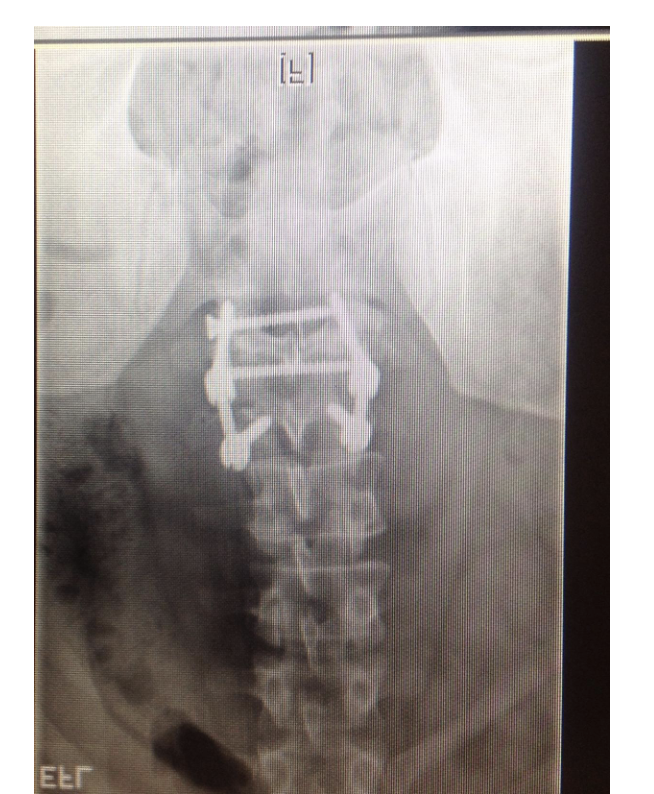
Figure 1: Lumbar flexion and extension radiographs
The medical team recommends evaluating the patient’s right hip pain as a separate clinical issue rather than assuming that all symptoms originate from the lumbar spine. A history of repeated falls, prolonged weakness, altered gait, and compensatory loading may place additional mechanical stress on the greater trochanteric region. This can contribute to greater trochanteric pain syndrome, bursitis, or irritation of the surrounding gluteal tendons.
Therefore, management should address both components of the patient’s condition:
Treating only the lumbar region may not fully resolve the patient’s pain or functional limitations.
In this case, cell therapy may be considered as a supportive component of a broader rehabilitation programme, rather than as a treatment expected to reverse the original surgical nerve injury. Cell therapies are being investigated for their ability to release growth factors, cytokines, extracellular vesicles, and other biological signals that may influence inflammatory activity and cellular communication within injured tissues.
The proposed goals of this supportive cell therapy treatment would therefore be to:
It should be clearly explained to the patient that cell therapy cannot be expected to dissolve established postoperative scar tissue, reconstruct a severely damaged nerve, reposition spinal implants, or guarantee neurological recovery.
Subject to review of the patient’s updated imaging, neurological status, medical history, and treatment suitability, a targeted supportive programme may be considered for both the lumbar nerve region and the right hip.
A comprehensive, targeted cell therapy protocol may be considered:
The objective of this programme would be to support the biological environment surrounding the affected nerve and hip tissues. It should not be presented as a substitute for revision surgery when structural compression is present, nor as a method of removing postoperative fibrosis or correcting spinal instrumentation.
Cell therapy should be integrated into a broader recovery strategy rather than used as a stand-alone intervention.
The medical team recommends continued follow-up focusing on:
Treatment response should be assessed over time rather than immediately after the procedure. Useful outcome measures may include:
The medical team’s recommendation is to approach this case as a combination of previous structural spinal pathology, chronic neurological injury, possible postoperative fibrosis, altered biomechanics, and secondary right hip soft-tissue pain.
The previous decompression and stabilisation procedures may already have corrected an important mechanical component. The remaining symptoms therefore require careful differentiation between persistent nerve injury, residual compression, scar-related irritation, and secondary musculoskeletal dysfunction. Cell therapy may be considered as an adjunctive support option, with the objective of supporting inflammatory regulation, tissue recovery, comfort, and rehabilitation.
The most appropriate strategy would combine: Updated imaging and neurological assessment → confirmation of remaining structural pathology → targeted supportive treatment where appropriate → structured physiotherapy and gait rehabilitation → longitudinal monitoring of neurological and functional outcomes.
Cell therapy should therefore be positioned as one component of a comprehensive supportive recovery plan, with realistic expectations and continued supervision by the relevant medical specialists.