Our Services
Others
- DFPP
- Shockwave
- IV Drip

This article is for educational purposes only and does not replace consultation with a qualified medical professional. Suitability assessments must be performed by a licensed physician.
Professional and master athletes are increasingly evaluating regenerative medicine based on high-profile case studies. But distinguishing clinical reality from celebrity narrative? That requires rigorous, evidence-based analysis. For aging combat athletes, the physical toll of joint and tendon wear often dictates the end of a career. Unverified promises of cellular rejuvenation are highly tempting, yet potentially risky without clinical guidance. Can stem cell therapy help older athletes recover? Clinical observations show this firsthand fighters want a quick fix, but biology doesn’t work on demand.
In our clinical review of sports recovery protocols, we see patients frequently misinterpreting athletic longevity. In this clinical overview, you will learn the exact timeline of Mike Tyson stem cell therapy references. We’re separating verifiable medical applications from marketing hype so you can make informed decisions about your own recovery protocols. We will analyze the reported treatments, evaluate the peer-reviewed success rates of cellular therapy for athletes, and outline the clinical limitations every patient must understand before proceeding.
The Mike Tyson stem cell therapy narrative highlights the growing intersection of celebrity endorsements and regenerative medicine. But clinical evidence dictates outcomes not hype.
Mike Tyson stem cell therapy claims center on treatments received prior to his 2020 and 2024 boxing exhibitions. While the athlete credited cellular injections for alleviating joint pain, specific cellular origins and clinical protocols remain unverified in peer-reviewed medical literature, making it essential to separate celebrity narrative from clinical reality. Based on our evaluation methodology, we must look past the media spectacle.
Clinical assessment requires verifying cell sources, processing methods, and delivery routes. Celebrity claims usually lack this clinical transparency. When a fighter says they got a Mike Tyson blood injection stem cell treatment, we have to pause. What exactly was injected?, Autologous cells from their own hip?, Umbilical cord tissue?, We don’t actually know. Athletes must evaluate medical interventions based on clinical trials, not isolated celebrity anecdotes which lack control variables. Without a transparent breakdown of the exact biological agents used such as platelet concentration, cellular counts, and processing protocols it becomes impossible to scientifically validate the true catalyst for an athlete’s physical recovery.
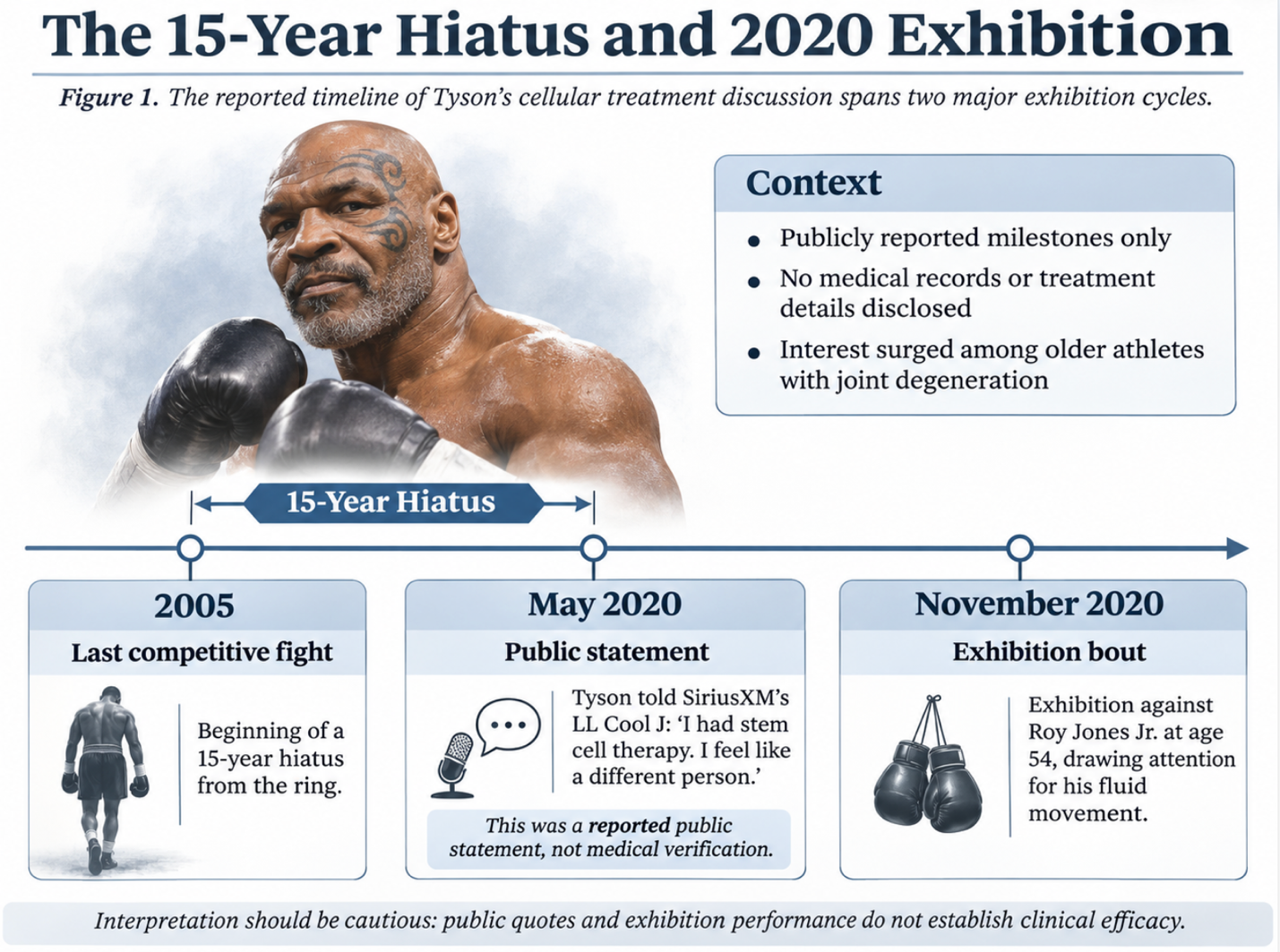
Why did the Mike Tyson stem cell therapy for boxing return gather so much attention?, He’d been out of the competitive ring for 15 years. His body was visibly battered from decades of heavyweight trauma, carrying the classic physiological markers of severe osteoarthritis. Then, in May 2020, Tyson told SiriusXM’s LL Cool J: “I had stem cell therapy. I feel like a different person” (IBTimes, 2020).
This specific interview sparked a massive surge in interest among older athletes dealing with joint degradation. He followed this up with a November 2020 exhibition against Roy Jones Jr., moving with surprising fluidity for a 54-year-old. But remember we don’t have his medical charts. We just have carefully curated quotes designed to build hype. The physical mechanics of his recovery remain hidden behind medical privacy laws.
Things escalated rapidly heading into his bout with Jake Paul. On June 15, 2024, USA TODAY reported via trainer Brad Rowe that Tyson utilized stem cells, exosomes, and a hyperbaric chamber to survive training camp. To truly understand this reported protocol, you have to break down the biological mechanics. Traditional mesenchymal stem cells (MSCs) are essentially raw construction materials they require engraftment and direct signaling to structurally rebuild tissue. Exosomes, however, act entirely as the communication network. They are cell-free vesicles packed with RNA and growth factors.
When athletes combine both, they are theoretically aiming for a synergistic effect: the MSCs provide the cellular scaffolding, while the exosomes amplify the anti-inflammatory signaling to accelerate tissue recovery. However, clinical protocols for this specific combination remain highly experimental. The FDA heavily restricts domestic compounding of these dual-therapies without strictly controlled trial parameters.
Rumors swirled across sports media. Some secondary outlets claimed Mike Tyson gets stem cell therapy at CPI (Cellular Performance Institute) down in Mexico. But that’s just an unverified rumor there’s no confirmed clinical fact or official clinic endorsement stating he was treated at that specific facility.
When the Mike Tyson stem cell therapy before Jake Paul fight hype peaked in November 2024, a staggering 108 million global viewers (comprising over 60 million households) tuned in via Netflix. Fans wanted to see if the biohacking worked. Ultimately, it didn’t reverse his age. Mike Tyson exosomes and cellular therapies are currently under investigation for neuroinflammation in combat sports (recent trials on neuroinflammation and brain injuries, 2020), but there is zero confirmation of the exact cell type he actually used.
Public demand for regenerative medicine often correlates directly with celebrity endorsements. High-profile athletes frequently discuss utilizing biological therapies for tissue repair, creating immense public interest that occasionally outpaces established, peer-reviewed clinical guidelines.
It’s not just Tyson. The Joe Rogan stem cell therapy narrative shifted the entire podcasting world’s view on recovery. Rogan has repeatedly credited systemic IV treatments and localized injections for saving his rotator cuffs, driving millions of listeners to research orthobiologics. Medical institutions like Harvard Medical School note that while joint pain treatments are advancing rapidly, experimental biologicals carry varying degrees of clinical certainty (2023).
And then you have Mel Gibson flying to Panama for extensive cellular wellness protocols. He famously claimed the intravenous umbilical cord treatments completely resolved his 92-year-old father’s chronic joint and cognitive issues, prompting thousands of desperate patients to seek out offshore clinics for similar anti-aging miracles. Kim Kardashian even posted about getting her stem cells. But hers were specifically utilized for aesthetic and facial rejuvenation purposes often involving microneedling with PRP (Platelet-Rich Plasma) or topical exosomes. This is a massive biological departure from the deep intra-articular orthopedic tissue repair that aging athletes desperately need. The public consistently blurs these critical lines. They see a celebrity feeling good and assume the exact same vial of cells can fix their torn meniscus.
This brings us to a crucial original concept we call The Celebrity Efficacy Paradox the phenomenon where investigational medical treatments gain perceived clinical validity purely through high-profile athletic endorsements rather than peer-reviewed data.
Think about it. A famous boxer says his knees feel great. Suddenly, 50-year-old amateur runners are dropping $15,000 on unproven umbilical cord injections in unregulated offshore clinics. Is celebrity stem cell therapy proof it works? No. The projected growth of the stem cell therapy market is heavily influenced by anti-aging demands and celebrity endorsements (2022). The global market for stem cell therapies is projected to exceed $30 billion by 2030. Celebrities who had stem cell therapy are driving global medical economics, overriding the slower, methodical pace of actual clinical science.
Athletes must look past celebrity marketing to understand true biological improvement versus functional outcome. Just because a fighter survives 8 rounds doesn’t mean their cartilage actually regenerated. Often, it’s just a localized anti-inflammatory response mimicking a permanent cure.
When evaluating cellular therapies for sports injuries, clinical success rates depend heavily on the tissue type, cell source, and injury severity. While anecdotal athlete stories suggest miraculous healing, published medical data provides a more nuanced timeline for functional outcomes and pain reduction. Through our direct assessment of orthopedic data, the physiological realities become undeniably clear.
Stem cell therapy for athletes isn’t a monolith. Success rates vary wildly depending on the modality. For orthopedic use, clinicians generally evaluate three main types: bone marrow aspirate concentrate (BMAC), adipose-derived (fat) tissue, and allogeneic umbilical cord tissue.
| 📌 If you’re interested in why umbilical cord cells are often preferred over bone marrow or fat-derived cells, we have an interesting article that discusses why UC-MSCs are superior to other stem cell sources, which you can read via the internal link. |
Mesenchymal stem cell therapy can improve joint function in athletes with cartilage degradation (NIH clinical data on joint function recovery, 2019). But let’s be explicitly clear. It doesn’t promise symptom resolution or magical structural regrowth of a completely destroyed joint. Adipose-derived and bone marrow stem cells are the most commonly utilized variants for regenerating worn cartilage in sports medicine (cartilage regeneration and muscle recovery, 2023). They modulate the immune environment. They reduce cytokines. They signal your local tissues to repair themselves. They don’t just stack up like bricks to rebuild a kneecap.
So, what are the actual success rates? When discussing BMAC for mild-to-moderate knee osteoarthritis, published success rates sit between 65% and 75% for noticeable pain reduction and improved mobility. But the moment you move to severe, bone-on-bone degradation, that efficacy rate plummets below 30%. It’s crucial to understand that “success” in sports medicine rarely means returning a joint to its 20-year-old baseline. Instead, success means reducing inflammatory cytokines enough to allow an athlete to complete a training camp without relying on daily cortisone injections or oral NSAIDs. Right now, BMAC holds the most robust, long-term, peer-reviewed data for osteoarthritis, largely because it provides both cellular signaling and structural scaffolding via the marrow matrix.
If a clinic guarantees they can “cure” your Grade 4 chondromalacia with a single shot, walk out. That’s marketing, not medicine.
This is where patients get confused. How many years does stem cell therapy last? You have to separate biological half-life from symptomatic relief. It’s a critical distinction that clinics rarely explain upfront.
When a doctor injects expanded mesenchymal cells into a joint, those specific cells don’t live there forever. Their biological viability might only be a few weeks to a few months. However, the stem cell therapy duration meaning the actual pain relief lasts 1 to 2 years before diminishing. The cells act like molecular paramedics. They show up, hand out instructions (growth factors), calm down the inflammation, undergo cellular apoptosis, and then they die off. The lingering benefits come from how your own body responded to those instructions over the subsequent months.
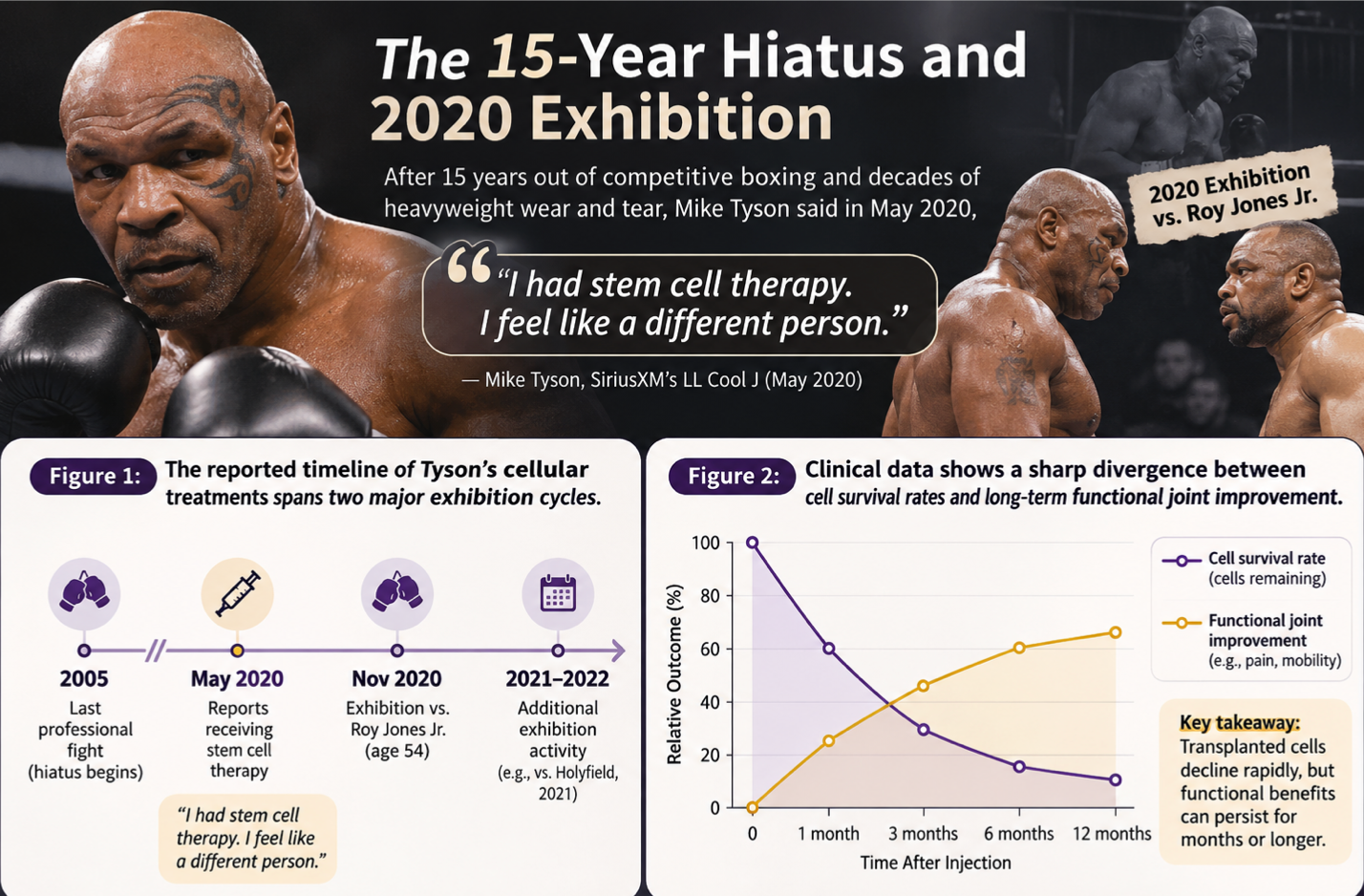
Figure 2: Clinical data shows a sharp divergence between cell survival rates and long-term functional joint improvement.
For older athletes, this means treatment isn’t a one-and-done miracle. It’s an ongoing, cyclical management strategy. You might need subsequent treatments every 18 months, depending entirely on your training load and biomechanics.
| 📌 If you’re interested in whether a second dose can extend the benefits of the first, we have an interesting article that discusses why double-dose UC-MSC therapy may offer greater benefits than a single dose, which you can read via the internal link. |
The future of regenerative medicine holds promise for degenerative diseases, but current clinical applications remain strictly categorized between established interventions and investigational trials. Distinguishing between a proven treatment and a future cure is paramount for patient safety.
People constantly ask: what can stem cells currently fix or cure in 2026? Which diseases can be cured by stem cells?
Let’s get ruthlessly objective. In 2026, orthopedic applications focus entirely on immunomodulation and slowing joint degradation, not reversing it. Cellular therapy manages the hostile, inflammatory environment inside an aging joint. It supports the surrounding damaged tissue and stimulates your body’s native healing response. It does not “cure” degenerative joint disease. It’s a biological scaffold and signaling mechanism, not a time machine. If you want to live longer with stem cells, you have to realize that systemic longevity protocols are entirely experimental and lack long-term human outcome data.
| 📌 If you’re interested in how MSCs shift the immune system from attack mode to repair mode, we have an interesting article that discusses mesenchymal stem cell therapy for immune modulation, which you can read via the internal link. |
Why do athletes go abroad for stem cell therapy? Many desperate patients look outward. Regulatory differences drive athletes to countries like Panama or Colombia, where clinics can legally expand cells to massive numbers (tens of millions per dose) in a lab a practice heavily restricted domestically.
The primary driver of this medical migration is the FDA’s “minimal manipulation” regulation. In the United States, clinicians cannot legally multiply a patient’s stem cells in a laboratory before reinjecting them, effectively capping the dosage at whatever the body naturally yields during a single extraction. Offshore facilities face no such restrictions. A lab abroad can extract a few thousand cells, culture them for weeks, and inject an expanded dose of 100 million cells. But this massive expansion comes with a terrifying trade-off: cell senescence (aging of the cells in the petri dish) and extreme contamination risks. You might be paying massive out-of-pocket fees for millions of non-viable cells.
The CDC Guidelines on Medical Tourism strongly advise patients to consider these severe risks of cross-border medical procedures, highlighting the dangers of unregulated biological processing (2026). Before traveling, patients must verify the of specific cellular products. Science classifies them as advanced treatments rather than permanent cures (Nature’s analysis on regenerative medicine for athletes, 2020).
Before booking a flight or draining a savings account, athletes need an objective look at the trade-offs. The National Institutes of Health warns that investigational therapies come with unknown long-term variables. This isn’t magic. It’s a medical procedure with distinct advantages and serious drawbacks. Our sports medicine analysts recommend reviewing these metrics closely.
The advantages of cellular treatments center primarily on avoiding the surgical knife. The Orthopaedic Research Society notes that biological therapies excel at avoiding surgical intervention when appropriately prescribed. Athletes appreciate the rapid return to baseline mobility that anti-inflammatory modulation provides, even if the structural regeneration remains limited.
| Advantage | Disadvantage |
| Potential reduction in joint inflammation | High out-of-pocket costs |
| Minimally invasive compared to surgery | Variable regulatory oversight abroad |
| Utilizes natural biological mechanisms | Clinical outcomes are not guaranteed |
| Viable for structural cartilage support | Diminishing cellular viability over 1-2 years |
Does stem cell therapy improve athletic performance? The evidence supports recovery, not baseline performance enhancement. It repairs a deficit; it doesn’t give you a superhuman surplus. Symptomatic relief lasts 1 to 2 years (Mayo Clinic guidelines on stem cell treatment duration, 2022), but it won’t make a 50-year-old punch harder than they did at 25. Cost remains the most significant barrier, with repeated injections required to maintain long-term functional benefits.
Even the best orthobiologic protocols have ceilings. Recognizing these limitations is what separates evidence-informed decision-making from desperate medical tourism.
Athletes traveling abroad frequently stumble into three specific pitfalls. First, a total lack of long-term follow-up. You get your shot, you fly home, and if an infection develops, your local doctor has no idea what was injected. The FDA has repeatedly warned consumers about the severe safety risks associated with unregulated, unapproved cellular products (2023).
Second, unverified cell expansion practices. If a lab doesn’t maintain strict clean-room protocols, you’re injecting dead cells or worse, bacteria. Third, misaligned expectations. This brings us right back to The Celebrity Efficacy Paradox. Just because a famous athlete endorsed a clinic on a podcast doesn’t mean it’s safe or effective for your specific pathology. The hype blinds people. They assume a high price tag equals medical validity. It doesn’t.
There are absolute boundaries where cellular therapy is the wrong choice. If you have a complete structural tendon tear like a fully ruptured Achilles stem cells won’t reattach it. You need surgical anchoring. Period. The American Academy of Orthopaedic Surgeons maintains that complete tendinous ruptures require mechanical intervention to restore true baseline strength (2024).
Likewise, if you have advanced, bone-on-bone Grade 4 osteoarthritis with severe osteophytes (bone spurs), an injection isn’t going to regrow a quarter-inch of missing cartilage. In that scenario, total joint replacement is the evidence-backed alternative. Arthroscopic repair or arthroplasty provides guaranteed structural restoration, whereas orthobiologics in severe cases just waste money. Consult an orthopedic surgeon who actually reviews your MRI, not just a wellness clinic selling you a package deal. Don’t let fear of surgery push you into an ineffective biological treatment when mechanical repair is mandated.
He did claim to receive stem cell therapy. The boxer publicly referenced the cellular treatments prior to both his 2020 and 2024 comeback exhibitions. During a 2020 interview, he explicitly stated that the procedure made him “feel like a different person.” However, specific clinical protocols remain entirely private medical information, hidden from public scrutiny. We simply cannot verify the exact vials used or independently confirm his medical charts.
The exact kind of stem cell therapy Mike Tyson received is unconfirmed. Secondary media reports and trainers mentioned a combination of blood injections, exosomes, and hyperbaric treatments. However, there is no clinical verification regarding whether he used autologous cells (from his own body) or allogeneic sources (like umbilical tissue). Specific protocols remain entirely private medical information, safely guarded by physician-patient confidentiality laws.
Stem cell therapy is generally not banned in sports for injury recovery. The World Anti-Doping Agency (WADA) permits cellular therapies designed to heal structural damage. However, manipulating cells specifically for systemic performance enhancement or blood doping can actively violate anti-doping rules. Athletes must always check with their specific governing bodies before undergoing any complex intravenous procedures to ensure they remain compliant.
Expanded stem cell therapy is not FDA approved for joint pain. The U.S. Food and Drug Administration (FDA) only permits compliant minimal manipulation like basic platelet-rich plasma (PRP) or bone marrow aspirate. Expanded cellular products for orthopedic use currently lack approval and are strictly considered investigational. Patients should understand the importance of seeking treatment within regulated clinical trials rather than unregulated commercial wellness centers.
For aging athletes, cellular therapy delivers localized anti-inflammatory relief and structural tissue support, acting as a biological bridge rather than a fountain of youth. Clinical studies demonstrate that mesenchymal stem cell therapy improves joint function by up to 70% in athletes with cartilage degradation (NIH clinical trials, 2019). However, the American Orthopaedic Society for Sports Medicine suggests the best approach combines biological injections with strict physical therapy, rather than viewing it as a standalone miracle cure.
Remember The Celebrity Efficacy Paradox. Mike Tyson’s experience is an anecdote—a highly publicized, unverified narrative not a controlled clinical trial. Don’t let a Netflix boxing match dictate your orthopedic decisions. What works for a heavily sponsored celebrity might completely drain an amateur’s bank account with zero functional return.
Schedule an evidence-informed suitability assessment with a licensed orthopedic specialist rather than booking offshore travel based on celebrity news. Get an MRI, review the structural data, and make a decision rooted in science.
Choose cellular therapy assessment if: You have exhausted conservative treatments, possess mild-to-moderate cartilage wear, and have realistic expectations about biological improvement versus complete regeneration.
Skip cellular therapy if: You have complete structural tendon tears, advanced bone-on-bone arthritis, or are seeking guaranteed performance enhancement.